
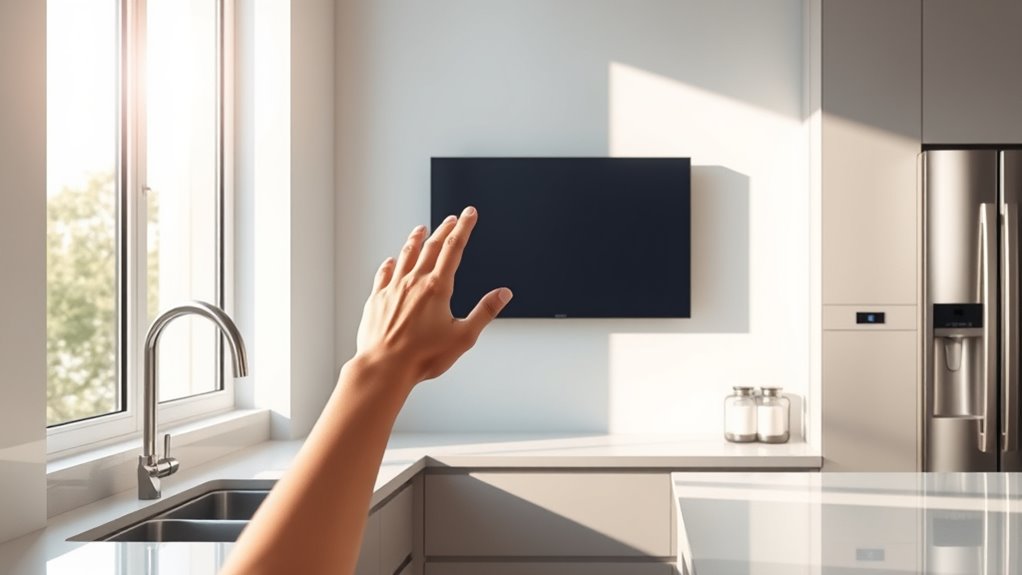

Touchless displays are transforming hygiene in smart homes by enabling interactions through voice commands and gestures, which cuts down on direct contact with surfaces. This reduces the spread of germs, creating a cleaner and safer living environment. With advanced gesture recognition and likely integration with AI, smart home devices are not only more convenient, but they also promote healthier habits. Interested in how this technology continues to evolve and further enhance hygiene? There’s more to explore.
The Rise of Touchless Technology in Smart Homes
As technology continues to evolve, you’re likely noticing a significant shift toward touchless solutions in smart homes. This trend reflects a growing preference for user-friendly interfaces that enhance convenience while promoting hygiene. With the rise of touchless technology, daily interactions become more seamless and intuitive. Imagine controlling your home’s lighting or temperature without ever touching a surface—just your voice or gestures. This tech adoption not only simplifies life but also aligns with a desire for cleaner living environments, especially in a world increasingly aware of hygiene. As more companies innovate in this space, you’ll find that the possibilities are endless, making your home smarter and more adaptable to your lifestyle, ultimately giving you the freedom to interact without limits.
How Touchless Displays Work
While many touchless displays rely on advanced sensors to detect gestures and movements, the underlying technology is both fascinating and complex. You might be surprised to learn how gesture technology and sensor innovation work together to create seamless user experiences. Here’s a breakdown:
Touchless displays combine advanced sensors and gesture technology, creating an intricate system for intuitive user interactions.
- Infrared sensors detect hand movements without physical contact.
- Cameras capture gestures and translate them into commands.
- Ultrasonic waves provide precise distance measurements for interaction.
- Machine learning algorithms improve the accuracy of gesture recognition over time.
- Haptic feedback simulates touch sensations, enhancing user engagement.
Reducing Germ Transmission With Touchless Interaction
Touchless interaction not only enhances convenience but also plays an essential role in reducing germ transmission in smart homes. By eliminating the need to touch surfaces, you greatly cut down the risk of transferring pathogens from germ hotspots, like light switches and door handles. Instead of relying on traditional methods, you can explore interaction alternatives such as voice commands or gestures, keeping your environment cleaner and safer. This shift not only promotes hygiene but also fosters a sense of freedom, allowing you to navigate your space without the worry of contamination. Embracing touchless technology empowers you to maintain a healthier home while enjoying the benefits of modern smart living, making it an essential upgrade for your lifestyle.
Enhancing Hygiene in Shared Spaces
In shared spaces, reducing surface contamination is essential for maintaining hygiene, and touchless displays can greatly help with that. You’ll find that these systems not only minimize direct contact but also simplify maintenance protocols, making it easier to keep environments clean. By integrating touchless technology, you can create safer, healthier spaces for everyone.
Reduced Surface Contamination
As you navigate through shared spaces, the risk of surface contamination becomes a pressing concern, particularly in environments like homes, offices, and public areas. Touchless interfaces are revolutionizing how you interact with your surroundings, greatly reducing the need for physical contact. This innovation not only enhances convenience but also aligns with modern hygiene standards, ensuring a cleaner environment.
- Minimizes the spread of germs
- Reduces cleaning frequency
- Enhances user experience
- Promotes healthier interactions
- Supports a sustainable lifestyle
Easy Maintenance Protocols
Implementing easy maintenance protocols is essential for enhancing hygiene in shared spaces, especially in smart homes. By establishing clear maintenance schedules, you can guarantee that touchless displays and other surfaces remain clean and sanitary. Regular cleaning routines make it easier for you to manage hygiene without feeling overwhelmed. Incorporating easy cleaning solutions, like disinfectant wipes or sprays, can simplify the process, allowing you to quickly tackle high-touch areas. Furthermore, using smart home technology can remind you when it’s time to clean, promoting accountability and consistency. When everyone in a shared space follows these protocols, it fosters a healthier environment. Ultimately, embracing these easy maintenance practices not only enhances hygiene but also empowers you to enjoy your smart home to the fullest.
Smart Home Devices That Benefit From Touchless Displays
Touchless displays are revolutionizing the way we interact with smart home devices, enhancing both convenience and hygiene. These advanced interfaces allow you to control various devices without physical contact, making your home cleaner and safer. Here are some smart home devices that particularly benefit from touchless displays:
- Smart mirrors that provide hands-free skincare routines and feedback
- Kitchen appliances like ovens and refrigerators that respond to gestures
- Smart thermostats that adjust settings with a wave
- Home security systems that allow you to monitor without touching surfaces
- Voice-activated assistants that enhance functionality and minimize contact
Future Trends in Touchless Technology and Hygiene
As you explore the future of touchless technology, you’ll notice significant advancements in gesture recognition and voice-controlled interfaces that promise to reshape your smart home experience. Enhanced surface materials are also on the horizon, offering not just functionality but improved hygiene. Together, these innovations could make your living space more intuitive and healthier than ever.
Advancements in Gesture Recognition
While many people appreciate the convenience of gesture recognition technology, its rapid advancements are also reshaping our understanding of hygiene in smart homes. With improved gesture tracking, you can now control everything from lights to appliances without touching surfaces, greatly reducing germ transmission. Here are some key developments:
- Enhanced accuracy in recognizing hand movements
- Intuitive user interfaces that adapt to individual preferences
- Integration with AI, predicting your gestures for seamless interaction
- Multi-user support, recognizing different users for personalized experiences
- Energy-efficient designs that minimize power consumption while maintaining functionality
These innovations not only elevate convenience but also promote a cleaner, healthier living environment. Embracing gesture recognition means you’re prioritizing hygiene while enjoying the freedom of touchless control.
Voice-Controlled Smart Interfaces
With the rise of voice-controlled smart interfaces, homeowners are finding new ways to enhance hygiene and convenience in their living spaces. Voice activation technology allows you to interact with smart assistants hands-free, reducing the need for physical contact with surfaces that may harbor germs. Imagine controlling your lights, thermostat, or even kitchen appliances simply by speaking. This not only streamlines your daily routines but also minimizes the spread of bacteria, especially in high-touch areas. As smart assistants evolve, they’ll offer even more sophisticated commands, making it easier to maintain a clean environment. Embracing these innovations gives you the freedom to manage your home efficiently while prioritizing hygiene, ultimately creating a safer, more comfortable living space.
Enhanced Surface Materials
The emergence of enhanced surface materials marks a significant leap in touchless technology and hygiene for smart homes. You’ll appreciate how these innovations not only elevate convenience but also promote a healthier living environment.
- Anti-microbial coatings that actively kill germs on contact.
- Self-cleaning surfaces that repel dirt and grime, reducing maintenance.
- Nanotechnology that creates smoother, more durable finishes.
- Hydrophobic materials that resist water and stains, keeping surfaces pristine.
- Eco-friendly options that prioritize sustainability while enhancing hygiene.
These advancements in surface materials provide a thorough approach to hygiene, allowing you to enjoy a cleaner home without the hassle. By integrating these technologies, you’re not just upgrading your space—you’re embracing a lifestyle that prioritizes your well-being and freedom from germs.
Frequently Asked Questions
Can Touchless Displays Work With All Smart Home Devices?
Touchless displays can work with many smart home devices, but you might face some compatibility concerns. Device integration varies by manufacturer, so it is crucial to check compatibility before investing in touchless technology for your home.
Are Touchless Displays More Expensive Than Traditional Touch Screens?
You might recall the early days of smartphones—touchless displays are similar. In a cost analysis, you’ll find they often exceed traditional screens. However, market trends suggest prices could stabilize as demand grows.
How Do Touchless Displays Compare to Voice-Activated Controls?
Touchless displays offer precision and visual feedback, while voice-activated controls rely on voice accuracy. Your user preference might lean towards touchless for its tactile engagement, or voice commands for convenience depending on your lifestyle and environment.
What Maintenance Is Required for Touchless Displays?
Think of touchless displays as your home’s crystal-clear window to the future. Regular cleaning protocols and occasional sensor calibration keep them shining bright, ensuring seamless interaction without the grime of daily life. Embrace the freedom of effortless maintenance!
Can Touchless Technology Be Retrofitted Into Existing Smart Home Systems?
Yes, touchless technology can often be retrofitted into existing smart home systems, though integration compatibility can present challenges. You’ll want to assess your current system’s capabilities to guarantee smooth functionality and maximize your home’s efficiency.
