
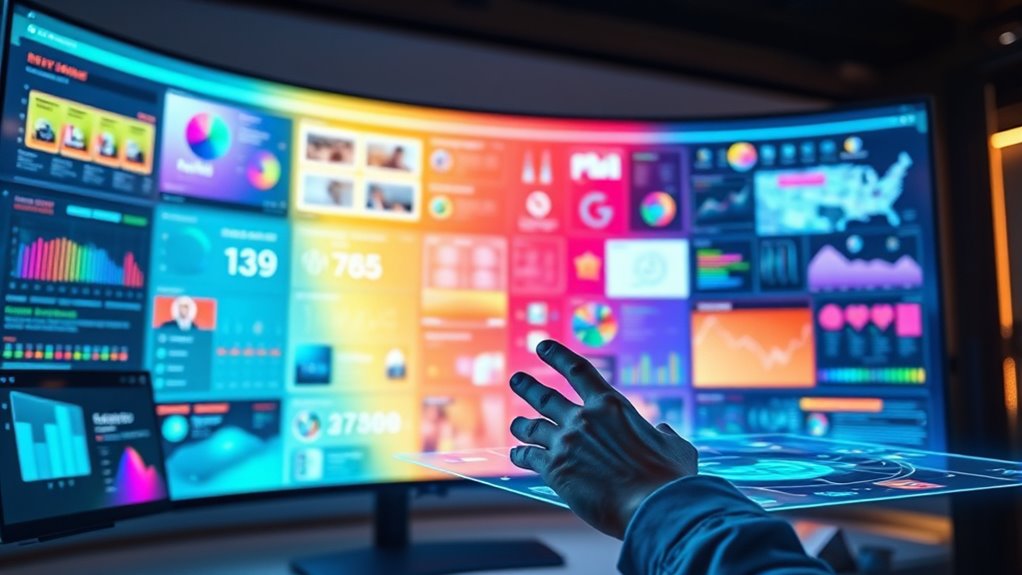

The future of AI-powered customizable UIs for displays is set to transform your interaction with technology. These interfaces will adapt to your personal preferences, learning from your habits and behaviors to enhance usability. As they evolve, you'll find that your devices can automatically adjust settings like brightness and content based on your environment and lifestyle. However, along with these advancements come challenges, especially concerning privacy. There's much more to explore about these exciting developments.
Understanding AI-Powered Customizable UIs
As technology evolves, you might find yourself intrigued by the concept of AI-powered customizable user interfaces (UIs), which offer a unique blend of personalization and adaptability. These interfaces leverage machine learning algorithms to analyze user behavior, enabling them to adjust dynamically to your preferences. By incorporating user feedback, AI-driven UIs can refine their functionalities, ensuring a tailored experience that feels natural and intuitive. Imagine a display that learns your habits, presenting information in a way that resonates with you. This level of customization not only enhances usability but also empowers you, granting the freedom to interact with technology on your terms. In a world increasingly defined by individuality, AI-powered UIs stand out as a revolutionary approach to personalizing digital experiences.
The Technology Behind Adaptive Displays
Adaptive displays rely on sophisticated technologies that enable them to respond intelligently to user interactions and environmental changes. These systems utilize advanced machine learning algorithms and cutting-edge display technology to create a seamless experience. Here's how they work:
Adaptive displays leverage advanced machine learning and innovative technology to intelligently respond to user interactions and environmental shifts.
- Real-time data analysis: They track user preferences and behaviors.
- Dynamic adjustments: Brightness and contrast adapt based on surroundings.
- Context awareness: Interfaces change according to the user's location and activity.
- Personalized content: Information displayed matches user interests and habits.
Enhancing User Experience Through Personalization
While many technologies aim for user engagement, personalization stands out as a key factor in enhancing user experience with customizable UIs. By tapping into user feedback, developers can create interfaces that resonate with individual user preferences. When you can tailor your display to reflect your unique style and needs, it feels less like a tool and more like an extension of yourself. This level of customization not only boosts satisfaction but also fosters a deeper emotional connection with the technology. Imagine a UI that learns from your interactions, adapting over time to predict what you want. Such advancements empower you, granting you the freedom to navigate your digital world effortlessly while ensuring your experience is genuinely yours.
Applications in Personal Devices and Public Spaces
In a world where technology permeates every aspect of our lives, the applications of AI-powered customizable UIs in personal devices and public spaces are transforming how we interact with our environments. Imagine the freedom to tailor your experience based on your needs. Consider these applications:
- Smartphones: Adaptive interfaces that learn your habits and preferences.
- Wearables: Personalized notifications and health tracking tailored to your lifestyle.
- Public Displays: Dynamic content that adjusts based on audience engagement and demographics.
- Smart Homes: Interfaces that adapt to your daily routines, enhancing convenience and efficiency.
These innovations not only enhance user experience but also empower you to shape your interactions in ways that reflect your unique desires and contexts. The future is truly customizable.
Challenges and Future Prospects of AI-Driven Interfaces
As we embrace the potential of AI-driven interfaces, several challenges emerge that could impact their widespread adoption and effectiveness. One major concern is user privacy; as these systems gather vast amounts of personal data, ensuring it's handled responsibly becomes essential. You might worry about how your information is used and whether it's secure from breaches. Additionally, ethical considerations arise when designing AI systems that learn from user behavior. It's imperative to strike a balance between personalization and manipulation, maintaining user autonomy. Future prospects depend on addressing these challenges through transparent policies and robust data protection measures. By prioritizing user trust and ethical practices, we can foster an environment where AI-driven interfaces enhance your experience without compromising your freedom.
Frequently Asked Questions
How Can I Create My Own Customizable UI With AI?
To create your own customizable UI with AI, leverage design frameworks that adapt to user preferences. Combine intuitive elements with machine learning algorithms to guarantee a unique and engaging experience tailored just for you.
What Are the Costs Associated With Implementing Ai-Powered Displays?
Implementing AI-powered displays involves significant implementation expenses and development resources. You'll need to factor in software licensing, hardware upgrades, and skilled personnel, all of which can impact your budget and project's overall feasibility.
Are There Privacy Concerns With Ai-Driven Customization?
Yes, there're significant privacy concerns with AI-driven customization. You must prioritize data security and guarantee user consent. Without transparency, users may feel their personal data's exploited, undermining trust in these advanced, personalized experiences.
Can Ai-Powered UIS Adapt to Multiple Users Simultaneously?
Think of a chameleon changing colors; AI-powered UIs can indeed adapt to multiple users simultaneously, offering multi-user adaptability and simultaneous personalization. This flexibility empowers everyone, ensuring a tailored experience that respects individual preferences and needs.
What Industries Will Benefit Most From Ai-Powered Customizable Displays?
You'll find industries like healthcare applications, retail experiences, automotive interfaces, and educational tools benefiting considerably from AI-powered customizable displays. These sectors can enhance user interaction, personalization, and overall efficiency, catering to diverse needs and preferences.
