
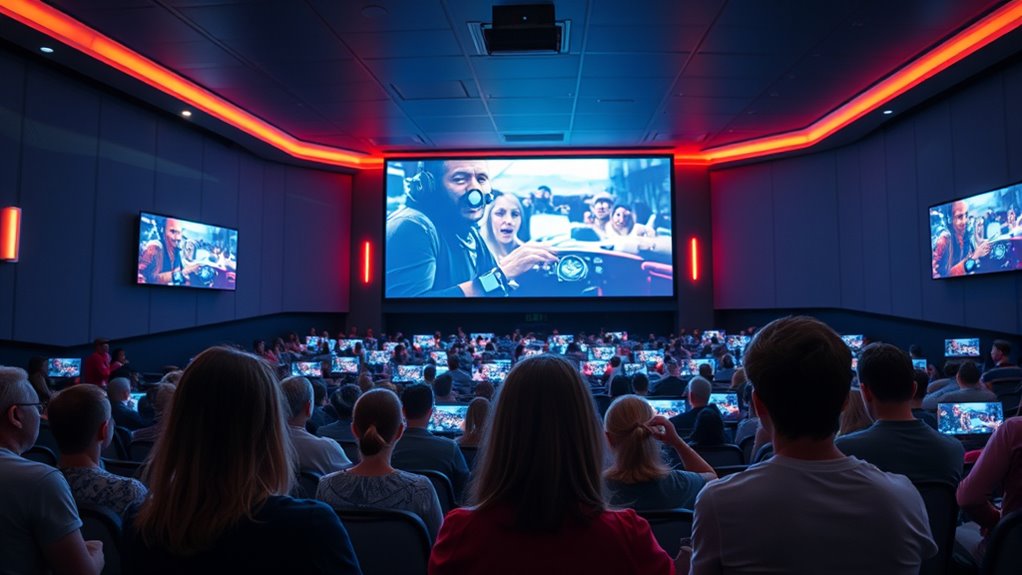

The future of personalized AI-generated movies is set to transform your viewing experience by tailoring narratives and characters to your unique preferences. AI will analyze your tastes, creating engaging stories that resonate with your emotions and interests. You’ll witness a deeper connection to protagonists that reflect real-life struggles, enhancing empathy. As technology continues to evolve, you can anticipate increasingly immersive storytelling that adapts to your choices, making every film a personal adventure. Explore the exciting advancements ahead.
The Evolution of AI in Filmmaking
As technology continues to advance, the integration of artificial intelligence in filmmaking has transformed the way stories are told and produced. AI advancements are reshaping filmmaking techniques, enabling creators to push boundaries previously thought impossible. You’ll find that the fusion of AI in creative collaboration allows filmmakers to harness new tools for generating ideas, enhancing visuals, and refining scripts. This innovation fosters narrative diversity, empowering storytellers to explore varied perspectives and genres. Additionally, AI’s ability to analyze viewer engagement enables filmmakers to tailor their content, ensuring it resonates more deeply with audiences. As you embrace this evolution, you’ll realize that AI not only amplifies creativity but also democratizes storytelling, granting more voices the freedom to share their narratives.
Understanding Personalization: How AI Analyzes Viewer Preferences
The rise of AI in filmmaking not only enhances creative processes but also fundamentally changes how audiences engage with content. By leveraging viewer data, AI systems conduct preference analysis that reveals your unique tastes. Through recommendation algorithms, they curate films that resonate with your interests, ensuring a more personalized viewing experience. Engagement metrics further inform creators about what captivates you, while sentiment analysis captures your emotional responses to narratives. Demographic insights and behavioral patterns allow AI to adapt content curation, tailoring offerings to fit diverse audiences. This intricate dance between technology and viewer preferences creates a dynamic landscape where your choices shape the cinematic experience, ultimately granting you the freedom to explore stories that genuinely reflect your desires.
Crafting Unique Narratives: The Role of AI in Storytelling
As you explore the domain of AI-driven storytelling, you’ll notice how it enhances plot development and character customization. This technology allows for narratives that are not only unique but also tailored to individual preferences, reshaping traditional storytelling dynamics. By blending creativity and data, AI crafts stories that resonate more deeply with viewers, making every experience distinct.
AI-Driven Plot Development
While traditional storytelling often relies on the imagination of a single writer, AI-driven plot development introduces a collaborative approach that enhances creativity and originality. By utilizing narrative algorithms, these systems can analyze vast amounts of data, identifying patterns and themes that resonate with audiences. This results in innovative plot generation that reflects diverse perspectives and unexpected twists. You’ll find that AI not only streamlines the brainstorming process but also empowers you to push boundaries, exploring narratives that might not have emerged through conventional methods. As you engage with AI tools, you’ll experience a freedom to experiment, allowing your ideas to intertwine with sophisticated algorithms, ultimately crafting unique stories that captivate and inspire viewers in ways previously unimaginable.
Character Customization Techniques
Building on the foundation of AI-driven plot development, character customization techniques play a pivotal role in shaping engaging narratives. You’ll find that these techniques allow you to explore a range of character traits, making your storytelling experience more immersive. With diverse customization options, you can create characters that resonate with your own preferences, enhancing narrative depth. Interactive design further enriches this process, inviting you to influence the storyline based on your character choices. Furthermore, user feedback is essential in refining these tools, ensuring that the customization experience remains intuitive and satisfying. By embracing character diversity, AI-generated movies can reflect a broader spectrum of human experiences, ultimately providing a richer, more personalized cinematic journey.
Tailored Characters: Creating Relatable Protagonists With AI
When you think about the characters in AI-generated movies, their emotional resonance can greatly enhance your viewing experience. By utilizing adaptive personality algorithms, these characters can evolve based on your preferences, making them feel more relatable and engaging. This user-centric approach to character development not only fosters a deeper connection but also transforms your interaction with storytelling.
Emotional Resonance in Characters
As audiences increasingly seek deeper connections with on-screen characters, the role of AI in crafting relatable protagonists becomes vital. Emotional depth is essential in creating characters that evoke genuine character empathy. AI can analyze vast data on human emotions and interactions, allowing it to design protagonists that reflect real-life struggles, aspirations, and complexities. By tapping into the intricacies of human experience, AI-generated characters can resonate on a profound level, making stories more compelling and relevant. This emotional resonance not only enhances viewer engagement but fosters a sense of belonging and understanding. In a world craving authentic narratives, the ability of AI to create rich, relatable characters might just redefine our cinematic experiences, revealing new dimensions of storytelling.
Adaptive Personality Algorithms
By employing adaptive personality algorithms, filmmakers can create tailored characters that resonate with individual viewers on a personal level. These algorithms analyze user preferences, enabling the evolution of characters that align with audience expectations. As the algorithm evolves, it enhances character dynamics, ensuring relatable protagonists that reflect diverse backgrounds and experiences. This personalization fosters deeper audience engagement, as viewers see their own traits and emotions mirrored on screen. The result is a cinematic experience that feels uniquely crafted for each viewer, promoting a sense of connection and immersion. By prioritizing adaptive personality algorithms, filmmakers can break traditional narrative molds, paving the way for a more liberated and engaging storytelling landscape that celebrates individuality.
User-Centric Character Development
Adaptive personality algorithms have paved the way for a new era in filmmaking where user-centric character development takes center stage. By tailoring character arcs to individual preferences, filmmakers can create protagonists that resonate deeply with viewers. Imagine experiencing a narrative where your unique values and desires shape the hero’s journey, enhancing viewer engagement like never before. This level of personalization not only fosters stronger emotional connections but also invites you to reflect on your own life choices through the lens of these relatable characters. As AI continues to refine its understanding of human behavior, the potential for more nuanced, authentic characters expands. Ultimately, this innovative approach promises to redefine storytelling, making it a more immersive and personal experience for everyone involved.
Visual Innovation: AI-Driven Cinematic Techniques
While traditional filmmaking relies heavily on human creativity and intuition, the emergence of AI-driven cinematic techniques is transforming visual storytelling in unprecedented ways. You’re witnessing a revolution that enhances your experience as a viewer and creator. Here are some innovations to take into account:
- Automated Scene Composition: AI can analyze thousands of films to suggest ideal layouts.
- Dynamic Lighting Adjustments: Algorithms can adapt lighting in real-time based on narrative shifts.
- Virtual Cinematography: AI models simulate camera movements to create engaging shots.
- Personalized Visual Styles: Tailor aesthetics to individual preferences, making each movie unique.
These advancements not only streamline production but also empower creators to explore new horizons in cinematic techniques, ensuring that visual storytelling remains vibrant and relevant.
Ethical Considerations in AI-Generated Content
As AI-generated content becomes more integrated into filmmaking, it’s vital to reflect on the ethical implications that arise. You’ll need to evaluate content ownership, especially since AI often learns from existing works. Ethical storytelling must guide these innovations, guaranteeing that audience manipulation isn’t a byproduct of personalized narratives. Copyright implications also warrant attention, as they can complicate the rights of creators and AI systems alike. Implementing transparency standards is fundamental for fostering trust. Additionally, bias detection and accountability measures should be prioritized to avoid reinforcing harmful stereotypes. Consent issues can emerge when using real individuals or likenesses, while societal impacts and representation challenges must be addressed to guarantee diverse voices are heard and respected in this evolving landscape.
The Impact on Filmmakers and the Creative Industry
Given the rapid integration of AI technologies in filmmaking, filmmakers are at a pivotal crossroads, where their creative processes are both challenged and enriched. The rise of personalized AI-generated movies impacts your work in several ways:
- Enhanced Collaboration: AI tools can streamline communication, fostering stronger filmmaker collaboration.
- Creative Autonomy: You can explore new narratives and styles, pushing creative boundaries.
- Resource Efficiency: AI reduces time spent on repetitive tasks, allowing you to focus on storytelling.
- Diverse Perspectives: AI can introduce unique ideas, enriching your creative palette.
While these advancements promise freedom and innovation, they also demand a reevaluation of your role in the industry. Balancing technology with artistic vision is essential for your future in filmmaking.
The Future Viewer Experience: What to Expect From Personalized Movies
The evolving landscape of AI in filmmaking not only reshapes how creators work but also redefines the viewer’s experience. As personalized movies emerge, you can expect an unprecedented level of viewer engagement. AI algorithms will analyze your preferences, crafting narratives that resonate with your unique tastes. Imagine immersing yourself in storytelling tailored specifically to you. This dynamic approach will not just entertain; it’ll invite you to become an active participant in the narrative. The lines between creator and viewer blur, fostering a sense of agency in your cinematic journey. As technology advances, films will evolve into interactive experiences, enhancing emotional connections and making every viewing a personal adventure. Embrace this future; it promises to revolutionize how you engage with stories.
Frequently Asked Questions
Will Ai-Generated Movies Replace Traditional Filmmakers?
You can’t have your cake and eat it too; AI-generated movies might push creativity limits, but they could also compromise artistic integrity. Traditional filmmakers will always offer a human touch that machines can’t replicate.
How Do AI Systems Learn From Audience Feedback?
AI systems learn from audience feedback through feedback loops, adapting to audience preferences. By analyzing viewer reactions and choices, these systems refine their outputs, creating more engaging experiences that resonate with individual tastes and desires.
Can Personalized Movies Cater to Diverse Cultural Backgrounds?
You might think personalized movies can’t truly reflect diverse cultures, but they can! By analyzing audience preferences, AI can enhance cultural representation, crafting stories that resonate deeply with varied backgrounds, enriching the cinematic experience for everyone.
What Are the Costs Associated With Creating Ai-Generated Films?
Creating AI-generated films involves significant production expenses, including software licensing fees. You’ll need to evaluate costs for advanced technology, talent, and marketing, all of which can impact the overall budget and potential profitability.
How Will Copyright Laws Evolve With Ai-Generated Content?
As the saying goes, “the writing’s on the wall.” Copyright ownership and legal frameworks must adapt to clarify AI-generated content rights. You’ll need to navigate these evolving laws to maintain creative freedoms and protect your work.
