
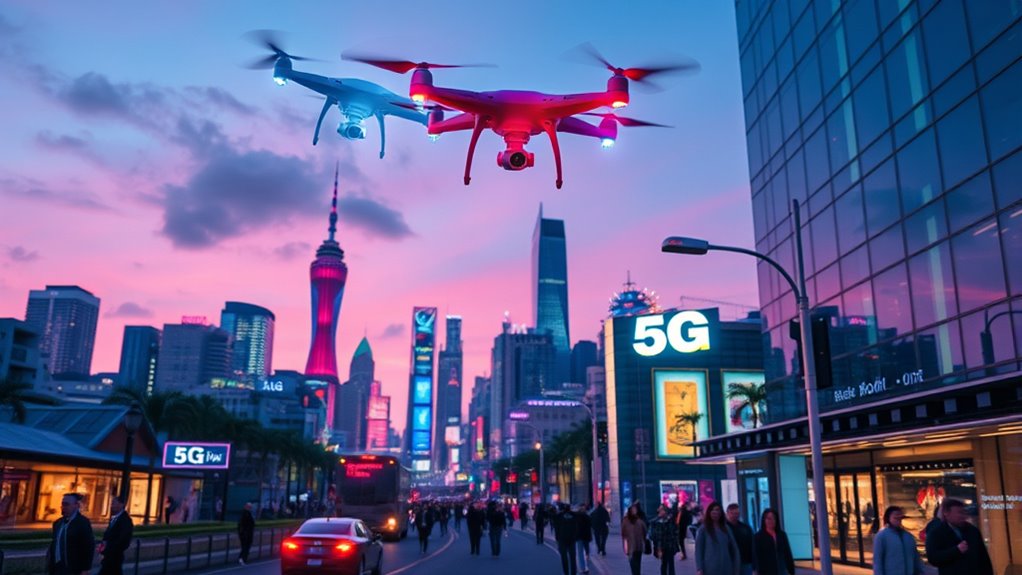

5G greatly enhances video-based smart city surveillance by providing high-speed capabilities for superior image quality and low latency for real-time data analytics. This technology improves incident detection and response times, empowering emergency services to act more efficiently. Integrating IoT devices allows for seamless data sharing, creating a cohesive understanding of urban environments. However, implementing 5G comes with challenges like infrastructure costs and cybersecurity risks. Understanding these dynamics can further illuminate the full potential of 5G in urban surveillance.
Enhancing Video Quality and Coverage With 5G
As cities continue to evolve into smart environments, enhancing video quality and coverage through 5G technology becomes vital for effective surveillance. With 5G’s high-speed capabilities, you can achieve superior video resolution, enabling clearer images for identifying incidents and monitoring public spaces. This advancement is essential for maintaining safety and security in urban areas where traditional networks may falter. Furthermore, network reliability plays a pivotal role; the low latency and increased bandwidth of 5G guarantee uninterrupted video feeds, allowing for real-time monitoring. This reliability fosters confidence among citizens, as they know their environments are being actively watched. Embracing 5G technology isn’t just an upgrade; it’s a commitment to enhancing urban living through sophisticated surveillance solutions.
Real-Time Data Processing and Analytics
While cities increasingly rely on advanced surveillance systems, the role of real-time data processing and analytics becomes essential in maximizing the potential of 5G technology. By leveraging edge computing, data is processed closer to its source, reducing latency and enabling immediate insights. This efficiency allows you to make informed decisions swiftly, enhancing situational awareness. Additionally, predictive analytics harnesses historical data and real-time inputs to anticipate potential issues before they escalate. With 5G’s high bandwidth and low latency, you’re equipped to analyze vast amounts of video feeds in real time, identifying patterns and anomalies that would otherwise go unnoticed. This integration not only supports proactive measures but also fosters a sense of security, empowering communities to thrive in a connected, intelligent environment.
Improved Incident Response and Emergency Services
Given the rapid advancements in 5G technology, the integration of enhanced surveillance systems can greatly improve incident response and emergency services. With 5G, you can expect:
- Emergency Coordination: Real-time data sharing among first responders enhances situational awareness, allowing for informed decision-making.
- Rapid Deployment: Emergency services can be dispatched faster, minimizing response times during critical situations.
- Video Analytics: Advanced analytics can identify incidents or anomalies quickly, alerting responders before they escalate.
Together, these capabilities empower emergency teams to act swiftly and effectively, ultimately saving lives and resources. By leveraging 5G’s potential, cities can create a more resilient and responsive emergency framework, ensuring that freedom and safety go hand in hand.
Integration of IoT Devices in Surveillance Systems
The integration of IoT devices in surveillance systems markedly enhances situational awareness and operational efficiency in smart cities. By deploying smart sensors, you can collect real-time data on environmental conditions, traffic patterns, and public safety incidents. This data, when combined with robust network connectivity enabled by 5G, allows for instantaneous analysis and response, creating a proactive approach to urban management. With interconnected devices, your surveillance systems can share insights, leading to a more cohesive understanding of urban dynamics. The synergy between IoT and surveillance not only improves monitoring capabilities but also fosters a sense of freedom, allowing citizens to navigate safer and smarter urban environments. Ultimately, embracing this technology is key to realizing the potential of smart cities.
Challenges and Considerations for 5G Implementation in Urban Areas
As cities endeavor to harness the power of 5G for enhanced surveillance, several challenges and considerations emerge that must be addressed to guarantee successful implementation. You’ll need to navigate the following key issues:
- Network Infrastructure: Building robust infrastructure is essential, yet it requires significant investment and planning.
- Regulatory Hurdles: Local regulations can complicate deployment, demanding compliance with various laws that can slow progress.
- Cybersecurity Concerns: With increased connectivity, the risk of cyber threats rises, necessitating strong protection measures.
Additionally, you must weigh the cost implications against the benefits of 5G technology. Addressing these challenges will be vital for realizing the full potential of 5G in smart city surveillance, ensuring both effectiveness and citizen trust.
Frequently Asked Questions
How Does 5G Impact Privacy in Smart City Surveillance?
Did you know 70% of people worry about surveillance? As 5G enables real-time data collection, privacy concerns intensify. Steering through data ethics becomes essential to balance technological advancement with your fundamental rights and freedoms.
What Are the Costs Associated With Implementing 5G Surveillance Systems?
When considering implementation expenses, you’ll find costs stem from developing robust connectivity infrastructure, including equipment, installation, and maintenance. These factors greatly impact overall budgets, requiring careful analysis to guarantee sustainable and effective deployment.
How Does 5G Enhance Existing Surveillance Technologies?
You’ll find 5G transforms existing surveillance technologies by enabling real-time analytics and enhanced connectivity. This synergy allows for quicker data processing and improved response times, ultimately fostering a more efficient, responsive environment for urban safety and freedom.
What Are the Potential Cybersecurity Risks With 5G Surveillance?
When considering 5G surveillance, you must acknowledge potential cybersecurity risks like network vulnerabilities and data breaches. These weaknesses can expose sensitive information, undermining the freedom and privacy individuals expect in a technologically advanced society.
How Will 5G Affect Data Storage for Video Surveillance?
5G’s high bandwidth will enable efficient cloud storage solutions for video surveillance. You’ll benefit from advanced data compression techniques, reducing storage needs while maintaining quality, ultimately allowing more extensive data retention and faster access to critical information.
