
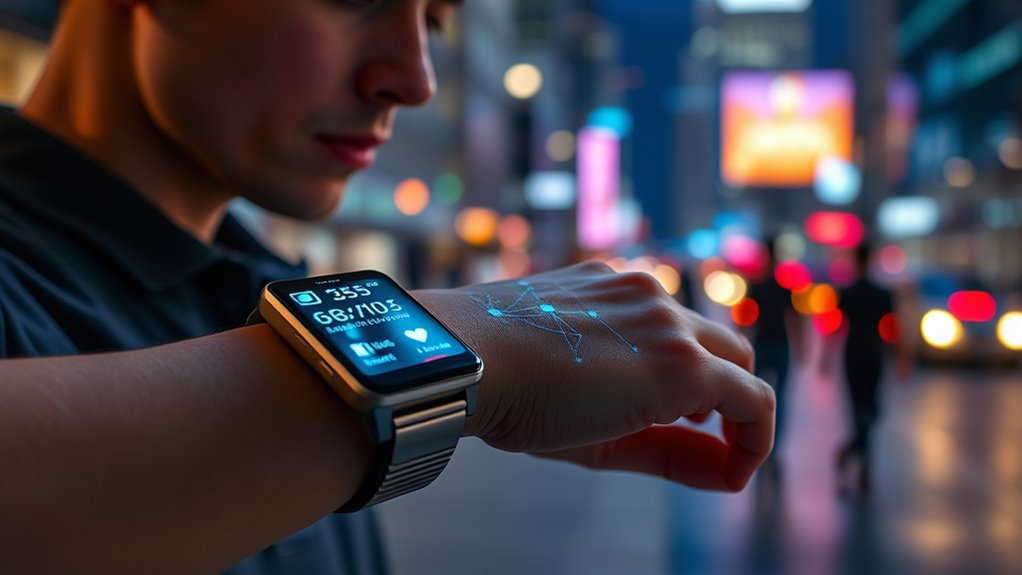

AI plays a crucial role in enhancing wearable display interfaces by creating adaptive experiences that cater to your preferences and behaviors. This technology guarantees that interactions with your devices are seamless and intuitive, making communication and health monitoring easier than ever. With features like real-time feedback and gesture recognition, wearables can transform your daily routine. As AI continues to evolve, you'll discover even more exciting developments in this field that can enrich your life.
Understanding Wearable Display Interfaces
As wearable technology continues to evolve, understanding wearable display interfaces becomes essential for both developers and users alike. You need to grasp how display technology interacts with interface design to fully appreciate the potential of these devices. A well-designed interface can enhance your experience, making interaction intuitive and fluid. Think about the importance of visibility, touch responsiveness, and user feedback; these elements are vital in creating a seamless experience. Developers must prioritize user-centric design while keeping up with rapid advancements in display technology. By embracing these principles, you'll not only enhance your own understanding but also advocate for designs that empower users. Ultimately, it's about ensuring that wearable technology serves your needs without constraints, providing the freedom and functionality you desire.
The Impact of AI on User Experience
Although wearable technology has transformed how we interact with digital content, the integration of AI elevates the user experience to unprecedented levels. With AI, adaptive interfaces learn your preferences and behaviors, tailoring the display to suit your needs seamlessly. Imagine how intuitive interactions become when your device anticipates your requests, allowing you to engage without effort. This personalized experience not only enhances usability but also empowers you to take full advantage of the technology at your fingertips. AI's ability to optimize functionality based on real-time data means you're no longer just a user; you're an active participant in a dynamic digital landscape. Embracing these advancements can lead to a truly liberated experience that aligns with your lifestyle and choices.
Enhancing Communication Through Smart Wearables
Smart wearables are redefining how we communicate, making interactions more fluid and immediate than ever before. With technologies like gesture recognition and voice commands, you can engage with your devices effortlessly. Imagine simply waving your hand to answer a call or issuing a quick command to send a message. This level of convenience not only enhances your daily interactions but also liberates you from the confines of traditional communication methods. By integrating AI into wearable interfaces, these devices understand your habits and preferences, allowing for more personalized and intuitive exchanges. The result? A seamless flow of information that empowers you to connect with others anytime, anywhere, without the need for cumbersome screens or distractions. Embrace this new era of communication!
Personalized Health and Fitness Monitoring
Wearable devices are revolutionizing how you approach health and fitness by offering personalized monitoring that adapts to your unique lifestyle. With advancements in AI, you can now harness real-time feedback that empowers you to meet your wellness goals. The integration of activity tracking, sleep analysis, and biometric data provides thorough health insights tailored specifically for you.
- Set personalized goals based on your activity levels
- Receive alerts for unusual biometric changes
- Analyze sleep patterns to improve rest quality
- Track daily workouts for better performance
- Visualize progress through intuitive dashboards
Augmented Reality and Its Applications
As technology continues to evolve, augmented reality (AR) is increasingly transforming how you interact with the world around you. This innovative technology blends digital information with your physical environment, creating experiences that feel both real and imaginative. In augmented gaming, for instance, you can engage with virtual characters right in your living room, turning ordinary spaces into thrilling adventure grounds. Furthermore, AR enhances immersive navigation, guiding you through unfamiliar streets with real-time overlays that highlight points of interest and directions. This seamless integration of the digital and physical worlds not only enriches your daily experiences but also empowers you with freedom in how you explore and connect with your surroundings. AR is truly reshaping the way you see and interact with reality.
Future Trends in AI-Driven Wearable Technology
The integration of augmented reality highlights the growing intersection of digital technology and personal interaction, setting the stage for the future of AI-driven wearable technology. As you embrace these wearable advancements, you'll discover how AI integration is reshaping your experience in remarkable ways.
- Personalized health monitoring and insights
- Enhanced user interfaces through voice and gesture recognition
- Seamless connectivity with IoT devices
- Adaptive learning algorithms that evolve with your habits
- Augmented reality overlays for real-time information
These trends not only empower you with more intuitive devices but also foster a lifestyle where technology enhances your freedom. As wearable tech evolves, the fusion of AI and augmented reality will redefine how you interact with the world around you, making it more engaging and personalized.
Frequently Asked Questions
How Do Wearable Displays Connect to Other Devices?
Wearable displays connect to other devices primarily through Bluetooth connectivity, allowing seamless communication. Sensor integration enhances functionality, enabling real-time data exchange, which empowers you to track health metrics and receive notifications directly on your display.
What Are the Battery Life Implications of AI in Wearables?
When it comes to battery life, you've got to weigh the pros and cons. AI aids in battery optimization, reducing energy consumption, but increased processing demands might also leave your wearables running low faster than you'd like.
Are There Privacy Concerns With AI in Wearable Displays?
Yes, there're privacy concerns with AI in wearable displays. Data monitoring often occurs without clear user consent, leading to potential misuse of personal information. It's essential to advocate for transparent practices to protect your privacy.
How Do Wearables Handle Data Security and Encryption?
Think of wearables as a fortress guarding your secrets. They employ advanced data encryption and security protocols, ensuring your information remains safe. It's about giving you the freedom to connect without compromising your privacy.
Can Wearable Displays Be Used in Extreme Environments?
Absolutely, wearable displays can thrive in extreme conditions, thanks to rugged designs that withstand harsh environments. These innovative devices offer you the freedom to explore and perform tasks, no matter how challenging the surroundings might be.
