
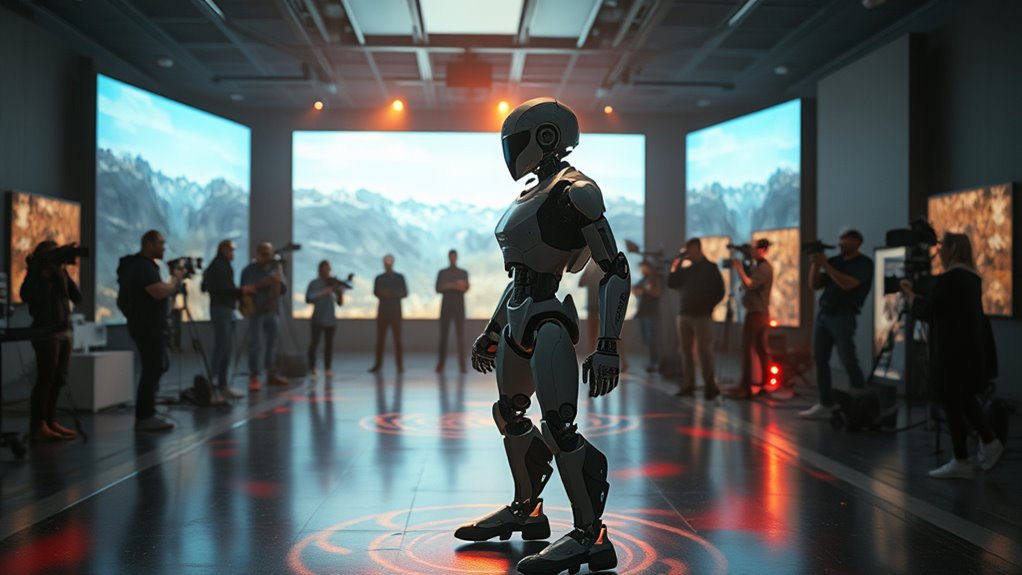

Virtual production’s role in the future of filmmaking is transformative. By blending real-time rendering, motion capture, and immersive environments, it empowers you to enhance storytelling and artistic control. You’ll find creative flexibility that allows for spontaneous choices and reduces costs, making high-quality narratives more accessible. However, you also face challenges like technical glitches and the need for advanced equipment. Explore how this innovative approach could reshape your filmmaking experience in exciting ways.
Understanding Virtual Production: An Overview
As filmmakers increasingly seek innovative ways to tell stories, understanding virtual production becomes essential for anyone in the industry. It’s not just a trend; it’s a transformative approach that combines motion capture with real-time rendering, allowing you to create immersive environments on demand. This technology empowers you to visualize scenes instantly, providing immediate feedback during the creative process. By harnessing virtual production, you can blur the lines between physical and digital worlds, enhancing storytelling possibilities. Imagine directing a scene while your actors interact with dynamic backgrounds that shift in real-time, all while maintaining artistic control. Embracing this method gives you the freedom to push boundaries and redefine cinematic experiences, making your stories more engaging and visually stunning.
Key Technologies Driving Virtual Production
At the heart of virtual production are several key technologies that reshape how filmmakers approach storytelling. Real-time rendering allows you to visualize scenes instantly, reducing the need for extensive post-production. This capability enables you to create immersive environments that captivate audiences, making them feel part of the story.
| Technology | Description |
|---|---|
| Real-Time Rendering | Instant visual feedback during production |
| Motion Capture | Captures actor movements for digital character animation |
| LED Volume Displays | Creates dynamic backgrounds with adjustable lighting |
| Game Engines | Used for creating interactive and visually stunning scenes |
These technologies empower you to experiment, iterate, and push creative boundaries, ultimately transforming the filmmaking experience.
Advantages of Virtual Production for Filmmakers
The integration of key technologies in virtual production not only enhances visual storytelling but also offers filmmakers significant advantages throughout the production process. You’ll find that virtual production provides remarkable cost efficiency, reducing the need for extensive location shoots and minimizing set construction expenses. This means you can allocate funds to more creative aspects of your project. Additionally, the creative flexibility it affords allows you to experiment with environments and visual effects in real-time, enabling spontaneous artistic choices that can elevate your narrative. With virtual production, you can achieve immersive worlds without geographical constraints, empowering you to bring your vision to life in ways previously unimaginable. Embrace this revolutionary approach to filmmaking for a liberating creative experience.
Challenges and Limitations of Virtual Production
While virtual production offers groundbreaking possibilities, it also presents distinct challenges and limitations that filmmakers must navigate. Here are three key hurdles you might face:
- Cost Implications: The initial investment in advanced technology can be steep, potentially straining budgets, especially for independent projects.
- Technology Reliability: Dependence on cutting-edge equipment means you’re vulnerable to technical glitches, which can disrupt production schedules and lead to costly delays.
- Creative Constraints: While innovative, virtual environments can impose limitations on your storytelling, requiring talent adaptation as actors must engage with digital elements that aren’t physically present.
Embracing virtual production requires a delicate balance between harnessing its potential and overcoming these challenges to realize your creative vision.
The Future Landscape of Filmmaking With Virtual Production
As filmmakers increasingly embrace virtual production, you’ll find that this innovative approach is reshaping the very fabric of storytelling. By integrating cutting-edge technology, you’re not just creating images—you’re crafting immersive storytelling experiences that pull audiences into the narrative. With real-time rendering and interactive environments, your projects can evolve dynamically, allowing for spontaneous creativity and collaboration. This level of engagement transforms how viewers connect with content, enabling deeper emotional responses and fostering a sense of presence within the story. As you navigate this future landscape, consider the potential of virtual production to redefine not only the filmmaking process but also the very relationship between creators and audiences, offering unprecedented freedom to explore imaginative domains.
Frequently Asked Questions
How Does Virtual Production Impact Traditional Filmmaking Jobs?
Virtual production’s rise can lead to job displacement, but it also demands skill adaptation. You’ll need to embrace new technologies, enhancing your craft and storytelling methods, ensuring you remain relevant in an evolving industry landscape.
What Are the Costs Associated With Implementing Virtual Production?
When considering a project like “The Mandalorian,” you’ll see a cost breakdown that includes high-tech equipment and skilled personnel. Budget considerations can escalate quickly, impacting overall finances while offering innovative storytelling opportunities.
Can Independent Filmmakers Utilize Virtual Production Techniques Effectively?
You can absolutely utilize virtual production techniques, even with budget constraints. These methods provide creative flexibility, allowing you to craft immersive narratives without breaking the bank, consequently empowering your storytelling vision in innovative ways.
How Does Virtual Production Affect Post-Production Processes?
Virtual production streamlines post-production by integrating virtual editing and visual effects seamlessly. You’ll find it enhances creative storytelling, allowing you to manipulate scenes effortlessly, thereby reducing time and costs while maintaining artistic integrity.
What Skills Do Filmmakers Need to Work in Virtual Production?
Ever wondered what it takes to thrive in today’s filmmaking landscape? You’ll need strong virtual skills and a deep understanding of production techniques. Mastering these will empower you to push creative boundaries and innovate storytelling.
