
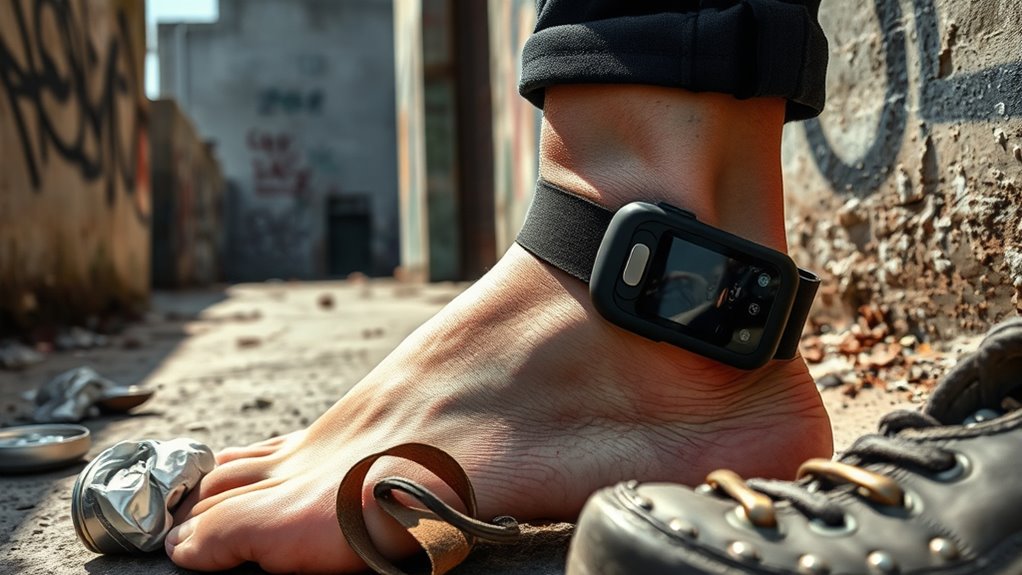

Ankle monitors are often used for non-violent offenses like theft, fraud, and drug possession, where they serve as alternatives to incarceration. However, they’re also applied in cases of violent crimes, particularly domestic violence and assault, to guarantee public safety and compliance with court orders. Additionally, repeat offenders may be monitored to prevent recidivism. Factors such as the nature of the offense and risk assessments influence monitoring decisions. Understanding these aspects can provide deeper insights into their role in the justice system.
Overview of Ankle Monitors in the Criminal Justice System
Ankle monitors, also known as electronic monitoring devices, have become an integral part of the criminal justice system as a means of supervising offenders in the community. This ankle monitor technology offers a way to monitor an individual’s location and compliance with court orders while allowing them to maintain some level of freedom. However, it also raises significant legal implications, such as privacy concerns and the potential for misuse. Courts often weigh these factors when deciding whether to impose monitoring as part of a sentence or parole. For individuals facing such measures, understanding the balance between accountability and personal liberty is essential. You’ll need to navigate these complexities as you consider the broader impact of ankle monitoring on your life and community.
Non-Violent Offenses and Ankle Monitoring
When individuals are convicted of non-violent offenses, courts often consider alternatives to incarceration, and ankle monitoring has emerged as a popular option. This electronic monitoring system allows those convicted of non-violent crimes, such as theft, fraud, or drug possession, to serve their sentences while remaining in their communities. By using ankle monitors, courts aim to reduce prison overcrowding and provide offenders the chance to maintain employment and family connections. Additionally, electronic monitoring can facilitate rehabilitation by encouraging compliance with probation terms. For many, this option represents a path toward regaining their freedom while still being held accountable for their actions. Ultimately, ankle monitoring serves as a practical solution for addressing non-violent offenses in the justice system.
Violent Crimes That May Require Ankle Monitors
When discussing violent crimes that may necessitate ankle monitors, it’s essential to evaluate offenses like domestic violence, assault and battery, and homicide charges. These crimes often involve a significant risk to victims and the community, prompting the use of monitoring devices as a means of ensuring safety. Ankle monitors can play a key role in tracking offenders and enforcing court-ordered restrictions.
Domestic Violence Offenses
Domestic violence offenses are serious crimes that can lead to significant legal consequences, including the imposition of ankle monitors as a condition of bail or probation. Understanding the legal repercussions is essential for those involved, as these measures aim to promote domestic violence prevention and guarantee the safety of victims.
| Type of Offense | Potential Consequences |
|---|---|
| Physical Assault | Ankle monitor during probation |
| Threats or Intimidation | Restricted movement, monitored area |
| Stalking | Mandatory monitoring, legal action |
Ankle monitors can serve as a tool to enforce compliance with court orders while allowing individuals some freedom of movement. However, they also highlight the state’s commitment to protecting victims and holding offenders accountable.
Assault and Battery
Assault and battery are violent crimes that can lead to serious legal repercussions, often necessitating the use of ankle monitors as a condition of release. Understanding assault penalties is essential, as they can vary widely depending on the severity and context of the offense. Generally, assault involves threatening harm or causing fear, while battery definitions typically refer to the actual physical act of harm. If you’re charged with these offenses, a court may impose conditions like wearing an ankle monitor to guarantee public safety and compliance with legal restrictions. This monitoring allows authorities to track your movements, providing an added layer of security for victims and the community. Ultimately, maneuvering through these legal waters requires awareness of the consequences and responsibilities involved.
Homicide Charges
Homicide charges represent some of the most serious violent crimes in the legal system, often resulting in severe penalties and the potential for lengthy prison sentences. If you’re facing such charges, you might encounter ankle monitors as part of your conditions for release. The use of monitoring technology can help guarantee public safety while allowing you some degree of freedom. Here are four key considerations regarding homicide charges and ankle monitors:
- Homicide penalties vary greatly by jurisdiction.
- Ankle monitors can help track movements and enforce curfews.
- They may be used during pre-trial release or parole.
- Compliance with monitoring terms is vital to avoid further legal issues.
Understanding these aspects can empower you in maneuvering the complexities of your situation.
Domestic Violence Offenses and Electronic Monitoring
When it comes to domestic violence offenses, electronic monitoring can play an essential role in ensuring safety and compliance. You’ll find that various types of domestic violence, including physical, emotional, and psychological abuse, can lead to court-mandated ankle monitoring. Additionally, the conditions and restrictions associated with this monitoring often aim to prevent contact with victims and maintain specific boundaries.
Types of Domestic Violence
Domestic violence encompasses a range of offenses that can have serious implications for the victims and the perpetrators alike. Understanding the types of domestic violence is essential for addressing these issues effectively. Key categories include:
- Physical abuse: This involves any form of physical harm or threat.
- Emotional abuse: Here, manipulation and psychological harm are used to undermine a victim’s self-worth.
- Coercive control: This form encompasses tactics that restrict a victim’s freedom and independence, often through intimidation or isolation.
- Sexual abuse: Involves any non-consensual sexual acts or coercion.
Recognizing these types can empower both victims and communities to take action, ensuring a safer environment for everyone involved. Understanding the nuances of these offenses is a step towards prevention and recovery.
Monitoring Conditions and Restrictions
After recognizing the various forms of domestic violence, it’s important to contemplate the monitoring conditions and restrictions that often accompany legal consequences for offenders. Electronic monitoring, using advanced surveillance technology, helps enforce compliance with court orders while allowing some degree of freedom. However, there are specific legal implications that come with such measures.
| Condition | Restriction | Implication |
|---|---|---|
| No contact with victim | Cannot communicate or approach the victim | Prevents re-offense |
| Curfew | Must stay within designated hours | Encourages accountability |
| Geographic limitations | Restricted from specific areas | Guarantees victim safety |
Understanding these conditions can aid in maneuvering the complexities of post-offense life while promoting accountability and rehabilitation.
Drug-Related Crimes and Ankle Monitor Use
Although drug-related crimes often carry significant legal repercussions, the use of ankle monitors has emerged as a common alternative to incarceration for offenders. This approach allows individuals to maintain some level of freedom while addressing issues related to substance abuse. Here are some key points regarding ankle monitors in drug-related cases:
- Prevention of Recidivism: Monitoring helps reduce the likelihood of reoffending.
- Support for Rehabilitation: Offenders can engage in treatment programs while under supervision.
- Family and Community Ties: Ankle monitors enable individuals to remain with their families and contribute to their communities.
- Judicial Flexibility: Judges can tailor monitoring conditions, balancing accountability with the chance for rehabilitation.
Theft and Property Crimes Requiring Ankle Monitors
In examining theft and property crimes, it’s important to understand the various types of offenses that may lead to ankle monitor requirements. Sentencing guidelines often dictate the conditions for monitoring, especially for repeat offenders. By analyzing these factors, you can gain insights into how the legal system addresses property crime and its consequences.
Types of Theft Offenses
When individuals engage in theft or property crimes, the severity of their offenses often dictates the legal consequences they face, including the possibility of being required to wear an ankle monitor. Understanding the types of theft offenses can help clarify these consequences:
- Petty Theft: Involves stealing items of low value, often resulting in lighter penalties.
- Grand Theft: Entails stealing items valued above a certain threshold, leading to more severe legal repercussions.
- Burglary: Breaking and entering with the intent to commit theft, carrying stricter sentences.
- Shoplifting: A specific form of petty theft that occurs in retail environments, potentially resulting in monitoring requirements.
Ultimately, the nature of the theft can considerably impact your legal journey and personal freedom.
Property Crime Sentencing Guidelines
The legal landscape surrounding property crimes, particularly theft, includes specific sentencing guidelines that can lead to the requirement of an ankle monitor for certain offenders. Understanding property crime trends and sentencing disparities is essential for maneuvering through these complexities.
| Crime Type | Typical Sentencing | Ankle Monitor Requirement |
|---|---|---|
| Petty Theft | Fine/Probation | Rarely |
| Burglary | 1-5 years prison | Often |
| Grand Theft | 2-10 years prison | Common |
| Vandalism | Community Service | Sometimes |
In cases of repeat offenses or higher-value thefts, judges may impose ankle monitoring as a precaution, reflecting the seriousness of the crime and aiming to reduce recidivism.
Monitoring for Repeat Offenders
For repeat offenders, particularly those involved in theft and other property crimes, the imposition of ankle monitors serves as both a punitive measure and a means of ensuring public safety. These devices are often linked to lower recidivism rates when combined with effective rehabilitation programs. Here’s how they help:
- Monitoring Movement: They track the offender’s location, preventing them from returning to crime-prone areas.
- Behavioral Accountability: Ankle monitors create a sense of accountability, encouraging compliance with legal restrictions.
- Integration with Programs: They can be paired with rehabilitation programs, fostering personal growth.
- Reducing Jail Overcrowding: Ankle monitoring provides an alternative to incarceration, allowing for community reintegration while maintaining safety.
This dual approach balances freedom with responsibility.
Repeat Offenders and the Use of Ankle Monitoring
Although many believe that repeat offenders pose a heightened risk to public safety, the implementation of ankle monitoring technology offers a potential solution for managing their behavior. By analyzing repeat offender patterns, you can gain insights into the triggers and circumstances that lead to reoffending. Ankle monitors provide real-time data, allowing authorities to track movements and guarantee compliance with set restrictions. This monitoring effectiveness can deter future crimes by creating a sense of accountability for offenders. Additionally, it allows for a more nuanced approach to rehabilitation, balancing public safety with the need for personal freedom. Ultimately, using ankle monitors for repeat offenders can help reduce recidivism while maintaining community trust and safety.
Violations of Probation and Parole Conditions
Ankle monitoring technology plays a significant role in managing violations of probation and parole conditions. When you’re under supervision, it’s essential to adhere to the requirements set by the court. Violations can lead to serious consequences, including re-incarceration. Here are some common reasons that may trigger ankle monitoring for violations:
- Failing to report to a probation officer.
- Missing scheduled drug tests.
- Engaging in prohibited activities, like associating with known criminals.
- Leaving designated geographic areas without permission.
These probation and parole violations not only hinder your freedom but also impact your chances of rehabilitation. Ankle monitors serve as a tool for accountability, allowing you to maintain a level of independence while still being monitored for compliance.
The Role of Ankle Monitors in High-Risk Cases
When dealing with high-risk cases, the implementation of ankle monitors can be essential for ensuring public safety and monitoring offenders effectively. These devices offer a method of tracking high-risk offenders while allowing them some degree of freedom. By providing real-time location data, ankle monitors enhance monitoring effectiveness, enabling authorities to respond quickly if an offender breaches their conditions. This is particularly significant for those with a history of violent behavior or serious offenses, as their movements can be closely scrutinized. Ankle monitors also serve as a deterrent, reminding offenders of the legal consequences of their actions. Ultimately, these devices strike a balance between public safety and individual freedom, facilitating rehabilitation while protecting the community.
Factors Influencing the Decision to Impose Ankle Monitoring
The decision to impose ankle monitoring involves several critical factors that courts and probation officers must consider to guarantee appropriate supervision of offenders. These factors often rely on risk assessments and judicial discretion, ensuring that the monitoring serves its intended purpose without infringing on personal freedoms.
The decision to implement ankle monitoring hinges on careful assessment of risk and the need for public safety.
- Nature of the Offense: Serious crimes typically warrant closer supervision.
- Risk Assessment Results: Evaluating the likelihood of reoffending helps inform the decision.
- Past Criminal History: A history of violations may lead to stricter monitoring.
- Community Safety: Protecting the public is a paramount concern that influences the outcome.
Frequently Asked Questions
How Do Ankle Monitors Track a Person’s Location?
Ankle monitors use GPS and cellular tracking technology to pinpoint your location. They provide real-time data and maintain location accuracy, ensuring compliance with court orders while monitoring your movements to prevent unauthorized departures from designated areas.
Are Ankle Monitors Uncomfortable to Wear for Long Periods?
Ankle monitors can be uncomfortable for long-term wear due to their materials, which might irritate the skin. It’s crucial to guarantee proper fit and hygiene to mitigate discomfort during extended use.
Can Individuals Remove Their Ankle Monitors?
You can’t just remove your ankle monitor. Doing so has serious legal implications, including potential criminal charges. The consequences of tampering with the device could jeopardize your freedom and worsen your situation considerably.
What Happens if an Ankle Monitor Is Tampered With?
If you tamper with an ankle monitor, you could face serious consequences, including legal repercussions like additional charges or extended confinement. It’s essential to understand that tampering undermines the trust placed in your monitoring system.
How Much Do Ankle Monitoring Programs Typically Cost?
Ankle monitoring programs typically cost between $5 to $15 daily. While that may seem steep, the program benefits, including enhanced monitoring technology and reduced incarceration, often outweigh the costs for those seeking greater freedom.
