
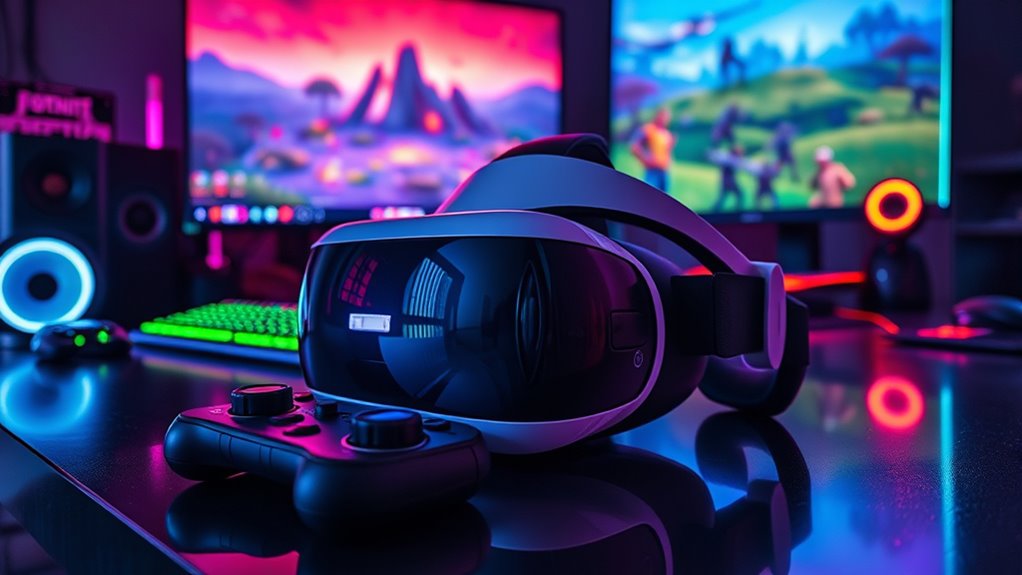

To play Fortnite on a VR headset, you’ll need a compatible device like the Oculus Quest 2, HTC Vive, or Valve Index. Your gaming PC should meet minimum specs, including an Intel Core i5-7300 CPU and NVIDIA GTX 660 GPU. Don’t forget to install the Epic Games Launcher to download Fortnite. Setting up your headset and optimizing your settings can greatly enhance your experience. Stick around to discover some insider tips for an even better gameplay session.
Required VR Headsets for Fortnite
If you’re looking to immerse yourself in Fortnite with a VR headset, you’ll need to know which devices are compatible to guarantee the best experience. Currently, popular headsets like the Oculus Quest 2, HTC Vive, and Valve Index offer excellent VR headset compatibility. Each of these devices enhances your VR gaming experience by providing immersive visuals and responsive controls. The Oculus Quest 2 stands out for its wireless capabilities, while the HTC Vive brings precision tracking to the mix. Don’t forget to check for software updates and compatibility with your PC or console. Choosing the right VR headset can elevate your Fortnite adventures, allowing you to explore the game world like never before and truly embrace your freedom to play.
Minimum and Recommended PC Specifications
To fully enjoy Fortnite in virtual reality, your PC must meet certain specifications that guarantee peak performance. First, understanding the minimum system requirements is essential for a playable experience, but to truly immerse yourself, consider recommended hardware upgrades.
| Specification | Minimum Requirements |
|---|---|
| CPU | Intel Core i5-7300 / AMD FX-4350 |
| GPU | NVIDIA GTX 660 / AMD Radeon HD 7870 |
| RAM | 8 GB |
| Storage | 30 GB available space |
Meeting these minimum specs will get you in the game, but upgrading your hardware guarantees smoother gameplay, enhanced graphics, and an overall better VR experience. Don’t settle for less when you can elevate your Fortnite adventures!
Setting Up Your VR Headset
Setting up your VR headset is vital for ensuring an immersive Fortnite experience, as even the best hardware won’t deliver enjoyment without proper configuration. Begin by checking headset compatibility with your gaming rig; compatibility issues can lead to frustration. Once confirmed, arrange your play area for ideal movement, ensuring enough space to dodge and weave in-game. Effective cable management is important to prevent tangles and interruptions during gameplay, so use clips or ties to keep cables organized. Adjust your headset for comfort, as a secure fit enhances immersion. Finally, calibrate your position and boundaries to avoid collisions while diving into your Fortnite adventure. With these steps, you’ll be ready to explore the vibrant world of Fortnite in VR.
Installing Fortnite for VR
Before diving into the thrilling world of Fortnite in VR, you’ll need to guarantee the game is properly installed on your system. Start by ensuring your device meets the game compatibility requirements; this includes your VR headset and your computer’s specs. Download the Epic Games Launcher if you haven’t already, as it’s essential for the installation process. Once launched, locate Fortnite in the store, and click “Install.” Keep an eye on the install location to avoid cluttering your drive. After downloading, allow the installation to complete, and check for any updates. With everything in place, you’re ready to gear up for an immersive battle royale experience. Enjoy the freedom of exploring Fortnite like never before!
Game Controls and Settings in VR
When you jump into Fortnite with a VR headset, understanding the game controls and settings is essential for a smooth experience. You’ll find various VR control schemes that can enhance your gameplay, along with customizable options that let you tailor everything to your liking. Plus, adjusting motion sensitivity can help you find that sweet spot for comfort and precision in your movements.
VR Control Schemes
As you engage yourself in the immersive world of Fortnite on a VR headset, understanding the control schemes becomes essential for maximizing your gaming experience. VR interaction methods vary, but controllers typically feature thumbsticks, triggers, and buttons that let you navigate the environment fluidly. You can aim, shoot, and build structures with intuitive gestures, enhancing your immersive gameplay techniques.
Familiarizing yourself with these controls can greatly impact your performance. For instance, using motion tracking allows you to physically lean and peek around corners, adding a tactical edge. Experimenting with different control schemes will help you find what feels most natural, giving you the freedom to play your way. So, plunge in, explore, and enjoy the exhilarating world of Fortnite in VR!
Customizable Settings Options
Whether you’re a seasoned player or new to Fortnite in VR, customizing your settings can greatly enhance your gameplay experience. With various customization options available, you can tailor the game to suit your unique user preferences. This flexibility allows you to feel more immersed and in control.
- Adjust the button layout to suit your play style
- Change visual settings for peak performance
- Fine-tune audio settings for an immersive experience
Exploring these options not only improves your comfort but can also give you an edge in competitive situations. By taking the time to optimize your settings, you’ll find that your VR adventure becomes even more enjoyable and engaging, allowing you to focus on what truly matters: winning the game!
Motion Sensitivity Adjustments
How can adjusting motion sensitivity transform your Fortnite VR experience? Fine-tuning this setting can greatly enhance your gameplay. If you’re prone to motion sickness, finding the right sensitivity level is vital. Too high a setting can lead to discomfort, while a lower sensitivity can provide a smoother, more controlled movement, allowing you to immerse yourself fully in the action.
Utilizing comfort settings to adjust motion sensitivity helps you strike that perfect balance between responsiveness and stability. This way, you can dodge enemy fire and build structures without feeling disoriented. Experiment with different levels until you discover what feels right for you. Embrace the freedom that comes with personalized settings, and elevate your Fortnite VR adventure to new heights!
Tips for an Enhanced VR Experience
To truly enjoy Fortnite in VR, you need to optimize your play area and adjust your VR settings. Start by ensuring you have ample space to move around safely, which can greatly enhance your gameplay. Then, fine-tuning your VR settings can make a world of difference in your immersion and overall experience.
Optimize Your Play Area
Creating an ideal play area for your VR experience can greatly enhance your gameplay in Fortnite. To fully immerse yourself, consider your play area layout and guarantee it meets the necessary space requirements. Here are some tips to optimize your space:
- Clear Obstacles: Remove any furniture or items that could interrupt your movement or cause injury.
- Define Boundaries: Use markers to establish your VR boundaries, helping you stay aware of your surroundings.
- Lighting: Ensure good lighting to avoid tracking issues while still keeping the area comfortable.
Adjust VR Settings
Once your play area is optimized, the next step involves fine-tuning your VR settings for the best Fortnite experience. Start by adjusting brightness to guarantee you can see everything clearly without straining your eyes. A well-lit environment enhances immersion and gameplay. Next, focus on headset calibration; this step’s essential for aligning your visuals with your movements, preventing discomfort or motion sickness. Make sure the headset fits snugly but comfortably, allowing for an unobstructed view. Don’t forget to tweak other settings, like audio and controls, to match your preferences. By refining these settings, you’ll release a more engaging and enjoyable Fortnite adventure that truly makes you feel free in the virtual battlefield. Get ready to plunge into!
Troubleshooting Common Issues
While immersing yourself in Fortnite on a VR headset can be an exhilarating experience, you might encounter a few common issues that can disrupt your gameplay. Here are some troubleshooting tips to help you get back into the action:
- Common connectivity issues: Check your Wi-Fi signal and verify your headset is properly connected to your gaming system.
- Performance optimization techniques: Lower graphics settings to maintain a smooth frame rate, and close background applications that may hog resources.
- Audio problems: Confirm your headset’s audio settings are correctly configured and that the volume levels are adjusted.
Frequently Asked Questions
Can I Play Fortnite VR on a Console?
You can’t play Fortnite in VR on consoles due to platform limitations. Currently, VR support is primarily for PC. If you want the immersive experience, consider upgrading to a VR-compatible gaming setup.
Are There Any Age Restrictions for Playing Fortnite VR?
When it comes to age restrictions for Fortnite VR, you’ll want to follow age guidelines. Parental controls can help manage gameplay, ensuring you’ve got the freedom to enjoy while staying within safe boundaries.
Will Playing Fortnite in VR Cause Motion Sickness?
Yes, playing Fortnite in VR might cause motion sickness for some. Virtual reality effects can intensify sensations, affecting your gaming experience. It’s essential to take breaks and adjust settings to minimize discomfort while playing.
Can I Use an Oculus Quest Without a PC?
Absolutely, you can use an Oculus Quest without a PC, like flying a kite in the open air. It offers wireless gaming freedom, letting you explore immersive worlds without being tethered to anything. Enjoy the adventure!
Is Fortnite VR Compatible With All VR Controllers?
Fortnite VR isn’t compatible with all VR controllers; you’ll face some limitations. To guarantee a superior experience, check your specific controller’s compatibility with Fortnite VR, as not every option provides seamless gameplay.
