
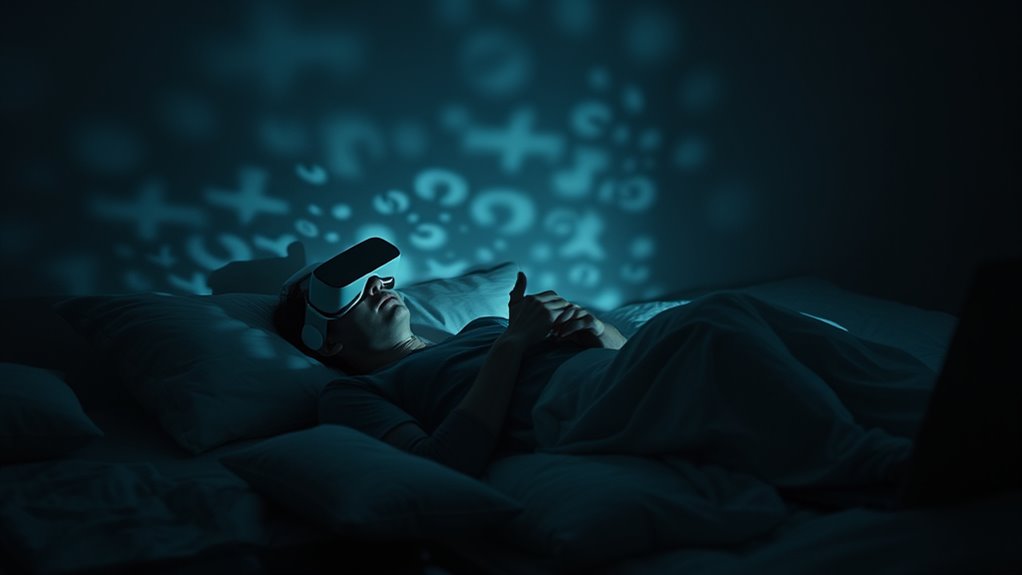

Sleeping with a VR headset can disrupt your sleep environment, causing discomfort and limiting airflow. You may experience overheating and strain from the headset’s weight, leading to headaches or neck pain. The immersive nature keeps your brain active, resulting in lighter sleep and reduced REM cycles, which can leave you groggy. Additionally, prolonged use can cause eye strain and fatigue. If you’re curious about the broader implications, there’s much more to uncover on this topic.
Health Risks of Sleeping With a VR Headset
While it might seem harmless to doze off with a VR headset on, there are several health risks you should consider. First, wearing a headset can disrupt your sleep environment, limiting airflow and causing discomfort. This can lead to overheating, potentially resulting in skin irritation or sweat build-up. Additionally, neglecting device hygiene poses a threat; headsets can harbor bacteria and allergens, which may lead to skin infections or respiratory issues. It’s essential to maintain a clean device to protect your health. Moreover, the weight of the headset can strain your neck and cause headaches. To sum up, while VR offers immersive experiences, sleeping with it on invites several health concerns that could disrupt your well-being.
Effects on Sleep Quality
Sleeping with a VR headset can greatly impact your sleep quality, as the immersive nature of virtual reality may keep your brain active long after you’ve closed your eyes. This constant stimulation can disrupt your sleep patterns, leading to a lighter sleep state and reduced restorative REM cycles. You might find it difficult to shift into deeper sleep, which can leave you feeling groggy and unrefreshed upon waking. Additionally, the vivid dream experiences facilitated by VR might blend with reality, resulting in confusion and fragmented memories of your dreams. As a result, your overall sleep quality diminishes, impacting your daily functioning and well-being. For those seeking freedom in their rest, it is crucial to reflect on these factors before drifting off with a headset on.
Psychological Impact of VR During Sleep
Given the immersive nature of virtual reality, using a VR headset during sleep can lead to significant psychological effects. You might find your dream experiences altered, as the boundaries between reality and virtual landscapes blur. This could lead to vivid, sometimes disorienting dreams, impacting your mental state.
- Increased anxiety related to immersive environments
- Distorted perception of reality upon waking
- Heightened emotional responses to dream scenarios
These psychological impacts can linger, influencing your daily interactions and overall well-being. While the allure of exploring virtual environments is enticing, it’s essential to reflect on how these experiences may shape your subconscious mind. Balancing your use of VR with mindful sleep practices can help mitigate potential adverse effects.
Potential Eye Strain and Discomfort
Using a VR headset during sleep can lead to significant eye strain and discomfort, primarily due to the prolonged exposure to screens so close to your eyes. You might experience eye fatigue, as your eyes struggle to process the constant influx of visual information even while you’re resting. This strain can manifest as headaches or a persistent feeling of fatigue, making it challenging to fully relax. Additionally, the bright displays can contribute to visual discomfort, disrupting your natural sleep cycle and leaving you feeling unrested. Over time, this can affect your overall eye health. It’s important to weigh the desire for immersive experiences against the potential for these uncomfortable consequences, particularly if you’re valuing your well-being and freedom from unnecessary discomfort.
Alternatives to Enjoying VR Before Bed
While VR can provide thrilling experiences, there are several alternatives you can explore before bed that won’t compromise your eye health or sleep quality. Immersive relaxation techniques can help you unwind and prepare for a restful night. Consider integrating these options into your bedtime routine:
Explore relaxing alternatives to VR before bed to enhance your sleep quality and protect your eye health.
- Guided Bedtime Meditation: Use an app or audio track to lead you through calming visualization exercises.
- Soothing Music or Nature Sounds: Create a peaceful atmosphere that encourages relaxation and sleepiness.
- Gentle Yoga or Stretching: Engage in light physical activity to release tension and promote a sense of calm.
Frequently Asked Questions
Can Sleeping With a VR Headset Cause Nightmares?
Sleeping with a VR headset can disrupt your sleep quality and alter your dream patterns. The immersive experience might lead to more vivid dreams or nightmares, affecting your overall rest and mental well-being.
Will My VR Headset Get Damaged if I Sleep With It?
You might be asking for trouble if you sleep with your VR headset. Without proper lens protection and hygiene, you risk damaging it. Keep it safe and clean for peak performance and longevity.
Can I Use My VR Headset While Lying Down?
Yes, you can use your VR headset while lying down, but comfort levels may vary. Make certain your lying position supports your neck and head properly to avoid discomfort during extended use, enhancing your immersive experience.
Is It Safe to Wear a VR Headset for Long Periods?
Wearing a VR headset for long periods isn’t typically safe; it can lead to eye strain and increased discomfort levels. Balance your immersive experiences with breaks to maintain your vision and comfort. Freedom lies in moderation.
How Long Should I Wait After Using VR Before Sleeping?
After using VR, it’s best to wait at least 30 minutes before sleeping. This helps mitigate VR sleep effects, allowing your mind to unwind and improving sleep quality by reducing overstimulation and enhancing relaxation.
