
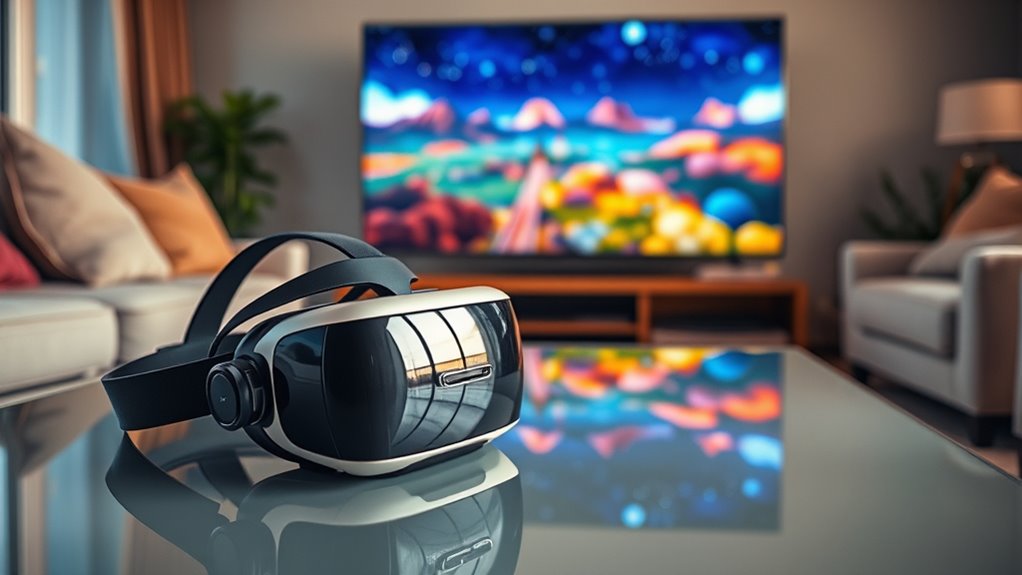

When you connect your VR headset to a TV, it transforms your individual immersive experience into a shared adventure. Your friends or family can witness the thrilling virtual worlds as you explore them, fostering excitement and collaboration. This setup enhances gameplay and encourages discussions about challenges. You’ll need to adjust settings for ideal display quality, but the payoff is a more engaging experience. There’s plenty more to discover about optimizing your setup and the exciting future of VR.
Understanding Virtual Reality and Its Components
When you immerse yourself in the world of virtual reality (VR), you’ll quickly realize it’s more than just a headset—it’s a complex ecosystem that combines hardware and software to create immersive experiences. The primary hardware components include the headset, controllers, and sensors that enable motion tracking, allowing you to interact with gaming environments and interactive simulations seamlessly. Sensory feedback, such as haptic vibrations, enhances your experience, making virtual interactions feel real. The user interface is designed for intuitive navigation, ensuring you can focus on exploration rather than frustration. By understanding these elements, you reveal the full potential of VR, embracing the freedom to explore new worlds and engage in experiences that defy the limits of reality.
The Basics of Connecting a VR Headset to a TV
Although connecting a VR headset to a TV might seem intimidating at first, it’s a straightforward process that can enhance your virtual experiences. You’ll typically start by ensuring both your VR headset and TV support a wireless connection, which allows for a clutter-free setup. Once you’ve confirmed compatibility, navigate to the settings on your VR headset to locate the display options. Adjust the resolution settings to match your TV’s capabilities for the best visual quality. Don’t forget to connect any necessary apps or streaming services to maximize your experience. Finally, test the connection by launching a VR application while monitoring the TV display. With these simple steps, you’re ready to share your adventures and immerse yourself in a new dimension!
Benefits of Sharing Your VR Experience
Sharing your VR experience offers a unique opportunity to deepen connections with friends and family, as it allows them to witness the immersive worlds you’re exploring. When you connect your headset to a TV, it transforms solitary adventures into shared moments of excitement. You can invite loved ones to see the immersive storytelling unfold right before their eyes, creating a communal atmosphere that enhances the overall experience. This shared engagement fosters discussions about the challenges and triumphs within the virtual domain, encouraging collaboration and teamwork. It’s not just about playing games; it’s about creating lasting memories together and initiating shared adventures that transcend the physical world. Ultimately, this connection enriches your VR journey and strengthens your relationships.
Types of VR Headsets Compatible With TVS
When connecting your VR headset to a TV, knowing which models are compatible is essential. For instance, the Oculus Quest offers seamless integration, allowing you to share your virtual experiences effortlessly. Similarly, PlayStation VR provides options that enhance your gaming experience on a larger screen, making it a popular choice for console gamers.
Oculus Quest Compatibility
If you’re considering connecting your Oculus Quest to a TV, you’ll be pleased to know that this headset offers a range of compatibility options that enhance your virtual reality experience. With features like built-in casting, you can easily share your immersive adventures with friends and family on a larger screen. However, it’s important to be aware of some Oculus Quest limitations, such as potential lag during casting and the need for a stable Wi-Fi connection. While the seamless integration with smart TVs and Chromecast devices provides great flexibility, the experience may vary based on your setup. Ultimately, understanding these factors can help you maximize your VR sessions and enjoy a broader audience for your virtual escapades.
PlayStation VR Options
Numerous PlayStation VR options exist that allow you to enjoy immersive gaming experiences on your TV. The PlayStation VR headset, for instance, features advanced motion tracking, ensuring your movements translate seamlessly into the virtual world. You can connect it directly to your PS4 or PS5, making it easy to immerse yourself in a rich library of games. Plus, with the ability to share your VR experience on the TV screen, your friends can join in on the fun. Game compatibility is broad, with titles designed specifically for VR and others that offer enhanced experiences when played in this mode. By choosing the right headset, you’ll access a world of freedom in gaming that’s hard to beat.
Setting Up Your VR Headset for TV Display
To set up your VR headset for TV display, you’ll need to gather some essential equipment, such as HDMI cables and compatible adapters. Once everything’s connected, adjusting the display settings on both your VR headset and TV will guarantee a seamless viewing experience. Let’s explore the steps to make this connection as smooth as possible.
Required Equipment Setup
Setting up your VR headset for display on a TV requires just a few essential pieces of equipment to guarantee a seamless experience. First, you’ll need to evaluate the cable requirements; an HDMI cable is typically necessary to connect your headset to the TV. Make sure your TV has an available HDMI port. If you prefer the freedom of movement, wireless options are available, allowing you to connect without the hassle of cables, though they may require a compatible wireless adapter. You’ll also want to check that your VR headset supports TV display functionality, ensuring compatibility with your chosen connection method. With these components in place, you’ll be ready to immerse yourself in VR while sharing the experience with others on the big screen.
Adjusting Display Settings
Once you’ve connected your VR headset to the TV, it’s essential to adjust the display settings for ideal viewing. Start with display resolution adjustments; you’ll want to set it to match the TV’s native resolution for a crisp and clear image. Most modern TVs boast 1080p or 4K capabilities, so verify your headset aligns with these standards. Next, plunge into refresh rate settings. A higher refresh rate can greatly enhance the smoothness of visuals, minimizing motion blur and enhancing your overall experience. Experiment with these settings to find the perfect balance that meets your preferences. By fine-tuning these aspects, you’ll open up a more immersive VR experience, transforming your gaming or viewing into something truly spectacular.
Enhancing Social Interaction During VR Gaming
While VR gaming often immerses players in solitary worlds, it can also foster vibrant social interactions that enhance the overall experience. Connecting your VR headset to a TV creates a shared space for friends and family, allowing everyone to participate in the action. This transforms traditional social gaming into a more engaging event, where shared experiences become memorable moments.
| Benefits | Features | Impact |
|---|---|---|
| Enhanced Engagement | Larger display for group viewing | Increased laughter and fun |
| Collaborative Play | Team-based games | Strengthened friendships |
| Shared Reactions | Real-time feedback from spectators | More immersive atmosphere |
Potential Challenges in VR and TV Connectivity
Connecting your VR headset to a TV can certainly enhance social gaming experiences, but it’s not without its challenges. You may encounter connectivity issues that can disrupt gameplay. Latency problems are common, leading to delays that affect your immersion. Display discrepancies between the VR headset and TV can create a disjointed experience, while resolution limitations might not deliver the high-quality visuals you expect. Additionally, audio sync issues can leave you frustrated, as sounds lag behind actions. Compatibility concerns arise when your hardware doesn’t meet the necessary requirements, complicating the setup. All these factors can impact your overall user experience, making it essential to address each challenge for a seamless VR and TV connection.
Optimizing Visual Quality on the TV Screen
To guarantee your VR experience translates beautifully onto the TV screen, it’s essential to optimize visual quality by adjusting several key settings. Start with the resolution settings; confirm your TV’s resolution matches that of your VR headset for the sharpest image. If your headset supports 4K, maximize your TV’s capabilities to fully appreciate the visuals. Next, focus on color calibration. Adjust the TV’s color settings to enhance vibrancy and accuracy, creating a more immersive experience for viewers. Use calibration tools or presets to fine-tune contrasts and brightness, confirming that colors pop without losing detail. By taking these steps, you’ll elevate your VR content, making it not just watchable but truly enchanting on the big screen.
Creative Uses for a VR Headset Connected to a TV
Connecting your VR headset to a TV opens up a world of creative possibilities. You can transform a simple gaming session into a shared experience, enjoy immersive movie nights with friends, or even collaborate on artistic projects in a virtual space. By leveraging this technology, you’ll enhance both entertainment and creativity in ways that traditional setups can’t match.
Shared Gaming Experience
Have you ever wondered how a VR headset can transform your living room into a shared gaming arena? By connecting your headset to a TV, you create an immersive co-op gaming experience that everyone can enjoy. With one player in the VR world and others watching in spectator mode, the dynamic shifts dramatically. Your friends can cheer you on or strategize from the sidelines, making the experience more interactive and engaging. This setup fosters a sense of community, as onlookers can react to your virtual challenges in real time. Plus, it breaks down barriers, allowing even those without headsets to join in on the fun. Enjoy gaming freedom like never before, where everyone can partake in the adventure together!
Virtual Movie Nights
Imagine taking your shared gaming experiences to the next level with virtual movie nights. By connecting your VR headset to a TV, you can immerse yourself in experiences that transform ordinary film watching into exhilarating cinematic adventures. Picture gathering friends for group viewing, where everyone wears a headset, enhancing social engagement through interactive storytelling and audience participation. You’ll explore different perspectives, each person feeling like they’re inside the movie itself. This setup allows for shared entertainment that goes beyond traditional formats, creating a unique bond among viewers. With virtual reality, you’re not just watching a film; you’re part of it, making memories while enjoying the freedom of a new kind of communal experience. Embrace this revolutionary way to connect!
Collaborative Creative Projects
While traditional creative projects often require physical materials and in-person collaboration, using a VR headset connected to a TV opens up exciting new avenues for teamwork and innovation. Imagine diving into a world where you and your friends can engage in collaborative storytelling, weaving narratives that come to life in real-time. With a shared screen, everyone can contribute ideas, manipulate scenes, and immerse themselves in the unfolding story together. Additionally, the capability to create immersive art allows you to explore vibrant landscapes, sculpt 3D objects, and paint with virtual brushes, all while sharing the experience on the larger screen. This collective approach not only enhances creativity but also fosters a sense of community, making art and storytelling more accessible and engaging than ever before.
Future Trends in VR and Home Entertainment
As technology continues to evolve, the fusion of virtual reality (VR) and home entertainment is set to revolutionize how we experience media. Imagine diving into immersive storytelling that transports you into the heart of the action. With advancements in VR, you’ll engage in interactive experiences like never before, blurring the lines between viewer and participant.
| Trend | Description | Impact on Users |
|---|---|---|
| Enhanced VR Graphics | Improved visuals for realism | Deeper immersion |
| Social VR Experiences | Multi-user environments | Shared adventures |
| AI Integration | Personalized content recommendations | Tailored storytelling |
These trends empower you to explore, connect, and enjoy a unique blend of entertainment that liberates your imagination. The future looks bright for VR and home entertainment!
Frequently Asked Questions
Can I Use Any TV With My VR Headset?
You can’t just use any TV with your VR headset; compatibility varies by headset types. Check your headset’s specifications to verify the TV supports the required resolution and features for an ideal VR experience.
Will Connecting to a TV Affect VR Performance?
Connecting to a TV can impact your VR performance, especially if the TV’s resolution or refresh rate isn’t ideal. A subpar setup might detract from your immersive VR experience, so choose wisely for enhanced enjoyment.
Do I Need Special Cables for VR to TV Connection?
Do you really need special cables for connecting your VR to a TV? Typically, standard HDMI cables meet the requirements, but checking your headset’s specifications for specific cable types is always a wise move to guarantee peak performance.
Can I Play Non-Vr Games on the TV While Using VR?
Yes, you can play non-VR games on the TV while using VR. Just adjust your TV display settings accordingly. This flexibility enhances your VR gameplay options, allowing you to enjoy both experiences seamlessly.
Is There a Delay When Mirroring VR to the TV?
When mirroring VR to a TV, you might notice a mirroring latency of around 20 to 30 milliseconds, which can affect display synchronization. That said, many find the immersive experience worth the slight delay.
