
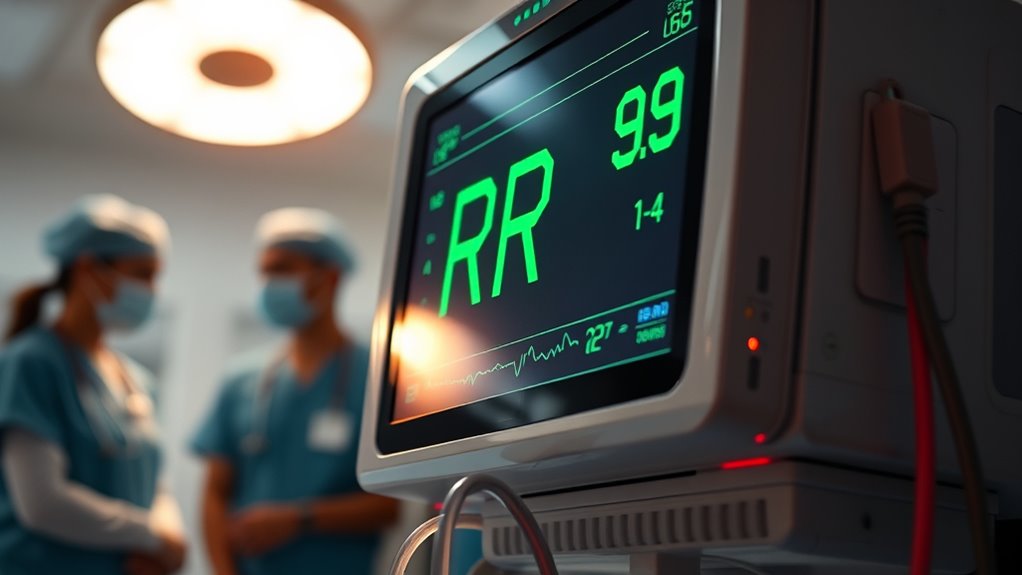

RR on a hospital monitor reflects the number of breaths per minute, providing essential insights into a patient’s respiratory health. It’s a crucial sign that helps identify distress or illness. An RR above 20 breaths per minute, known as tachypnea, can indicate anxiety or distress, while bradypnea occurs when RR falls below 12 breaths per minute, signaling potential issues. Understanding RR and its fluctuations can enhance patient care and safety. Learn more about the factors that influence these readings.
Understanding Respiratory Rate (RR)
When monitoring a patient’s critical signs, understanding respiratory rate (RR) is essential because it provides important insights into their respiratory health. RR reflects the number of breaths taken per minute and can reveal various respiratory patterns that may indicate underlying issues. Identifying these patterns helps you assess the patient’s clinical significance, as deviations from the norm can signify distress or illness. For instance, a rapid RR may suggest hypoxia or anxiety, while a slow RR might indicate respiratory depression. By closely observing RR, you can detect changes early, enabling timely interventions. Ultimately, grasping the nuances of RR empowers you to make informed decisions about patient care, enhancing overall health outcomes.
The Importance of Monitoring RR in Healthcare
Monitoring respiratory rate (RR) plays an important role in patient care, as it serves as an early indicator of respiratory distress and overall health. By keeping an eye on RR, you enhance patient safety and guarantee timely interventions. Understanding RR as a crucial sign can help identify potential issues before they escalate.
| Aspect | Importance | Impact on Care |
|---|---|---|
| Early Detection | Signals respiratory distress | Facilitates prompt treatment |
| Crucial Sign | Essential for evaluating health | Guides clinical decisions |
| Patient Safety | Prevents complications | Enhances overall patient outcomes |
Incorporating RR into routine monitoring fosters a holistic approach to healthcare, ultimately improving patient well-being.
How RR Is Measured in a Hospital Setting
In a hospital setting, respiratory rate (RR) is typically measured using non-invasive monitoring techniques, such as capnography or pulse oximetry. These methods provide real-time data that helps you assess a patient’s respiratory status. Understanding how to interpret these results is essential for effective patient care and timely intervention.
Monitoring Techniques
Although various methods exist to measure respiratory rate (RR) in a hospital setting, the most common techniques rely on both direct observation and advanced technology. You’ll often find monitoring devices such as pulse oximeters and capnometers, which can provide continuous RR readings. These devices use sensors to detect changes in breathing patterns and deliver data with high accuracy. Additionally, trained healthcare professionals may perform manual counts by observing chest movements, guaranteeing accuracy through their expertise. Each method has its benefits, but integrating technology with clinical assessment enhances overall data accuracy. By utilizing these monitoring techniques, you can guarantee that RR measurements reflect the patient’s true respiratory status, enabling timely interventions when necessary.
Interpretation of Results
When evaluating respiratory rate (RR) in a hospital setting, understanding how the results are derived is essential for accurate patient assessment. Monitoring RR provides vital insights into a patient’s respiratory function and overall health status. Here are key points to take into account:
- Measurement Techniques: RR is typically calculated by counting the number of breaths per minute, often using electronic monitors for precision.
- RR Significance: Abnormal RR can indicate underlying issues such as respiratory distress or metabolic problems, making timely identification critical.
- RR Trends: Monitoring RR trends over time helps healthcare providers detect changes in a patient’s condition, enabling prompt interventions when necessary.
Factors Influencing Respiratory Rate Readings
Patient activity levels and environmental conditions greatly impact respiratory rate readings. For instance, physical exertion can increase your respiratory rate, while factors like room temperature and humidity can also play a role. Understanding these influences is essential for accurately interpreting RR data on the hospital monitor.
Patient Activity Levels
Many factors can influence respiratory rate readings, and one significant element is patient activity levels. Understanding how patient movement affects these readings is vital for accurate assessment. Activity monitoring is essential in a clinical setting, as it can lead to variations in respiratory rates due to increased oxygen demand.
Consider these three aspects of patient activity levels:
- Physical Activity: Exercise or even minor movements can elevate respiratory rates as your body requires more oxygen.
- Emotional State: Anxiety or stress may lead to increased respiratory rates, reflecting your mental state.
- Resting State: When you’re at rest, your respiratory rate typically stabilizes, offering a baseline for comparison.
Being aware of these factors will help you interpret respiratory rate data effectively.
Environmental Conditions
Although various factors can influence respiratory rate readings, environmental conditions play an essential role in shaping these measurements. The hospital air quality greatly affects how you breathe, impacting your respiratory rate. Poor air quality, such as elevated levels of pollutants or allergens, can lead to increased respiratory effort and subsequently a higher respiratory rate. Conversely, a well-ventilated environment with clean air can promote normal respiratory function. Temperature and humidity also contribute to the overall environmental impact on your respiratory system. Extreme conditions may cause discomfort, further altering your breathing patterns. Understanding these environmental influences is important for accurate respiratory monitoring and ensuring ideal patient care in the hospital setting.
Normal vs. Abnormal RR: What to Look For
Understanding the difference between normal and abnormal respiratory rates (RR) is essential for effective patient monitoring. Normal ranges for adult RR typically fall between 12 to 20 breaths per minute. Deviations from this can indicate underlying issues. Here are key abnormal indicators to watch for:
- Tachypnea: RR over 20 breaths per minute, often linked to anxiety, fever, or respiratory distress.
- Bradypnea: RR under 12 breaths per minute, which can signal respiratory depression or neurological issues.
- Irregular patterns: Any sudden changes in rhythm or depth may suggest serious complications requiring immediate attention.
The Role of RR in Assessing Patient Health
Respiratory rate (RR) serves as an essential indicator of a patient’s overall health status, as it reflects the body’s ability to deliver oxygen and remove carbon dioxide effectively. Monitoring RR can help you identify respiratory distress early, which is vital for timely interventions. An elevated or decreased RR can indicate various health issues, including infections, cardiac problems, or metabolic disorders. By regularly evaluating RR, healthcare providers can make informed decisions that directly impact patient outcomes. You’ll find that a stable RR often correlates with better health, while significant fluctuations may signal the need for immediate care. Understanding RR’s role empowers you to engage actively in health discussions, ensuring ideal care for yourself or your loved ones.
Tips for Families to Understand RR and Patient Care
Monitoring RR is not just for healthcare professionals; families can play a significant role in understanding and supporting patient care. By being informed, you can enhance both your involvement and the patient’s comfort.
- Ask Questions: Don’t hesitate to inquire about RR readings and their implications. Understanding the numbers helps you advocate for the patient.
- Observe Changes: Pay attention to any fluctuations in RR. Noticing changes early can prompt timely interventions.
- Encourage Relaxation: Support the patient in maintaining comfort through calming techniques. A relaxed patient often has a more stable RR.
Your active participation not only aids in care but also fosters a supportive environment, ensuring the patient’s well-being during their hospital stay.
Frequently Asked Questions
How Often Is RR Monitored in Hospital Patients?
You’ll find RR monitored every few hours, or more frequently if patient stability is uncertain. Observing respiratory patterns closely guarantees timely interventions, balancing the rhythm of care with the need for patient autonomy in recovery.
Can Medications Affect Respiratory Rate Readings?
Yes, medications can greatly affect respiratory rate readings. Certain drugs, particularly sedatives or opioids, may depress respiration, while stimulants can increase it. Always consider these medication effects when interpreting respiratory rate data in clinical settings.
What Devices Are Used to Measure RR?
Pulse oximeters and capnography devices are commonly used to measure respiratory rate. Pulse oximeters assess oxygen saturation levels while capnography monitors carbon dioxide, providing valuable insights into your respiratory function and overall health.
Are There Any Risks Associated With RR Monitoring?
When monitoring respiratory rates, there’re risks like inaccurate readings affecting your treatment. A thorough risk assessment is essential to guarantee monitoring accuracy, helping you maintain your autonomy while receiving the best possible care.
How Does RR Impact Treatment Decisions in Hospitals?
RR impacts treatment strategies by helping you assess respiratory function, guiding interventions. Accurate RR monitoring can enhance patient outcomes, ensuring timely responses to respiratory distress, adjusting therapies, and ultimately improving overall care effectiveness in hospital settings.
