

To achieve the best audio experience with surround sound speakers, optimal positioning is crucial. The ideal configuration typically involves placing speakers at ear level and forming a specific arrangement around the listening area. This carefully calculated setup not only enhances your audio experience but also immerses you in the content, whether you’re watching movies or listening to music. In this article, we’ll explore the best practices for speaker placement to enhance your surround sound setup, ensuring that every sound detail is perfectly delivered.
Understanding Surround Sound Speaker Types
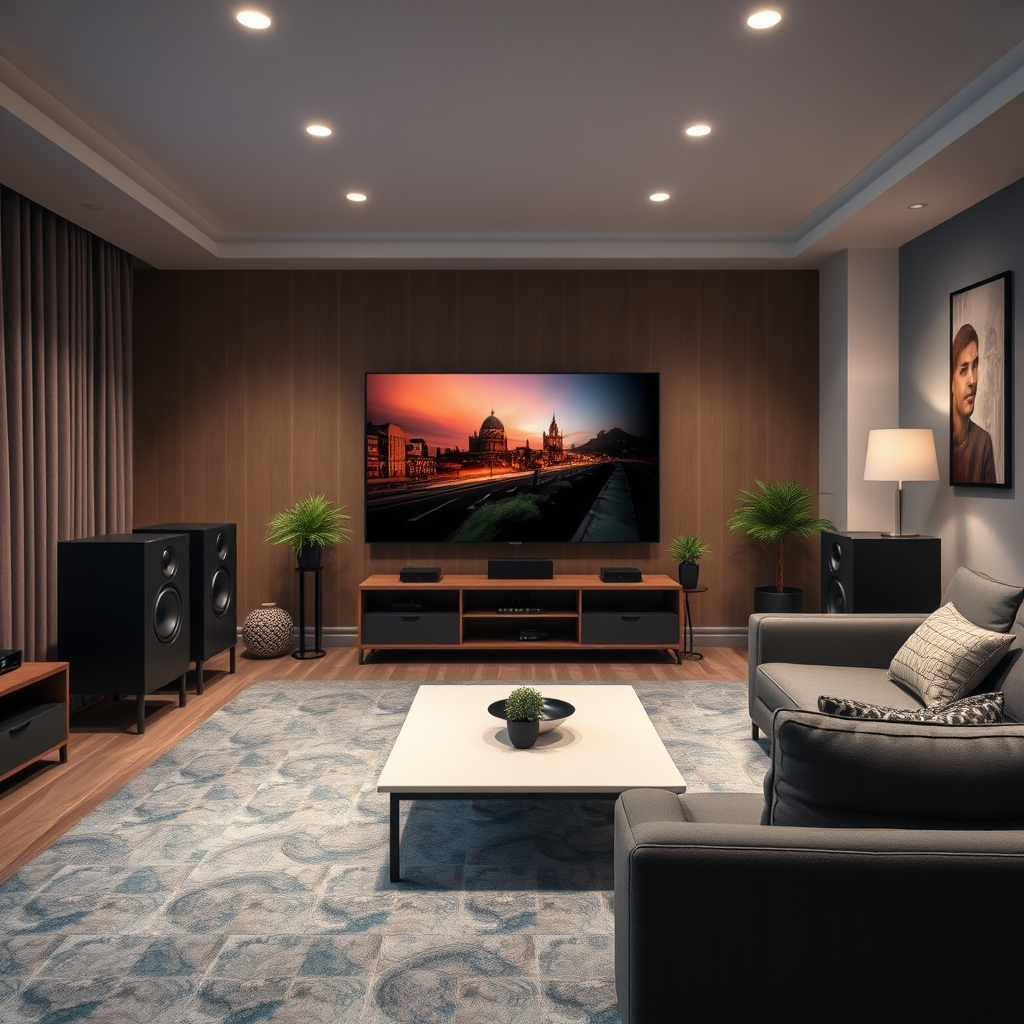
A surround sound system generally consists of multiple speaker types, each serving a unique purpose in creating a comprehensive audio experience. Understanding these speaker types is essential for achieving optimal placement.
– Front Speakers: The left, center, and right front speakers are the cornerstone of any surround sound system. They should be positioned at ear level and equidistant from the main listening position. This arrangement allows for a balanced sound stage, making dialogues clear and music rich. The center channel, often responsible for dialogue, should be placed directly above or below the screen to ensure that sound appears to come from the on-screen action.
– Rear Speakers: Rear speakers, also known as surround speakers, should be placed behind the listener to create an immersive sound environment. They should be slightly above ear level, typically mounted on walls or placed on stands. This positioning helps in enveloping the listener with audio cues that enhance the realism of movies and games, making sounds feel like they are coming from all directions.
Ideal Speaker Placement in a Room
The layout of your room plays a significant role in how sound travels and is perceived. To achieve the best audio quality, consider the following aspects:
– Room Shape and Size: The dimensions and layout of your room significantly influence speaker positioning. In a rectangular room, for instance, place the front speakers along the longer wall, while in a square room, positioning might be more flexible. Avoid placing speakers in corners, as this can lead to sound distortion and muddiness.
– Listening Position: Identifying the best listening spot is critical. Typically, this is where the listener spends the most time, often in the center of the seating arrangement. Once this position is established, arrange the speakers accordingly to ensure balanced sound distribution. Ideally, the distance from each speaker to the listening position should be equal, creating a cohesive sound experience.
Recommended Angles and Distances
Optimal angles and distances will greatly enhance your audio experience, making it feel more immersive and realistic.
– Angle Guidelines: Front speakers should be angled towards the listener, ideally forming a 22 to 30-degree angle from the center. This setup helps in focusing sound directly toward the audience, enhancing clarity and impact.
– Distance Calculation: To maintain an even sound field, keep all speakers equidistant from the listening position. A good rule of thumb is to space the front speakers about 6 to 10 feet apart and ensure that the rear speakers are the same distance from the listener. This uniformity helps in creating a seamless sound experience, where sounds transition smoothly between speakers.
Optimal Surround Sound Speaker Placement Guide
| # | Speaker Type | Ideal Height | Ideal Distance | Recommended Angle |
|---|---|---|---|---|
| 1 | Front Left/Right | Ear Level (3-4 ft) | 6-10 ft apart | 22-30° |
| 2 | Center Speaker | Ear Level (3-4 ft) | Equal to front speakers | 0° (facing center) |
| 3 | Rear Left/Right | Above Ear Level (5-7 ft) | 6-10 ft apart | 135-150° |
| 4 | Subwoofer | Floor Level | Varies (experiment) | N/A |
| 5 | Height Speakers | Above Ear Level (7-9 ft) | Varies | 135-150° |
| 6 | Dolby Atmos Speakers | Above Listener | Varies | N/A |
| 7 | Soundbars | Ear Level (3-4 ft) | Wall-mounted or TV Stand | 0° (facing center) |
Special Considerations for Subwoofers
Subwoofers are a unique component in surround sound systems, primarily responsible for low-frequency sounds. Their placement can significantly affect overall audio quality.
– Placement Flexibility: Unlike other speakers, subwoofers can be placed in various locations around the room. This flexibility allows for experimentation, as the best placement can vary based on room acoustics. The general advice is to start with the subwoofer near the front of the room and adjust based on sound quality.
– Corner Placement: While placing a subwoofer in a corner can enhance bass response due to boundary reinforcement, it can also lead to muddiness in sound. Therefore, it’s often advisable to position the subwoofer near walls but not directly in corners. Conducting a “subwoofer crawl,” where you move the subwoofer around the room while listening, can help identify the optimal location.
Adjusting for Acoustic Challenges
Even with ideal speaker placement, acoustic challenges in a room can hinder sound quality. Here are some strategies to mitigate such issues:
– Room Acoustics: The materials in your room, including furniture and wall coverings, affect sound reflection and absorption. For example, hardwood floors tend to reflect sound, while carpets absorb it. To improve acoustics, consider adding rugs, curtains, or acoustic panels to manage sound reflections.
– Calibration Tools: Utilizing calibration tools and apps can help fine-tune speaker settings for optimal audio performance. Many modern AV receivers come with built-in calibration features that analyze the room’s acoustics and adjust speaker settings accordingly. Using a sound meter app can also assist in measuring the sound levels across the listening area.
Common Mistakes to Avoid
When setting up surround sound speakers, certain pitfalls can degrade your audio experience. Here are common mistakes and how to avoid them:
– Ignoring Distance: One of the most frequent errors is placing speakers too close to walls or each other, which can lead to distorted sound. Ensure adequate spacing between speakers and avoid placing them in corners to reduce sound interference.
– Neglecting Listening Height: The height of the speakers is crucial for achieving audio balance. Ensure that the speakers are positioned at an appropriate height for seated listeners; a general rule is that tweeters should be at ear level when seated.
Positioning surround sound speakers correctly can significantly enhance your audio experience. Experiment with different placements, consider room acoustics, and utilize calibration tools for the best results. Ready to upgrade your sound system? Start adjusting your speaker setup today!
By following the guidelines laid out in this article, you can create a dynamic and immersive audio experience tailored to your specific space. Remember, listening is subjective, so don’t hesitate to make adjustments based on your personal preferences and the unique characteristics of your room.
Frequently Asked Questions
What is the best placement for surround sound speakers in a home theater?
The best placement for surround sound speakers typically involves positioning them at ear level, around 90 to 110 degrees from the primary listening position. This creates an immersive experience by allowing sounds to come from the correct direction. Ideally, the front left and right speakers should be equidistant from the screen, while the center channel should be directly above or below the screen.
How high should I mount my surround sound speakers?
Surround sound speakers should generally be mounted at ear level when seated, which is about 3 to 4 feet from the floor. However, for rear speakers, a height of 6 to 8 feet is often recommended to create a more enveloping sound experience. Adjusting the height based on your room’s acoustics and seating arrangement can enhance sound quality.
Why is speaker placement important for surround sound systems?
Speaker placement is crucial for surround sound systems because it directly affects the audio experience in your home theater. Proper positioning allows for accurate sound localization and a more immersive listening experience, creating a three-dimensional soundstage. Incorrect placement can lead to imbalanced sound and diminished audio quality.
Which speakers should be placed behind the seating area for optimal surround sound?
For optimal surround sound, it’s best to place the rear or surround speakers behind the seating area, typically 1 to 2 feet above ear level. This positioning allows for ambient sounds to fill the room effectively and creates a more cohesive sound environment. If utilizing a 7.1 system, consider adding rear speakers positioned slightly further apart for a fuller sound coverage.
What are common mistakes to avoid when positioning surround sound speakers?
Common mistakes when positioning surround sound speakers include placing them too close to walls, which can cause sound reflections and muddiness, and neglecting to calibrate the system after setup. Additionally, not considering the listening position can lead to an unbalanced soundstage. Ensuring proper distance, height, and angle can significantly improve your surround sound experience.
References
- Surround sound
https://en.wikipedia.org/wiki/Surround_sound - https://www.audioholics.com/home-theater-connection/surround-sound-speaker-placement
https://www.audioholics.com/home-theater-connection/surround-sound-speaker-placement - https://www.thespruce.com/how-to-set-up-surround-sound-1845111
https://www.thespruce.com/how-to-set-up-surround-sound-1845111 - Google Scholar Google Scholar
https://scholar.google.com/scholar?q=surround+sound+speaker+placement - Google Scholar Google Scholar
https://scholar.google.com/scholar?q=home+theater+speaker+setup - Google Scholar Google Scholar
https://scholar.google.com/scholar?q=speaker+positioning+for+surround+sound - Google Scholar Google Scholar
https://scholar.google.com/scholar?q=where+to+position+surround+sound+speakers - where to position surround sound speakers – Search results
https://en.wikipedia.org/wiki/Special:Search?search=where+to+position+surround+sound+speakers - https://www.ncbi.nlm.nih.gov/search/research-articles/?term=where+to+position+surround+sound+speakers
https://www.ncbi.nlm.nih.gov/search/research-articles/?term=where+to+position+surround+sound+speakers
