
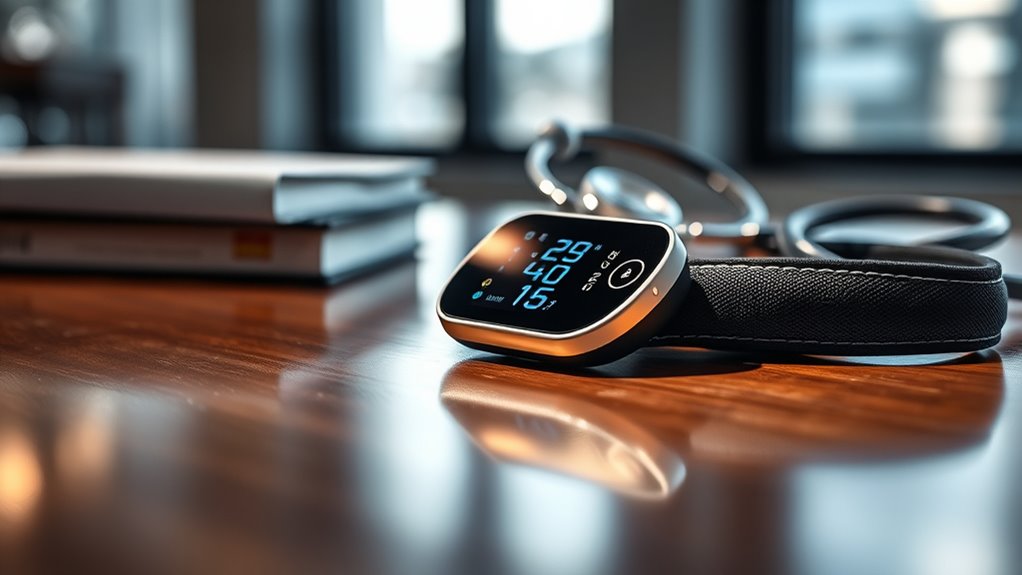

Wrist blood pressure monitors can be accurate, but their reliability hinges on proper usage and positioning. Make sure you place the cuff snugly over your wrist artery and keep your wrist at heart level during measurements. Body movement can also impact results, so stay still and relaxed. While some wrist monitors show variability compared to arm monitors, many can provide reliable readings when used correctly. Discover more about best practices and factors affecting accuracy as you continue.
Understanding Blood Pressure Measurements
Understanding blood pressure measurements is essential for monitoring your cardiovascular health. Blood pressure basics involve two key values: systolic and diastolic pressure. Systolic pressure measures the force of blood against artery walls during heartbeats, while diastolic pressure gauges this force during rest between beats. The significance of these measurements lies in their ability to indicate heart health and detect potential issues like hypertension. Regular monitoring helps you recognize patterns and manage risks effectively. By grasping these concepts, you empower yourself to make informed health decisions, maintaining the freedom to take charge of your well-being. Accurate blood pressure readings can ultimately guide lifestyle changes that promote a healthier heart and body.
How Wrist Monitors Work
While wrist monitors may seem convenient, their accuracy relies on specific mechanisms that differ from traditional arm cuffs. These devices utilize oscillometric technology, measuring blood pressure by detecting pulsations in the arteries. Your wrist anatomy plays an important role; the radial artery is closer to the skin’s surface, allowing for easier detection of blood flow. However, incorrect positioning can lead to inaccurate readings. For reliable results, proper monitor calibration is essential, ensuring the device accounts for individual variations in wrist size and shape. To get the most accurate readings, it’s essential to wear the monitor at heart level and avoid movement during measurement. Understanding these factors can help you make informed decisions about your blood pressure management.
Comparing Wrist and Upper-Arm Monitors
When comparing wrist and upper-arm BP monitors, you’ll notice key differences in measurement accuracy and user comfort. Additionally, cost and accessibility can influence your choice between these devices. Understanding these factors can help you select the best option for your needs.
Measurement Accuracy Differences
Although wrist blood pressure monitors offer convenience and portability, their accuracy can vary markedly compared to upper-arm monitors. Studies reveal that wrist monitor calibration often results in less reliable readings, particularly in individuals with certain user demographic differences, such as age or body size. The position of the wrist relative to the heart during measurement is essential; even slight deviations can lead to significant discrepancies. Furthermore, upper-arm monitors typically provide more consistent results due to their design, which better accommodates the anatomy of most users. If you’re considering a wrist monitor, be cautious and guarantee proper technique, as misinterpretations can lead to misguided health decisions. Prioritizing accuracy is critical for effective blood pressure management.
User Comfort Considerations
Comfort plays a significant role in the usability of blood pressure monitors, especially when comparing wrist and upper-arm models. When it comes to user experience, wrist monitors often provide greater device comfort due to their compact design and lightweight nature. They’re easy to wear, making it simpler to integrate monitoring into your daily routine. Conversely, upper-arm monitors can feel bulkier and may require more time to set up, which could detract from your experience. If you’re looking for convenience without sacrificing accuracy, a wrist monitor might be the way to go. Ultimately, the choice will depend on your personal preferences and how you prioritize comfort alongside functionality in your health management.
Cost and Accessibility Factors
While considering blood pressure monitors, cost and accessibility are essential factors that can influence your decision between wrist and upper-arm models. Generally, wrist monitors tend to be more affordable, with price variations often reflecting brand and features. This makes them an appealing choice for budget-conscious consumers. However, upper-arm monitors may offer more consistent accuracy, which could justify their higher price for some users.
Accessibility options also play a significant role. Wrist monitors are typically lightweight and portable, making them easy to use on the go. In contrast, upper-arm monitors may require more space and setup. Ultimately, weighing these cost and accessibility factors will help you choose the blood pressure monitor that best aligns with your needs and lifestyle.
Factors Affecting Accuracy of Wrist Monitors
When using wrist BP monitors, proper positioning is essential for accurate readings. Additionally, the cuff size must be appropriate for your wrist, as an ill-fitting cuff can lead to erroneous measurements. Body movement can also influence results, so it’s important to stay still during the measurement process.
Proper Positioning Matters
Proper positioning of the wrist monitor is vital for obtaining accurate blood pressure readings. To guarantee that you get reliable results, maintain proper wrist alignment by keeping your arm at heart level. Your wrist should be straight and relaxed, allowing the monitor to capture precise measurements. Position stability is essential; any movement or tension can lead to discrepancies in readings. Sit quietly and avoid talking during the measurement process to minimize fluctuations. If your wrist isn’t aligned correctly, you may not get an accurate reading, leading to potential misinterpretation of your health. By adhering to these guidelines, you can enhance the accuracy of your wrist monitor and maintain a better understanding of your blood pressure.
Cuff Size Considerations
Cuff size plays an essential role in the accuracy of wrist blood pressure monitors. If the cuff fit isn’t right, you might not get reliable readings. A cuff that’s too tight can overestimate your blood pressure, while one that’s too loose can underestimate it. Achieving the correct cuff fit guarantees measurement consistency, which is significant for tracking your health. When selecting a wrist monitor, check the manufacturer’s guidelines for recommended cuff sizes based on your wrist circumference. Ideally, the cuff should cover about 80% of your wrist’s circumference. Remember, an accurate cuff fit is key to obtaining trustworthy measurements, helping you make informed decisions about your cardiovascular health. Don’t underestimate the importance of proper cuff size!
Body Movement Influence
Although it might seem trivial, body movement greatly influences the accuracy of wrist blood pressure monitors. When you’re measuring your blood pressure, your body posture and activity level play vital roles. If you’re moving or not holding your wrist at heart level, the readings can be considerably skewed. For instance, standing or being active can raise your blood pressure temporarily, leading to an inaccurate measurement. To guarantee reliable results, sit still and maintain proper posture, keeping your wrist at the correct height. It’s essential to minimize any movement during the measurement process. By being mindful of your body posture and activity level, you can achieve more accurate readings, making your wrist monitor a more dependable tool for monitoring your health.
Proper Usage of Wrist Blood Pressure Monitors
To guarantee accurate readings from wrist blood pressure monitors, you need to follow specific guidelines during usage. First, verify proper cuff placement; it should be snug but not overly tight, positioned directly over the wrist artery. Next, focus on wrist positioning. Your wrist should be at heart level, supported on a flat surface. Avoid any movement during the measurement, as this can skew results. It’s also essential to remain still and relaxed for at least five minutes before taking your reading. Take multiple readings and average them for greater accuracy. Finally, always refer to the manufacturer’s instructions to verify you’re using the device correctly. By adhering to these guidelines, you’ll enhance the reliability of your wrist blood pressure readings.
Common Myths About Wrist Monitors
Many people hold misconceptions about wrist blood pressure monitors that can lead to confusion regarding their accuracy and reliability. Here are some common wrist monitor misconceptions and accuracy myths to clear up:
- They’re always inaccurate: While some models may vary, many wrist monitors can provide reliable readings when used correctly.
- They’re only for the elderly: Wrist monitors are suitable for anyone needing regular blood pressure checks, not just seniors.
- You can’t trust them at home: With proper technique, home readings can be just as valid as those taken in a doctor’s office.
- They’re difficult to use: Most wrist monitors are user-friendly, making them accessible for anyone looking to monitor their health.
Clinical Studies on Wrist Monitor Accuracy
Clinical studies have compared wrist BP monitors with traditional arm monitors, revealing significant differences in accuracy. Factors such as wrist positioning and monitor calibration can greatly affect readings, emphasizing the need for proper usage guidelines. Understanding these elements is essential for ensuring reliable blood pressure measurements with wrist devices.
Comparison With Arm Monitors
While wrist blood pressure monitors offer convenience and portability, their accuracy compared to arm monitors has been the subject of numerous clinical studies. You might find these key points interesting:
- User friendly design: Wrist monitors are easier to use, especially for those with mobility issues.
- Portability benefits: Their compact size makes them great for on-the-go measurements.
- Variability in readings: Studies often show wrist monitors can yield higher variability in results compared to traditional arm models.
- Positioning impacts: The accuracy of wrist monitors can greatly depend on wrist position relative to the heart.
Understanding these factors can help you make an informed decision about which type of monitor best suits your needs.
Factors Affecting Accuracy
Although wrist blood pressure monitors are convenient, several factors can greatly impact their accuracy. It’s essential to evaluate calibration techniques and environmental factors when using these devices. Here’s a table summarizing key influences:
| Factor | Impact on Accuracy |
|---|---|
| Calibration Techniques | Improper calibration can skew results. |
| Arm Position | Incorrect positioning affects readings. |
| Wrist Circumference | Different sizes can lead to discrepancies. |
| User Movement | Movement during measurement can cause errors. |
| Temperature | Extreme temperatures can alter device performance. |
Recommended Usage Guidelines
To guarantee accurate readings with wrist blood pressure monitors, following specific usage guidelines is imperative. Here’s a brief overview of recommended usage for ideal results:
- Positioning: Keep your wrist at heart level during measurement to guarantee accuracy.
- Monitoring Frequency: Measure your blood pressure at the same time each day for consistent tracking.
- Rest Period: Sit quietly for at least five minutes before taking a reading to stabilize your heart rate.
- Calibration: Regularly check the device against a medical-grade monitor to verify its accuracy.
Recommendations for Choosing a Blood Pressure Monitor
When selecting a blood pressure monitor, it’s vital to take into account several factors to guarantee accuracy and reliability. First, look for monitor features like automatic inflation, large displays, and memory storage for previous readings. These can enhance usability and help you track your blood pressure effectively. Additionally, consider the cuff size; a properly fitting cuff is essential for accurate readings. Don’t forget to check user reviews, as they provide insights into real-world performance and reliability. Researching brands with established credibility can also guide your choice. Ultimately, selecting the right monitor involves balancing features with personal needs to make sure you can manage your blood pressure confidently and accurately.
Monitoring Blood Pressure at Home: Best Practices
Monitoring your blood pressure at home can be a straightforward process if you follow best practices to guarantee accuracy. By implementing these strategies, you’ll improve your home monitoring results.
Monitoring your blood pressure at home is simple when you follow best practices for accuracy. Implement these strategies for better results.
- Choose the Right Time: Measure your blood pressure at the same time each day for consistency.
- Sit Correctly: Sit in a comfortable chair with your back supported, feet flat on the floor, and arm at heart level.
- Avoid Stimulants: Refrain from caffeine, smoking, or exercise for at least 30 minutes before measurement.
- Use the Right Device: Confirm your wrist BP monitor is validated for accuracy and fits properly on your wrist.
Following these tips will enhance your confidence in your blood pressure readings and promote better health management.
When to Consult a Healthcare Professional
Consulting a healthcare professional is essential if you notice consistent readings that are considerably higher or lower than normal. It’s vital to understand when to consult an expert for accurate healthcare guidance. If your wrist BP monitor consistently shows elevated or low readings, don’t hesitate to seek help. Symptoms like headaches, dizziness, or chest pain warrant immediate attention. Regular check-ups can also aid in tracking your blood pressure accurately over time. If you’re unsure about the accuracy of your wrist monitor, a healthcare provider can confirm its reliability and recommend alternatives if needed. Remember, proactive health management guarantees you stay informed and empowered in your wellness journey. Don’t ignore the signs; timely consultation can make a significant difference.
Frequently Asked Questions
Can Wrist Monitors Be Used With Atrial Fibrillation?
Yes, wrist monitors can be used with atrial fibrillation, but accuracy concerns may arise. It’s crucial to use reliable monitoring techniques and consult a healthcare professional for the best approach to managing your condition effectively.
How Often Should I Calibrate My Wrist Blood Pressure Monitor?
You should calibrate your wrist blood pressure monitor every six months to guarantee monitor accuracy. Regular calibration frequency helps maintain reliable readings, especially if your health status changes or you notice inconsistencies in measurements.
Are Wrist Monitors More Convenient for Travel Than Upper-Arm Monitors?
Wrist monitors are often more convenient for travel, with studies showing they’re 50% lighter than upper-arm devices. Their portability benefits allow you to easily pack them, ensuring you keep track of your health on the go.
Can I Share My Wrist Monitor With Family Members?
Yes, you can share your wrist monitor with family members, but guarantee proper wrist monitor hygiene. Clean the device between uses to prevent cross-contamination and guarantee accurate readings for everyone in your family.
What Is the Lifespan of a Typical Wrist Blood Pressure Monitor?
A typical wrist blood pressure monitor has a lifespan of about 2 to 3 years. You should consider replacement frequency based on usage, accuracy, and battery life, ensuring reliable readings for your health needs.
