
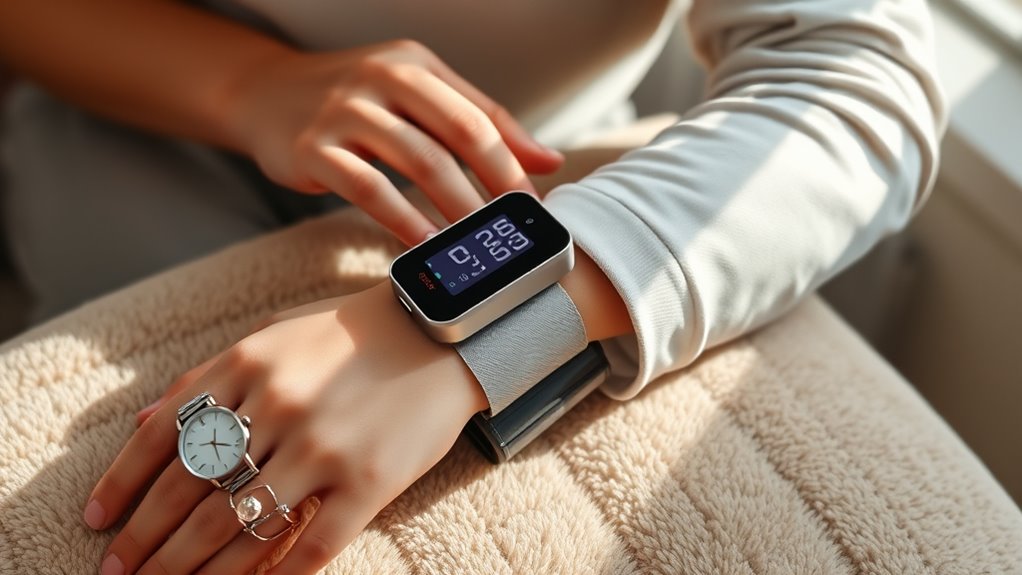

To use a wrist blood pressure monitor, make sure you’re in a quiet space and seated comfortably with your back supported. Position the monitor about an inch above your wrist bone and snugly, but not too tight. Keep your wrist at heart level and avoid talking or moving during the reading. After taking measurements, record your results for future reference. For more tips on achieving accurate measurements and maintaining your monitor, keep going with the details offered.
Understanding Your Wrist Blood Pressure Monitor
When you’re looking to monitor your blood pressure at home, understanding your wrist blood pressure monitor is essential. These devices offer several key features that enhance your experience. The compact design makes them portable, allowing you to check your readings anywhere. Look for wrist monitor features like automatic inflation, which simplifies the process. A clear digital display is vital, as it shows your systolic and diastolic readings along with your pulse rate. Some models even store previous readings, so you can track changes over time. Familiarizing yourself with these features not only helps you use the device effectively but also empowers you to take control of your health. Embrace the freedom that comes with being informed about your wrist monitor!
Preparing for a Blood Pressure Reading
To guarantee accurate blood pressure readings, it’s important to prepare properly before using your wrist monitor. Start by creating a preparation checklist. First, verify you’re in a quiet environment, free from distractions, to achieve ideal conditions. Sit comfortably with your back supported and feet flat on the floor. Rest for at least five minutes before taking your reading to relax your body. Avoid caffeine, nicotine, and intense exercise for at least 30 minutes prior, as they can elevate your blood pressure. Wear loose-fitting clothing to guarantee the monitor fits snugly around your wrist. Finally, confirm your device is fully charged or has fresh batteries. Following these steps will help you obtain the most reliable results.
Proper Placement of the Monitor
Ensuring the proper placement of your wrist BP monitor is essential for obtaining accurate readings. Start by positioning the device about one inch above your wrist bone. Make sure your wrist positioning is comfortable and relaxed, allowing for natural blood flow. The monitor should be snug but not too tight; you should be able to slide a finger underneath. Align the screen of the device with your palm for ideal visibility. It’s important to keep your wrist at heart level during the reading, as this helps with accuracy. Adjust any straps or bands to maintain proper device alignment, ensuring the monitor stays in place throughout the measurement. Following these guidelines will help you achieve reliable blood pressure readings every time.
Steps to Take a Reading
Taking a reading with your wrist BP monitor involves a few straightforward steps. First, make sure you’re seated comfortably and relaxed. Place the monitor on your wrist, ensuring it’s snug but not too tight. Use proper reading techniques by keeping your arm at heart level; this helps get an accurate measurement. Before you start, avoid common mistakes like talking or moving, which can affect the results. Press the start button, and remain still while the monitor takes your reading. Once completed, record the results for future reference. Remember, consistency is key—try to take your readings at the same time each day. This way, you’ll have a clearer picture of your blood pressure trends.
Interpreting Your Blood Pressure Results
Interpreting your blood pressure results can seem challenging, but it’s essential for understanding your overall health. Start by familiarizing yourself with the blood pressure categories: normal, elevated, and various stages of hypertension. A normal reading is typically below 120/80 mmHg. If your readings fall into the elevated or hypertensive categories, it’s important to monitor for changes over time. Look for reading trends—are your numbers consistently high, or do they fluctuate? Tracking these patterns can help you identify potential health issues early on. Don’t hesitate to discuss your readings with a healthcare professional, as they can provide personalized guidance based on your results. Remember, knowledge empowers you to take charge of your health!
Tips for Accurate Measurements
Understanding your blood pressure results is only part of the equation; getting accurate measurements is equally important. Here are some tips to enhance your accuracy:
Understanding your blood pressure results is essential, but accurate measurements are crucial for effective tracking.
- Measurement Timing: Take your readings at the same time every day. Consistency helps track changes effectively.
- Environmental Factors: Verify you’re in a calm environment, free from distractions. Stress and noise can impact your results.
- Proper Positioning: Sit comfortably with your back supported and feet flat on the floor. Keep your wrist at heart level for the best results.
Maintaining Your Wrist Blood Pressure Monitor
To guarantee your wrist blood pressure monitor stays accurate and reliable, regular maintenance is key. This includes performing calibration checks, using proper cleaning techniques, and following safe storage practices. By taking these steps, you can prolong the life of your monitor and guarantee consistent readings.
Regular Calibration Checks
While using a wrist blood pressure monitor can be convenient, it’s vital to verify its accuracy through regular calibration checks. Calibration frequency is important to guarantee you’re getting reliable readings. Here’s how to maintain accuracy verification:
- Check Manufacturer Guidelines: Consult the manual for recommended calibration intervals—usually every 6 to 12 months.
- Compare with a Standard: Occasionally, measure your blood pressure using a traditional sphygmomanometer to confirm accuracy.
- Monitor Performance: If you notice erratic readings, it’s time for a recalibration, regardless of the last check.
Proper Cleaning Techniques
Keeping your wrist blood pressure monitor clean is crucial for accurate readings and longevity. To maintain its effectiveness, aim for a cleaning frequency of at least once a week. Use a soft, lint-free cloth to wipe the exterior, and don’t forget the strap, as it can accumulate sweat and dirt. For deeper cleaning, use mild disinfecting materials like isopropyl alcohol or a gentle soap solution. Avoid harsh chemicals that could damage the device. Verify the monitor is dry before storing it, as moisture can lead to malfunctions. By regularly cleaning your wrist monitor, you create a reliable tool for monitoring your health, empowering you to take control of your well-being with confidence.
Safe Storage Practices
After guaranteeing your wrist blood pressure monitor is clean, proper storage is key to maintaining its functionality. Storing your monitor correctly helps protect it from damage and guarantees accurate readings. Here are three essential storage practices:
- Choose Ideal Storage Conditions: Keep your monitor in a cool, dry place away from direct sunlight and extreme temperatures.
- Use Protective Cases: Store your monitor and its accessories in a padded case to prevent accidental damage.
- Organize Monitor Accessories: Keep all components, like cuffs and batteries, together to avoid misplacing them and guarantee you have everything when needed.
Frequently Asked Questions
Can Wrist Monitors Be Used for Children or Teenagers?
Yes, wrist monitors can be used for children and teenagers, but make certain they’re designed for their age group. Prioritize child safety and consult a healthcare professional for accurate readings and guidance on teen health.
How Often Should I Replace My Wrist Blood Pressure Monitor?
Think of your wrist blood pressure monitor as a trusty compass. Replace it every 2-3 years, or sooner if you notice replacement indicators like inconsistent readings or wear. Keep your health journey on the right path!
Are There Any Medications Affecting Wrist Blood Pressure Readings?
Yes, certain medications can affect your wrist blood pressure readings. Medications like diuretics or beta-blockers may alter reading accuracy, so it’s essential to monitor your blood pressure regularly and consult your doctor for guidance.
Can I Use the Monitor on My Right Wrist Instead?
Yes, you can use the monitor on your right wrist. Just make certain it fits snugly and maintains proper positioning for accurate readings. Consistency in wrist usage helps improve the reliability of your measurements.
What Should I Do if My Readings Are Inconsistent?
If your readings are inconsistent, think of calibrating your monitor like tuning a guitar. Follow calibration tips, guarantee proper reading techniques, and check your position to get those harmonious numbers that reflect your true health.
