
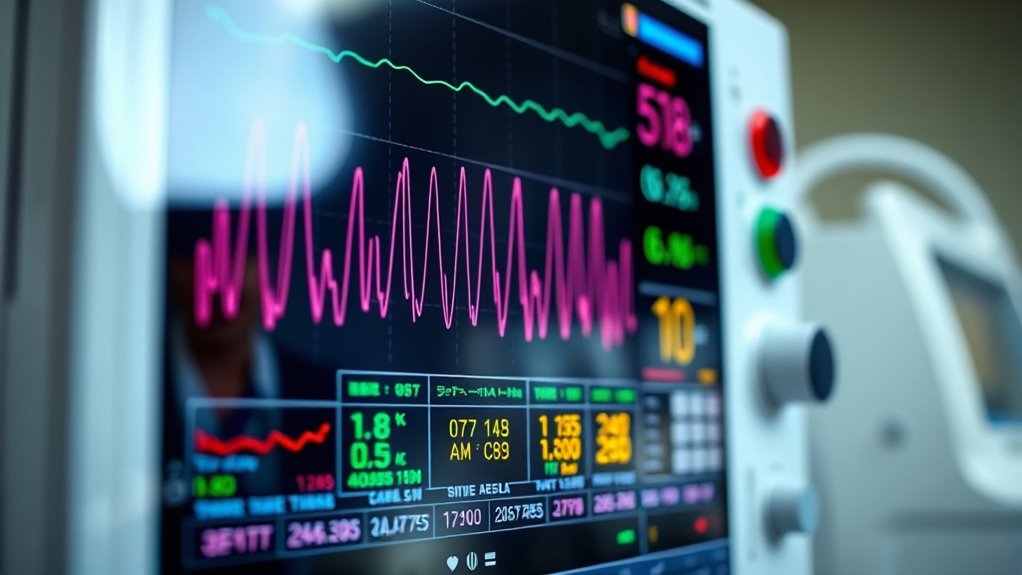

To read a hospital monitor, you’ll need to focus on key essential signs like heart rate, blood pressure, and oxygen saturation. Heart rate is measured in beats per minute (BPM), while blood pressure is displayed as systolic over diastolic in mmHg. Oxygen saturation levels indicate respiratory health, ideally between 95% and 100%. Pay attention to alarm signals, as they can indicate critical issues. Understanding these metrics helps guarantee patient safety, and there’s more to learn about them ahead.
Overview of Hospital Monitors
Hospital monitors are essential tools for tracking patients’ critical signs and ensuring their safety during treatment. You’ll encounter various monitor types, including bedside monitors, portable monitors, and telemetry devices. Each is designed to provide important data in real time, allowing healthcare professionals to make informed decisions swiftly.
Display features vary considerably; some monitors utilize high-resolution screens for better visibility, while others may have touch-sensitive interfaces for ease of use. Additionally, many monitors include customizable alarm settings to alert staff of any deviations from normal parameters. Understanding these monitor types and their display features is imperative for effective patient care, empowering you to respond quickly to any changes in a patient’s condition.
Understanding Vital Signs
Essential signs are the key indicators of a patient’s physiological status, providing critical information that monitors their health in real time. Vital signs typically include heart rate, blood pressure, respiratory rate, and temperature. Each of these parameters plays an important role in evaluating a patient’s condition. For instance, heart rate and blood pressure reveal cardiovascular health, while respiratory rate indicates respiratory function. Temperature helps identify infections or systemic issues. When you’re familiar with these vital signs, you can better understand the overall picture of a patient’s well-being. Consistent patient monitoring guarantees timely interventions and enhances care quality. Stay engaged with these metrics to empower yourself in recognizing significant changes that may require immediate attention.
Heart Rate and Rhythm
Heart rate and rhythm are critical components in evaluating a patient’s cardiovascular health. When you look at a hospital monitor, you’ll notice the heart rate displayed in beats per minute (BPM). A normal heart rate typically ranges from 60 to 100 BPM, but this can vary based on individual factors. Rhythm analysis involves examining the pattern of heartbeats; is it regular or irregular? An irregular rhythm may indicate potential issues, such as arrhythmias, which require further investigation. Pay attention to any sudden changes in heart rate, as these can signal distress. Understanding these metrics empowers you to advocate for necessary care and recognize when something seems off in your health monitoring. Always consult healthcare professionals for accurate interpretations.
Blood Pressure Readings
Monitoring heart rate and rhythm provides key insights into cardiovascular health, but blood pressure readings are equally important for evaluating overall condition. Blood pressure is measured in millimeters of mercury (mmHg) and consists of two numbers: systolic pressure and diastolic pressure. Systolic pressure, the upper number, indicates the force of blood against artery walls when the heart beats. Diastolic pressure, the lower number, measures that same force when the heart is at rest between beats. A normal reading typically falls below 120/80 mmHg. Elevated or abnormal readings can indicate underlying health issues, so it’s essential to understand these values. By keeping an eye on these numbers, you can take proactive steps toward maintaining your cardiovascular health and overall well-being.
Oxygen Saturation Levels
Oxygen saturation levels are important indicators of your respiratory health, showing how effectively your blood is carrying oxygen throughout your body. Monitoring these levels is essential, and a pulse oximeter can help you easily check your oxygen saturation at home or in the hospital.
Here are three key points to remember about oxygen saturation:
- Optimal Range: Healthy oxygen saturation levels typically range from 95% to 100%. Anything lower may signal a need for medical attention.
- Symptoms of Low Levels: Signs of low oxygen saturation can include shortness of breath, confusion, or a bluish tint to your lips or fingertips.
- Impact on Freedom: Maintaining adequate oxygen saturation levels is critical for your overall well-being and allows you to live life fully.
Respiratory Rate Monitoring
Monitoring respiratory rate is essential for evaluating a patient’s respiratory function and overall health. By understanding how to interpret the monitor readings, you can quickly identify abnormalities that may require immediate attention. Let’s explore the significance of respiratory rate and how to accurately read those important signs on the hospital monitor.
Importance of Respiratory Rate
The respiratory rate is an important essential sign that reflects a patient’s respiratory health and overall well-being. Monitoring breathing patterns provides significant insights into how well the body is functioning. Here are three key reasons why it matters:
- Early Detection: Changes in respiratory rate can signal underlying health issues before they become serious.
- Oxygenation Status: A stable rate indicates adequate oxygen delivery, which is essential for sustaining life.
- Stress Response: An elevated rate may reveal emotional or physical stress, guiding necessary interventions.
Interpreting Monitor Readings
Understanding respiratory rate readings on a hospital monitor is key to evaluating a patient’s respiratory health. The monitor displays breaths per minute, an essential metric indicating how well a patient is breathing. To interpret these readings accurately, verify the monitor calibration is correct; this minimizes errors and enhances data accuracy. Look for normal ranges—typically 12 to 20 breaths per minute for adults—while noting any significant deviations. Elevated rates may signal distress, while lower rates could indicate respiratory failure. Regularly check the monitor’s settings and perform routine maintenance to maintain peak performance. By familiarizing yourself with these readings, you empower yourself to assess a patient’s condition effectively, guaranteeing timely interventions when needed.
Interpreting Alarm Signals
When monitoring patients, you’ll encounter various alarm signals that indicate changes in essential signs. Understanding the types of alarms, their common meanings, and how to respond effectively is important for patient safety. Being prepared to interpret these signals can make a significant difference in a critical situation.
Understanding Alarm Types
While monitoring a patient, you’ll encounter various alarm types that provide critical information about their condition. Understanding these alarms is essential to ensuring patient safety and preventing alarm fatigue. Here are three key alarm types to recognize:
- High-Priority Alarms: These indicate immediate threats to the patient’s life, requiring rapid intervention.
- Medium-Priority Alarms: These signal important changes that need attention but may not be life-threatening right away.
- Low-Priority Alarms: These are often routine alerts, like reminding staff to check equipment.
Common Alarm Meanings
Each alarm type carries specific meanings that can help you assess a patient’s status quickly. Familiarizing yourself with common alarm definitions is vital. For example, a tachycardia alarm indicates a rapid heart rate, while bradycardia signifies a slow heart rate. A desaturation alarm alerts you to low oxygen levels, essential for respiratory assessment. Understanding these signals allows you to prioritize your response effectively. Alarm response protocols often dictate the urgency of intervention based on the alarm type. Recognizing the difference between critical and non-critical alarms can save valuable time. Keep in mind that each facility may have unique protocols, so knowing your environment enhances your ability to react appropriately to alarm signals.
Responding to Alarms
Understanding how to respond to alarms is crucial in a hospital setting. Effective alarm management guarantees patient safety and timely intervention. Here’s how to prioritize your alarm response:
- Assess the Situation: Quickly determine if the alarm indicates a critical issue or a false alarm.
- Act Swiftly: If the situation is serious, take immediate action to stabilize the patient.
- Document and Review: After addressing the alarm, document the response and review the alarm settings to minimize future disruptions.
Your awareness and responsiveness can make a significant difference in patient outcomes. Remember, alarms are there to guide your actions—embrace this responsibility and exercise your freedom to act decisively.
Frequently Asked Questions
What Do Different Colors on the Monitor Represent?
Different colors on the monitor represent various health signals. For instance, green typically indicates normal readings, while yellow suggests caution, and red often signals critical conditions. Understanding color meanings helps you interpret monitor signals effectively.
How Often Are Vital Signs Recorded in Hospitals?
Crucial signs are typically recorded every 4 to 6 hours in stable patients, but hospital monitoring guidelines dictate more frequent checks for those at risk. Stay aware; this frequency can greatly impact patient care and outcomes.
Can a Hospital Monitor Malfunction?
Yes, a hospital monitor can malfunction. Monitor errors may arise from equipment reliability issues, such as sensor failures or software glitches. Regular maintenance and checks are essential to guarantee accurate readings and patient safety.
What Should I Do if an Alarm Sounds?
When an alarm sounds, think of it as a firefly guiding you. Quickly assess the situation, check the monitor, and respond as needed. Your alarm response is crucial for patient safety—stay calm and act swiftly.
How Can I Ask for Monitor Interpretation Help From Staff?
To ask for monitor interpretation help, approach the staff, and clearly communicate your concerns about the monitor signals. It’s essential to establish effective staff communication to guarantee you receive the necessary assistance promptly.
