
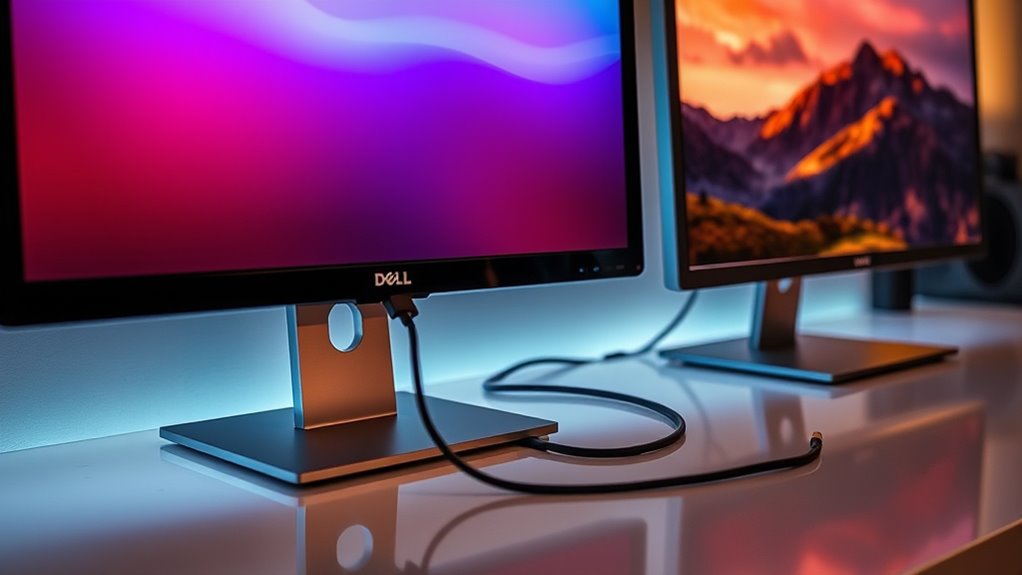

Yes, you can connect your Dellsharp to another monitor using an HDMI cable. Just check that both devices have compatible HDMI ports and use a high-quality HDMI cable. Plug one end into your Dellsharp and the other into the monitor. Once both are powered on, the monitor should detect the connection. You may need to select the correct input source on the monitor. If you need help with settings or troubleshooting, there are more details available.
Understanding HDMI Connections
HDMI, or High-Definition Multimedia Interface, is a standard for transmitting high-quality audio and video signals between devices. Understanding HDMI connections is essential for maximizing your setup. There are various HDMI standards, including HDMI 1.4, 2.0, and 2.1, each offering different features and capabilities. For instance, HDMI 2.1 supports higher resolutions and refresh rates, providing a more immersive experience. You’ll also encounter different connection types, like standard HDMI, mini HDMI, and micro HDMI, depending on your devices. Knowing which type your Dellsharp and monitor support can make the connection process seamless. By familiarizing yourself with these standards and connection types, you’ll empower your setup, ensuring peak performance and freedom in your multimedia experience.
Preparing Your Dellsharp for Connection
Before connecting your Dellsharp to another monitor, you’ll want to make certain everything’s ready. Start by checking the HDMI ports on both devices, then update your graphics drivers for peak performance. Finally, adjust your display settings to prepare for a smooth connection.
Check HDMI Ports
To successfully connect your Dellsharp to another monitor, the first step is ensuring your HDMI ports are ready for use. Start by checking the HDMI types available on both your Dellsharp and the monitor. Most devices use standard HDMI, but some may require mini or micro HDMI connections. Next, inspect the HDMI ports for dust or damage; clean them gently if needed.
Also, consider the cable length you’ll need. A longer HDMI cable can provide flexibility in positioning your devices, but too much length might lead to signal loss. Aim for a cable that balances distance with quality. Once you’ve confirmed the ports and chosen the right cable, you’re ready to make that connection!
Update Graphics Drivers
Updating your graphics drivers is essential for guaranteeing a smooth connection between your Dellsharp and the external monitor. This step can greatly enhance your graphics performance and assure driver compatibility with the new display. To update your drivers, you can either visit the manufacturer’s website or use device management tools on your Dellsharp.
Here’s a quick table to help you:
| Action | Purpose |
|---|---|
| Check for Updates | Confirm you have the latest drivers |
| Install Updates | Enhance graphics performance |
| Restart Your Device | Apply changes for ideal compatibility |
Adjust Display Settings
Once you’ve guaranteed your graphics drivers are up to date, the next step involves adjusting the display settings on your Dellsharp. Start by right-clicking on your desktop and selecting “Display settings.” Here, you’ll find options to configure your display resolution; choose the recommended setting for ideal clarity. If you’re connecting to a second monitor, make sure to adjust the settings to extend or duplicate your display as needed. Additionally, don’t forget to check your screen orientation. You can switch between landscape and portrait modes based on your preference. Once you’ve made these adjustments, your Dellsharp will be ready to connect seamlessly to another monitor using HDMI, giving you the freedom to work or enjoy media on a larger screen.
Connecting the Dellsharp to Another Monitor
While connecting your Dellsharp to another monitor might seem challenging, it’s a straightforward process that can enhance your productivity and viewing experience. First, verify your Dellsharp and the external monitor are compatible; check their HDMI ports and specifications. Next, grab a good-quality HDMI cable to guarantee ideal display performance. Plug one end into your Dellsharp and the other into the monitor. Once connected, power on the monitor, and it should automatically detect the connection. If it doesn’t, you may need to select the correct input source on the monitor. With this setup, you can enjoy an extended workspace, perfect for multitasking. Just remember, monitor compatibility is key to achieving the best results.
Configuring Display Settings
To guarantee the best experience with your newly connected monitor, you’ll want to configure your display settings correctly. First, right-click on your desktop and select “Display settings.” Here, you’ll see options to adjust the display resolution for each monitor. Choose a resolution that matches your monitor’s capabilities to confirm crisp visuals. Don’t forget to select the desired display mode—whether you want to extend your desktop for multi monitor productivity or duplicate displays for presentations. Once you’ve made your selections, click “Apply” to save the changes. By tailoring these settings, you’ll release the full potential of both screens, enhancing your workflow and overall experience. Enjoy the freedom of a more efficient setup!
Troubleshooting Common Connection Issues
If you’re having trouble connecting your Dellsharp to another monitor, you might want to start by checking the HDMI cable for any damage or loose connections. It’s also essential to verify that the monitor settings are correctly configured to receive the signal. These quick checks can often resolve common connection issues.
Check HDMI Cable
One of the most common issues when connecting your Dellsharp to another monitor is a faulty HDMI cable. First, check the type of HDMI cable you’re using; there are various HDMI types, such as Standard, High Speed, and Ultra High Speed. Make sure your cable matches the specifications required for both your Dellsharp and the monitor. Next, consider cable lengths—longer cables can sometimes lead to signal degradation. If you’re using an extended cable, try a shorter one to see if that resolves the issue. Inspect the connectors for any visible damage, and try different HDMI ports on both devices. A simple cable swap can often fix connection problems, so don’t overlook this vital step in troubleshooting!
Verify Monitor Settings
Have you double-checked the monitor settings? It’s essential to guarantee your Dellsharp and the secondary monitor are compatible. Start by confirming that both monitors support the same resolution settings. Mismatched resolutions can cause display issues or prevent the connection altogether.
Next, navigate to the monitor’s settings menu and look for options related to input source and resolution. Make sure the HDMI input is selected and that the resolution is set to a level both monitors can handle. If you’re unsure, you can always refer to the user manuals for guidance. By taking these steps, you’ll enhance your chances of a seamless connection and enjoy the freedom of an extended workspace.
Tips for Optimizing Your Dual Monitor Setup
While you’re setting up your dual monitor configuration, optimizing the layout can greatly enhance your productivity. First, choose a monitor arrangement that suits your workflow—consider placing your primary monitor directly in front of you and the secondary to the side for easy access. Use window management tools to snap applications to specific screens, allowing you to switch between tasks seamlessly. Don’t forget to adjust display settings; matching resolutions can prevent strain and improve visual consistency. Additionally, take advantage of keyboard shortcuts for faster navigation between screens. Finally, keep your workspace organized—minimize clutter on your desktop to maintain focus. With these tips, you’ll enjoy a more efficient dual monitor experience that supports your freedom to create and explore.
Frequently Asked Questions
What Types of HDMI Cables Are Compatible With Dellsharp Monitors?
Dellsharp monitors support various HDMI standards, including 1.4 and 2.0. You can choose cable lengths based on your setup, ensuring you’ve the right cable to achieve peak performance and freedom in your viewing experience.
Can I Use an HDMI Splitter for Dual Monitor Setups?
Absolutely, you can use an HDMI splitter for dual monitor setups. Imagine the productivity boost! With an HDMI splitter’s advantages, you’ll effortlessly expand your workspace, enhancing your efficiency and creativity without limitations.
Does the Dellsharp Support 4K Resolution via HDMI?
Yes, the Dellsharp does support 4k capabilities through HDMI. You’ll find its HDMI compatibility enhances your viewing experience, allowing you to enjoy high-resolution content with vibrant detail and clarity on your display.
Will Connecting a Second Monitor Impact Performance?
Connecting a second monitor can lead to a performance impact, especially if your system’s hardware isn’t robust. However, with a capable setup, dual monitor configurations can enhance productivity without significant slowdowns. Balance is key.
Can I Connect Multiple Dellsharp Monitors Using HDMI?
Absolutely, you can connect multiple Dellsharp monitors using HDMI. Picture a multi-monitor setup, expanding your digital horizon. Just guarantee your devices support HDMI compatibility, and you’ll be free to enhance your workspace effortlessly.
