
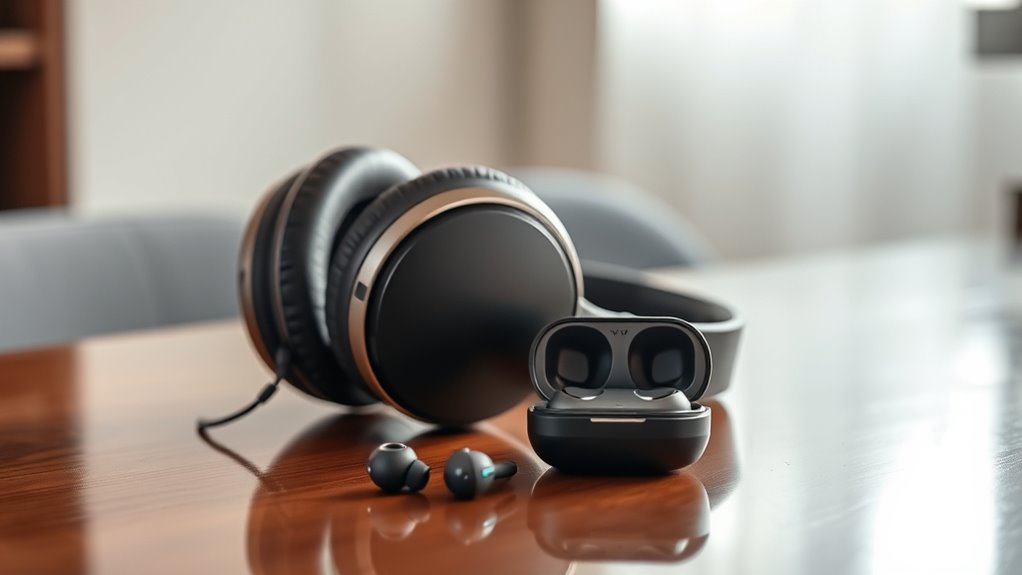

Headphones typically provide better sound quality and noise isolation than earbuds, making them ideal for immersive listening experiences. They excel in clarity and bass depth, while their design offers enhanced comfort for extended use. Conversely, earbuds are portable and convenient for active lifestyles but may sacrifice some audio quality. Ultimately, your choice depends on your listening habits and environment. If you want to explore the finer details of each option, keep exploring the insights ahead.
Sound Quality Comparison
When considering sound quality, it is essential to recognize that both headphones and earbuds have distinct advantages and limitations. Headphones typically provide superior sound clarity, delivering a broader frequency response. This means you’ll catch nuances in music that earbuds might overlook, especially in lower frequencies. However, earbuds have made significant strides, offering impressive sound quality in a compact form. While they can sometimes struggle with bass depth, many high-end models deliver remarkable clarity and frequency response that rivals headphones. Ultimately, your choice depends on your listening preferences and environment. If you prioritize immersive soundscapes, headphones may be your go-to. Conversely, if portability and convenience matter more, high-quality earbuds can provide an excellent listening experience without sacrificing too much sound quality.
Comfort and Fit
Comfort and fit are essential factors to take into account when choosing between headphones and earbuds, as they can greatly impact your listening experience. Headphones often feature adjustable ear cushions, providing a customizable fit, while earbuds rely on various ear tip sizes to accommodate different ear shapes.
Here’s a quick comparison:
| Headphones | Earbuds |
|---|---|
| Adjustable ear cushions | Multiple ear tip sizes |
| Often heavier, more stable | Lightweight, portable |
| Covers entire ear | Inserted in ear canal |
| Less ear fatigue | Can cause discomfort |
Ultimately, your choice depends on personal preference and intended use. Finding the right fit guarantees you enjoy your audio without distraction.
Portability and Convenience
Portability and convenience are essential elements that can influence your decision between headphones and earbuds. When evaluating your daily routine and travel needs, you might find that earbuds often win regarding practicality. Here are three key factors to evaluate:
Consider portability and convenience when choosing between headphones and earbuds; earbuds often prove more practical for daily routines and travel.
- Compact Design: Earbuds are typically smaller and easier to store compared to bulkier headphones, fitting neatly in pockets or bags.
- Travel Friendly: They’re lightweight, making them ideal for on-the-go use, whether you’re commuting or on a trip.
- Quick Setup: With minimal wires and straightforward connectivity, earbuds allow for hassle-free listening, letting you enjoy your music without delays.
In contrast, headphones can be more cumbersome, which might affect your overall experience when you prioritize portability and convenience.
Battery Life and Usage
Although you might prioritize sound quality or comfort, battery life and usage are critical factors to contemplate when choosing between headphones and earbuds. Generally, headphones tend to offer greater battery longevity compared to earbuds, mainly due to their larger batteries. If you’re someone who listens frequently throughout the day, this can make a significant difference. Earbuds, while compact, often require more frequent charging, especially if they’re wireless. Consider your usage frequency; if you’re on the go or enjoy extended listening sessions, headphones may serve you better. Additionally, think about how quickly you can recharge your device, as some models include fast-charging features. Ultimately, your choice should align with your lifestyle and listening habits to guarantee a seamless experience.
Price Range and Value
When considering price range and value, you’ll find that both headphones and earbuds come in a diverse array of options tailored to different budgets. Conducting a price comparison can reveal significant differences in value assessment. Here’s a quick breakdown:
- Budget Options: Basic earbuds can start as low as $10, while entry-level headphones may begin around $30.
- Mid-Range Choices: Expect to pay between $50 to $150 for decent quality, offering better sound and durability.
- Premium Models: High-end headphones and earbuds can exceed $300, often featuring advanced technology and superior materials.
Ultimately, your choice should align with your needs and how much you value sound quality, comfort, and brand reputation. Each option brings its own merits, catering to various preferences and financial situations.
Noise Isolation and Cancellation
When considering noise isolation and cancellation, it’s essential to understand the differences between active noise cancellation (ANC) and passive noise isolation. ANC uses technology to reduce unwanted ambient sounds, while passive noise isolation relies on the physical design of the headphones or earbuds to block external noise. Each approach has its advantages and limitations, impacting your listening experience in different environments.
Active Noise Cancellation
Active Noise Cancellation (ANC) technology has revolutionized the way we experience sound, enabling listeners to immerse themselves in their audio without distractions from the outside world. This advanced feature is particularly beneficial for those seeking sound isolation in noisy environments. Here are three key aspects of ANC:
- Adaptive Technology: ANC systems continuously monitor external sounds and adjust their counteracting noise waves, ensuring peak performance.
- Enhanced Listening Experience: By actively reducing ambient noise, ANC allows you to enjoy music or podcasts without raising the volume excessively, protecting your hearing.
- Versatility: ANC is effective in various settings, from bustling city streets to quiet offices, making it a flexible choice for many lifestyles.
Ultimately, active noise cancellation offers a significant advantage for anyone prioritizing immersive audio experiences.
Passive Noise Isolation
While active noise cancellation offers a high-tech solution for blocking out unwanted sounds, passive noise isolation provides a more straightforward approach. This method relies on the physical design of headphones or earbuds to create a seal that blocks external noise. You’ll often find that over-ear headphones excel in passive isolation, as their larger cups envelop your ears, reducing sound leakage effectively. On the other hand, earbuds can offer good passive isolation, especially when they fit snugly in your ear canal. However, they may not entirely eliminate noise, leaving some room for ambient sounds. Ultimately, if you value simplicity and a natural sound experience, passive isolation is a reliable choice that grants you freedom from distractions without the need for electronic enhancements.
Durability and Build Quality
When considering durability and build quality, you’ll find significant differences between headphones and earbuds, particularly in material quality. Headphones often utilize sturdier materials, which can enhance impact resistance, while earbuds may struggle with cable durability, leading to more frequent replacements. Understanding these factors is essential for making an informed choice based on your lifestyle and usage habits.
Material Quality Comparison
Although both headphones and earbuds serve the same fundamental purpose of delivering audio, their material quality considerably impacts their durability and build quality. Here’s a breakdown of how different material types influence them:
- Plastic: Common in both, but lower-grade plastics may crack or wear down quickly, affecting longevity.
- Metal: Often found in high-end models, metal components enhance durability, resisting wear and tear.
- Rubber and Silicone: Used in ear tips and cushioning, these materials improve comfort and can withstand regular use, but may degrade over time.
Understanding these aspects of material quality helps you make informed choices, ensuring you select audio devices that align with your lifestyle and preferences for freedom in sound experiences.
Impact Resistance Factors
Durability and build quality are critical factors when evaluating the impact resistance of headphones and earbuds, with various elements influencing their ability to withstand everyday wear and tear. When considering impact resistance factors, look for materials like reinforced plastics or aluminum, which enhance durability. Design considerations also play a significant role; over-ear headphones often provide better protection due to their larger form factor, while earbuds may be more susceptible to damage from drops. Additionally, check for features like detachable cables or sweat resistance, which can prolong the life of your device. Ultimately, understanding these aspects helps you make an informed choice, ensuring your audio gear can endure the rigors of daily use without compromising performance.
Cable Durability Issues
While many users focus on the headphones or earbuds themselves, cable durability is often a critical yet overlooked factor that can greatly affect overall performance and longevity. Poorly constructed cables can lead to issues like cable fraying and connector wear, ultimately diminishing your listening experience. Here are three key points to evaluate:
- Material Quality: Look for cables made from durable materials that resist wear and tear.
- Connection Strength: Verify connectors are reinforced to prevent bending and breakage.
- Length and Flexibility: Longer cables may be more prone to tangling and fraying, so assess your usage environment.
Investing in quality cables not only enhances performance but also extends the lifespan of your audio device, allowing for a more enjoyable listening experience.
Ideal Use Cases for Each Option
When considering the ideal use cases for headphones and earbuds, it’s vital to evaluate how each option aligns with your specific needs and activities. Headphones excel in scenarios where sound quality and immersion are paramount, like gaming, studio work, or long listening sessions at home. They often offer superior comfort for extended wear, making them ideal for leisurely activities. On the other hand, earbuds fit seamlessly into an active lifestyle, perfect for workouts, commuting, or any situation where portability is essential. Their compact design caters to those who prioritize convenience without sacrificing sound. Ultimately, your choice should reflect your lifestyle preferences and the environments you frequent, ensuring you have the right audio experience for every occasion.
Frequently Asked Questions
Do Headphones or Earbuds Cause More Ear Fatigue During Long Listening Sessions?
Headphones typically offer better sound isolation, which can minimize distractions and reduce ear fatigue during long listening sessions. However, individual comfort and fit are essential factors that can influence your overall experience considerably.
Can You Use Headphones or Earbuds While Exercising?
You can absolutely use headphones or earbuds while exercising. However, consider comfort levels and sound quality; headphones might offer superior sound, while earbuds often provide a lighter feel, letting you move freely without distraction.
What Are the Best Brands for Headphones Versus Earbuds?
For headphones, consider Sony models for innovation, Bose for performance, and Sennheiser for quality. If you prefer earbuds, Apple offers convenience, Audio Technica delivers value, and JBL guarantees impressive sound. Choose based on your specific needs.
How Do Headphones and Earbuds Affect Hearing Health Differently?
Headphones often provide better sound isolation, allowing you to enjoy music at lower volumes, which can protect your hearing. In contrast, earbuds might push you to crank up the volume, risking long-term damage.
Are Wireless Options Available for Both Headphones and Earbuds?
Yes, wireless options are available for both headphones and earbuds. Utilizing wireless technology, they offer convenience and freedom of movement, though sound quality can vary. Consider your preferences when choosing the best option for your needs.
