
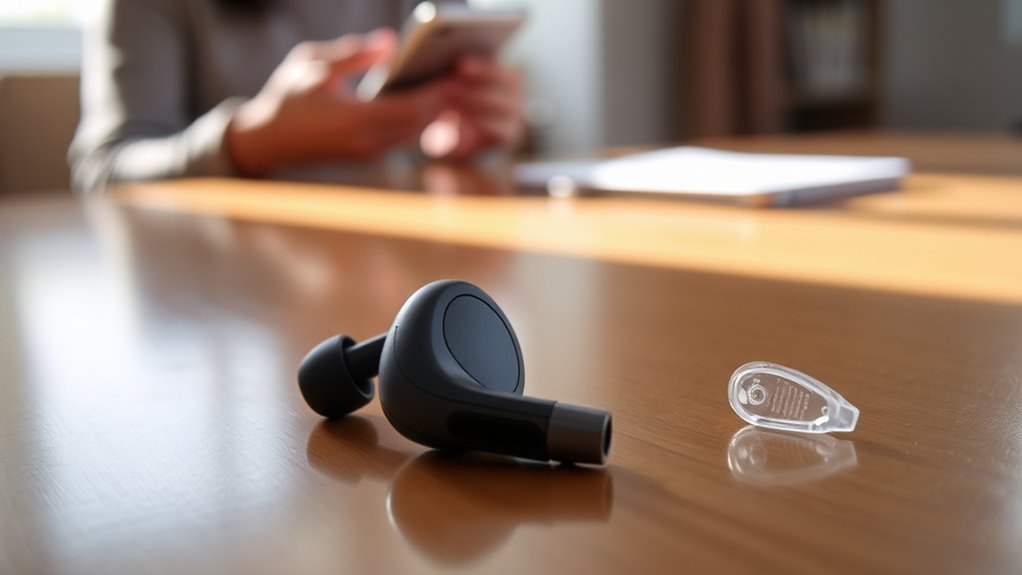

Earbuds aren’t designed to function as hearing aids. They lack the specific amplification and customization necessary for those with hearing loss. While earbuds can enhance sound quality and provide some amplification, they do so indiscriminately, missing essential frequencies and failing to tailor to individual hearing profiles. This can lead to sound distortion and poor user experience. To understand how they differ markedly and the impact on hearing health, you might want to explore further.
Understanding Hearing Loss
Hearing loss is a complex condition that affects millions of people worldwide. It primarily disrupts the intricate hearing mechanisms in your ears, leading to altered sound perception. When sound waves enter your ear, they trigger a series of processes involving the outer, middle, and inner ear, ultimately reaching the auditory cortex in your brain. Any disruption in these pathways can result in diminished hearing abilities. Factors like age, noise exposure, and genetics can contribute to this condition, affecting how well you perceive sounds. Understanding these mechanisms not only empowers you to seek appropriate interventions but also fosters awareness of the importance of protecting your hearing. By grasping the nuances of hearing loss, you can reclaim your auditory freedom and improve your quality of life.
Earbuds vs. Hearing Aids: Key Differences
Understanding hearing loss is vital when considering auditory solutions like earbuds and hearing aids. Earbuds primarily focus on music and casual listening, featuring a standard earbud design that lacks the advanced features tailored for hearing loss. In contrast, hearing aids utilize sophisticated hearing aid technology that amplifies specific frequencies, enhancing speech clarity and reducing background noise. While earbuds may offer some amplification, they don’t provide the personalized fitting and adjustment options vital for individuals with varying degrees of hearing impairment. Furthermore, hearing aids are often programmable and designed to adapt to different listening environments, ensuring peak performance. If you seek true auditory support, it’s important to recognize these key differences before making a choice between earbuds and hearing aids.
Sound Amplification and Clarity
While you might think that all sound amplification is created equal, the reality is that the clarity of sound differs markedly between earbuds and hearing aids. Sound clarity is essential for effective communication, and here’s how the amplification techniques vary:
- Earbuds typically amplify all frequencies indiscriminately, which can muddle sound.
- Hearing aids use advanced algorithms to enhance speech frequencies and reduce background noise.
- The fit of hearing aids guarantees they capture sound directly from the ear canal, improving clarity.
- Earbuds may lack the precision needed for nuanced soundscapes.
- Hearing aids often include customizable settings tailored to individual hearing loss profiles.
Ultimately, if you prioritize sound clarity and targeted amplification, hearing aids are specifically designed for that purpose.
The Role of Technology in Earbuds
In today’s earbuds, advanced sound processing technology enhances audio quality and clarity, essential for effective hearing assistance. Noise cancellation features further improve your listening experience by filtering out background sounds, allowing for clearer communication. Additionally, personalization and adjustability options enable you to tailor the sound profile to your specific hearing needs, optimizing the overall effectiveness of these devices.
Advanced Sound Processing
As technology continues to evolve, the integration of advanced sound processing in earbuds has considerably enhanced their functionality, allowing them to operate similarly to traditional hearing aids. These innovations provide you with greater audio enhancement and adaptive equalization, improving your listening experience. Key features include:
- Real-time sound adjustments: Automatic changes based on your environment.
- Speech enhancement: Focuses on voices while reducing background noise.
- Customizable sound profiles: Tailor audio settings to your personal hearing preferences.
- Directional microphones: Captures sound from specific directions for clarity.
- Bluetooth connectivity: Seamlessly connects to devices, offering convenience and ease of use.
With these advancements, earbuds can empower you to enjoy sound like never before, providing a new level of freedom in auditory experiences.
Noise Cancellation Features
The advancements in sound processing technologies have paved the way for sophisticated noise cancellation features in earbuds, markedly enhancing your listening experience. These earbuds utilize advanced noise isolation techniques, effectively reducing external sounds and allowing you to focus on your audio content. By employing active noise cancellation (ANC) and passive noise isolation, they create a serene auditory environment, making them ideal for various situations. Additionally, audio enhancement features work in tandem with noise cancellation to boost clarity and detail in your sound, ensuring you don’t miss any nuances. This combination provides a more immersive experience, empowering you to enjoy music, podcasts, or calls without distractions. Ultimately, these technologies contribute to a sense of freedom and control over your auditory surroundings.
Personalization and Adjustability
While many earbuds come with standard sound profiles, advancements in technology now enable a high degree of personalization and adjustability tailored to individual preferences. This is particularly beneficial for those seeking custom sound experiences that enhance listening without compromising comfort.
Here are some key adaptive features you might find:
- Equalizer Settings: Tailor bass, mid, and treble levels to your liking.
- Hearing Profiles: Create a unique audio profile based on your hearing capabilities.
- Ambient Sound Control: Adjust how much external noise you want to let in.
- Sound Modes: Switch between different modes for various environments.
- Real-time Adjustments: Use apps to modify sound settings on-the-go.
These features empower you to customize your listening experience, enhancing your auditory freedom.
Limitations of Using Earbuds as Hearing Aids
While earbuds offer convenience, they fall short in several key areas compared to traditional hearing aids. You may notice significant sound quality differences, as earbuds are not designed to filter and amplify specific frequencies essential for hearing impairment. Additionally, their amplification limitations and potential discomfort due to fit can hinder their effectiveness as a substitute for professional hearing devices.
Sound Quality Differences
Although many users may find earbuds convenient for casual listening, their sound quality often falls short when comparing them to traditional hearing aids. The differences in sound fidelity and frequency response can impact the clarity of speech and environmental sounds. Here are some limitations you should consider:
- Limited frequency range, often missing essential high and low frequencies
- Lack of personalized sound adjustments for individual hearing loss
- Inability to filter background noise effectively
- Poor sound amplification tailored for speech recognition
- Reduced dynamic range, affecting overall sound clarity
Ultimately, while earbuds can offer a temporary solution, they can’t match the precise engineering of hearing aids designed specifically for enhancing auditory experiences.
Amplification Limitations
Earbuds lack the necessary amplification capabilities to serve effectively as hearing aids. They’re designed primarily for music playback, not for the precise amplification accuracy required for speech and environmental sounds. Hearing aids amplify specific frequencies based on individual hearing loss profiles, while earbuds provide a flat response curve, leading to inadequate sound enhancement. This can result in sound distortion, where important speech cues may be lost or muddled, making communication difficult. Additionally, earbuds can’t adjust automatically to varying sound environments, a critical feature in hearing aids. Without proper amplification and customization, you may find earbuds fail to meet your hearing needs, ultimately limiting your ability to engage fully in conversations and activities.
Comfort and Fit
When reflecting on the limitations of using earbuds as hearing aids, comfort and fit play a vital role in their effectiveness. Unlike specialized hearing aids, earbuds often lack the precise earbud design needed for ideal fit adjustments. Here are some key points to take into account:
- Pressure Points: Poor fit can create discomfort after prolonged use.
- Sound Leakage: An improper seal can lead to sound escaping, reducing amplification.
- Weight Distribution: Heavier models may cause fatigue during extended wear.
- Inconsistent Fit: One-size-fits-all designs often don’t accommodate individual ear shapes.
- Limited Customization: Unlike hearing aids, most earbuds lack adjustable features for personalized comfort.
Finding a comfortable fit is essential; otherwise, you may sacrifice both hearing clarity and overall enjoyment.
User Experience and Comfort
While finding the right balance between functionality and comfort can be challenging, user experience with earbuds repurposed as hearing aids is increasingly positive. Many users appreciate the lightweight design, allowing for extended wear without discomfort. The adaptability of earbuds to different ear canal shapes enhances user satisfaction, catering to various user preferences. Additionally, advancements in audio technology offer customizable sound profiles, enabling you to fine-tune amplification according to your specific hearing needs. This personal touch considerably contributes to a more enjoyable experience. However, some users may still encounter issues with fit and sound quality over prolonged use. Overall, when considering comfort, earbuds can serve as a viable alternative to traditional hearing aids, empowering you with greater freedom in daily activities.
Cost Considerations and Accessibility
Although traditional hearing aids can be prohibitively expensive, earbuds adapted for hearing enhancement offer a more accessible alternative for many individuals. Conducting a cost analysis reveals that using earbuds can greatly reduce financial barriers, allowing you to prioritize your auditory health without breaking the bank. Here are some key accessibility options to take into account:
Earbuds designed for hearing enhancement provide an affordable and accessible alternative to traditional hearing aids.
- Affordability: Earbuds are generally less expensive than hearing aids.
- Availability: Widely available in retail stores and online.
- Customization: Many earbuds come with customizable settings for diverse hearing needs.
- Technological integration: Can connect seamlessly with smartphones and other devices.
- User-friendly: Simple to use and often come with intuitive apps.
These factors collectively make earbuds a viable option for enhancing hearing while maintaining financial freedom.
Frequently Asked Questions
Can Earbuds Improve Hearing for Individuals With Mild Hearing Loss?
Yes, earbuds can provide mild hearing enhancement through earbud amplification. They may help you hear better in certain situations, but they won’t replace professional hearing aids tailored to your specific hearing loss needs.
Are There Specific Earbuds Designed for Hearing Assistance?
You’ll find specialized earbuds designed for hearing assistance, equipped with advanced technology. These devices can enhance sound clarity and improve overall listening experiences, offering a modern solution for those needing better auditory support without traditional hearing aids.
How Long Can I Wear Earbuds Without Discomfort?
You can typically wear earbuds for about 1 to 2 hours without discomfort, depending on earbud comfort and fit. Prolonged usage duration may lead to ear fatigue or irritation, so take regular breaks.
Do Earbuds Have a Warranty Like Hearing Aids?
Earbuds typically come with limited warranties, often shorter than hearing aids. While hearing aids are designed for longevity, earbuds’ warranty differences reflect their shorter product lifespan, meaning they might not last as long under heavy use.
Can I Use Earbuds While Sleeping or Exercising?
You can use earbuds while sleeping or exercising, but make certain they’re comfortable for sleep and secure for exercise. Prioritize sleep comfort and exercise safety to avoid discomfort or potential injury during your activities.
