
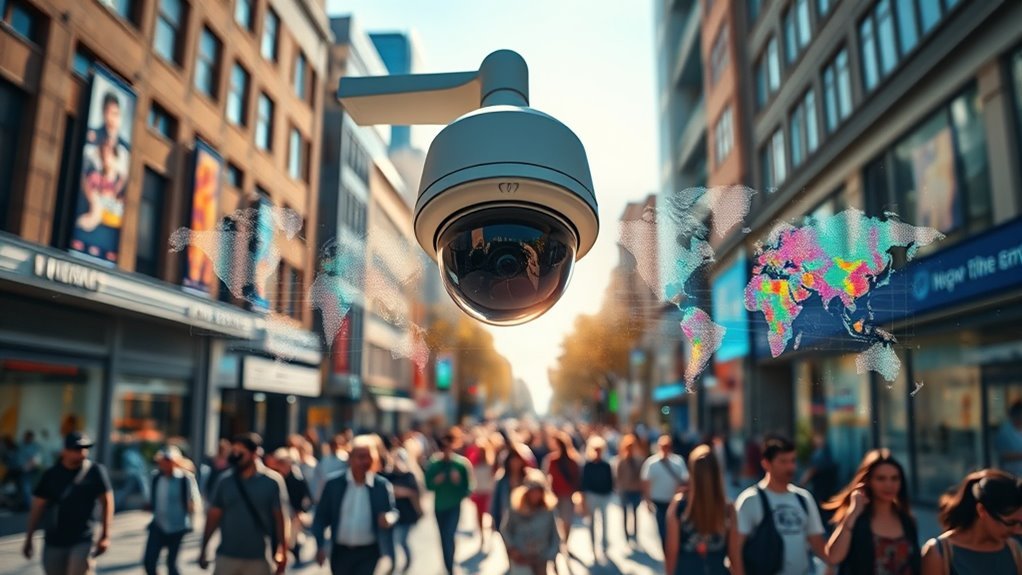

Machine learning is revolutionizing CCTV footage analysis by enhancing pattern recognition, enabling real-time threat detection, and automating incident reporting. You'll benefit from improved operational efficiency as advanced algorithms analyze footage, detect anomalies, and provide actionable insights. Deep learning techniques guarantee accurate object recognition while predictive analytics help in anticipating suspicious behavior. Enhanced algorithms reduce false alarms and streamline resource allocation. Discover how these developments are shaping security strategies across various industries and addressing privacy concerns effectively.
Understanding Machine Learning in Surveillance
As surveillance systems become increasingly complex, understanding machine learning's role in CCTV analysis is crucial for optimizing security operations. Effective data labeling is essential during model training, as it directly affects algorithm performance and surveillance accuracy. By employing feature extraction techniques, you can enhance the system's ability to identify relevant patterns in footage. However, integrating these machine learning models into existing systems raises challenges related to data privacy and ethical implications, warranting careful consideration. User interfaces must be designed to facilitate intuitive data visualization, allowing operators to interpret results effectively. Balancing these technical components with a commitment to individual freedoms guarantees that advancements in CCTV technology serve the greater good without compromising personal rights.
Key Technologies Driving Machine Learning in CCTV
While many technologies contribute to the advancement of machine learning in CCTV, specific innovations stand out for their transformative impact. Deep learning techniques, particularly neural networks, enable sophisticated image processing and computer vision capabilities. These technologies facilitate feature extraction, allowing systems to recognize patterns and objects with remarkable accuracy. Data annotation is essential for training models, ensuring that algorithms learn from well-labeled datasets. Furthermore, algorithm optimization enhances performance, making real-time analysis feasible. Sensor integration and data fusion further enrich the information received from multiple sources, improving context awareness. Together, these elements streamline model training, ultimately leading to more effective surveillance solutions that empower users to make informed decisions without compromising their freedom.
Pattern Recognition and Anomaly Detection
In the domain of CCTV analysis, pattern recognition and anomaly detection leverage advanced algorithm techniques to enhance surveillance effectiveness. These technologies provide real-time insights, enabling swift responses to unusual activities. Additionally, predictive analytics applications allow for proactive security measures by forecasting potential threats based on identified patterns.
Advanced Algorithm Techniques
Advanced algorithm techniques like pattern recognition and anomaly detection are pivotal in enhancing CCTV analysis capabilities. By leveraging deep learning, you can achieve remarkable accuracy in identifying patterns within vast amounts of footage. Key methods include:
- Feature extraction for capturing relevant data points
- Model optimization to improve performance through hyperparameter tuning
- Data augmentation to enrich training datasets, increasing model robustness
- Transfer learning to adapt existing models for new tasks without extensive retraining
Additionally, ensemble methods can combine multiple models for enhanced accuracy, while reinforcement learning and unsupervised learning facilitate adaptive systems. Emphasizing algorithm transparency guarantees you understand the decision-making processes, fostering trust and reliability in automated surveillance solutions.
Real-time Surveillance Insights
As the demand for efficient surveillance increases, real-time insights derived from pattern recognition and anomaly detection become essential. Using advanced machine learning algorithms, you can achieve dynamic monitoring of live CCTV feeds, identifying unusual patterns or behaviors instantaneously. This technology enables real-time alerts, allowing security personnel to respond promptly to potential threats or incidents. By continuously analyzing video data, machine learning systems can distinguish between normal activities and anomalies, enhancing situational awareness. As a result, you're empowered to maintain safety and security in various environments, from public spaces to private properties. Embracing these capabilities not only optimizes surveillance efforts but also fosters a sense of freedom, knowing that advanced technology is actively working to protect your interests.
Predictive Analytics Applications
While machine learning transforms CCTV analysis, predictive analytics applications, particularly in pattern recognition and anomaly detection, are at the forefront of this evolution. These tools allow you to anticipate events, enhancing surveillance efficiency and security measures. By leveraging historical data, you can achieve:
- Predictive maintenance: Identify potential equipment failures before they occur.
- Crime forecasting: Analyze patterns to predict and prevent criminal activities.
- Behavioral analysis: Recognize unusual movement patterns or activities in real-time.
- Operational insights: Boost resource allocation and optimize monitoring strategies.
Incorporating these applications not only empowers you to respond proactively but also fosters a more secure environment, giving you the freedom to focus on what truly matters while technology manages the complexities of surveillance.
Facial Recognition Capabilities
Facial recognition technology has rapidly evolved, with many systems now achieving accuracy rates exceeding 95%. This advancement hinges on sophisticated algorithms that analyze facial biometrics, capturing unique features like the distance between your eyes or the contour of your jaw. As these systems learn from vast datasets, they can also incorporate emotion recognition, identifying subtle facial expressions that convey feelings such as anger or joy. This capability enhances surveillance effectiveness by providing context to identified individuals, allowing for more informed decision-making. However, as you embrace these developments, it's crucial to contemplate the implications for privacy and individual freedom, ensuring that the benefits of facial recognition technologies don't come at the cost of your rights.
Real-Time Data Processing and Analysis
Incorporating real-time data processing and analysis into CCTV systems markedly enhances their operational effectiveness, especially in dynamic environments. You'll find that real-time analytics allows for immediate insights, enabling proactive decision-making. With advanced data visualization techniques, complex information becomes more digestible, allowing you to quickly grasp critical situations.
Incorporating real-time analytics into CCTV systems enhances decision-making and situational awareness in dynamic environments.
- Instant threat detection and alerts
- Improved situational awareness through live feeds
- Enhanced resource allocation based on real-time data
- Data-driven insights for operational improvements
These capabilities not only streamline security operations but also empower you to respond swiftly to emerging threats. By harnessing the potential of machine learning, you can transform traditional surveillance into a powerful tool for safety and efficiency.
Enhancing Security Measures With AI
In enhancing security measures with AI, you'll find that real-time threat detection can greatly reduce response times to incidents. By automating incident reporting, you streamline communication and guarantee that critical information reaches the right personnel without delay. Additionally, integrating predictive analytics allows you to anticipate potential security breaches before they occur, effectively fortifying your defenses.
Real-time Threat Detection
While traditional security measures often rely on human monitoring, real-time threat detection powered by machine learning transforms how we approach safety in public and private spaces. By analyzing video feeds continuously, AI systems can provide real-time alerts, enabling immediate responses to potential threats. This capability drastically improves threat prioritization, allowing security personnel to focus on the most critical issues without sifting through hours of footage.
- Instantaneous identification of suspicious activities
- Reduction in false alarms through advanced algorithms
- Enhanced situational awareness for security teams
- Integration with existing security infrastructure
As you embrace this technology, you'll find that enhanced safety doesn't compromise your freedom; it empowers you to navigate spaces more securely and confidently.
Incident Reporting Automation
As security environments become increasingly complex, automating incident reporting through AI can greatly streamline how organizations respond to security breaches. By integrating automated reporting tools within incident tracking systems, you can guarantee that every security event is logged and analyzed efficiently. These tools utilize machine learning algorithms to categorize incidents, assess severity, and trigger alerts in real-time, enabling swift action. This automation not only reduces human error but also frees up security personnel to focus on proactive measures rather than administrative tasks. Additionally, accurate and timely reports generated by these systems enhance accountability and provide valuable insights for future security strategies. Embracing this technology empowers your organization to foster a more responsive and agile security framework.
Predictive Analytics Integration
Leveraging predictive analytics can greatly enhance security measures by anticipating potential threats before they escalate. By employing predictive modeling, you can analyze historical data and identify patterns, enabling you to predict future incidents. This proactive approach allows for timely interventions, enhancing overall safety.
Key benefits include:
- Threat Identification: Recognize suspicious behavior patterns early.
- Resource Allocation: Optimize personnel deployment based on predicted hotspots.
- Data Visualization: Utilize dashboards for real-time insights into security trends.
- Incident Prevention: Implement preventive measures based on predictive analysis.
Integrating these tools fosters a more secure environment, empowering you to act decisively and intelligently. Embracing these technologies not only enhances your security strategy but also aligns with a desire for freedom and safety.
Applications Across Different Industries
Though many may primarily associate CCTV with security, its integration with machine learning has revealed transformative applications across various industries. In retail security, advanced analytics can recognize suspicious behavior, reducing theft and enhancing loss prevention. Transportation monitoring employs machine learning to analyze traffic patterns, improving congestion management and safety. In healthcare surveillance, intelligent systems can detect anomalies in patient behavior, enabling timely interventions. Public safety benefits from real-time analysis, allowing swift responses to incidents, thereby fostering safer communities. Additionally, event management leverages machine learning to monitor crowd dynamics, ensuring effective resource allocation and emergency preparedness. By embracing these technologies, industries can harness the power of CCTV to enhance operational efficiency and bolster safety measures considerably.
Challenges and Limitations of Machine Learning in CCTV
While the integration of machine learning in CCTV analysis offers numerous advantages, it also presents several challenges and limitations that must be addressed. Confirming data quality is essential, as poor data can lead to inaccurate outcomes. Algorithm transparency is another concern; users need to understand how decisions are made to foster trust. Training bias can skew results, necessitating rigorous oversight to maintain fairness. Additionally, deploying these systems requires substantial computational resources and careful system integration.
The integration of machine learning in CCTV analysis offers benefits but also presents significant challenges that must be carefully managed.
- Data quality management
- Algorithm transparency and user trust
- Addressing training bias
- Maneuvering regulatory compliance
These challenges highlight the need for human oversight and emphasize the importance of real-world applicability to guarantee effective machine learning deployment in CCTV analysis.
Future Trends in CCTV Footage Analysis
As machine learning technologies continue to evolve, the future of CCTV footage analysis is poised for significant advancements that will enhance surveillance capabilities. You can expect future technological advancements to focus on real-time data processing, allowing for instant alerts and actionable insights. Machine learning developments will enable systems to automatically identify and track individuals or objects with unprecedented accuracy, reducing human oversight. Additionally, integration with other smart technologies will facilitate a more cohesive security ecosystem, providing thorough situational awareness. Enhanced predictive analytics will also emerge, allowing for proactive measures against potential threats. Ultimately, these innovations will not only improve security effectiveness but also empower you with greater control and transparency in surveillance practices, aligning with a desire for freedom and privacy.
Ethical Considerations in Machine Learning Surveillance
When implementing machine learning in surveillance systems, you must consider the implications for privacy and the potential for bias. These concerns can considerably affect public trust and the fairness of outcomes generated by these technologies. Addressing these ethical challenges is vital for responsible deployment and acceptance.
Privacy Concerns in Surveillance
How do we balance the benefits of machine learning in CCTV analysis with the urgent need to protect individual privacy? Surveillance ethics demand that we scrutinize how data is collected, stored, and utilized. As machine learning enhances analysis, it's critical to address potential infringements on data privacy. The following points highlight key considerations:
- The necessity of informed consent from individuals being monitored.
- Transparency in how footage is analyzed and used.
- Implementing strict data retention policies to limit exposure.
- Adopting robust security measures to prevent unauthorized access.
Bias and Fairness Issues
While machine learning offers significant advancements in CCTV surveillance, it also raises vital concerns about bias and fairness. Algorithmic bias can lead to unfair treatment of certain demographics, resulting in skewed outcomes that undermine trust in surveillance systems. You must consider the fairness implications of the algorithms employed, ensuring that they are trained on diverse data sets to mitigate bias. Implementing transparency measures and adhering to accountability standards are essential steps in fostering equitable outcomes. Without these practices, there's a risk of perpetuating systemic inequalities, further eroding public confidence. Your role in advocating for responsible AI deployment is essential, as it can drive the development of ethical frameworks that prioritize fairness and inclusivity in machine learning applications within surveillance technologies.
Frequently Asked Questions
How Much Does Machine Learning Surveillance Technology Cost?
When considering machine learning surveillance technology, costs vary considerably based on factors like system complexity, installation, and ongoing maintenance. You'll need to assess your budget considerations to determine the best fit for your needs.
Can Machine Learning Analyze Footage From Older CCTV Systems?
Yes, machine learning can analyze footage from older CCTV systems, but you'll need to guarantee system compatibility. Historical analysis may be limited due to lower resolution, yet advancements can still yield valuable insights from existing data.
What Is the Accuracy Rate of Machine Learning Algorithms in CCTV?
The accuracy rate of machine learning algorithms in CCTV analysis varies, but it often exceeds 90% under ideal conditions. Evaluating accuracy benchmarks and algorithm performance helps guarantee reliable surveillance outcomes, enhancing your security measures effectively.
How Does Machine Learning Improve Over Time in Surveillance Applications?
In surveillance applications, machine learning's data refinement enhances accuracy, while algorithm evolution enables adaptability. As you gather more data, the system learns patterns, improving performance and ensuring timely, precise responses to emerging threats in real-time.
What Are the Privacy Implications of Using AI in CCTV Systems?
When using AI in CCTV systems, you must consider data protection, ethical concerns, and surveillance transparency. Consent issues arise, challenging your freedom and privacy, making it essential to address these implications responsibly for society's benefit.
