
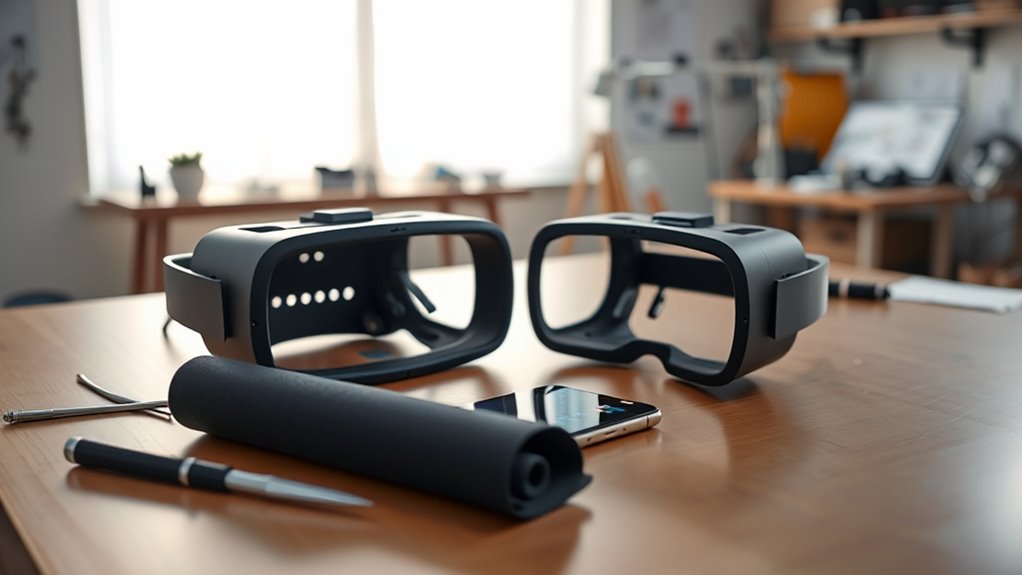

You can make a VR headset without lenses by using cardboard and your smartphone. Start by cutting the cardboard to fit your phone snugly, ensuring it’s secured for safety. Instead of lenses, position your smartphone at the right distance from your eyes to achieve a satisfying field of view. Create a comfortable fit with straps for stability. Customize your design for personal flair. There’s plenty more to discover about optimizing your setup for the best experience ahead.
Understanding the Basics of VR Technology
As you explore the world of virtual reality (VR), it’s essential to grasp the fundamental principles that underpin this immersive technology. VR technology basics revolve around creating a simulated environment that users can interact with in real-time. This is achieved through a combination of hardware and software, which includes head tracking, motion sensors, and stereoscopic displays. The aim is to generate immersive experiences that engage your senses, tricking your brain into feeling present in a virtual space. Understanding these components allows you to appreciate how VR can redefine interaction and enhance creativity. By harnessing these principles, you release the potential for limitless exploration and innovation, ultimately fostering a sense of freedom within digital domains.
Exploring Smartphone-Based VR Solutions
How can you transform your smartphone into a powerful VR device? Start by ensuring your smartphone compatibility with various VR platforms. Download apps specifically designed for VR, such as Google Cardboard or Oculus. These apps leverage your phone’s gyroscope and accelerometer, creating immersive experiences without the need for complex equipment.
Next, consider investing in a quality mobile VR headset that securely holds your smartphone. This setup enhances visual fidelity and provides a comfortable fit. By calibrating the headset to your unique viewing preferences, you can dive deeper into virtual worlds.
Lastly, explore diverse content, from games to educational simulations, expanding your VR horizons. With the right tools, your smartphone can become an extraordinary portal to limitless experiences.
Utilizing Simple DIY Materials
To create a VR headset, you can start with basic materials like cardboard and your smartphone. By carefully adjusting the distance between the screen and your eyes, you can enhance your immersive experience without the need for expensive lenses. This innovative approach allows you to explore virtual reality using resources you already have at home.
Cardboard and Smartphone Setup
Creating a VR headset using just cardboard and a smartphone can be accomplished with minimal resources and a bit of creativity. Start by crafting a cardboard design tailored to your smartphone’s dimensions. Verify the cutouts for the screen align perfectly, as this enhances smartphone compatibility. You’ll need to create a front enclosure that securely holds your device while allowing for good airflow and easy access to buttons. Use a simple strap or elastic bands to keep the headset snug against your face. By pivoting the design to your specific smartphone model, you can achieve an immersive experience without the complexity of lenses. This DIY project empowers you to explore virtual worlds while embracing a minimalist approach to technology.
Adjusting Screen Distance
Once your cardboard headset is ready, fine-tuning the screen distance becomes essential for optimizing your VR experience. You can achieve this by utilizing simple DIY materials like foam or cardboard spacers. Start by placing your smartphone inside the headset and adjusting the distance until the screen calibration aligns perfectly with your eyes. Test for comfort and clarity, making small adjustments as needed. For focus adjustment, consider using a ruler to measure the distance from your eyes to the screen. This precision will enhance immersion and reduce strain. Remember, each individual’s preference varies, so don’t hesitate to iterate until you find the sweet spot. Your freedom to explore VR awaits with these straightforward adjustments!
Creating a Cardboard VR Headset
To create a cardboard VR headset, you’ll need specific materials for assembly, including sturdy cardboard and adhesive. This guide will walk you through a step-by-step construction process to guarantee precision and functionality. Once assembled, testing your VR setup is essential to optimize the immersive experience.
Materials Needed for Assembly
When assembling a cardboard VR headset, gathering the right materials is vital for achieving an effective design. You’ll need sturdy cardboard, scissors, tape or glue, and a smartphone to serve as the display. Consider using a ruler for precise cuts and a pen for marking measurements. Safety precautions are important—ensure you’re careful with sharp tools to avoid injury. Design considerations include ensuring your headset fits comfortably and aligns with your eyes for best viewing. You might also want to include cushioning materials like foam or fabric for comfort during use. Finally, a lens-free design allows for a lightweight experience, promoting freedom of movement while enjoying virtual content.
Step-by-Step Construction Guide
Creating a cardboard VR headset involves a series of straightforward steps that can be completed with basic materials and tools. Follow this guide to commence your DIY projects and immerse yourself in virtual reality.
| Step | Action | Materials Needed |
|---|---|---|
| 1 | Cut the cardboard | Cardboard, scissors |
| 2 | Assemble the frame | Tape, glue |
| 3 | Create lens holders | Cardboard strips |
| 4 | Attach a phone holder | Elastic bands, cardboard |
| 5 | Decorate and customize | Markers, stickers |
Ensure each part fits snugly for an ideal experience. This project not only releases your creativity but also offers a cost-effective way to explore virtual reality without lenses. Enjoy crafting your unique headset!
Testing Your VR Setup
Testing your VR setup is essential to guarantee a seamless experience. Begin by employing various testing techniques to assess the functionality of your cardboard headset. Check for proper alignment of the smartphone and verify the lenses—if applicable—are positioned accurately. Engage different users to gather feedback on comfort, image clarity, and overall immersion. User feedback is imperative; it can highlight issues you might overlook, such as eye strain or distortion. Adjustments based on this feedback can enhance performance and comfort, leading to a more enjoyable experience. Experiment with different apps and environments to see how your setup reacts under various conditions. Fine-tuning your VR headset based on thorough testing and user insights will empower you to enjoy the freedom of immersive experiences.
Using Mirrors for a Lens-less Experience
Although traditional VR headsets rely on lenses to focus images, you can achieve a compelling immersive experience by utilizing mirrors instead. By employing mirror reflections, you can manipulate light pathways, enhancing virtual immersion without needing complex optics. Here’s how to create a mirror-based setup:
- Select High-Quality Mirrors: Choose mirrors that minimize distortion to maintain image clarity.
- Position Strategically: Arrange mirrors at angles that direct light from your screen to your eyes effectively.
- Calibrate Distance: Confirm the distance between the mirrors and your eyes is ideal for viewing comfort.
- Test Different Configurations: Experiment with various mirror placements to find the setup that maximizes your immersive experience.
This innovative approach offers a unique alternative to traditional lens-based designs, granting you freedom in VR creation.
Leveraging Google Cardboard for VR
If you’re looking to explore the world of virtual reality without investing in expensive hardware, leveraging Google Cardboard is an excellent option. This innovative Cardboard design offers a simplistic yet effective way to experience VR. By utilizing your smartphone’s screen, you can transform it into a powerful VR display. The beauty of Google Cardboard lies in its versatility—it’s compatible with a wide range of smartphones, ensuring that you don’t need the latest model to plunge into VR. Simply insert your device, adjust the settings, and you’re ready to immerse yourself in various virtual environments. This approach not only democratizes access to VR but also empowers you to experiment with different apps, enhancing your experience without the burden of costly equipment.
Software Applications to Enhance Your VR Experience
As you immerse yourself in the world of virtual reality, selecting the right software applications can considerably enhance your experience. Prioritize software compatibility with your device to guarantee seamless interaction. Here are four must-have applications:
- VR Games: Engage in immersive gameplay that pushes the boundaries of your headset’s capabilities.
- VR Video Players: Experience 360-degree content, bringing films and documentaries to life in an unparalleled manner.
- Social VR Platforms: Connect with others in virtual spaces, enhancing your social interactions and user experience.
- Creative Tools: Utilize apps that allow you to design and build within virtual environments, giving you the freedom to express your creativity.
Choosing the right software not only optimizes performance but also elevates your overall virtual experience.
Tips for Optimizing Your Lens-less VR Setup
To achieve an ideal experience with your lens-less VR setup, it’s crucial to focus on several key factors that can greatly enhance performance. Proper lens positioning is essential for optimizing image clarity and guaranteeing an immersive experience.
| Factor | Tips |
|---|---|
| Lens Positioning | Adjust distance for best focus |
| Display Quality | Use high-resolution screens |
| Lighting Conditions | Minimize glare and reflections |
| Head Tracking Accuracy | Make sure sensors are unobstructed |
Frequently Asked Questions
Can I Use My Regular Glasses With a Lens-Less VR Headset?
Yes, you can use your regular glasses with a lens-less VR headset, but guarantee proper glasses compatibility. You might need prescription adjustments for ideal clarity, enhancing your immersive experience without compromising comfort or vision accuracy.
What Types of Smartphones Are Compatible With DIY VR Headsets?
Most smartphones with a gyroscope, accelerometer, and a minimum display resolution of 1080p are compatible with DIY VR headsets. Always check smartphone specifications and compatibility factors to guarantee peak performance and immersive experiences.
How Do I Ensure Comfort While Using a Lens-Less VR Headset?
To guarantee comfort with your lens-less headset, prioritize soft headset padding and an ergonomic design. These features cradle your face, allowing for extended use without discomfort, granting you the freedom to immerse in virtual worlds effortlessly.
Are There Any Specific Apps Recommended for Lens-Less VR Experiences?
You’ll find immersive experiences in apps like VRChat and Rec Room. For interactive games, try Beat Saber or Oculus Quest’s library; they’re optimized for diverse setups, ensuring you enjoy freedom and creativity in your lens-less VR adventures.
What Safety Precautions Should I Take While Using a DIY VR Headset?
When using a DIY VR headset, prioritize eye protection with appropriate filters and avoid prolonged use to prevent strain. Guarantee device safety by securing components to prevent accidents, and regularly inspect for wear and potential hazards.
