


Testing speakers involves a combination of listening tests and technical measurements to assess their performance accurately. In this article, you’ll learn how to evaluate speakers through various methods, ensuring you can identify their strengths and weaknesses for an optimal audio experience.
Understanding Speaker Specifications
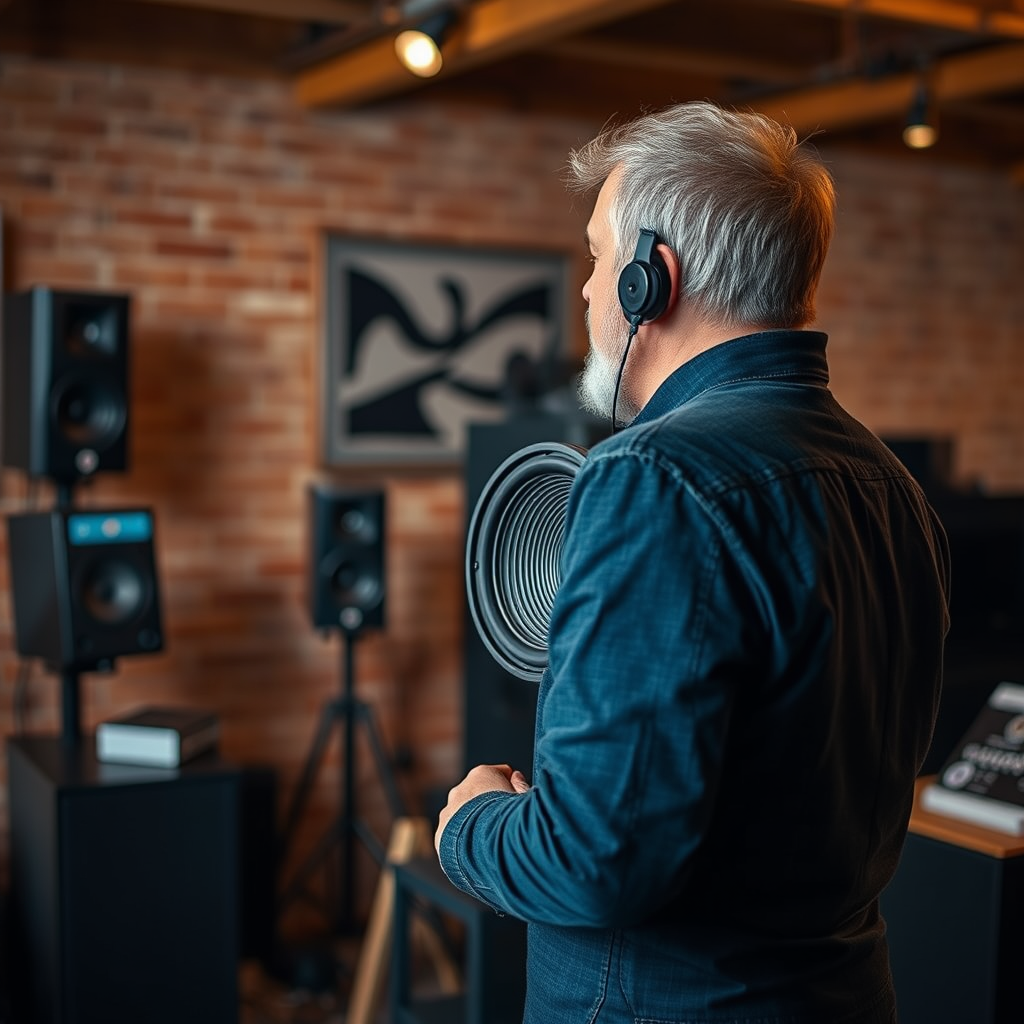
To effectively test speakers, it is vital to familiarize yourself with key specifications that influence sound quality and performance. The most important specifications include frequency response, sensitivity, and impedance.
– Frequency Response: This refers to the range of frequencies a speaker can reproduce, typically measured in Hertz (Hz). A broader frequency response allows for a more detailed audio experience. For example, a speaker with a frequency response of 20 Hz to 20 kHz can handle deep bass and high treble, providing a fuller sound.
– Sensitivity: Measured in decibels (dB), sensitivity indicates how efficiently a speaker converts power into sound. A higher sensitivity rating means that a speaker will produce more sound at a given power level. This is particularly important when considering amplification.
– Impedance: This is the measure of resistance a speaker presents to an amplifier, usually expressed in ohms (Ω). Most home audio speakers are rated at 4, 6, or 8 ohms. Impedance affects how much power is drawn from the amplifier and can impact sound quality if mismatched.
Understanding these specifications is crucial because they impact not only the performance of the speakers but also their compatibility with audio equipment. Knowing what to look for can help you make informed decisions when selecting speakers for your audio setup.
Preparing for the Test
Preparing for a speaker test is just as important as the test itself. The environment in which you conduct your tests can greatly influence the results.
– Choose a Suitable Listening Environment: Find a quiet room with minimal background noise and adequate acoustics. Ideally, a space that can be treated acoustically with soft furnishings will help prevent sound reflections that can distort your perception of the speakers’ performance.
– Select High-Quality Audio Tracks: Choose audio tracks that encompass a wide range of frequencies and dynamics. A well-rounded selection might include classical pieces, rock, jazz, and electronic music. Look for recordings that are known for their high fidelity to ensure you are evaluating the speakers under optimal conditions.
Conducting Listening Tests
Listening tests are essential for evaluating the subjective performance of speakers.
– Play Various Audio Tracks: As you listen, pay attention to critical factors such as clarity, balance, and distortion. For instance, assess how well the speakers handle vocals. Are the voices natural and clear? Do instruments blend well without overpowering each other?
– Compare Sound Quality: Use the same audio source for different speakers to maintain consistency. This comparison helps you identify differences in sound quality effectively. Take notes on your observations to help you remember which speaker performed better in specific areas.
Speaker Performance Comparison
Speaker Performance Comparison (2024)
| # | Speaker Model | Frequency Response | Sensitivity | Impedance | Price |
|---|---|---|---|---|---|
| 1 | Bose 901 | 30Hz – 20kHz | 89 dB | 4 Ω | $1,299 |
| 2 | Klipsch RP-600M | 45Hz – 25kHz | 96 dB | 8 Ω | $649 |
| 3 | Yamaha NS-6490 | 45Hz – 20kHz | 90 dB | 8 Ω | $299 |
| 4 | Polk Audio T50 | 38Hz – 24kHz | 89 dB | 8 Ω | $199 |
| 5 | JBL Studio 530 | 45Hz – 24kHz | 86 dB | 8 Ω | $299 |
| 6 | Infinity Reference R162 | 55Hz – 40kHz | 89 dB | 8 Ω | $249 |
| 7 | KEF Q150 | 51Hz – 28kHz | 86 dB | 8 Ω | $599 |
Using Measurement Tools
In addition to subjective listening tests, technical measurements can provide valuable insights into speaker performance.
– Explore Measurement Tools: Tools like sound level meters and frequency analyzers can help you gather technical data about the speakers. Sound level meters measure the sound pressure level (SPL) in decibels, while frequency analyzers display the frequency response curve, allowing you to visualize how a speaker performs across the audible spectrum.
– Learn to Interpret Measurements: Understanding the data collected is crucial. For instance, a flat frequency response graph indicates that the speaker reproduces sound evenly across all frequencies, which is generally desirable. Look for peaks and dips in the response, as these can indicate coloration in the sound that may affect listening experiences.
Testing Connectivity and Compatibility
When testing speakers, ensuring compatibility with various audio sources is essential.
– Verify Connectivity: Check that speakers function properly with different devices, such as amplifiers, AV receivers, and mobile devices. This not only guarantees versatility in usage but also allows you to assess how the speakers perform across various platforms.
– Inspect Cables and Connections: Poor-quality cables or faulty connections can severely impact sound quality. While testing, ensure that all connections are secure, and consider trying different cables to rule out any issues that may arise from connectivity.
Evaluating Speaker Placement
The placement of speakers within a room can significantly affect their performance.
– Experiment with Placement: Try positioning the speakers in various locations to find the optimal setup for soundstage and imaging. For example, placing speakers at ear level and equidistant from the listening position can enhance stereo imaging.
– Consider Room Acoustics: Room features, such as walls, furniture, and floor materials, can impact how sound waves behave. Consider utilizing acoustic panels or bass traps to manage sound reflections and improve overall audio quality.
Documenting Your Findings
Keeping a detailed log of your testing process is vital for making informed decisions.
– Maintain a Test Log: Document your tests and observations for each speaker. Note the specifications, subjective listening impressions, and measurement results. This log will serve as a valuable resource when comparing different models or making future upgrades.
– Use Notes for Decision Making: Analyze the documented findings to identify trends, strengths, and weaknesses of each speaker. This information will assist you in making educated choices, whether you’re purchasing new speakers or fine-tuning your existing audio setup.
By following these steps, you can ensure that your speakers deliver the best possible sound quality. Testing speakers effectively combines subjective listening experiences with objective measurements, allowing for a comprehensive evaluation of audio performance.
In summary, understanding speaker specifications, preparing adequately, conducting thorough tests, utilizing measurement tools, ensuring compatibility, and documenting findings are all vital components of the speaker evaluation process. Ready to put your testing skills to the test? Start evaluating your speakers today!
Frequently Asked Questions
How can I test the sound quality of my speakers at home?
To test the sound quality of your speakers, start by playing a variety of audio tracks that span different genres and frequencies. Listen for clarity in vocals, balance in instruments, and the richness of bass. You can also use sound test tracks available online that feature specific frequencies to help identify any weaknesses or distortions in your speakers.
What tools do I need to effectively test my speakers?
While you can test speakers using just your ears, utilizing tools like a sound level meter app and frequency response test tones can provide more accurate results. A frequency response test can help you analyze how well your speakers reproduce specific tones, while a sound level meter can help ensure that volume levels remain consistent during your tests.
Why are my speakers producing distorted sound, and how can I test for this issue?
Distorted sound from speakers can be caused by a variety of issues, including loose connections, damaged drivers, or poor source material. To test for distortion, play a track with a strong bass line at moderate volume and listen for any rattling or unclear sounds. If distortion occurs, check all connections, try different audio sources, and consider testing with other speakers to isolate the problem.
What is the best way to test subwoofers in a speaker system?
The best way to test subwoofers is to play bass-heavy music or specific test tones that focus on low frequencies. Ensure that the subwoofer is properly calibrated and that the crossover settings on your receiver are optimized. Pay attention to the tightness and clarity of the bass response, as well as how well the subwoofer integrates with the rest of your speaker system.
Which audio sources are best for testing speakers and ensuring accurate results?
For accurate testing of your speakers, use high-quality audio sources such as lossless files, CDs, or streaming services that offer high-resolution audio. Avoid compressed formats like MP3 for critical listening, as they may not fully represent the speaker’s capabilities. Additionally, consider using a variety of genres and recordings to assess the speakers across different sound profiles.
References
- Loudspeaker
https://en.wikipedia.org/wiki/Loudspeaker - https://www.bbc.com/future/article/20201201-how-do-you-test-a-sound-system
https://www.bbc.com/future/article/20201201-how-do-you-test-a-sound-system - https://www.cdc.gov/niosh/topics/noise/testing.html
https://www.cdc.gov/niosh/topics/noise/testing.html - https://pubmed.ncbi.nlm.nih.gov/29483540/
https://pubmed.ncbi.nlm.nih.gov/29483540/ - https://www.sciencedirect.com/topics/engineering/loudspeaker
https://www.sciencedirect.com/topics/engineering/loudspeaker - https://www.nature.com/articles/s41598-021-83421-w
https://www.nature.com/articles/s41598-021-83421-w - Google Scholar Google Scholar
https://scholar.google.com/scholar?q=how+to+test+speakers - Google Scholar Google Scholar
https://scholar.google.com/scholar?q=loudspeaker+testing - Google Scholar Google Scholar
https://scholar.google.com/scholar?q=speaker+performance+evaluation - Antidepressants: Selecting one that’s right for you – Mayo Clinic
https://www.mayoclinic.org/healthy-lifestyle/consumer-health/in-depth/noise-pollution/art-20046273
