


Excessive television viewing can contribute to speech delays in children, particularly when it replaces interactive communication. Research suggests that while television can provide educational content, it lacks the interactive elements necessary for language development. This article explores the intricate relationship between screen time and language development, providing insights into how parents can foster better speech skills in their kids.
Understanding Speech Delay
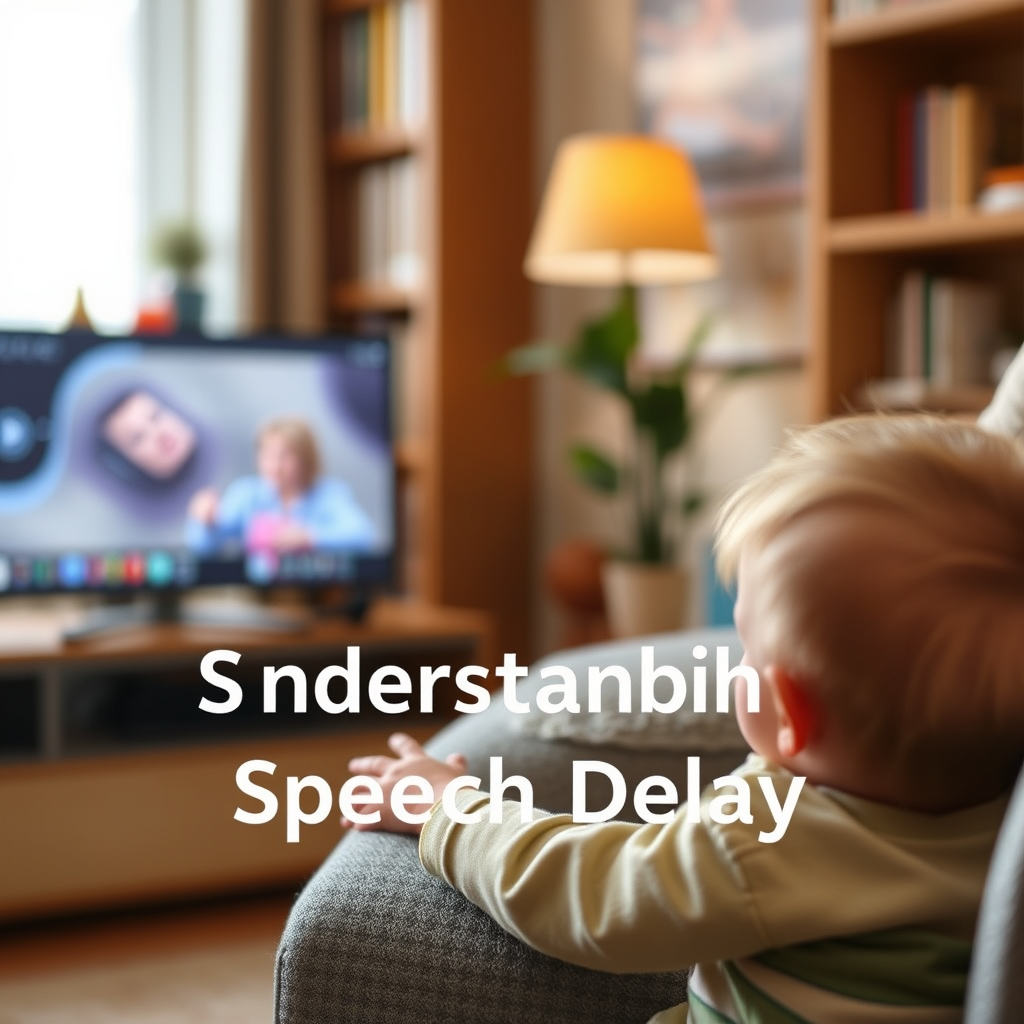
Speech delay is defined as a condition where a child’s speech development is significantly behind that of their peers. Common signs of speech delay include limited vocabulary, difficulty forming sentences, trouble articulating words, and challenges in following directions. Children typically reach specific speech development milestones at various ages: by 12 months, they should say their first words; by 24 months, they should use simple two-word phrases; and by age 3, they should be able to form short sentences and be understood by family members.
The first three years of a child’s life are crucial for language acquisition. During this period, the brain is highly receptive to learning sounds, words, and the nuances of language. Delays in speech can lead to broader developmental issues, including difficulties in social interactions and academic performance later in life. Therefore, it is essential to recognize the signs of speech delay early and address any concerns.
The Impact of Television on Language Skills
Television viewing, especially when excessive, can limit the opportunities for interactive language experiences that are vital for young children. Passive viewing does not engage children actively in conversation or critical thinking, both of which are essential for language development. Unlike face-to-face interactions, where children can ask questions and receive immediate feedback, television does not provide such dynamic exchanges.
Numerous studies have explored the link between high screen time and delayed speech development. For instance, a study published in the journal “Pediatrics” found that children who watched more than two hours of television per day were more likely to exhibit language delays at age 2. Another research project highlighted that children who had limited exposure to interactive communication, such as reading and talking with adults, showed slower language acquisition compared to their peers who engaged in more interactive activities. This evidence underscores the need for parents to monitor their children’s screen time and prioritize interactive forms of communication.
Recommended Screen Time Guidelines
Pediatric experts recommend that children aged 2 to 5 should have no more than one hour of high-quality programming each day, while children under 18 months should avoid screen time altogether, except for video chatting. These guidelines emphasize the importance of age-appropriate content and the benefits of co-viewing, where parents watch programs together with their children. This practice allows for discussions about the content and helps reinforce learning through active engagement.
The American Academy of Pediatrics (AAP) suggests that parents should not only monitor the quantity of screen time but also the quality. Educational programs that promote interaction, such as those that encourage children to sing along or answer questions, can be beneficial. Co-viewing and discussing the content can enhance understanding and retention, making screen time a more productive part of a child’s day.
Impact of Screen Time on Speech Development (2023)
| # | Screen Time (hrs/day) | Percentage with Speech Delay | Recommended Action |
|---|---|---|---|
| 1 | < 1 hr | 10% | Encourage Interactive Play |
| 2 | 1 – 2 hrs | 20% | Limit Screen Time |
| 3 | 2 – 3 hrs | 35% | Seek Professional Guidance |
| 4 | > 3 hrs | 50% | Immediate Intervention Needed |
| 5 | 1 hr (Co-Viewing) | 5% | Promote Family Interaction |
| 6 | 2 hrs (Educational) | 15% | Encourage Discussion |
| 7 | 3 hrs (Passive) | 45% | Reduce Immediately |
Alternative Activities to Encourage Speech Development
To encourage speech development, parents can explore a variety of interactive activities that promote language skills. Interactive games, such as puzzles that require verbal instruction or role-playing games, can provide children with the opportunity to practice their language skills in a fun context. Reading aloud to children is another powerful tool; it not only exposes them to new vocabulary but also invites them to engage in discussions about the story, characters, and plot.
Playtime is essential in language learning and social skills development. Activities such as building blocks, arts and crafts, or outdoor play can stimulate conversation and encourage children to express themselves verbally. For instance, during a craft session, parents can ask open-ended questions about the child’s creations, prompting them to elaborate on their thoughts and ideas. This type of interaction fosters not only speech development but also critical thinking and creativity.
Signs of Healthy Communication Development
Parents should be aware of the typical markers of healthy speech development. By age 1, most children should be able to say a few words; by age 2, they should be able to form simple sentences; and by age 3, they should be able to express thoughts clearly and be understood by unfamiliar adults. Other indicators of healthy communication include the ability to follow simple directions, engage in conversation, and use a variety of words to express needs and feelings.
If parents notice significant delays, such as a lack of verbal communication or failure to follow age-appropriate milestones, it is essential to seek professional help. Speech-language pathologists can provide assessments and tailored intervention strategies to support children experiencing delays in speech and language development.
Strategies for Reducing Screen Time
To effectively limit television exposure and promote better speech development, parents can adopt several practical strategies. One effective approach is to establish a family media plan that outlines appropriate screen time limits based on age and developmental needs. Parents can also designate screen-free times or zones within the home, such as during meals or in bedrooms, to encourage family bonding and conversation.
Engaging family activities can replace screen time and foster communication. Organizing game nights, family walks, or cooking sessions can provide opportunities for interaction and language practice. Additionally, parents can model good communication habits by being present and actively listening to their children, encouraging them to express themselves freely.
Incorporating educational and interactive content, when screen time is permitted, can also be beneficial. By choosing programs that promote interaction or discussion, parents can ensure that screen time is a productive component of their child’s day.
In summary, while too much TV can potentially hinder speech development, parents can take proactive steps to encourage healthy communication skills. By balancing screen time with interactive and engaging activities, you can help your child thrive linguistically. Consider setting screen time limits and exploring alternative activities that promote speech and language growth.
Frequently Asked Questions
Can too much TV watching lead to speech delay in children?
Yes, excessive TV watching can contribute to speech delay in children, as it may limit their opportunities for interactive communication. Engaging in conversations and playing with peers are crucial for language development, and too much screen time can hinder these interactions.
How does screen time impact language development in toddlers?
Screen time can impact language development in toddlers by reducing the time they spend engaging in verbal interactions with caregivers and peers. When toddlers watch TV instead of participating in conversations or play, they miss out on essential language-learning experiences that foster vocabulary and speech skills.
Why is interactive play important for preventing speech delays?
Interactive play is important for preventing speech delays because it encourages children to express themselves, ask questions, and learn new words in a natural context. Through play, children develop social skills and gain exposure to language structures that are vital for their communication development.
What are the recommended limits for screen time in young children?
The American Academy of Pediatrics recommends that children aged 2 to 5 should have no more than one hour of high-quality screen time per day. For children under 2, it is advised to avoid screen time altogether, focusing instead on interactive activities that promote speech and language development.
Which types of programs are best for supporting speech development in kids?
Educational programs that are interactive and encourage participation, such as shows that ask questions or include songs and rhymes, are best for supporting speech development in kids. Look for content that promotes storytelling, vocabulary building, and encourages children to respond verbally to enhance their language skills.
References
- https://www.ncbi.nlm.nih.gov/pmc/articles/PMC5613714/
https://www.ncbi.nlm.nih.gov/pmc/articles/PMC5613714/ - https://www.cdc.gov/childrensmentalhealth/development.html
https://www.cdc.gov/childrensmentalhealth/development.html - https://www.mayoclinic.org/healthy-lifestyle/childrens-health/in-depth/television-and-your-child/art-20046423
https://www.mayoclinic.org/healthy-lifestyle/childrens-health/in-depth/television-and-your-child/art-20046423 - Physical activity
https://www.who.int/news-room/fact-sheets/detail/physical-activity - https://www.britannica.com/topic/speech-delay
https://www.britannica.com/topic/speech-delay - https://www.nichd.nih.gov/health/topics/speech/conditioninfo/development
https://www.nichd.nih.gov/health/topics/speech/conditioninfo/development - Google Scholar Google Scholar
https://scholar.google.com/scholar?q=can+too+much+tv+cause+speech+delay - Google Scholar Google Scholar
https://scholar.google.com/scholar?q=television+effects+on+child+development - Google Scholar Google Scholar
https://scholar.google.com/scholar?q=language+development+and+screen+time - https://www.sciencedirect.com/science/article/pii/S009174351830080X
https://www.sciencedirect.com/science/article/pii/S009174351830080X
