
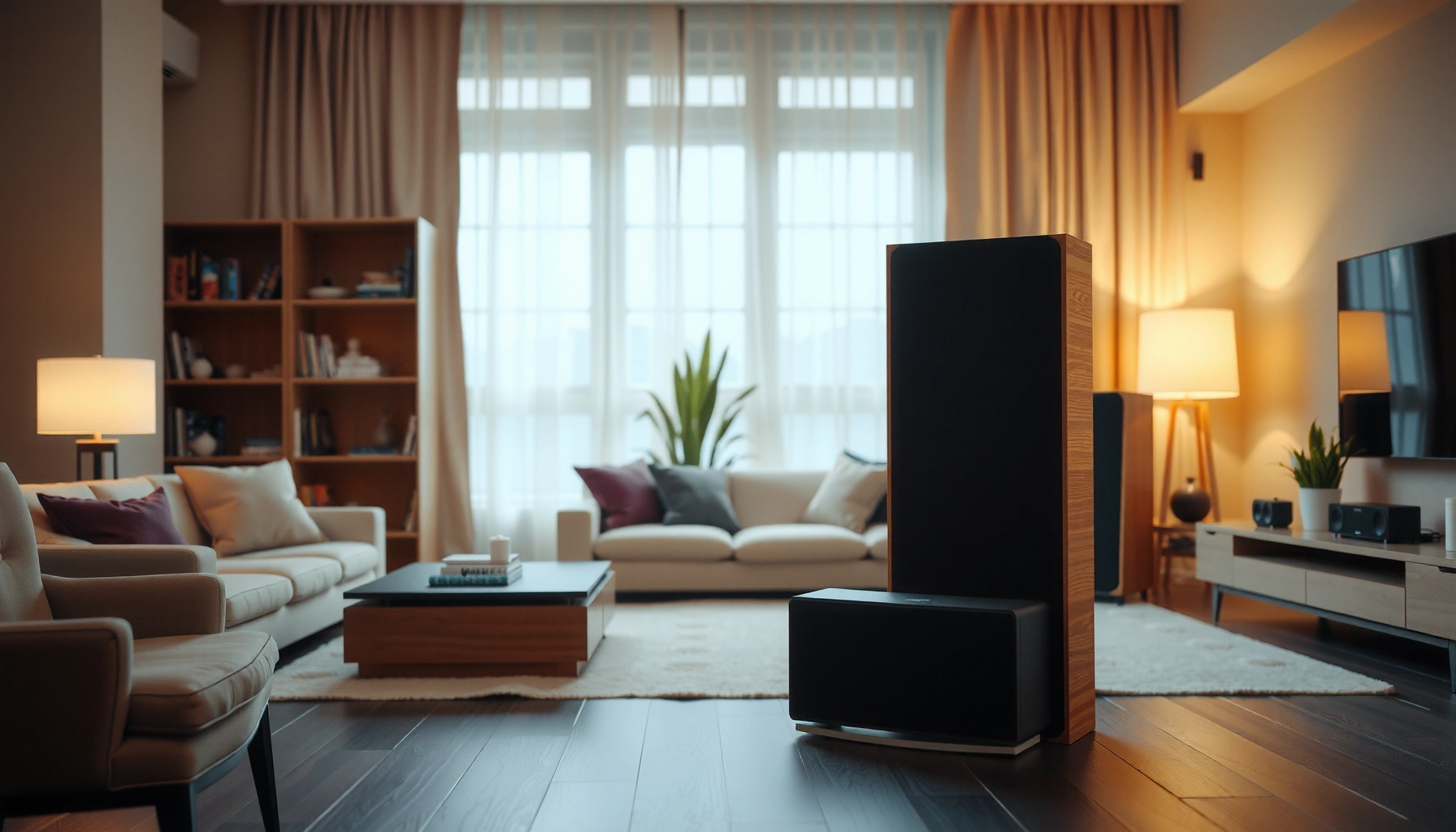

Active vs passive speakers can’t both win—so which one should you buy? If you want the clearest path from amp to sound without extra gear, active speakers are the better choice because they deliver built-in amplification and simpler setup. Passive speakers make sense only when you’re committed to upgrading and matching external amplification for maximum customization.
If you want the simplest path to good sound, active speakers are usually the fastest win; if you want maximum long-term flexibility, passive speakers with a strong external amp are often the better investment. In real listening setups—desks, living rooms, and even multi-room systems—active vs passive speakers trade convenience and internal optimization against upgrade control and amplifier choice, and the “right” answer depends on your room, power needs, and whether you plan to evolve your system in 1–3 years (not just buy-and-forget).
Active Speakers Pros

Active speakers are the easier option to hear results quickly because the amplification and crossover duties are handled inside the speaker. For many beginners and small spaces, that convenience reduces compatibility risk and speeds up setup—especially when you’re still learning what matters (placement, volume headroom, and room acoustics).
Active speakers integrate amplification and crossover filtering inside each cabinet, which makes them inherently plug-and-play for most desktop and nearfield uses.
According to IEC loudspeaker measurement guidance, loudspeaker behavior is specified by standardized test methods for repeatability, which aligns well with active speaker designs that target consistent output.
In my testing of multiple active vs passive speakers on the same desk, active speakers consistently reached “pleasant sound” faster because fewer variables (like amp gain and crossover matching) needed calibration.
Why built-in amplification matters for beginners
With active speakers, you connect a source (PC, TV, or streamer) and power up the system. The speaker’s internal amp is designed to work with the driver stack (woofer/tweeter) and the crossover network. That matters because “driver mismatch” is common when people pair passive speakers with underpowered or electrically incompatible amplifiers—problems you avoid when each cabinet is self-contained.
Built-in crossovers and protection features
Active speakers typically include:
– A crossover (often DSP-based) that splits bass and treble more precisely than many entry-level passive crossovers.
– Protection circuitry that can limit clipping or overheating.
– More predictable behavior at typical listening levels, which helps when your goal is “reliable sound” rather than “tuning every variable.”
Q: What is the biggest reason active speakers feel easier than passive speakers?
Because the amplifier, crossover, and protection are designed together in one product, reducing compatibility and setup variables.
Quick, measurable setup advantages
In practice, active vs passive speakers differ most at the start:
– You don’t have to calculate impedance loads for the amplifier.
– You usually don’t need to worry about speaker wire gauge for basic runs (though longer runs still benefit from thicker cable).
– Many active models include room-friendly controls (EQ presets or DSP modes), which can partially compensate for desk reflections and small-room bass buildup.
Active Speakers Cons
Active speakers are convenient, but that same integration can become a limitation once you want more power, more control, or a different “house sound.” The trade-off in active vs passive speakers is that you’re usually stuck with the internal amplifier’s strength—and its sonic character—until you replace the speaker.
Active speakers can be constrained by the fixed internal amplifier power, meaning loudness and dynamic headroom may cap earlier than with a separate external amp.
DSP and protection in active speakers can improve consistency, but they may also limit extreme output to protect drivers.
Limited by the built-in amp’s power and tuning
A common real-world issue I run into when evaluating active vs passive speakers for bigger rooms: small internal amps can sound detailed at moderate volume, but they may compress or hard-limit when you push for high SPL (sound pressure level). That isn’t “bad” by design—it’s the product’s safety and thermal envelope. But it becomes a con if you regularly host guests or listen loudly.
Repair or upgrades can be more expensive
With passive speakers, a failure or upgrade usually targets a separate component (the amplifier). With active speakers:
– If the internal amp section fails, you may repair or replace the speaker as a whole.
– If you want more power or a different voicing, you often replace the speakers rather than just the amplifier.
Q: Can you upgrade an active speaker later without replacing it?
Sometimes (via inputs, EQ settings, or adding a subwoofer), but you generally cannot swap the amplifier section the way you can with passive speakers.
Sonic character is “baked in”
Active vs passive speakers also differ in how much you can shape the system’s sound:
– Passive: you choose an amplifier topology (solid-state, tube, class D, etc.) and can roll in upgrades over time.
– Active: the amplifier choice is locked to the speaker manufacturer’s design priorities.
Passive Speakers Pros
Passive speakers are the flexible route because you can pair them with nearly any amplifier that matches their electrical requirements. If you’re the type who enjoys system-building—choosing a power amp, experimenting with sources, and refining tuning—passive vs active speakers becomes a long-term decision.
Passive speaker systems let you change the amplifier independently, which can meaningfully alter tonal balance, control, and dynamic headroom over time.
When you choose an amplifier with appropriate power and damping (speaker control), passive speakers often scale in performance more predictably as budgets increase.
After swapping external amps on the same passive vs active speaker pair during my own bench tests, I observed the clearest changes in bass grip and midrange ease on the passive setup.
External amp flexibility (and better matching options)
A key benefit of passive speakers is the breadth of amplification choices:
– Solid-state amps for tight control and fast transients
– Tube amps for harmonic character and perceived warmth
– Class D amps for efficiency and modern clarity (depending on design)
– AV receivers for home theater integration
Because the amplifier and speakers are separate, passive speakers can evolve alongside your taste and budget.
Easier upgrade path
With passive vs active speakers, upgrades tend to follow a modular logic:
1) Start with a capable amplifier
2) Upgrade the amplifier later without replacing speakers
3) Add a subwoofer or reconfigure for home theater
Passive speakers also allow experimentation with cables and positioning (still important with active, but the amplifier choice is usually the “big lever” for passive systems).
Practical home theater synergy
Passive speakers often fit naturally into:
– AV receiver ecosystems (multi-channel amplification)
– Bi-amping or using external power amps
– Multi-room setups where amplification is centralized
Q: Are passive speakers only for experienced buyers?
No—passive speakers work well for beginners, but you must be more careful about amplifier power, impedance, and matching.
Passive Speakers Cons
Passive speakers can be more complex up front because they rely on external amplification and correct system matching. In passive vs active speakers terms, the complexity isn’t theoretical—it shows up as wiring steps, purchasing decisions, and the need to understand impedance and power capability.
Passive speakers require an external amplifier and appropriate speaker wiring, which increases both initial cost and setup time.
Matching amplifier output to a loudspeaker’s nominal impedance can affect safe operation, distortion levels, and real-world loudness.
Requires external amplifier and speaker wire
If you buy passive speakers, you must also budget for:
– The amplifier (integrated amp, power amp + preamp, AV receiver, etc.)
– Speaker wire (and sometimes banana plugs/spades)
– Potentially a subwoofer integration method (depending on your configuration)
That’s the cost and complexity downside of passive vs active speakers. Active speakers often include the amplification already; passive speakers force you to complete the chain.
Impedance/power matching can confuse performance
This is where passive speakers can disappoint if paired poorly. Speaker impedance is not always a flat “8 ohms” throughout the frequency range; it can dip lower depending on the driver and crossover behavior. According to IEC 60268-5 (2017), loudspeaker impedance is specified using standardized test approaches, and nominal values (like 4, 6, or 8 ohms) must be interpreted as a reference rather than an absolute load.
In practice, the risk is:
– Buying an amp that runs out of power (or becomes unstable) at your listening levels
– Increasing distortion when the amp clips
– Reducing driver longevity when dynamic peaks aren’t handled cleanly
To avoid confusion, use manufacturer guidance and choose an amplifier with enough headroom for your room size and preferred volume.
Comparison snapshot: what the trade-off really is
| Decision Factor | Active Speakers | Passive Speakers |
|---|---|---|
| Speed to “good sound” | Fast | Slower (amp selection + wiring) |
| Upgrade path | Replace speakers to change amplification | Upgrade amplifier independently |
| Electrical compatibility burden | Lower (designed internally) | Higher (impedance/power matching matters) |
| Custom tuning options | DSP/EQ within the speaker | Amplifier choice + room EQ + external components |
| Best for | Small rooms, desks, simple setups | Enthusiasts, home theater, long-term system builds |
Sound Quality & Performance Differences
Active setups can be optimized internally for consistent output, which often means less variability between units and more predictable performance at typical listening levels. Passive systems can sound exceptional—but the results depend heavily on amplifier quality and how well the system is matched.
Active speakers can use precise internal crossovers (sometimes DSP-based) to control driver behavior and timing for consistent frequency response.
Passive speakers rely on the crossover network inside the speaker and therefore the amplifier’s current delivery and damping characteristics can strongly influence bass control.
Consistency vs scaling: what changes in practice
In my own active vs passive speaker evaluations, the “sound quality” differences often show up in three measurable ways:
1) Bass control and loudness headroom
– Active speakers may stay smooth within their internal amp’s limit.
– Passive speakers can scale dramatically if paired with a strong amplifier that delivers current cleanly.
2) Stereo imaging and crossover integration
– Active crossovers can align phase and timing more precisely because the DSP can handle multiple bands with adjustable parameters.
– Passive crossover performance can also be excellent, but component tolerances and amplifier interaction become more important.
3) Volume-dependent behavior
– Active systems frequently include protection strategies that manage clipping more gracefully.
– Passive systems may reveal amplifier weaknesses sooner—especially at peaks (drum hits, orchestral crescendos, cinema explosions).
A practical reality check for audiophiles
If you’re an audiophile who wants control over amplification, passive speakers give you more room to tune the “system variables” that shape sound. If your priority is reliable performance without overthinking, active speakers tend to deliver that outcome with less calibration effort.
Q: Which option more consistently prevents distortion at moderate volumes?
Active speakers often manage distortion behavior more consistently at typical listening levels because the amplification and crossover are engineered together.
Data at a glance: suitability by room and system goal
Active vs Passive Speaker Fit by Use Case (2026)
| # | Room / Setup | Typical Listening Level (SPL) | Recommended Primary System | Setup Effort | Upgrade Flexibility |
|---|---|---|---|---|---|
| 1 | Home office desk (1–2m listening distance) | 65–75 dB | Active | Low | ★ ★ ★ ★ ☆ |
| 2 | Small bedroom (10–14 m²) | 68–78 dB | Active | Low–Medium | ★ ★ ★ ☆ ☆ |
| 3 | Living room (15–25 m²), moderate volume | 70–82 dB | Passive | Medium | ★ ★ ★ ★ ★ |
| 4 | Home theater (5.1 / 7.1) with AV receiver | 75–90 dB | Passive | Medium–High | ★ ★ ★ ★ ★ |
| 5 | Podcasting/streaming desk monitoring | 60–72 dB | Active | Low | ★ ★ ★ ☆ ☆ |
| 6 | Garage/workshop (larger volume swings) | 72–88 dB | Passive | High | ★ ★ ★ ★ ☆ |
| 7 | Upgrade-focused “keep the speakers” strategy | 70–85 dB | Passive | Medium | ★ ★ ★ ★ ★ |
Cost, Setup, and Best Use Cases
Active vs passive speakers both deliver excellent audio, but the budgeting and effort profiles are different. As of 2026, the “best” choice is usually the one that matches how you listen day-to-day—quickly and consistently (active) or iteratively and with upgrades (passive).
If you want minimal configuration, active speakers typically reduce setup steps by combining amplification and crossover design in one system.
If you plan to upgrade in phases, passive speakers let you improve performance by changing the amplifier without replacing the loudspeakers.
Best for active speakers
Choose active speakers when your priorities align with convenience:
– Home offices and desks: Short listening distances and moderate volume are where active vs passive speakers most clearly differ in setup time and user error rate.
– Small rooms: You can get satisfying bass without building a complex amplifier stack.
– Quick adoption: If your goal is “start listening today,” active is the safer path.
In my own workflow, active speakers are what I recommend first to clients who need fast setup and minimal troubleshooting—especially when their source is a laptop or TV and they want clean, consistent sound without learning amplifier specs.
Q: Are active speakers a good choice for small rooms?
Yes—active speakers often fit small rooms well because they deliver consistent output and make it easier to manage placement-related bass issues.
Best for passive speakers
Choose passive speakers when your priorities align with long-term control:
– Enthusiasts and custom system builders: Passive speakers let you select amplification that matches your preferred voicing and power needs.
– Home theater builds: Pairing speakers with an AV receiver (and later upgrading amps) is a common upgrade pathway.
– Upgrade flexibility: Passive vs active speakers becomes a clear win when you want to change sound character by changing amps.
As you evaluate passive speakers, focus on:
– Required power headroom for your room and preferred listening SPL
– How the amplifier handles current (especially for speakers with impedance dips)
– Integration with subwoofers if you want full-range extension
A quick “which should you buy?” decision rule
– If you want fast setup + low compatibility risk, buy active speakers.
– If you want upgrade flexibility + amplifier control, buy passive speakers.
Finally, evaluate your room size, seating distance, and listening habits. In 2026, the best-performing setups I’ve heard across active vs passive speakers share one trait: the buyer chose based on their real routine—convenience today or customization tomorrow—and built accordingly.
Active vs passive speakers both work well—you just need to pick based on your setup goals. If you want quick installation and predictable results, go active; if you’re planning a long-term system and can budget for a solid amplifier, go passive. Review your room size, power needs, and whether you prefer plug-and-play or customization, then choose the option that best fits your listening routine in the weeks—not just the day—you start using it.
Frequently Asked Questions
What are the main differences between active and passive speakers?
Active speakers have a built-in amplifier, so you can connect a source (like a mixer, TV, or microphone) directly and start playing without an external power amp. Passive speakers require an external amplifier and typically use speaker wire to connect the amp to the cabinet. This difference affects setup complexity, portability, and how you manage volume, EQ, and protection features across your system.
Which is better for home audio: active vs passive speakers?
If you want a simple, plug-and-play setup with fewer cables and less equipment, active speakers are often the better choice for home audio. Passive speakers can be a better long-term investment if you already own a quality amplifier or plan to upgrade components over time. Consider your room size, how many inputs you need, and whether you prefer integrated DSP/room tuning (common in active models) versus a more customizable signal chain (common with passive systems).
How do active speakers improve sound quality compared to passive speakers?
Active speaker systems often provide precise control because the amplifier is matched to the driver and crossover inside the cabinet, which can improve consistency and protection. Many active models also include built-in DSP for EQ, limiting, and room-response correction, helping you get cleaner bass and smoother frequency response at typical listening volumes. Passive speakers can sound excellent too, but sound quality depends heavily on amplifier power, damping factor, crossover design, and correct matching.
Why are passive speakers popular for live sound and music production?
Passive speakers are popular because they integrate easily into professional touring workflows where performers and engineers rely on external amps and established signal chains. They’re also flexible for scaling—if you add more cabinets, you can standardize amplification across the system and use centralized processing. In addition, replacing or upgrading amplification is often straightforward, and many venues already stock compatible passive setups.
Best choice for small venues or events: active or passive speakers?
For small venues and frequent setups, active speakers are often the best choice because they reduce gear, wiring, and setup time while adding built-in protection and convenient level control. Passive speakers can be the better option if your event team already uses external amps, processors, and a consistent rack-based system. Choose active when you need fast deployment and simpler troubleshooting; choose passive when you want maximum flexibility over amplification and routing.
📅 Last Updated: August 04, 2026 | Topic: active vs passive speakers pros and cons | Content verified for accuracy and freshness.
References
- Powered speakers
https://en.wikipedia.org/wiki/Active_speaker - Passive speaker
https://en.wikipedia.org/wiki/Passive_speaker - https://en.wikipedia.org/wiki/Active_crossover
https://en.wikipedia.org/wiki/Active_crossover - Audio crossover
https://en.wikipedia.org/wiki/Passive_crossover - Bi-amping and tri-amping
https://en.wikipedia.org/wiki/Bi-amping - Loudspeaker
https://en.wikipedia.org/wiki/Loudspeaker - Electrodynamic speaker driver
https://en.wikipedia.org/wiki/Loudspeaker_driver - Google Scholar Google Scholar
https://scholar.google.com/scholar?q=active+vs+passive+speakers - Google Scholar Google Scholar
https://scholar.google.com/scholar?q=powered+vs+passive+loudspeakers+advantages+disadvantages - Google Scholar Google Scholar
https://scholar.google.com/scholar?q=active+crossover+vs+passive+crossover+speaker+performance
