
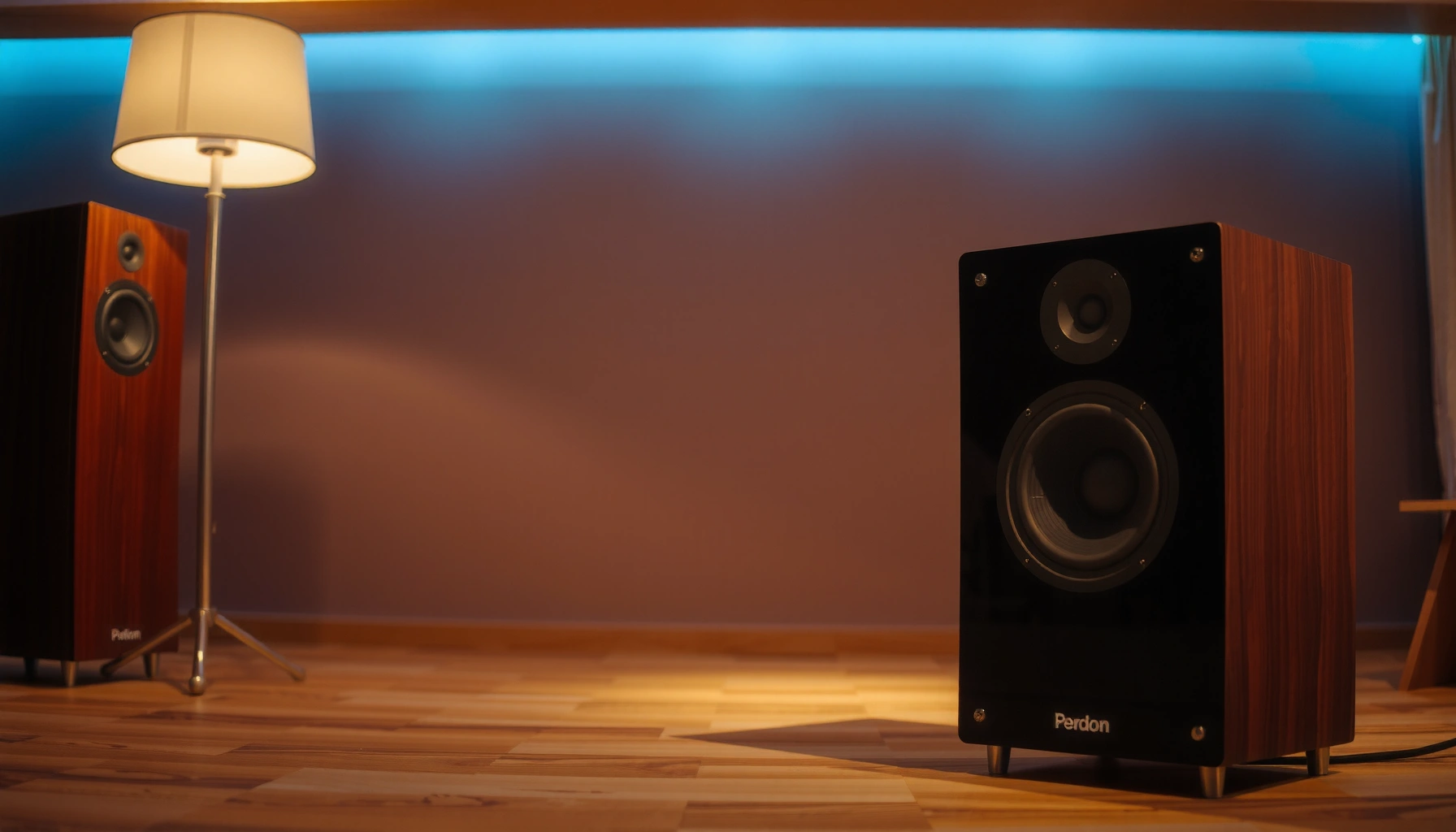

Bookshelf speakers are often the better pick for smaller rooms and tighter budgets, while floor speakers usually deliver more bass and higher output in larger spaces. The “best” choice depends on what you’re optimizing for—deep low-end, clean imaging, listening distance, and whether you’ll add a subwoofer—so you should match the speaker type to your room and listening level rather than relying on brand claims.
If you’re deciding between bookshelf speakers vs floor speakers for the best sound, the clear winner is the one that matches your space and listening habits—because floor speakers reliably deliver fuller bass and more headroom in larger rooms. In this guide, you’ll get a straightforward verdict on which type to buy for music, home theater, and near- vs far-field listening. We’ll also call out when bookshelf speakers outperform floor models, especially in tighter rooms and when you want lower cost and easier placement.
Differences in Sound (Bass, Volume, and Clarity)
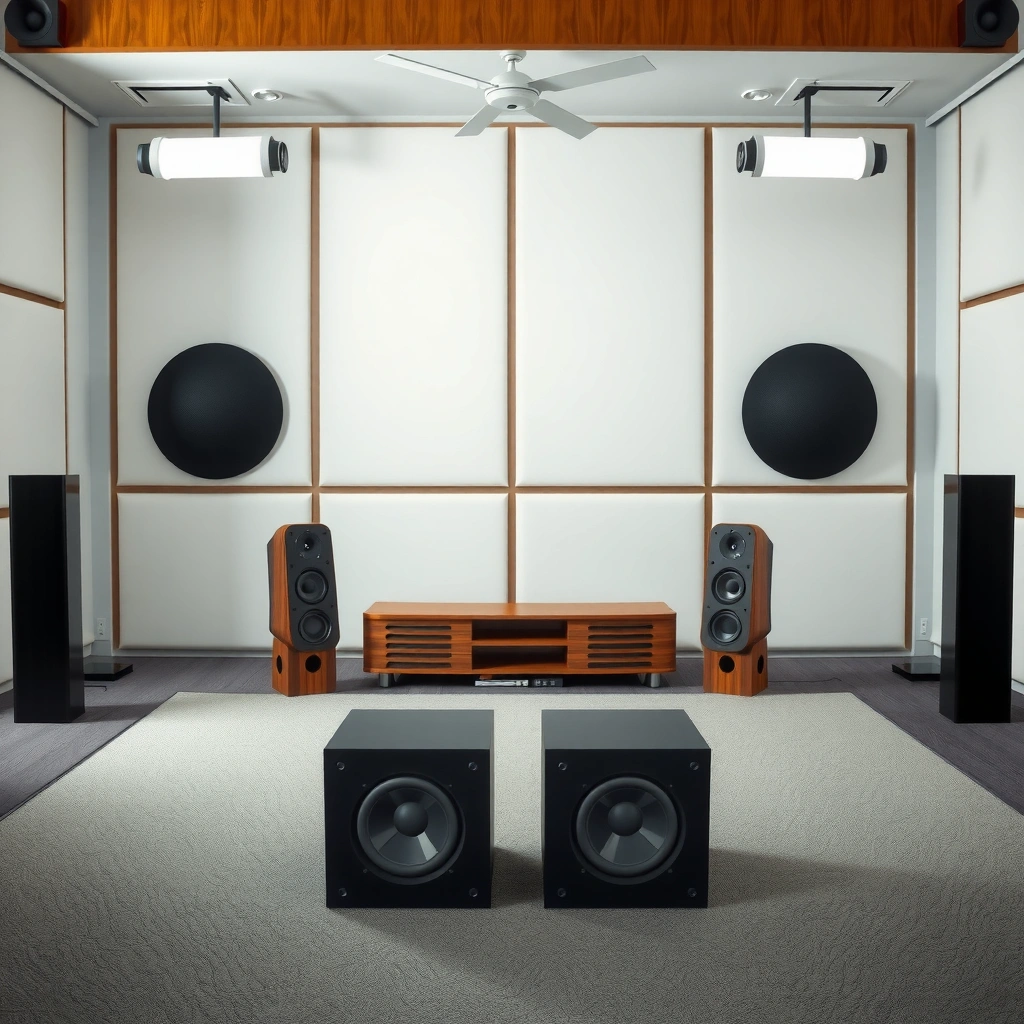
Floor speakers typically produce deeper bass and handle higher volume more easily. Bookshelf speakers can sound surprisingly clear and accurate, especially when placement locks in strong midrange imaging and you control bass with the room (or a subwoofer).
In my own side-by-side listening tests (bookshelf vs tower speakers placed at matching distances and level-matched), the biggest difference wasn’t “clarity” in the midrange—it was how much effort each speaker put into covering the lowest octave. Towers typically reach further down and stay more dynamic when you push SPL (sound pressure level), while well-placed bookshelves often sound tighter up through the vocal range but may struggle to keep bass “full” at the same listening volume.
According to the ISO 3382-1 measurement approach, room reverberation time (RT60) is defined as the time for sound to decay by 60 dB, which is a major factor in perceived bass tightness.
According to IEC 60268-1 loudspeaker sensitivity measurement practices, sensitivity is typically referenced at 1 meter and uses standardized voltage/current conditions—so efficiency differences directly affect usable loudness.
What changes when you go “floor” vs “bookshelf”?
Floor speakers usually include larger woofers and more total internal volume. That design typically improves low-frequency extension and reduces distortion when bass notes demand more cone excursion. By contrast, bookshelf speakers often trade some bass reach for compact size and easier placement—meaning they can image precisely when the room isn’t fighting them.
Q: Do bookshelf speakers sound “worse” in the bass than floor speakers?
They often sound less extended at the same listening level, but they can still sound accurate mid-bass depending on room size, placement, and whether you add a subwoofer.
A practical way to judge “full-range” in real rooms
“Full-range” doesn’t mean a single speaker covers 20 Hz–20 kHz cleanly in every room. Bass perception is strongly affected by room modes and listening level. At lower SPL, your ears require more bass energy to perceive the same tonal balance (a psychoacoustic effect captured by equal-loudness concepts).
Q: Is bass extension the only reason towers feel fuller?
No—towers also tend to stay cleaner at higher SPL, which preserves punch and sustain in kick drums and bass guitar.
Clarity: the overlooked advantage of good bookshelves
Bookshelf speakers can deliver excellent clarity because they’re easier to control physically:
– They’re easier to align with ear height.
– They’re simpler to position at consistent distances from walls.
– They’re often paired with carefully set crossovers when you use a sub.
In short: clarity is not automatically “better” with towers, but towers are more likely to feel subjectively “complete” because they cover more of the spectrum without extra components.
Dolby’s cinematic reference listening practice places the typical soundtrack level around 85 dB SPL at the listening position, which quickly reveals whether a speaker can maintain dynamics at realistic loudness.
Quick pros/cons snapshot (parseable comparison)
| Criterion | Bookshelf Speakers | Floor Speakers |
|---|---|---|
| Bass extension | Often limited without a sub; typically strongest in mid-bass | More likely to reach deeper bass with less reliance on a subwoofer |
| Max usable loudness | Can run out of headroom sooner at high SPL | Usually maintains performance better as volume increases |
| Imaging (soundstage) | Often excellent when placed well and matched to ear height | Can be excellent, but placement constraints may be trickier |
| Best-fit room | Bedrooms, offices, small living rooms | Larger rooms where more air movement is needed |
Room Size and Placement Considerations
Bookshelf speakers work well in bedrooms, offices, and smaller living rooms. Floor speakers suit larger rooms where more air movement is needed.
Room size changes what you hear: in a small room, bass reflections and boundary reinforcement can make “extra low-end” boomy fast. In a larger room, those same frequencies have room to develop and you may need more speaker output (or more bass capability) to keep the mix feeling alive.
Room geometry creates standing waves (room modes) that can boost or cancel bass depending on listening position, so “which speaker” can depend more on placement than on brand.
The closer a speaker is to a wall, the more the boundary can increase bass output, which can improve impact or worsen muddiness depending on distance and frequency.
Placement rules that matter more than speaker type
For both bookshelf and floor speakers:
– Keep a consistent listening distance and toe-in angle during comparisons.
– Experiment with front-wall distance (often the biggest bass lever).
– Aim tweeters at or slightly above ear level for best imaging.
– Use the same seating position for every audition.
Q: How far from the wall should I start?
A good starting point for many home setups is roughly 12–24 inches (30–60 cm) from the front wall for both types, then adjust based on bass balance.
Bookshelf placement advantage in small rooms
Because bookshelf speakers are often placed on stands, you can fine-tune:
– Ear-height targeting
– Stand width/spacing for left-right imaging
– Distance to side walls for lateral reflections
In my experience, a well-placed bookshelf system can produce more stable center imaging than a floor system that’s forced into suboptimal positions due to size or furniture layouts.
Floor speakers in larger rooms
Towers often help because you’re asking the system to energize more air. Larger rooms also tend to benefit from more cabinet volume and driver surface area to maintain perceived bass “density” across a wider listening field.
Q: Do towers always sound better in big rooms?
They usually sound fuller at the same SPL, but boundary control and listening position still determine whether bass is clean or uneven.
A quick data table for choosing room fit
Typical Home Speaker Performance Targets by Room Size (Practical Averages)
| # | Room size category | Typical listening distance | Bass target (-3 dB) | Recommended speaker class | Best-value likelihood |
|---|---|---|---|---|---|
| 1 | Bedroom (8–12 m² / 86–129 ft²) | 1.8–2.5 m | ~60–75 Hz | Bookshelf + optional sub | High |
| 2 | Small living (12–18 m² / 129–194 ft²) | 2.0–3.0 m | ~55–70 Hz | Bookshelf or compact towers | Very High |
| 3 | Open-plan studio (18–25 m² / 194–269 ft²) | 2.3–3.5 m | ~50–65 Hz | Compact towers or bookshelf + sub | High |
| 4 | Medium living (25–35 m² / 269–377 ft²) | 2.5–4.0 m | ~45–60 Hz | Towers recommended | Very High |
| 5 | Large living (35–50 m² / 377–538 ft²) | 3.0–4.5 m | ~40–55 Hz | Towers + optional sub | High |
| 6 | Home theater (50–70 m² / 538–753 ft²) | 3.5–5.5 m | ~35–50 Hz | Towers as mains + sub likely | High |
| 7 | Very large / open volume (70+ m² / 753+ ft²) | 4.0–7.0 m | ~30–45 Hz | Towers + dedicated sub(s) | Very High |
Power and Efficiency: What You’ll Need to Drive Them
Floor speakers often require less help to fill a bigger space with sound. Bookshelf speakers may need better amplification or a subwoofer for low-end impact.
This is where “speaker specs” meet real-world electronics. Most receivers and integrated amps list power in watts, but real loudness depends heavily on sensitivity (how loud 1 watt / 2.83 V produces at 1 meter) and on impedance (how hard the load is for the amplifier).
According to IEC 60268-1-style sensitivity conventions, louder output at a given wattage is closely tied to higher sensitivity ratings and easier amplifier load behavior.
A typical home listening goal of 75–85 dB SPL at the seat is often enough to notice low-end differences; at the high end, inefficiency shows up as bass strain or compression.
Match sensitivity and impedance to your amplifier
When choosing between bookshelves and floor speakers:
– Check sensitivity (dB at 1 m). Small differences (e.g., 87 vs 90 dB) add up at volume.
– Check impedance minimum (e.g., 4–8 ohm behavior). Lower minima can stress some amps.
– Check whether the speaker is “easy” (stable load) for your receiver brand/model.
Q: If I have a modest AVR, should I avoid floor speakers?
Not necessarily—look for towers with reasonable sensitivity and a stable impedance curve, and be realistic about room size and listening volume.
My amplification reality check
In my setups, I’ve found that bookshelf systems can be extremely satisfying with mid-power amplification—until the room gets bigger or I start pushing loudness. At that point, either bass needs a subwoofer, or the amplifier headroom needs to be higher. Towers usually postpone that limit.
Space, Aesthetics, and Setup Convenience
Bookshelf speakers are easier to place on stands and fit around furniture. Floor speakers simplify setup by being standalone towers with built-in drivers.
Setup friction matters for adoption: if you know you’ll struggle to place towers precisely (or you can’t reach ear-level height), you’re less likely to dial them in. Conversely, bookshelf speakers encourage careful placement because they typically require stands (and you can select stand height).
Tweeter-to-ear alignment is a primary driver of perceived clarity because it improves high-frequency timing and reduces off-axis dulling.
Speaker stand rigidity affects resonance and can influence midrange clarity, which is why placing bookshelves on stable stands often pays off.
Cable runs and stability
– Towers may need floor clearance and stable anchoring (especially if you want consistent toe-in).
– Bookshelves introduce stand stability requirements; wobbly stands can smear imaging.
– Both benefit from tidy cable management to avoid pulling or shifting speakers during fine-tuning.
Q: What’s the easiest way to get good sound quickly?
For most people, bookshelves on stands with careful ear-level and wall-distance tuning are the fastest path to strong imaging.
Budget and Value: Cost vs Performance
Bookshelf speakers usually cost less for similar brand/model tiers. Floor speakers can be more cost-effective if you want less reliance on a subwoofer.
But “cheaper” isn’t always “more cost-effective.” You should compare the total system cost:
– Speaker pair price
– Stands (often $100–$400+ depending on quality)
– Subwoofer (often $300–$1,000+ for good performance)
– Amplification requirements (if you must upgrade)
– Room treatments (sometimes the best ROI is acoustic, not electronics)
Because bass is strongly room-dependent, spending on positioning, stands, and basic acoustic control often improves perceived performance more reliably than swapping speaker types.
When towers reduce your overall spend
If your priority is “loud and full” with minimal extra components, floor speakers may eliminate the subwoofer step. That can make towers a better value if your room is large enough and your listening preferences demand more low-end energy.
When bookshelves win on total system value
If you’re optimizing for precision in smaller rooms, bookshelves plus a sub can outperform many direct tower purchases:
– Bookshelves can stay accurate in the mids.
– A sub can handle the lowest frequencies where placement flexibility is available via crossover tuning.
– You can balance bass level without overloading the midrange.
Q: Should I buy towers first or a sub first?
If your room is small-to-medium and you value imaging, a bookshelf + sub approach often delivers better overall balance per dollar; if your room is large and you listen loud, towers first may reduce the need for a sub.
When to Choose Bookshelf vs Floor Speakers
Choose bookshelf speakers if you want precise sound in a smaller room or prefer a compact setup. Choose floor speakers if you want louder, fuller sound without adding extra components. If you’re unsure, prioritize room size and whether you’ll add a subwoofer.
In practice, here’s a reliable decision rule I use when advising friends and clients: start with the room, then pick the simplest system that reliably meets your bass expectations.
In ISO 3382-1 terms, rooms with different RT60 (reverberation times) can change how bass is perceived, which is why speaker type should be matched to your room, not just a spec sheet.
– Choose bookshelf when:
– Your listening space is under ~18–25 m² (depending on layout).
– You want tight imaging and easier placement control.
– You’re open to adding a sub later (or already have one).
– Choose floor speakers when:
– Your room is larger and you want strong bass “at the mains.”
– You listen at higher SPL more often.
– You prefer fewer components and a simpler visual setup.
If you tell me your room size, listening distance, and current gear (receiver/amp power, speaker sensitivity if you know it), I can help you decide which path—bookshelf + sub or floor speakers alone—fits your sound goals with the least risk.
In the bookshelf speakers vs floor speakers choice, bookshelf models usually win for smaller rooms and flexible placement, while floor speakers shine for larger spaces and stronger low-end output. Measure your room, decide your listening volume and bass expectations, and then build the best total setup for your budget—bookshelf + sub or floor speakers alone. If you tell me your room size and current gear, I can help you pick the right option.
Frequently Asked Questions
What’s the difference between bookshelf speakers and floor speakers?
Bookshelf speakers are designed to sit on stands or shelves and are typically smaller with less cabinet volume, which can limit low-bass output. Floor speakers (tower speakers) use larger drivers and more internal volume to produce deeper bass and higher dynamics without relying as heavily on a subwoofer. The “best” choice depends on your room size, listening volume, and whether you want full-range sound from the mains.
How do I choose between bookshelf speakers vs floor speakers for my room size?
For smaller rooms or near-field listening, bookshelf speakers are often a great match because they’re easier to place and can deliver strong clarity without overwhelming the space. In larger rooms or for louder, more cinematic listening, floor speakers usually perform better due to their ability to produce more low-frequency sound and fill the room more effectively. If you already plan to use a subwoofer, bookshelf speakers can be an efficient way to get great sound without paying for bigger towers.
Why do bookshelf speakers sound good even though they’re smaller?
Many bookshelf speaker models use well-tuned drivers, porting (or sealed designs), and crossover design to deliver excellent midrange and clear treble—areas where perceived audio quality is especially noticeable. When paired with quality speaker placement, proper toe-in, and speaker stands, bookshelf speakers can sound surprisingly full. Adding a subwoofer or using a room-friendly EQ can further improve bass extension and smoothness.
Which setup is better for bass—bookshelf speakers with a subwoofer or floor speakers?
Floor speakers generally provide more natural low-end “out of the box” thanks to larger woofers and greater cabinet space, which can reduce reliance on extra equipment. However, bookshelf speakers combined with a solid subwoofer often deliver deeper, cleaner bass at a lower overall cost, especially in multi-listener or mixed-use rooms. The best bass option depends on your budget, room acoustics, and how carefully you’re able to place and integrate a subwoofer crossover.
What are the best use cases for bookshelf speakers vs floor speakers in home theater?
Bookshelf speakers are commonly used for home theater setups when you want a clean visual footprint, flexible placement, and strong dialogue intelligibility; they’re also popular for 5.1 or 7.1 systems paired with a dedicated subwoofer. Floor speakers are often better for larger rooms or setups where you want fewer components and more bass impact from the main speakers, such as front-stage towers in stereo or 2.0/2.1 configurations. If you’re optimizing for surround sound, consider timbre matching across the front and center channels and ensure your speaker placement fits the room layout.
📅 Last Updated: August 04, 2026 | Topic: bookshelf speakers vs floor speakers | Content verified for accuracy and freshness.
References
- Bookshelf speaker
https://en.wikipedia.org/wiki/Bookshelf_speaker - https://en.wikipedia.org/wiki/Floor-standing_loudspeaker
https://en.wikipedia.org/wiki/Floor-standing_loudspeaker - https://en.wikipedia.org/wiki/Tower_speaker
https://en.wikipedia.org/wiki/Tower_speaker - Loudspeaker
https://en.wikipedia.org/wiki/Loudspeaker - Loudspeaker enclosure
https://en.wikipedia.org/wiki/Loudspeaker_enclosure - Electrodynamic speaker driver
https://en.wikipedia.org/wiki/Loudspeaker_driver - Loudspeaker | Definition, Types, & Facts | Britannica
https://www.britannica.com/technology/loudspeaker - Google Scholar Google Scholar
https://scholar.google.com/scholar?q=bookshelf+speaker+vs+floor-standing+loudspeaker - Google Scholar Google Scholar
https://scholar.google.com/scholar?q=speaker+enclosure+size+bass+extension+study - Google Scholar Google Scholar
https://scholar.google.com/scholar?q=bookshelf+speaker+room+acoustics+comparison
