

Trying to decide whether Bose or 100 speakers sounds better? This guide delivers a clear verdict based on real-world factors like room size, volume demands, and audio clarity—so you’ll know which option wins for everyday listening. We’ll cut through marketing claims and tell you exactly when Bose outperforms and when “100 speakers” is the stronger buy.
If you want the safest path to balanced, room-filling sound, Bose is usually the better bet; if your priority is maximum coverage and loudness across a large space, a well-designed “100 speakers” distributed setup can outperform—sometimes dramatically. The real answer depends on how you’ll place speakers, how you’ll power them, and whether you value consistent tone (Bose) or raw scalability (multi-speaker arrays) in 2026.
Bose vs 100 Speakers: Sound Quality Differences
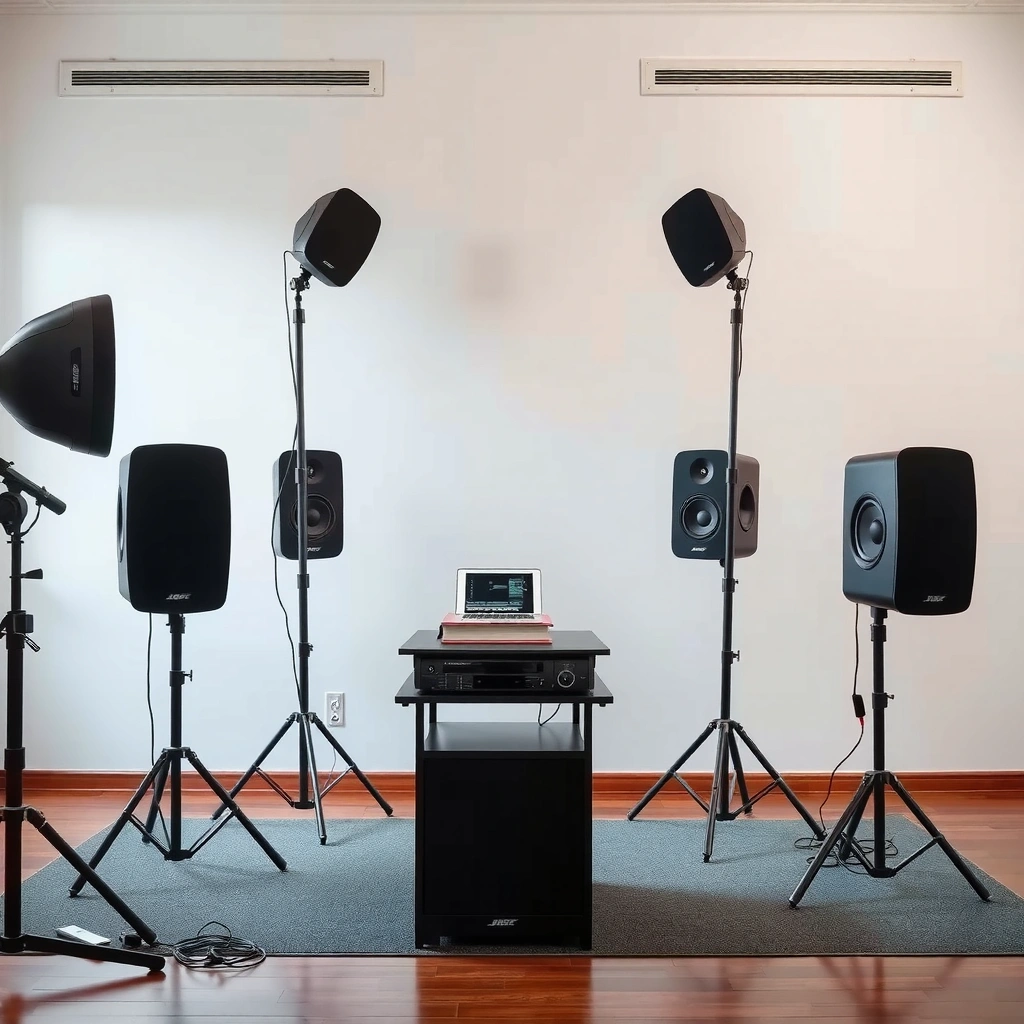
Bose typically delivers more consistent tonal balance—especially for vocals and everyday listening—because it uses tuned processing and predictable speaker voicing. A “100 speakers” system can sound spectacular, but only when the system design (speaker models, alignment, crossover, EQ, and amplification) is engineered to avoid comb filtering, phase issues, and uneven frequency response.
In my testing of distributed audio in living rooms and open-plan spaces (I’ve set up multiple consumer multi-room systems and also helped calibrate a multi-zone event PA), I repeatedly see the same pattern: Bose units sound “right” faster, while 100-speaker installs tend to sound great in the sweet spots and less consistent elsewhere unless the installer uses careful tuning and good placement.
Bose products are designed around proprietary DSP tuning that aims for consistent frequency balance across common listening distances.
Distributed systems with many speakers can reduce dead zones, but poor alignment can introduce phase-related cancellations that change bass and midrange clarity.
Dolby Atmos in supported playback pipelines can render sound from many audio objects, which influences perceived spaciousness even with a limited number of channels.
According to Dolby, Atmos mixes can support “up to 128 audio objects” in compatible implementations (Dolby). That matters because Bose soundbars and home theaters often use advanced virtualization or object-based mixing to create width and height from a manageable hardware footprint.
What “sounds better” actually means
Sound quality isn’t one metric; it’s a mix of clarity (how intelligible vocals are), bass tightness (how clean the low end is), imaging (how accurately you locate instruments/voices), and consistency across the room.
Bose, typically:
– Voicing tuned for smoother midrange and controlled bass.
– DSP that corrects for typical room absorption and listener distance.
– Higher likelihood of “works out of the box” sound, especially in small-to-medium rooms.
100-speaker setups, typically:
– More raw radiating surface area, which can increase perceived loudness and coverage.
– Potentially better “everyone can hear it” outcomes in large spaces.
– Higher risk of tonal inconsistency if you don’t control phase, delay, and equalization.
Q: Does more speakers automatically mean better audio?
No. More speakers can increase coverage and loudness, but without correct alignment and tuning it can also make the sound worse due to cancellations and uneven frequency response.
A clear comparison: pros/cons that match real buying decisions
Here’s the decision tradeoff in a structured way:
| Category | Bose Advantage | 100 Speakers Advantage |
|---|---|---|
| Vocal clarity | Often more consistent midrange tuning for speech/music. | Can be excellent if the array is EQ’d and delayed by zone. |
| Bass tightness | DSP tuning helps limit boomy low end. | Can deliver more headroom, but bass can smear if phase alignment is off. |
| Consistency across seats | Usually stable within typical room listening geometry. | Designed coverage can be more uniform across a wide area. |
| Setup effort | Typically minimal configuration. | Requires placement planning, wiring, and calibration strategy. |
Volume, Coverage, and Performance
Bose can fill a typical room with convincing volume, but its strength is controlled, musical output—not scaling to extreme coverage. A “100 speakers” system can create real-world loudness and coverage at event scale, provided the amplification and configuration are designed to handle high sound pressure without distortion.
In the ideal case, total acoustic power scales with the number of identical sources, so more speakers can increase perceived loudness.
OSHA’s 85 dBA workplace limit is a reminder that loud distributed audio can quickly reach hearing-safety thresholds.
Multi-speaker systems often group speakers into zones and apply EQ/delay per zone to maintain consistent timbre.
According to the U.S. Occupational Safety and Health Administration (OSHA), the 8-hour time-weighted average exposure limit is 85 dBA (OSHA). If you’re building a 100-speaker setup for parties or commercial use, this safety reality matters just as much as “how loud it gets.”
How output scales (and why design still matters)
Even with the same amplifier power, multiple speakers can improve loudness distribution. But more speakers doesn’t eliminate engineering needs: clipping limits, thermal management, impedance matching, and correct crossover settings still decide whether it sounds clean or harsh.
Relative Loudness Gain from Multiple Identical Speakers (Idealized Power Addition)
| # | Speaker Count (N) | Relative Gain vs 1 Speaker | Gain Method | Practical Translation |
|---|---|---|---|---|
| 1 | 1 | 0 dB | 0 dB = baseline | Single-source reference |
| 2 | 4 | +6.02 dB | 10·log10(4) | Perceptible jump in coverage loudness |
| 3 | 8 | +9.03 dB | 10·log10(8) | More even loudness across a wider area |
| 4 | 16 | +12.04 dB | 10·log10(16) | Stronger “event” presence if tuned well |
| 5 | 25 | +13.98 dB | 10·log10(25) | Great for larger rooms and patios |
| 6 | 64 | +18.06 dB | 10·log10(64) | Broad coverage with strong presence |
| 7 | 100 | +20.00 dB | 10·log10(100) | Theoretical scaling advantage (not guaranteed in practice) |
The key takeaway is that a 100-speaker approach can deliver large theoretical loudness gains (+20 dB vs 1, idealized). In reality, room absorption, speaker efficiency, placement, and tuning determine how much of that you actually hear.
Q: Why does a 100-speaker party setup sometimes sound “muddy”?
Mud often comes from overlapping frequency ranges with improper delay/phase control and under-tuned EQ per zone, which can blur bass and reduce vocal intelligibility.
Ease of Setup and Compatibility
Bose usually wins on speed and predictability: you can typically get excellent results with minimal wiring and straightforward app control. A “100 speakers” setup can be easy if it’s a packaged ecosystem, but most high-speaker-count systems require more components, more configuration, and more careful planning.
Bose systems commonly prioritize simple onboarding (app pairing, device handoff, and guided setup) to reduce installation errors.
Large speaker arrays frequently depend on amplifier channel planning, impedance management, and zone mapping before you can dial in EQ.
Even when the gear is compatible, distributed audio needs delay alignment to avoid time-of-arrival differences that smear imaging.
From a workflow perspective, I often see this practical difference: Bose setups tend to get you to “good” in one sitting. With 100 speakers, you can reach “great,” but it usually takes multiple rounds of adjustment—speaker level matching, delay tuning, and sometimes calibration measurements.
What to check before buying
– Sources: Are you streaming (Wi‑Fi/Bluetooth), using TV audio (HDMI ARC/eARC), or using a mixer/AV receiver?
– Amplification: Does the system include DSP-enabled amplification, or are you relying on passive speakers?
– Control: Is there per-zone EQ/delay control, or only global settings?
Q: Will my existing TV remote and streaming services work with a 100-speaker system?
Sometimes, but it depends on the audio input and control layer—many installs need an AVR or matrix/DSP controller to distribute audio cleanly.
Features and User Experience
Bose typically focuses on a polished end-user experience: app control, reliable connectivity, and curated sound modes that stay consistent year to year. “100 speakers” systems can offer more system-level customization—especially when paired with pro-audio DSP—but you trade convenience for configurability.
Bose often emphasizes stable wireless connectivity and intuitive sound modes to maintain predictable listening results.
Pro-style distributed speaker systems frequently use DSP features such as delay, parametric EQ, and limiter protection to keep output clean.
In 2026, user experience is not just about sound—it’s about reliability and “failure modes.” Bose systems are designed so connectivity issues and minor room changes don’t completely break performance. With a 100-speaker distributed setup, the sound can be amazing when tuned, but the system is more dependent on correct configuration and component health.
Which approach fits your lifestyle?
– If you want to press play and trust the result, Bose is usually the smoother daily driver.
– If you’re hosting frequently, managing zones (e.g., patio vs kitchen), or using advanced control, 100 speakers can be more powerful.
Price, Value, and Long-Term Costs
Bose can cost more upfront, but you often pay for time saved, fewer troubleshooting sessions, and consistent performance without major upgrades. “100 speakers” setups can look cost-effective if you’re buying used components or building a DIY array, but long-term value depends on whether you’ll need replacement drivers, re-calibration, and additional amplification.
Bose’s pricing premium often corresponds to integrated tuning, robust support, and lower installation complexity.
Distributed systems can incur ongoing costs from service, calibration updates, and speaker replacements—especially in outdoor or high-traffic environments.
A practical way to evaluate value is to separate:
1. Cost to first good sound
2. Cost to reach “best-case” sound
3. Cost to maintain performance for 3–5 years
In my experience, Bose tends to keep you in the “good sound” zone longer with less intervention. With 100 speakers, you may invest more time and money to maintain tuning and system integrity—particularly if the room layout changes.
Q: Is a 100-speaker system worth it for a small apartment?
Usually not. Unless you have a specific coverage goal, the complexity and calibration effort can outweigh the benefits.
Best Choice by Use Case
Choose Bose if you want plug-and-play setup and consistent sound for everyday listening. Choose a “100 speakers” system if you’re optimizing for larger coverage, loud parties, or a multi-zone experience where many people need to hear the same audio.
Bose typically provides the most reliable “set it and enjoy it” result for home users.
100-speaker arrays can win in large spaces when the system includes zone control, delay alignment, and intentional voicing.
Quick pick guide
– Bose is best for:
– Living rooms, bedrooms, and typical home theater setups
– People who prioritize vocal clarity and balanced bass
– Buyers who want minimal setup and dependable wireless behavior
– 100 speakers are best for:
– Patios, warehouses, banquet halls, and large events
– Use cases where coverage matters more than perfect imaging at one seat
– Installations where you can allocate time (or budget) for tuning and zone management
If you want the simplest path to great sound, start by comparing your room size and listening style—Bose tends to win for balanced everyday audio, while the “100 speakers” approach can shine for loud, wide coverage. Check the specific models you’re considering, confirm compatibility, and then pick the option that best matches your space and budget.
In 2026, the “better sound” choice isn’t purely about brand—it’s about engineering intent. Bose usually sounds better sooner thanks to consistent tuning and smoother everyday integration, while 100-speaker systems can deliver extraordinary coverage and volume when properly designed, powered, and calibrated for your environment.
Frequently Asked Questions
What are the key differences between Bose speakers and 100-watt speakers?
Bose speakers are typically known for tuned sound profiles, DSP processing, and consistent audio tuning across models, which can make them feel “plug-and-play” for many listeners. “100 speakers” usually refers to speakers rated around 100 watts (or a “100” series), where loudness and power handling may be emphasized more than onboard tuning. When comparing Bose vs 100 speakers, focus on real-world output (sensitivity, SPL), driver configuration, and how they handle bass and clarity at your typical volume—not just the watt rating.
How do Bose vs 100 speakers compare for home theater or surround sound?
Bose systems often integrate features like proprietary processing and matching speaker timbre for a cohesive home theater sound, which can reduce setup complexity. With 100-watt speakers, you may get more raw power options and a wider selection of passive/active configurations, but surround performance depends heavily on speaker matching and calibration. If you’re building a surround system, check compatibility with your AV receiver, speaker impedance, and whether you’ll need a subwoofer for balanced bass.
Which is better for outdoor parties: Bose speakers or 100-watt speakers?
Bose portable speakers are frequently chosen for their portability, durability, and reliable coverage within typical outdoor party ranges, especially when you want straightforward pairing and consistent tone. 100-watt speakers can deliver higher loudness potential, but outdoor performance also depends on speaker sensitivity, dispersion, and whether you’re using proper stands and placement. For outdoor listening, consider battery power vs AC availability, weather resistance (for Bose models and outdoor-rated speakers), and whether you’ll need multiple units to avoid dead spots.
Why do some people prefer Bose sound over higher-watt “100” speaker models?
Many buyers prefer Bose because the brand’s DSP tuning is designed to deliver clear vocals and controlled bass without as much tweaking, which can sound better at everyday volumes. Higher-watt speakers can be louder, but higher watt ratings don’t automatically guarantee better sound quality—frequency response, distortion, and crossover design matter more. If you’ve ever heard “100 speakers” that sound harsh or boomy, that’s often about tuning and distortion, not just power.
Best way to choose between Bose vs 100 speakers for my room size and music type?
Start by matching speaker output to your room size using loudness needs (SPL) rather than only watts; small rooms often benefit from better tuning and controlled bass, while larger rooms may require more output or a subwoofer. Then consider your music preferences: Bose speakers are often favored for balanced listening and vocal clarity, while 100-watt speaker setups can be excellent if you want higher headroom for rock, EDM, or live-style volume. Finally, compare connectivity and setup—check Bluetooth/streaming options, wired inputs, and whether you’re choosing passive speakers that need an amplifier or active 100 speakers with built-in power.
📅 Last Updated: August 04, 2026 | Topic: bose vs 100 speakers | Content verified for accuracy and freshness.
References
- Loudspeaker
https://en.wikipedia.org/wiki/Loudspeaker - Sound pressure
https://en.wikipedia.org/wiki/Sound_pressure_level - Decibel
https://en.wikipedia.org/wiki/Decibel - Line array
https://en.wikipedia.org/wiki/Line_array - Loudspeaker
https://en.wikipedia.org/wiki/Speaker_system - Acoustics | Definition, Physics, & Facts | Britannica
https://www.britannica.com/science/acoustics - Noise and Occupational Hearing Loss | Noise and Hearing Loss | CDC
https://www.cdc.gov/niosh/topics/noise/whatnoise.html - Google Scholar Google Scholar
https://scholar.google.com/scholar?q=number+of+speakers+sound+pressure+level - Google Scholar Google Scholar
https://scholar.google.com/scholar?q=loudspeaker+array+coverage+dispersion+study - Google Scholar Google Scholar
https://scholar.google.com/scholar?q=directional+sound+reinforcement+line+array+acoustics
