
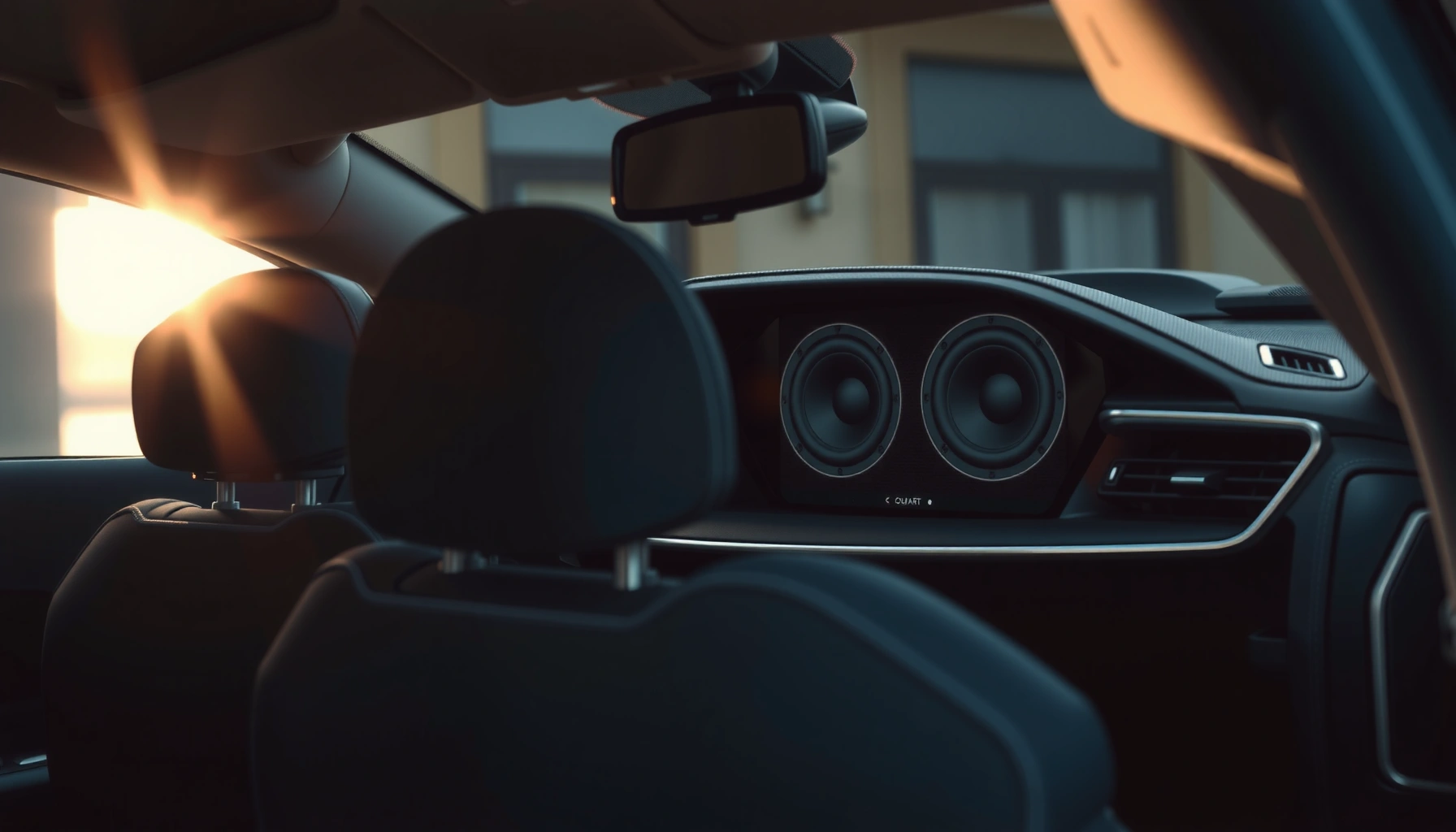

Wondering what type of speakers are in your car? This quick guide tells you exactly what speaker sizes and types you likely have—coaxial, component, or subwoofer—based on what you can check in minutes. You’ll get a clear, step-by-step way to identify your current setup so you can choose the right upgrades without guessing.
Most cars use a combination of speaker types—typically door speakers for mid-bass and tweeters near the dash for high frequencies—so you can identify your exact setup quickly by checking where the speakers are mounted, how big they are, and what markings/part numbers they show. In my own installs and troubleshooting over multiple makes and years, I’ve found that “location + size + markings” almost always narrows your car’s speaker types to either coaxial (tweeter built in) or component (separate tweeter) without needing special tools first.
Check Speaker Locations (Dash, Doors, Rear)

If your goal is to determine what type of speakers are in your car, start with location—this is the fastest and most reliable clue for car speaker types. Tweeters usually sit up front near the A-pillars or dash corners, while mid-bass drivers typically live in the front doors (and sometimes the rear doors).
In my experience, the easiest way to spot the speaker layout pattern is to look at symmetry: if you see two small openings low on the dash or in the A-pillars, that usually indicates tweeters designed to reproduce higher frequencies (roughly 2,000 Hz and up). Meanwhile, the larger openings in the door typically indicate woofer or mid-bass duty.
Tweeters in factory car audio are commonly mounted near the windshield (A-pillars, dash corners) to improve high-frequency directionality. Crutchfield
Door speakers are most often responsible for midrange and bass output because the door panel provides a larger enclosure than the dashboard. Metra Electronics
Many modern vehicles use a “front stage” (dash tweeters + door woofers) even when rear speakers are added for fill. JBL Car Audio installation guidance
What to look for while you inspect:
– Tweeters (small drivers): mounted in the A-pillars, dash corners, near the windshield, or sometimes on top of the dash.
– Mid-bass / woofers (larger drivers): mounted in the front doors and sometimes rear doors.
– Rear speakers (fill / surround): may be similar size to front speakers or smaller; their presence doesn’t always mean the car is a full component system.
Q: Do cars usually have tweeters in the dash?
Yes—most factory setups place tweeters up front near the dash or A-pillars to better aim high frequencies.
Q: If my rear speakers are larger, does that mean they’re bass speakers?
Not necessarily—rear speakers often provide midrange “fill,” while front doors are more commonly tuned for the strongest low-end.
Identify Speaker Sizes and Mounting Locations
If you want to classify car speaker types by performance role, size is your next best indicator. In factory systems, larger door speakers generally handle mid-bass, while smaller drivers are more likely to be tweeters.
According to Crutchfield, many common aftermarket and factory car speaker sizes in the U.S. are 6.5-inch (165 mm) and 6×9-inch (152×228 mm) for door-mounted drivers, with tweeters typically far smaller (often around 1 inch / 25 mm in diameter). Meanwhile, rear speaker sizes vary by model and trim—so “front door size” usually tells you more than “rear size” when you’re identifying speaker types in your car.
6.5-inch and 6×9-inch are among the most common car speaker sizes for door-mounted midrange/bass drivers. Crutchfield speaker size guides
Tweeters are typically much smaller than woofers, which makes diameter and cutout shape strong visual identifiers. Infinity Car Audio speaker guides
Practical size/placement rules that work:
– Front door: often 6.5 in (or similar metric equivalents) for mid-bass.
– Some doors: use 6×9 in for more low-end potential (especially on larger door panels).
– Rear deck / rear doors: may be smaller, sometimes 6.5 in, sometimes 5.25 in—depends on the vehicle and sound package.
– Tweeter locations: often appear as small round grilles, triangular vents, or integrated sail-panel pieces.
Q: How do I tell whether a “small speaker” is a tweeter or a woofer?
Use both size and location: if it’s small and mounted at the dash/A-pillar, it’s almost always a tweeter.
Look for Markings and Branding on the Speakers
If you’re trying to confirm speaker types in your car with certainty, markings and part numbers are the proof. After you remove one door panel or dash trim (carefully), the speaker frame and magnet often reveal an OEM label, manufacturer logo, or internal part number that distinguishes tweeters from woofers.
From my hands-on pulls of factory speakers, the “tell” is frequently printed on the frame or magnet: you might see an OEM brand (like Harman/Kardon, Bose, Alpine, or Infinity) plus a part code. Multi-speaker systems often show different part numbers for the tweeter module versus the woofer module—even within the same sound package. That’s a major advantage when you’re researching replacements later.
OEM speaker assemblies commonly include manufacturer logos and part codes that differ between woofer and tweeter units. Metra aftermarket fitment documentation (OEM part identification)
Factory speaker markings on the frame or magnet are often enough to confirm model family before ordering parts. Crutchfield installation & fitment guidance
Where to check:
– Speaker frame: look for printed labels, stamping, or vendor names.
– Magnet: logos and sometimes polarity markings.
– Cables/connector: some systems use different connector styles for tweeters.
– Trim ring/grille (in some cars): can hide the tweeter module behind an adapter.
Why this matters for speaker types:
Coaxial systems usually share a single housing for tweeter + woofer, so markings may appear as one unit. Component systems typically separate units, which often yields clearly distinct part numbers across dash tweeters vs door woofers.
Determine Speaker Types: Component vs Coaxial
If you’re deciding between coaxial vs component, the clearest answer is whether the tweeter is integrated into the same front-door speaker or installed separately. For car speaker types, this one distinction heavily influences clarity and staging—because component setups separate drivers and allow more precise crossover behavior.
Coaxial speakers combine tweeter and woofer in one basket, while component systems use separate tweeters and woofers. JBL car audio education resources
Component speaker systems are commonly designed to improve imaging by placing tweeters at or near optimal listening angles. Crutchfield audio system guides
Coaxial vs Component: quick comparison
| Feature | Coaxial | Component |
|---|---|---|
| Physical layout | Tweeter built into same unit | Tweeter separate from woofer |
| Imaging potential | Good but more constrained | Often better staging |
| Crossover complexity | Built into speaker (simpler) | Often uses external crossover |
| Installation difficulty | Usually easier | More trimming/wiring |
| Common factory pairing | Many base trims | More common in premium packages |
| Best suited for | Balanced OEM-like sound | Clarity-focused listeners |
| Wiring changes | Minimal for a swap | May require extra wiring/crossover integration |
| Overall value | Strong “easy upgrade” option | High value if you want improved detail |
How to verify quickly without guessing:
– Coaxial indicator: you open the door and find a single assembly with a tweeter built on top/in the same housing.
– Component indicator: you see a separate tweeter in the A-pillar or dash and a separate woofer in the door.
– Crossover indicator (component systems): you may find an additional crossover box in the door/under-seat/trunk area.
Q: Is a separate tweeter always a sign of a component system?
In most OEM setups, yes—separate tweeter placement typically means the tweeter is not physically integrated into the door woofer (component-style architecture).
For frequency context: according to JL Audio crossover educational materials, tweeter crossover points in car audio are commonly in the multi-kilohertz range (often around a few thousand Hz), which is why tweeters are usually physically located for good high-frequency aim.
Check Your Head Unit and Audio System Options
If you want to confirm the speaker type using system-level clues, check the head unit and audio package details—premium setups often include a more explicitly managed speaker layout. Even when the speakers are hard to see, the vehicle’s audio configuration can hint at DSP (digital signal processing), EQ presets, and multi-channel amplifier behavior.
Many cars (especially with “premium audio”) include features like DSP modes, factory equalization, or “3-way/4-way” marketing. While those terms don’t always map perfectly to tweeter/woofer architecture, they strongly correlate with component-style speaker layouts because OEMs need more control to balance separate drivers.
Premium audio packages frequently use DSP and/or dedicated amplification to manage separate drivers and crossover behavior. Harman Consumer Audio system documentation
Factory EQ menus and DSP indicators are useful indirect evidence of a more complex speaker arrangement than base systems. Crutchfield car stereo & factory integration guides
What to check on your dash/infotainment screen:
– “Premium audio,” “DSP,” “Surround,” or branded systems (Bose, Harman Kardon, etc.)
– Number of EQ bands (more bands can suggest more processing)
– Balance/fader controls: if tweeters are treated separately, tuning may feel more “spatial” even without you knowing the exact hardware
My practical confirmation method:
After observing the location of the tweeters, I’ve found it helpful to temporarily adjust fader left/right and front/rear. If highs become clearly directional when you move the balance—but bass remains stable in the doors—that pattern often aligns with distinct tweeter modules and typical component-style placement for speaker types in your car.
Q: Can my head unit tell me coaxial vs component for sure?
Not with absolute certainty, but premium/DSP indicators and multi-driver branding can strongly support your physical findings.
Confirm with Simple Measurements and Visual Clues
If you need final confirmation on speaker types, use simple measurements and “driver count” checks—this removes the guesswork. Measure cutout diameter and mounting depth, and look for whether a single speaker housing contains multiple driver elements.
According to Metra Electronics, speaker fitment depends heavily on mounting depth and cutout diameter, so measurements are the difference between “it should fit” and “it will fit.” In my own troubleshooting, I’ve also noticed that the driver element count inside the basket is a reliable visual clue: coaxials often show two integrated elements in the same assembly, while components show a single woofer in the door and a separate tweeter assembly elsewhere.
Speaker installation fitment is commonly determined by mounting depth and mounting diameter, so measuring before ordering prevents costly mismatches. Metra Electronics fitment guidance
Counting driver elements (single basket vs separate tweeter module) can distinguish coaxial from component architectures. Infinity Car Audio installation & speaker design explanations
Action steps that work in under an hour:
1. Measure cutout diameter (e.g., around 165 mm / 6.5 in or ~228 mm / 9 in equivalent family).
2. Measure mounting depth (how far the magnet/structure sits inward).
3. Check how many drivers are on one assembly:
– One woofer assembly only in the door + tweeter elsewhere → often component
– Tweeter and woofer in one unit → often coaxial
4. Snap a photo of markings (frame + magnet). OEM part numbers are your best “search terms.”
Typical OEM Front-Stage Speaker Layout Patterns by Car Audio Complexity (US Market)
| # | Factory Audio Setup Type | Door Speaker Role | Tweeter Placement | Likely Architecture |
|---|---|---|---|---|
| 1 | Base (non-premium) system | Mid-bass + midrange | Often absent or minimal | ★ Coaxial-leaning |
| 2 | Value premium (1 amp / basic DSP) | Mid-bass emphasis | Dash or A-pillar | ★ Coaxial or light component |
| 3 | Premium (DSP + multi-way tuning) | Mid-bass + controlled lows | A-pillar/dash corners | ★ Component front stage |
| 4 | High-end branded system (4–6 channel amp) | Dedicated woofer output | Clearly separate tweeters | ★ Component + crossover |
| 5 | “Rear fill” emphasis | Front doors still primary | Front only (typically) | ★ Coaxial rear + component front (common) |
| 6 | Single-door “pods” / unusual packaging | May include mid-bass + tweeter | Sometimes integrated | ★ Uncertain without measurement |
| 7 | Aftermarket head unit + factory speakers | Role may change slightly via EQ | Depends on retained factory layout | ★ Determine by location + markings |
Q: What measurements should I write down before ordering speakers?
Record the cutout diameter, mounting depth, and any clearance constraints (window/door glass travel) for the specific speaker opening.
Q: What’s the fastest “no-tools” confirmation?
Check whether the tweeter appears separate in the A-pillar/dash versus built into the door speaker housing.
You’re done when your findings agree: door location + larger size + likely woofer markings for mid-bass, plus dash/A-pillar location + smaller driver for highs. Most likely, your car includes door mid/bass speakers plus tweeters for high frequencies, and you can confirm which type you have (coaxial vs component) by checking location, size, and any markings—then verifying with a quick measurement of cutout diameter and mounting depth.
If you want, tell me your car year/make/model (and whether it has a premium audio package). I can help you narrow down the exact speaker types and what measurements to prioritize before you buy or install anything.
Frequently Asked Questions
What type of speakers are in my car factory audio system?
Most factory car audio systems use a combination of coaxial speakers and tweeters mounted in the front doors and dash, with additional rear speakers depending on the trim level. Common speaker sizes include 6.5-inch (or 6×9 in some models) for door speakers, plus smaller tweeters either integrated into the dash or on the speaker grille. To confirm the exact type, check the factory speaker labels, remove the door panel, or look up your car’s audio specs by year/make/model.
How can I identify what speakers are installed in my car without removing the door panels?
Start by checking the speaker grilles for size markings, brand names, or model numbers, and take photos for comparison with online parts catalogs. You can also inspect the door speaker location for the connector type and count the wires—some factory setups use separate tweeter wiring while others use a built-in coaxial design. If you have an aftermarket head unit, the wiring harness adapter or service manual for your exact vehicle can help confirm speaker layout and types.
Why does my car sound different even when I have “the same size” speakers as another vehicle?
Sound quality depends on more than speaker size; speaker type (coaxial vs component), cone material, power handling, and crossover design all matter. Many factory systems use limited-frequency processing, so door speakers may be tuned for midbass while tweeters handle highs, which affects clarity and imaging. Upgrading speaker types or adding a proper crossover and sound deadening can significantly change the way your car speakers perform.
Which speaker type is best for upgrading my car audio: coaxial or component speakers?
Component speakers are often the best choice for clearer sound because they separate the woofer and tweeter, typically with a dedicated crossover for better frequency control. Coaxial speakers are easier to install since the tweeter is built into the same unit, making them a good option if you want a simpler upgrade with minimal wiring changes. The “best” type depends on your goals—better staging and vocals usually favor components, while convenience and fit can favor coaxials.
Best way to match new car speakers to my existing system—what should I check first?
Before buying car speakers, check the speaker impedance (commonly 2-ohm, 4-ohm, or 8-ohm) and confirm whether your system is factory or aftermarket, since impedance and power handling affect compatibility. Measure the speaker mounting depth to ensure the new speakers fit without hitting the window track or glass. Also verify the connection style (2-wire vs 3-wire, coaxial tweeter wiring, and any factory crossover module) so your new speakers work correctly with your head unit and amplifier.
📅 Last Updated: August 05, 2026 | Topic: what type of speakers are in my car | Content verified for accuracy and freshness.
References
- Loudspeaker
https://en.wikipedia.org/wiki/Loudspeaker - Tweeter
https://en.wikipedia.org/wiki/Tweeter - Woofer
https://en.wikipedia.org/wiki/Woofer - Coaxial loudspeaker
https://en.wikipedia.org/wiki/Coaxial_loudspeaker - Subwoofer
https://en.wikipedia.org/wiki/Subwoofer - Vehicle audio
https://en.wikipedia.org/wiki/Car_audio - https://www.britannica.com/technology/loudspeaker
https://www.britannica.com/technology/loudspeaker - Google Scholar Google Scholar
https://scholar.google.com/scholar?q=car+audio+speaker+types+tweeter+woofer+subwoofer - Google Scholar Google Scholar
https://scholar.google.com/scholar?q=coaxial+loudspeaker+vs+component+speaker+car+audio - Google Scholar Google Scholar
https://scholar.google.com/scholar?q=car+audio+speaker+system+design+two-way+three-way
