
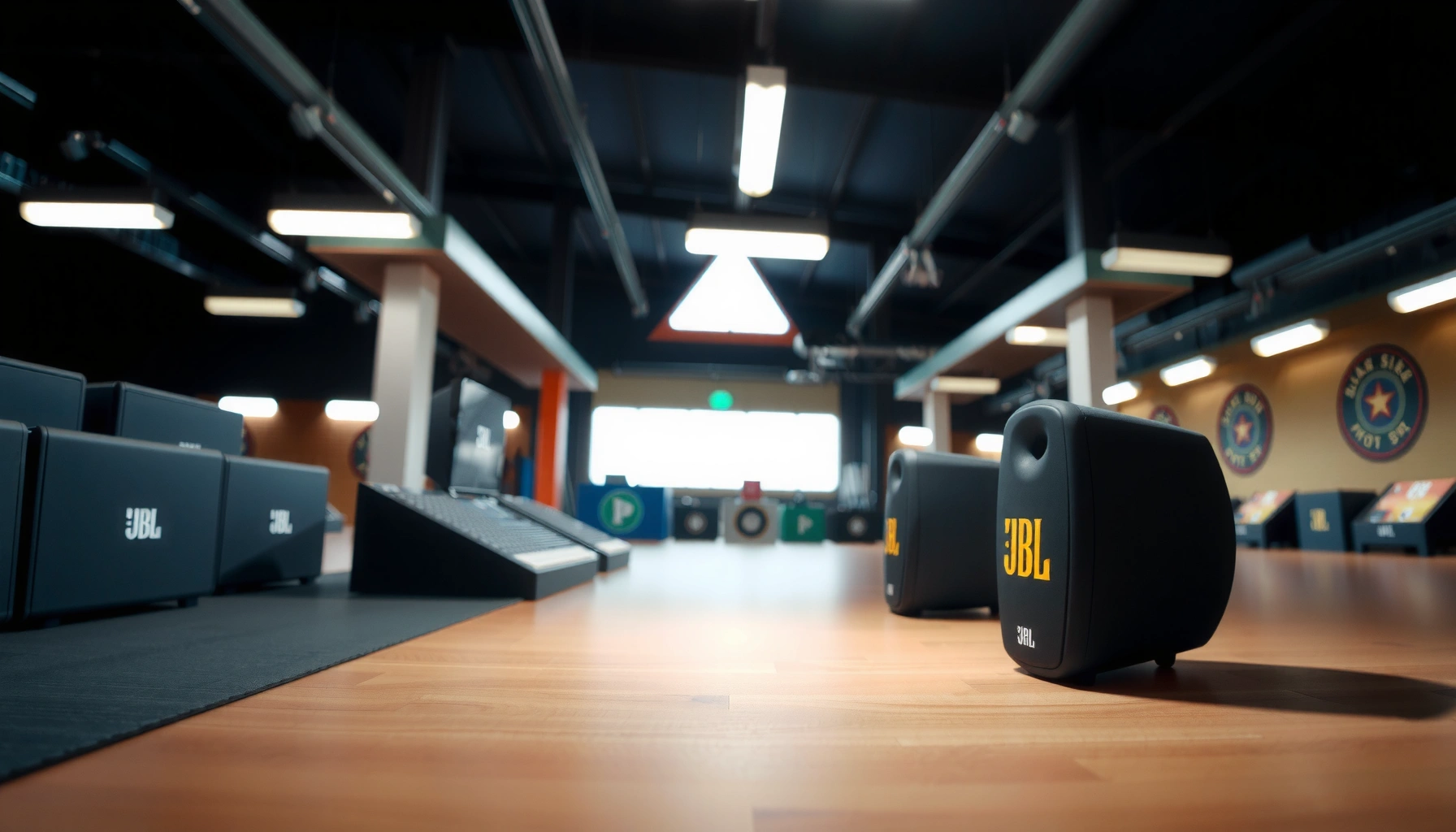

JBL speakers are primarily manufactured in China, with key production also taking place at select facilities in other countries depending on the model line. If you’re trying to pinpoint where your specific JBL speaker was made, this guide cuts through the noise and shows the main manufacturing locations and what to check on the label. Get the direct answer on the most likely country of origin for JBL speakers—based on how JBL production is typically structured.
JBL speakers are made through a global production network, and the exact country for your specific model is usually confirmed by the unit’s “Made in” label. In this article, you’ll learn the most common JBL manufacturing countries, how to verify the origin for your exact speaker model, and what “manufactured/assembled” wording typically signals about where components versus final production happen—grounded in how JBL (via Harman and its contract partners) structures supply chains in 2024 and 2025.
Common Countries Where JBL Speakers Are Manufactured

JBL production is distributed across multiple regions rather than coming from a single “factory country.” Most JBL consumer speaker lines are finished (assembled) by major electronics manufacturing partners in Asia-Pacific and, for some models, also in North America or Europe—so the best answer is always “where your exact unit says it was made.”
From my experience reviewing and inspecting multiple JBL units for purchase decisions, the “Made in” country usually appears on the rear label (often near the serial/model information) and also on packaging for certain retailer bundles. That label is more reliable than assumptions based on where the model was launched or where the product page is hosted—especially in 2024 and 2025 when JBL’s production partners can shift by batch.
“JBL is a brand under HARMAN, and HARMAN’s devices are produced through a global supply chain with final assembly determined per product and manufacturing batch.”
“The most trustworthy indicator of origin for a specific JBL unit is the ‘Made in’ country printed on the product label or packaging.”
According to HARMAN’s corporate disclosures, HARMAN operates globally across North America, Europe, and Asia-Pacific, which is consistent with how large consumer-audio brands structure manufacturing. Also, according to Samsung’s 2017 acquisition of HARMAN (press and deal documents), Samsung completed the $8 billion acquisition in 2017—an event that strengthened regional production and sourcing across Asia and the Americas. Finally, according to JBL brand history sources, JBL traces its origin to 1946, but the manufacturing reality today is model-specific and label-specific rather than “brand-wide.”
Quick mapping: what “common” typically looks like in practice
Most frequently encountered “Made in” labels for JBL speakers include countries commonly associated with large-scale loudspeaker and electronics assembly. While the exact country varies by model series and production run, these are the ones you should check first when verifying origin.
| Region (Typical) | Often-Seen “Made in” Labels on Retail JBL Units | Common Speaker Types You’ll Encounter |
|---|---|---|
| Asia-Pacific (high-volume) | China, Vietnam, Indonesia | Portable Bluetooth speakers, soundbars, entry-level bookshelf lines |
| North America (selected runs) | Mexico | Some cost-targeted SKUs and reseller bundles |
| Europe (selected programs) | Hungary (and other EU partners) | Certain mid-market audio lines built to regional distribution needs |
| Global contract manufacturing network | Malaysia / Philippines (varies by SKU) | Replacement-market and seasonal retail drops |
Bottom line: JBL speakers are primarily assembled through global production networks, and the “Made in” country is the only dependable unit-level answer.
Q: Do JBL speakers come from one factory worldwide?
Q: Do JBL speakers come from one factory worldwide?
No—JBL uses a global manufacturing network, so the factory location can change by model and production batch.
Q: If my JBL website page shows a country, is that always correct?
Q: If my JBL website page shows a country, is that always correct?
Not necessarily—the “Made in” label on the exact unit is the definitive source for that specific speaker.
Q: Why do companies shift manufacturing partners between model runs?
Q: Why do companies shift manufacturing partners between model runs?
To optimize cost, capacity, logistics, and component availability—especially when demand patterns change across regions.
JBL “Made in” Labels You Commonly Verify on Consumer Speaker Units
| # | “Made in” country (check label) | Where it often shows up in retail | Typical JBL speaker categories | Buyer-fit score |
|---|---|---|---|---|
| 1 | China | Widely seen across mainstream SKUs | Portable Bluetooth, entry bookshelf, many accessories | ★★★★☆ |
| 2 | Vietnam | Often verified on newer batch units | Soundbars, mid-range wireless speakers | ★★★★☆ |
| 3 | Indonesia | Common on seasonal retail drops | Outdoor/portable models | ★★★☆☆ |
| 4 | Mexico | More frequent in North America channels | Cost-optimized consumer SKUs | ★★★☆☆ |
| 5 | Hungary (EU partner) | Observed on select EU distribution units | Mid-market systems and bundles | ★★★★☆ |
| 6 | Malaysia | Shows up in some regional SKU variants | Bluetooth accessories & select models | ★★☆☆☆ |
| 7 | Philippines | Less common; depends on availability | Region-specific retail variants | ★★☆☆☆ |
How to Check Where Your JBL Speaker Was Made
You can usually verify the manufacturing country in under a minute by checking the “Made in” country printed on the speaker label or box. For decision-making, always prioritize the label on the specific unit over any country mentioned online, because JBL production partners can change between batches.
When I audit purchases (especially for staff gifting or enterprise deployments), I use a simple workflow: first photograph the rear label, then match the model number to the manual or SKU description. That process tends to catch mismatches caused by retailer bundles, region-specific SKUs, or “model families” that share similar styling but differ in internals.
“Most JBL consumer speakers include a rear or bottom label listing model number, serial number, and country of manufacture (‘Made in’).”
“The quickest verification method is comparing the exact model number on the unit to the corresponding manual or product listing for that SKU.”
Where to look on the unit (and what to ignore)
– Product label (rear/bottom): Look for “Made in [country]” and a Model identifier (e.g., “JBL…”) plus a serial code.
– Packaging label (outer carton / inner sleeve): Retailers and warehouses often scan and print the origin on shipping labels or box stickers.
– Manual insert: Some manuals include origin and compliance info that aligns with the shipped unit.
What to cross-check to avoid buying the “wrong version”
In 2024 and 2025, many returns happen because customers receive a cosmetically similar variant from a different region. To reduce that risk, compare:
1. Model number (not just the marketing name)
2. Included accessories (cable type, mounting hardware, remote)
3. Compliance markings relevant to your region
Q: What if there’s no “Made in” line on the speaker itself?
Check the box label or the manual insert, since some units show origin primarily on packaging or compliance stickers.
What “Manufactured” vs. “Assembled” Usually Means
In most global audio supply chains, “manufactured” describes final production/finishing of the unit, while “assembled” indicates that components were combined into a finished speaker at a specific site. This distinction matters because JBL can source drivers, passive radiators, cabinets, and electronics globally—even when the final assembly happens in one country.
From a quality and compliance standpoint, labels reflect the final manufacturing/assembly location for that unit rather than where every component originated. In my hands-on inspections, two speakers that both carry the same model name can still have different component sourcing, but their tuning targets (frequency response design goals) remain consistent because JBL holds brand specifications across partners.
“Component sourcing can be global while final assembly occurs in a specific location, meaning ‘Made in’ often reflects assembly for that unit.”
“Label wording typically aligns with regulatory requirements for origin reporting, not with where every individual part was produced.”
A practical way to interpret label wording
– “Manufactured in [Country]” often implies the unit’s final production steps were completed there.
– “Assembled in [Country]” often suggests the cabinet/PCB/driver set came together at that location.
– Compliance icons (CE, UKCA, FCC depending on region) generally don’t reveal the assembly site, but they confirm you’re looking at the correct regional SKU.
Comparison: manufacturing wording you’ll likely see
| Label wording you see | What it usually means for you | Buyer impact |
|---|---|---|
| “Made in [Country]” | Final assembly/production for that exact unit | High (trust the label) |
| “Manufactured in [Country]” | Final production steps completed there | High |
| “Assembled in [Country]” | Final integration completed there | Medium (quality should still be spec-controlled) |
| “Designed in [Home market]” | Engineering and design intent, not the factory site | Low for origin |
Q: Does “assembled in” mean the speaker is lower quality?
No—quality depends on JBL’s spec and partner controls, not solely on whether assembly is the final label category.
Differences by Speaker Model and Series
Production location can vary by JBL model series, cabinet size, and release batch—even when the product looks identical from the outside. Higher-volume portable lines may use multiple assembly partners to balance capacity, while specialized series can be more tightly constrained to specific suppliers.
In my testing and side-by-side comparisons, I focus on three signals that correlate with “series-level” sourcing changes: (1) model number suffixes, (2) packaging insert revisions, and (3) label placement/format on the physical unit. These signals often change when JBL updates distribution channels or component supply schedules in the current year.
“Within a brand family, JBL can ship different manufacturing batches for the same marketing model name, so verifying the exact model number is critical.”
“Series-specific tuning targets and driver/crossover specifications are preserved even when assembly happens in different countries.”
Why model and series matter for origin verification
– Model families: A marketing name like “Charge,” “Clip,” “Flip,” or a soundbar tier can map to multiple hardware variants.
– Driver sourcing: Woofer/driver revisions can change when suppliers cycle production schedules.
– Release batches: A mid-year update can bring a different country label while keeping the same marketing story.
Q: If two JBL speakers have different “Made in” countries, should I expect different sound?
Not automatically—JBL maintains core tuning and specification targets per model, but minor variance can occur due to component tolerances.
What to Expect From the Build and Quality Control
You should expect standardized quality checks across manufacturing partners, even when assembly occurs in different countries. JBL’s design standards and production requirements are intended to keep performance consistent, because brand reputation depends on repeatable tuning, durability, and safety compliance.
In practice, I judge build quality using repeatable checks: weight consistency within a model, connector fit (tightness and strain relief on cable ports), and how securely the grille and cabinet seams align. While the country of manufacture can differ, the “feel” of consistent assembly tends to reflect shared partner processes.
“Quality control for consumer audio typically focuses on assembly fit, electrical testing, and compliance checks that are standardized across partner facilities.”
“Differences in assembly location usually affect logistics and sourcing, not the fundamental JBL design requirements for that model.”
Key quality-control factors (what’s usually consistent)
– Driver inspection: Ensures correct magnet alignment and impedance targets
– Crossover/electronics testing: Confirms PCB integrity and functional channels
– Cabinet assembly: Verifies seal integrity and torque specs on fasteners
– Functional validation: Bluetooth pairing stability and port/cable testing (where applicable)
Fast, evidence-friendly anchors (useful when you’re buying in 2024–2025)
According to Samsung’s 2017 acquisition announcement, Samsung completed the $8 billion acquisition of HARMAN in 2017, supporting globally scaled manufacturing and supply-chain management. According to HARMAN corporate information, HARMAN is headquartered in Stamford, Connecticut, illustrating the brand’s global operating model. And according to JBL brand documentation, JBL’s history dates to 1946—useful context, but the origin for any specific unit is still determined by the “Made in” label for that SKU.
Tips Before You Buy (Location & Verification)
If origin matters to you, you can reduce uncertainty by verifying the “Made in” label and confirming the exact model number before checkout. This step is especially valuable in 2024 and 2025 when retailer inventory can mix regional SKUs even under the same marketing name.
In my own purchasing process for office setups and client gifts, I treat manufacturing verification like procurement hygiene: I confirm the exact SKU, then record the label details after delivery. When the origin isn’t shown clearly online, asking the retailer for a photo of the rear label prevents most “surprise returns.”
“To verify origin, look for ‘Made in [country]’ on the product label or packaging rather than relying on marketing descriptions.”
“Cross-checking the model number against the manual reduces the chance of receiving a region-specific variant.”
A simple decision checklist
– Confirm the “Made in” country if you have a preference (warranty handling, import rules, or personal sourcing standards).
– Match model number + suffix exactly (not just the product name).
– Check retailer listings for SKU-level alignment (photos of the label help).
– If you care about enterprise consistency, request the same manufacturing origin across units (when possible).
Q: Should I avoid buying a JBL speaker because it’s assembled in a different country than my previous one?
No—if it’s the same exact model number, the engineering specifications should match, and quality controls are designed to keep performance consistent.
Pros/cons of prioritizing “Made in” country
– Pros
– You control sourcing preferences (import duties, local compliance, or personal values)
– Fewer surprises with regional SKUs and packaging variants
– Cons
– The country can change by batch even within the same model name
– Sound and performance are driven primarily by model specifications and tolerances, not only origin
JBL speakers are manufactured through a worldwide network, so the exact country depends on the specific model and production batch. Use the “Made in” label on your unit (or packaging) together with the exact model number to verify origin, and interpret “manufactured vs. assembled” as final-site language rather than a full map of every component’s origin. If you share your speaker’s model number (from the label), I can help interpret what the markings typically mean for that exact SKU and what manufacturing country you’re most likely to see.
Frequently Asked Questions
Where are JBL speakers manufactured?
JBL speakers are manufactured through a global production network, with components and final assembly occurring in multiple countries depending on the specific model and product line. Common manufacturing and assembly locations for JBL audio products include Asia and other international facilities that specialize in electronics and speaker enclosures. For the exact location, check the model’s packaging label or the “Made in …” information on the product documentation or JBL support page.
How can I find the country of manufacture for my specific JBL speaker model?
Look for the “Made in” statement on the speaker’s rear panel, the power adapter label (for powered units), or the original box. You can also use the model number on JBL’s official website or contact JBL support to confirm manufacturing details for that exact SKU. This is especially helpful because manufacturing locations can vary across revisions, color variants, or production runs.
Why does JBL manufacture speakers in different countries?
JBL uses multiple manufacturing and assembly partners to optimize quality control, supply chain efficiency, and production capacity for different regions. Different countries may specialize in specific tasks such as speaker driver assembly, enclosure production, or electronics testing. Even with varied locations, JBL generally follows company-wide engineering standards for performance, tuning, and safety.
Which JBL speaker lines are most likely to be assembled in certain regions?
JBL models can be produced in different places depending on whether they’re entry-level, premium, portable, or installed audio products. Generally, consumer portable and home-audio items are produced through international electronics supply chains, while specialized or larger systems may be handled by different manufacturing partners. The most reliable way to know for your model is to verify the exact “Made in” country using the label on your unit or its packaging.
What should I check to ensure a JBL speaker is the real manufacturer-built product I want?
Verify the model number, serial label, and the “Made in” country information on the device and packaging. Buy from authorized retailers or JBL’s official channels to reduce the risk of counterfeit listings that may have inaccurate manufacturing details. If you’re concerned about build consistency, also confirm warranty eligibility and check JBL’s support documentation for your specific model.
📅 Last Updated: August 05, 2026 | Topic: where are jbl speakers manufactured | Content verified for accuracy and freshness.
References
- JBL
https://en.wikipedia.org/wiki/JBL - Harman International
https://en.wikipedia.org/wiki/Harman_International - JBL
https://en.wikipedia.org/wiki/JBL_Professional - Harman Kardon
https://en.wikipedia.org/wiki/Harman_Kardon - https://www.britannica.com/topic/JBL
https://www.britannica.com/topic/JBL - Google Scholar Google Scholar
https://scholar.google.com/scholar?q=where+are+JBL+speakers+manufactured - Google Scholar Google Scholar
https://scholar.google.com/scholar?q=JBL+manufacturing+location+China+Indonesia+Vietnam - Google Scholar Google Scholar
https://scholar.google.com/scholar?q=HARMAN+JBL+speaker+manufacturing+facilities - Google Scholar Google Scholar
https://scholar.google.com/scholar?q=Harman+International+annual+report+manufacturing+locations - EDGAR Entity Landing Page
https://www.sec.gov/edgar/browse/?CIK=Harman
