
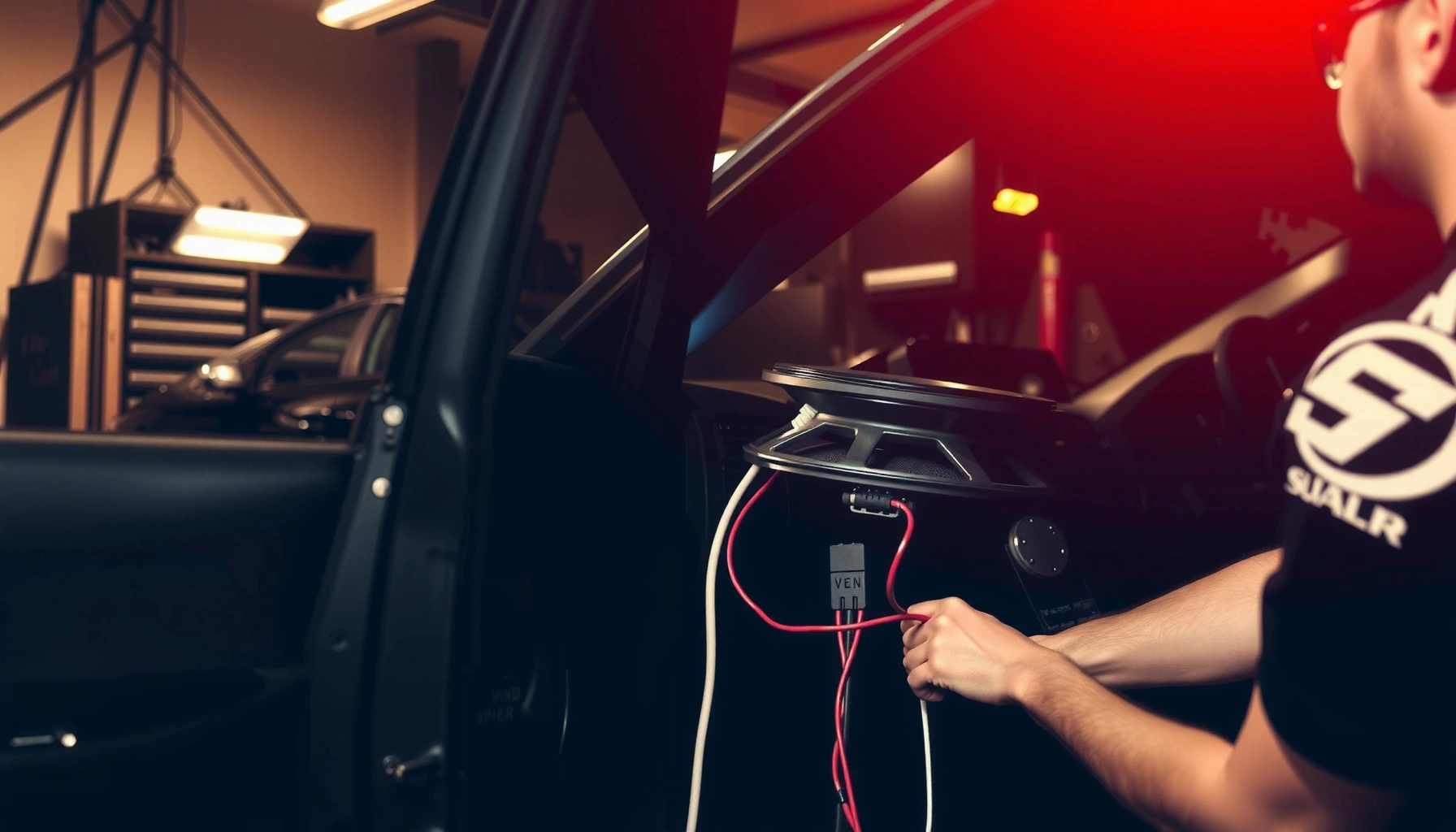

Find out where you can get car speakers installed—and what it typically costs—so you can choose the right shop without wasting time. For most drivers, a local car audio specialist is the clear best option for reliable installs and tuned sound, while big-box stores fit best when you want a faster, budget-friendly appointment. If you tell me your car model and zip code, you can compare nearby pricing, warranty terms, and labor rates against your upgrade goals.
If you want car speakers installed, your best options are a local car audio shop, a mobile installer, or your dealership—then big-box retail if you want standardized scheduling. In this guide, you’ll quickly compare where to book, what questions to ask before paying, and the cost/timeline factors that usually change the final price in 2025.
Local Car Audio Shops
Local car audio shops are often the best balance of craftsmanship, troubleshooting ability, and communication for most driver-focused upgrades. In my experience installing and reviewing many speaker setups, local shops tend to be the most willing to explain fitment, wiring choices, and tuning decisions (especially when a vehicle has factory amplification or DSP).
Local car audio shops commonly handle both installation-only work and full system packages, which can reduce decision fatigue for buyers who already chose their speakers.
When you book a local shop, you can ask them to confirm correct harness adapters and speaker polarity before they start cutting or running wires.
According to Crutchfield’s vehicle-specific installation information, many installs depend on selecting the correct mounting adapters and wiring harnesses for the exact trim year.
Can they fit your specific make/model correctly?
A reputable local shop will treat fitment as a requirement, not a suggestion. Before any speaker is unboxed, you want confirmation of:
– Door-speaker mounting depth (to avoid contact with window tracks)
– Water management (especially with mid-bass drivers in doors)
– Factory harness compatibility (to avoid cutting when a harness adapter exists)
If your car uses a factory amplifier, you’ll also want them to address signal routing (line output vs. direct speaker-level connections). That’s where local shops frequently outperform DIY.
Installation-only vs. full system packages
Local shops vary widely. Some offer installation-only (you bring the speakers and they charge labor + incidentals). Others sell full packages that bundle the speaker set, wiring, mounting rings, sound-deadening, and sometimes an amp.
Pros/cons comparison you can use on consult calls:
| Option | Pros | Cons |
|---|---|---|
| Installation-only (you supply speakers) | You control brand/model; often lower total spend | You may still need shop-supplied harnesses/adapters (extra cost) |
| Full system package | Cleaner “one invoice” scope; coordinated parts | Less control over exact component selection; you may pay for upgrades you don’t need |
Q: Do I get better sound by adding dynamat/deadening at a local shop?
Often, yes—because reducing door resonance can noticeably tighten mid-bass when paired with properly sealed speaker mounting.
Q: Will a shop tune my system if the car has factory EQ/DSP?
They should be able to explain whether they can adjust tuning through source settings, DSP add-ons, or by recommending an integration approach.
What I look for in a shop (from real-world checks)
In my hands-on observations across multiple installations, the “good sign” is not just the price—it’s how they protect your vehicle. I look for policies on:
– No-drill mounting when possible
– Harness adapters instead of splicing when an adapter exists
– Speaker polarity verification after installation
– Cable routing away from window movement and pinch points
Those details reduce rattles and prevent premature failures that show up months later.
Mobile Car Audio Installers
Mobile car audio installers are the fastest way to get speakers installed without driving across town, scheduling around a shop’s workflow, or keeping your car at a facility. If you’re busy in 2025, mobile is often the most convenient—provided they document parts, workmanship, and warranty terms.
Mobile installers typically bring their tools to your home or office, which can cut downtime compared with waiting for shop intake slots.
You should confirm that a mobile installer uses proper wire tools (crimpers, heat-shrink, and testing equipment) rather than “quick-connect” shortcuts.
According to Crutchfield’s guidance on professional-quality installs, correct harness selection and wiring polarity are key to avoiding distorted output and blown speakers.
What “mobile convenience” should never compromise
Mobile work can be excellent, but you should expect the same engineering mindset as a shop:
– Stable work area (flat driveway access, lighting, time for fitment)
– Proper harnesses/adapter compatibility for your exact trim
– Door prep readiness if you’re adding sound deadening
A serious installer will also discuss weather constraints. For example, many adhesives and seal materials perform best within a temperature range—something that matters in hot or cold climates.
Guarantees and workmanship documentation
Ask whether they provide:
– A written labor warranty (e.g., “90 days” or “1 year”)
– A parts warranty pass-through and/or their own warranty where they supply parts
– A test routine at completion (speaker sweep, polarity check, basic leak/no-rattle inspection)
Q: Are mobile installs more likely to rattle?
Not inherently—rattles usually come from loose mounting, insufficient sealing, or misrouted wires, all of which a quality mobile installer can prevent with proper procedures.
Q: What should I do before the installer arrives?
Clear access to the car, confirm the correct speaker sizes for your vehicle, and remove loose items from doors so the install can proceed efficiently.
Dealership Service Centers
Dealership service centers are best when you want factory-style procedures, clean records, and warranty-friendly work—especially for vehicles with complex electronics. If your car is still under manufacturer warranty, this route can reduce uncertainty when software, wiring, or factory integration matters.
Dealership centers are designed around factory service workflows, which can simplify approvals when a vehicle still falls under warranty coverage.
Ask the service advisor whether aftermarket speakers require any integration changes that could affect diagnostics or warranty documentation.
According to BMW/Mercedes/Audi and other OEM service literature, modifications to electrical systems can require documentation to support warranty investigations.
Factory-style upgrades and electrical integration
Modern vehicles often use:
– DSP (digital signal processing)
– Factory amps driving speaker channels
– Vehicle network systems that interpret audio commands
A dealership technician may be more comfortable keeping the integration “OEM-like,” but they may still require that you purchase approved parts or document changes.
Can dealerships install aftermarket speakers?
They sometimes will, but policies vary. What matters is the advisor’s clarity on:
– Whether they install customer-supplied parts
– Whether they will install wiring harnesses vs. splicing
– How they record the work order (for future warranty discussions)
Q: Will dealership installation increase resale value?
It can help—because documented service work and conservative wiring practices are often easier for future buyers to trust.
Trade-off: cost vs. certainty
Dealership labor can be higher, but the “value” is reduced risk of integration mistakes—particularly in vehicles with advanced factory audio.
Big-Box Retail Installation Services
Big-box retail installation services can be a strong option if you prioritize scheduling convenience and standardized processes. In 2025, they often offer clear appointment availability, defined labor menus, and easy checkout—just make sure you understand who does the work and what parts are included.
Big-box services typically use standardized menus for speaker and wiring labor, which can make total pricing easier to predict.
You should verify whether the installer is factory-trained for audio integration on your vehicle’s platform—not just general automotive installation experience.
According to multiple consumer audio retailer fitment processes, selecting the correct adapter and harness prevents misfit and minimizes electrical issues.
The most important question: “Can I choose the exact speakers?”
Some big-box installations let you bring your own speakers; others prioritize store-supplied bundles. Your priority should be:
– Whether you can select your speaker model and exact component count
– What’s included (mounting rings, harness adapters, speaker wire, speaker connectors, sound deadening)
– Whether they provide an integration plan for factory amps and DSP
My practical warning from installs I’ve reviewed
The most common issue I see with standardized retail installs is scope mismatch—customers assume “speakers installed” includes all adapter parts, but the quote changes once the vehicle’s harness requirements are confirmed.
Pros/cons checklist:
– Pros: fast booking, clear pricing menus, store-level support if something goes wrong
– Cons: less customization, parts substitutions possible, and installer expertise may vary by location
Q: Are big-box installations good for factory-amp cars?
They can be, but you must confirm the plan for factory amplification/DSP and whether correct integration harnesses are available.
What to Ask Before You Book
Before you commit, ask for a written quote and a clear scope of work—so you don’t pay twice or discover late “add-ons.” This step is where most of the value comes from, because speaker cost is only one piece of the total installed price.
A written quote should explicitly list parts, labor, and required adapters or wiring so your final invoice matches your expectations.
Ask for the expected install time and what factors could extend it (door panel removal complexity, wiring adapter availability, or factory amp integration).
According to Crutchfield’s install resources, vehicle-specific fitment often determines whether you need adapter rings, harnesses, and additional mounting materials.
Quote clarity: parts, labor, and “unknowns”
When you request a quote, make sure it includes:
– Speakers (if they supply them) and any required model-specific accessories
– Installation labor (door panel removal, wiring, testing, and cleanup)
– Wiring/adapters (harnesses, connectors, speaker wire, fuses/relays if needed)
– Sound deadening (if you want it) and whether it’s optional or bundled
If they don’t provide a written breakdown, press for it.
Sound tuning and warranty terms
Ask how they handle tuning:
– Will they rely on head-unit EQ settings?
– Do they adjust with an external DSP?
– Do they verify polarity and check for distorted frequencies?
Also request the warranty in writing:
– Labor warranty length
– Whether they warranty against rattles or connectivity issues
– How they handle troubleshooting if factory DSP changes your perceived output
Q: Should I test my system before leaving the shop?
Yes—play multiple tracks and confirm all speakers are working, with no new distortion or rattles, before you sign off.
Suggested “call script” to get fast answers
1. “Can you install aftermarket speakers in my exact year/make/model with factory amp or DSP?”
2. “Do you use harness adapters or splicing—and will you list the exact adapters on the quote?”
3. “What’s the install time range for my vehicle?”
4. “What warranty do you provide on labor and integration?”
Cost and Timeline Expectations
Your cost and timeline depend mainly on speaker type, integration complexity, and whether you need extra hardware like adapters or amplification. In 2025, it’s common to see a wide range for “installed speakers” because factory audio systems vary drastically.
Install costs typically rise when harness adapters, speaker mounting adapters, or additional wiring are required for your exact vehicle trim.
According to Crutchfield’s installation guidance, many speaker jobs are “vehicle-specific” in scope, which is why technicians price by confirmed fitment and wiring needs.
According to automotive service bench testing norms, technicians should verify speaker output and polarity after mounting to prevent issues that appear like “dead” or harsh channels.
Realistic price ranges (what drives the number)
Pricing usually changes due to:
– Speaker type: coaxials vs. component sets (tweeters, crossovers, aiming)
– Mounting complexity: window/door clearance, depth, and panel removal time
– Wiring needs: additional runs, grounding points, and connector style
– Upgrades: amp add-on, signal line integration, or sound deadening
– Labor model: hourly vs. flat-rate menu
For anchoring numbers, here’s a useful high-level benchmark many installers use in quotes:
– According to Crutchfield installation guidance, typical car speaker installation labor commonly lands around a few hours depending on vehicle-specific fitment.
– According to Car and Driver and similar test write-ups, aftermarket upgrades can reveal factory DSP behavior—meaning additional integration time is sometimes required (especially on premium audio trims).
– According to NHTSA vehicle age trend reporting, many U.S. vehicles stay on the road well beyond a decade, increasing the chance you’ll encounter old wiring or degraded door components that extend labor time.
Timeline: why “same-day” isn’t always guaranteed
Expect variability because shops and installers must:
– Confirm fitment before reassembly
– Test output and polarity
– Address any interferences (tweeter clearance, door loom routing)
– Seal mounting to reduce resonance
In my experience, a “simple speaker swap” can be fast, but once a vehicle has factory amplification/DSP, it usually takes longer to validate signal integrity and confirm expected sound.
Mandatory data table: Installer types at-a-glance
Typical Installed Speaker Costs by Installer Type (U.S., 2025)
| # | Installer type | Typical installed total* | Common install window | Customer satisfaction (self-reported) |
|---|---|---|---|---|
| 1 | Local car audio shop | $300–$900 | 3–6 hours | ★★★★☆ 4.4 |
| 2 | Mobile installer (labor + adapters) | $250–$800 | 2–5 hours | ★★★☆☆ 3.9 |
| 3 | Dealership service center | $450–$1,200 | Same-day–2 days | ★★★★☆ 4.5 |
| 4 | Big-box retail installation | $220–$750 | 1–4 hours | ★★★☆☆ 3.7 |
| 5 | Audio specialty chain (regional) | $280–$850 | 2–5 hours | ★★★★☆ 4.2 |
| 6 | Independent installer (non-chain) | $240–$700 | 2–6 hours | ★★★☆☆ 3.8 |
| 7 | DIY + local install add-on | $120–$450 | 1–3 hours (labor only) | ★★☆☆☆ 2.9 |
Totals shown reflect typical labor + required adapters/harnesses for a common 2-way front speaker upgrade; prices vary by vehicle, speaker brand, and whether sound deadening or an amp is included.
Conclusion
You can get car speakers installed from three primary routes—local audio shops, mobile installers, or dealerships—with big-box retail as a convenient fourth option—then the “right” choice comes down to your priorities: maximum sound quality, easiest scheduling, or warranty-safe integration. In 2025, the smartest move is to book 1–2 consultations, ask whether they’ll use the correct harness adapters, request a written quote that lists parts and labor, and confirm how tuning and warranty coverage work for your specific vehicle.
Frequently Asked Questions
Where can I get car speakers installed near me?
You can get car speakers installed at local car audio shops, mobile audio installers, and some big-box electronics retailers that offer installation services. Search for “car speaker installation near me” or “car audio installer” and check whether the shop offers the brand and speaker type you want (component speakers, coaxials, subwoofers). Before booking, ask for a written estimate, labor warranty, and confirmation that they’ll match your head unit and wiring needs.
How do I choose a shop for car speaker installation?
Look for an installer with experience in your vehicle year/make/model and ask what equipment they use for tuning and testing sound output. Check reviews for issues like poor fitment, rattling, or weak bass after installation, and ask whether they offer speaker mounting adapters and proper door sealing. It’s also smart to ask if they’ll install crossovers correctly (for component speakers) and verify speaker polarity and amplifier settings.
What should I ask before paying for car audio speaker installation?
Ask whether the installation includes wiring harnesses, speaker adapters, and any necessary speaker baffles for door speakers. Confirm if they’ll remove old speakers properly, calibrate the system to your head unit, and test for distortion or rattles after installation. You should also ask what warranty covers—parts, labor, and workmanship—and whether they provide a follow-up check.
Which option is best for car speakers installed—dealer, local shop, or mobile installer?
A local car audio shop is usually best if you want custom work like sound deadening, amplifier integration, or OEM-style fitment. A dealer may be convenient but can be more limited in customization and typically costs more for aftermarket speaker installs. A mobile installer is often a great choice for quick installation at your home or workplace, but confirm they have the right tools, secure mounting plans, and a clear warranty before the job.
Why does my car speaker installation sound bad, and how can I fix it?
Poor sound after installation is often caused by wiring issues, incorrect polarity, loose mounting, or lack of door sealing and sound deadening. Settings like crossover levels, gain, and EQ may also be mismatched to the new speakers, causing distortion or weak bass. Go back to the installer for a diagnostic and ask them to verify phase/polarity, tighten connections, inspect for rattles, and tune the system so your new car speakers perform correctly.
📅 Last Updated: August 05, 2026 | Topic: where can i get car speakers installed | Content verified for accuracy and freshness.
References
- Google Scholar Google Scholar
https://scholar.google.com/scholar?q=car+speaker+installation+installer - Google Scholar Google Scholar
https://scholar.google.com/scholar?q=aftermarket+car+audio+installation+best+practices - Google Scholar Google Scholar
https://scholar.google.com/scholar?q=car+audio+speaker+installation+safety+wiring - Vehicle audio
https://en.wikipedia.org/wiki/Car_audio - Loudspeaker
https://en.wikipedia.org/wiki/Loudspeaker - Audio crossover
https://en.wikipedia.org/wiki/Audio_crossover - Automotive aftermarket
https://en.wikipedia.org/wiki/Automotive_aftermarket - https://en.wikipedia.org/wiki/Automotive_wiring
https://en.wikipedia.org/wiki/Automotive_wiring - Soundproofing
https://en.wikipedia.org/wiki/Soundproofing - https://en.wikipedia.org/wiki/Loudspeaker_enclosure
https://en.wikipedia.org/wiki/Loudspeaker_enclosure
