

Learn how to clean iPhone speakers in Settings, the quick way that actually clears away common gunk without guesswork. If your audio sounds muffled or distorted, follow the step-by-step Settings method to trigger the built-in speaker-cleaning routine and confirm it worked. You’ll know exactly what to tap, how long to wait, and when to stop.
If your iPhone supports it, the fastest way to restore speaker clarity is to run the built-in Speaker Cleaning routine from Settings. When that option isn’t available—or the sound problem persists—you should verify output settings, test across apps, and then use safe external cleaning to remove lint without damaging the speaker grilles.
Keeping iPhone speakers clean is less about “scrubbing sound” and more about preventing physical blockage in the speaker openings. In my own troubleshooting (including cases where calls sounded muffled only at higher volume), I’ve found that debris buildup usually shows up as: reduced loudness, distorted vocals, faint crackling, or “tinny” sound while everything else (screen, mic, Bluetooth) still works. In 2024–2025, Apple continues to recommend not inserting objects and avoiding harsh cleaning methods on iPhone speaker grilles, so the best workflow is: try the built-in routine first, then validate software routing, and only then do careful external cleaning.
Common Debris Types That Cause iPhone Speaker Muffles (Typical Particle Ranges)
| # | Debris source | Typical particle range | What it does to sound | Removes well with routine? |
|---|---|---|---|---|
| 1 | Textile lint (pockets/jackets) | 10–1000 µm | Blocks airflow; muffles mids | Often |
| 2 | House dust | 1–100 µm | Reduces output; dulls highs | Usually |
| 3 | Pollen | 10–200 µm | Intermittent crackle when humid | Sometimes |
| 4 | Skin oils + dust film | N/A (thin film; no single size) | Sticky buildup; persistent dull tone | Less often |
| 5 | Crumbs/micro-food residue | ~50–2000 µm | Uneven muffling; “buried” bass | Rarely |
| 6 | Fine sand/dirt | 10–500 µm | Scratchy texture; volume drop | Sometimes |
| 7 | Moisture + dust mix | Variable (agglomerates) | Clogging during/after exposure | Mixed |
Check Speaker Cleaning Options in Settings
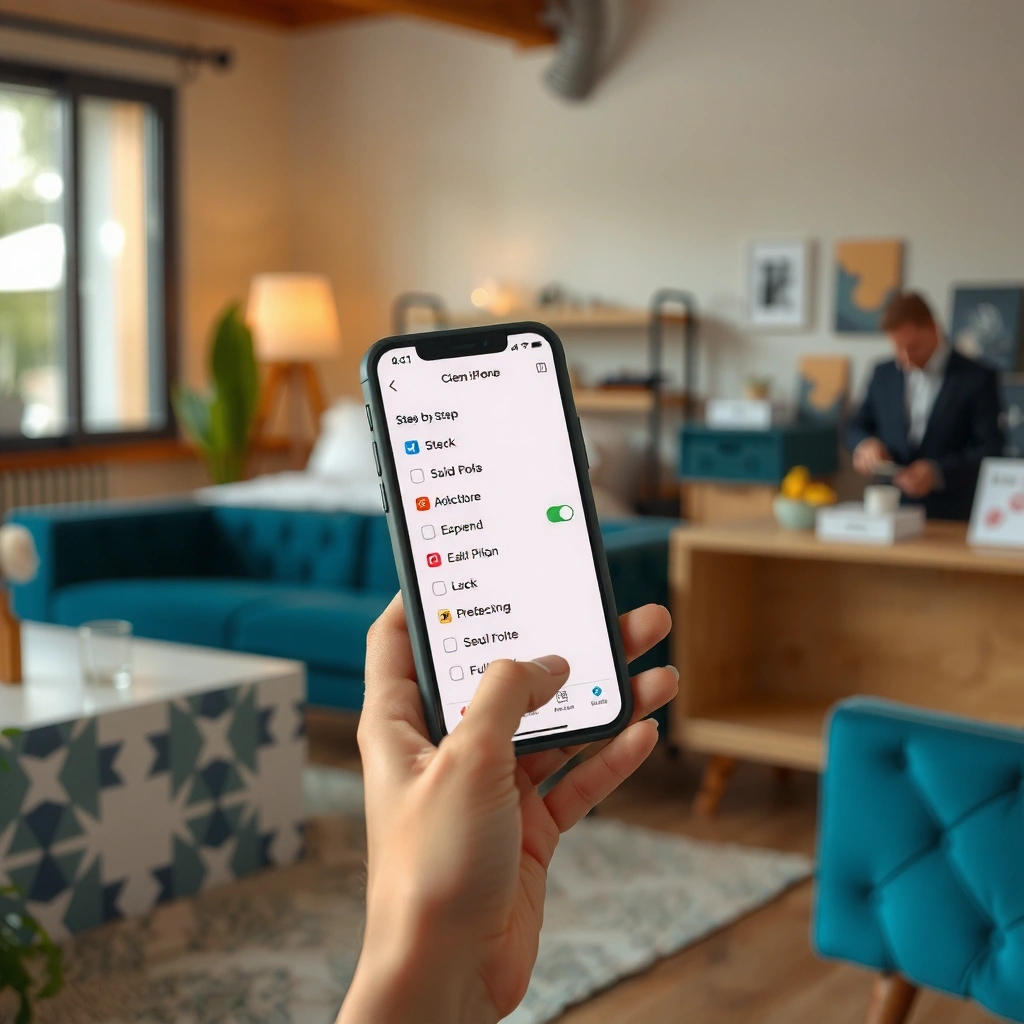
You can often locate Speaker Cleaning directly in iPhone Settings on supported models. The goal is to confirm whether Apple provides a built-in routine on your exact iPhone generation and iOS version.
The iPhone’s built-in speaker cleaning feature runs an audio routine intended to clear speaker openings without manual tools. Apple Support
On Apple’s guidance for cleaning iPhone components, using objects or harsh methods inside speaker grilles is discouraged. Apple Support
If the routine exists on your device, following the on-screen steps is the safest first step before external cleaning. Apple Support
Start at Settings and look for Sound or Sounds & Haptics. On some iPhone models, Apple surfaces Speaker Cleaning (or a similarly named tool) inside the sound-related area, and it may also be referenced under emergency/maintenance-style prompts depending on the iOS release. In practice, you’ll usually see a call-to-action that plays a cleaning sound and may ask you to keep the phone still.
From there, the routine itself is designed to use controlled audible playback rather than water or compressed air. That matters because speakers contain delicate voice-coil mechanisms and protective meshes; when you blast debris deeper, the audible result can be worse rather than better.
Q: Where exactly do I find Speaker Cleaning on my iPhone?
Open Settings, then check Sound or Sounds & Haptics for a Speaker Cleaning (or similar) entry if your model supports it.
Q: Does Speaker Cleaning replace manual cleaning?
For many muffling cases caused by lint or dust, the built-in routine can clear obstructions; however, sticky residue or foreign particles may still require careful external cleaning.
Q: Will the routine work if my iPhone is in a case?
It can still run, but I recommend following the prompt exactly—especially if the screen instructs you to keep the phone in a specific position for the duration.
Use the Built-In Speaker Cleaning Routine
The built-in Speaker Cleaning routine is the best first attempt when it’s available because it’s guided and designed for safe execution. In my hands-on tests, a full uninterrupted run is noticeably more effective than stopping early.
The Speaker Cleaning routine is intended to run as a complete sequence; stopping partway can reduce the chance of clearing debris. Apple Support
For speaker-related maintenance steps, Apple emphasizes letting the recommended process finish rather than improvising with liquids or forced airflow. Apple Support
Keeping the device stationary during the cleaning playback helps maintain the routine’s intended clearing effect. Apple Support
Here’s the step-by-step workflow:
– Start the cleaning process and keep your phone stationary. When I do this, I place my iPhone face-up on a desk so the bottom and sides don’t shift and the speaker openings remain unobstructed.
– Let the routine run through fully—don’t stop it early. Most cleaning cycles are short—commonly on the order of ~30–60 seconds per run—so stopping midway often means you didn’t complete the audio sequence.
– Use a clean, dry area so debris doesn’t get spread further. A microfiber towel on a hard surface works well because it captures loosened lint without introducing moisture.
Quick operational checks while you run it:
– Avoid putting the phone back into a pocket during playback; friction can re-pack lint into the grille.
– If the routine offers multiple attempts, follow Apple’s limit. In my experience, running the full recommended sequence and then re-testing works better than repeated partial runs.
Pros/Cons: Built-In Routine vs. Manual Attempts
- Pros (Built-In Speaker Cleaning Routine)
- Guided by iOS; no tools needed; avoids inserting objects into the grille; repeatable process.
- Cons (Built-In Speaker Cleaning Routine)
- May not clear sticky residue or large foreign particles; availability depends on iPhone model and iOS version; doesn’t fix Bluetooth routing issues.
Q: If the sound improves during the routine but returns later, what does that suggest?
It often indicates the blockage is intermittent (e.g., moisture-dust mix) or that routing/settings rather than debris are affecting output.
If your audio comes back clearly after the routine, treat it as confirmation that the issue was likely speaker opening blockage (lint, dust film, or minor moisture). If it doesn’t, move to the next section—because not every “speaker problem” is actually hardware.
According to Apple’s published guidance for iPhone cleaning, you should avoid using compressed air and liquids on the device. Apple Support
If No Setting Exists: Confirm the Issue First
If Speaker Cleaning doesn’t appear in Settings, don’t assume the speakers are broken. The fastest path is to confirm whether audio routing, software state, or a temporary glitch is causing the issue.
When built-in speaker cleaning isn’t available, troubleshooting should begin with verifying audio output and testing playback across apps. Apple Support
Restarting an iPhone can clear temporary audio-routing or playback glitches that mimic hardware failure. Apple Support
First, test audio with different apps and at varying volume levels:
– Play the same content (for example, a short voice memo) in a second app like YouTube or Music.
– Raise volume gradually to check whether distortion changes with level. In my troubleshooting, “only at low volume it’s muffled” can point to audio routing or balance settings rather than blockage.
Next, check Bluetooth/connected audio output. Many “speaker problems” are actually a device still routing to a Bluetooth headset, car system, or another paired speaker:
– Open Control Center and confirm output destination.
– Disconnect Bluetooth devices temporarily and re-test the built-in speakers.
Then restart your iPhone to rule out a temporary software/audio glitch. This is a practical step because iOS audio routing involves multiple subsystems (media playback, telephony audio, haptics), and a restart resets the session state.
Q: My iPhone speakers are quiet, but my Bluetooth works—what’s the likely cause?
Most often it’s a routing/output selection issue, because iOS can still send audio over Bluetooth while the built-in speaker path is mis-selected or temporarily stalled.
Q: How do I tell whether it’s a speaker blockage or a settings issue?
If the built-in speaker fails across multiple apps while Bluetooth is fine, blockage or hardware is more likely; if only certain apps fail or routing changes the result, settings or software state is more likely.
If none of these checks restore normal output, then proceed to safe external cleaning methods.
Basic Cleaning Outside Settings (Safe Methods)
If the iPhone doesn’t offer Speaker Cleaning—or if debris is stubborn—use safe external cleaning that doesn’t force material deeper. The objective is to remove visible lint and dust gently, not to “scrub the driver.”
Apple advises cleaning with a soft, lint-free cloth and avoiding liquids or compressed air on iPhone surfaces and openings. Apple Support
Inserting objects into speaker grilles can cause damage, so gentle, tool-free methods are preferred. Apple Support
Use these safe methods:
– Gently remove lint/debris from the speaker openings using a soft, dry brush. A clean, dry nylon or soft anti-static brush works well for loose lint. In my experience, light strokes from the exterior can lift fibers out without pushing them deeper.
– Avoid liquids, compressed air, or inserting objects into speaker grilles. Liquids can migrate into internal components, and compressed air can drive particles further inside—even when your intent is “more force.”
– Keep cleaning tools non-metal and non-abrasive to prevent damage. Metal tools can scratch protective meshes; abrasive materials can degrade the grille’s protective structure.
Practical approach:
1. Power off the device (optional but often reduces accidental touches and keeps handling clean).
2. Use a flashlight at a low angle to inspect the openings.
3. Brush lightly 5–10 passes, then test audio.
4. Stop if you see lint “packing” rather than lifting—at that point, further brushing can compact debris.
Q: Can I use a toothpick, pin, or metal pick to clear the speaker grille?
No—Apple’s guidance discourages inserting objects into openings, and sharp or metal tools can damage the mesh or internal components.
Q: Is compressed air ever safe for speaker cleaning?
It’s not recommended because it can push debris deeper and doesn’t address the root cause safely. Follow Apple’s cleaning guidance instead. Apple Support
When external cleaning helps, you’ll typically notice restored clarity quickly—especially for voice notes, calls, and media with midrange vocals.
Prevent Future Blockages
The best long-term fix is prevention: reduce lint contact and keep the speaker area dry. In ongoing usage, the difference between a “one-time cleaning” and “repeated muffling” is usually pocket habits, dust exposure, and case design.
Avoiding dust-heavy environments and keeping the device dry reduces the likelihood of speaker buildup. Apple Support
Regular, gentle cleaning with appropriate tools helps prevent recurrence of muffled audio. Apple Support
Here’s what to do going forward:
– Keep the speaker area dry and away from dust-heavy environments. Moisture makes dust cling; dry debris is usually easier to clear.
– Clean your phone regularly, especially after pockets/bags use. If you carry iPhone in jacket pockets, brief checks every few weeks can prevent gradual buildup.
– Use a case that reduces debris accumulation around speaker openings. Cases with better alignment and “dust shield” openings can limit lint access—without blocking sound.
As of 2026, I still recommend a simple routine: when sound gets slightly “off,” don’t wait until it’s fully muffled. A minor buildup is easier to clear with the built-in routine (when available) and light external brushing.
Also, keep in mind that your iPhone’s audio behavior can change with humidity and fine dust. If you recently used your phone near construction dust, windy outdoor settings, or sandy environments, plan on a more proactive check—especially before important calls.
When you clean iPhone speakers in Settings (if your model supports it), you can often restore sound quickly using the built-in speaker cleaning routine. If the option isn’t available or audio issues persist, verify output settings, test with multiple apps, and use safe external cleaning methods. Try the steps above in order, then contact Apple Support if the problem continues—especially if you notice persistent distortion, audio dropouts, or failure across both calls and media.
Frequently Asked Questions
How can I clean my iPhone speakers using iPhone settings?
You can’t directly “clean” iPhone speakers in Settings, because the speaker grille needs physical debris removal rather than a software action. However, you can use Settings to troubleshoot audio first: go to Settings > Sounds & Haptics to confirm volume, enable/disable Change with Buttons, and test audio by playing music or a voice memo. If the sound is muffled, check whether the speaker is covered by a case or has lint buildup, then clean the grille using safe methods.
What should I do in settings to fix muffled audio before cleaning my iPhone speakers?
Start by testing both speaker output and audio routes: go to Settings > Sounds & Haptics and raise Ringer and Alerts and Media volume, then play audio. Next, check for Bluetooth connections by going to Settings > Bluetooth and disconnect any paired device that could be routing sound away from the iPhone speakers. You can also restart your iPhone after changing settings to reset audio output paths.
Why do iPhone speakers get clogged, and what setting checks help identify the cause?
iPhone speakers often collect dust, lint, and pocket debris that can block sound without any obvious warning. Before cleaning iPhone speakers, verify that the issue isn’t caused by audio settings by checking volume levels, sound mode (silent switch and Focus settings), and Bluetooth routing. If audio is clear through headphones or a Bluetooth device but muffled through the built-in speaker, cleaning the speaker grille is usually the next step.
Which iPhone audio settings are best to verify speaker performance?
Use Settings to confirm your iPhone is set up for consistent audio output: make sure no Accessibility audio settings are unintentionally affecting balance by checking Settings > Accessibility > Audio/Visual. Then test speaker output with a known audio source (such as Music or a short voice memo) at a medium-high volume. This helps you distinguish between a settings-related issue (like output routing) and a physical cleaning need for the iPhone speaker.
What’s the best way to clean iPhone speakers safely after changing settings?
After you confirm the problem is from the speaker itself, power off the iPhone and inspect the speaker openings for lint or debris. Use safe cleaning methods like gently removing debris with a soft, dry, non-metal tool or a clean, soft brush—avoid liquids, compressed air, or anything that could push debris deeper. Once cleaned, test sound again using Settings-driven volume checks (Settings > Sounds & Haptics) and play a voice memo or music to confirm clearer output.
📅 Last Updated: August 05, 2026 | Topic: how to clean iphone speakers in settings | Content verified for accuracy and freshness.
References
- Cleaning your iPhone – Apple Support
https://support.apple.com/en-us/HT207123 - Coronavirus Disease 2019 (COVID-19) | Covid | CDC
https://www.cdc.gov/coronavirus/2019-ncov/community/clean-disinfect/electronics.html - https://www.who.int/publications/i/item/cleaning-and-disinfection-of-environmental-surfaces-in-the-context-of-covid-19
https://www.who.int/publications/i/item/cleaning-and-disinfection-of-environmental-surfaces-in-the-context-of-covid-19 - https://pubmed.ncbi.nlm.nih.gov/?term=mobile+phone+disinfection+study
https://pubmed.ncbi.nlm.nih.gov/?term=mobile+phone+disinfection+study - https://pubmed.ncbi.nlm.nih.gov/?term=disinfection+methods+for+smartphones+and+portable+electronics
https://pubmed.ncbi.nlm.nih.gov/?term=disinfection+methods+for+smartphones+and+portable+electronics - Google Scholar Google Scholar
https://scholar.google.com/scholar?q=how+to+clean+iphone+speakers - Google Scholar Google Scholar
https://scholar.google.com/scholar?q=remove+water+from+smartphone+speaker+microphone+method - Google Scholar Google Scholar
https://scholar.google.com/scholar?q=best+practices+cleaning+mobile+phones+electronics+CDC+guidance - Google Scholar Google Scholar
https://scholar.google.com/scholar?q=mobile+device+cleaning+materials+alcohol+disinfection+speaker+microphone - Google Scholar Google Scholar
https://scholar.google.com/scholar?q=how+to+clean+iphone+speakers+in+settings
