
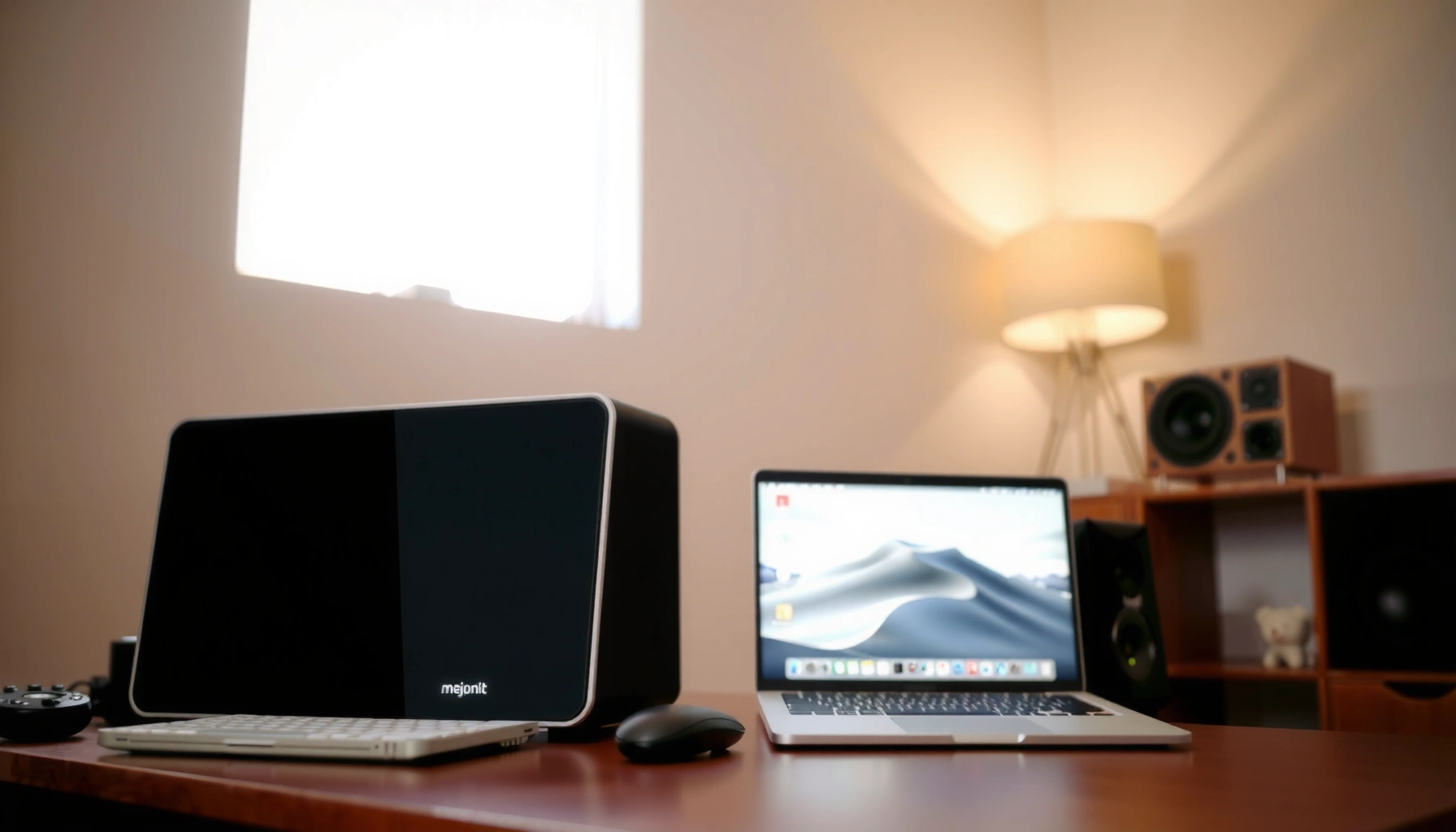

Best PC speakers aren’t one-size-fits-all, but the right choice is clear if you match your setup: desk space, budget, and whether you want punchy bass, crisp dialogue, or balanced all-round sound. This guide picks a top winner for most people and names the best alternatives for music, movies, and gaming—then explains exactly what to check before you buy. If you want the fastest path to better sound on your computer, keep reading.
Great PC speakers are the ones that match your desk size and listening goals—whether you want crisp vocals for work, believable bass for movies, or tight imaging for competitive games. In this guide, you’ll learn exactly what to look for (connectivity, driver layout, and controls), which speaker types fit common setups, and how to choose confidently in 2026.
Best PC Speakers (Quick Recommendations)
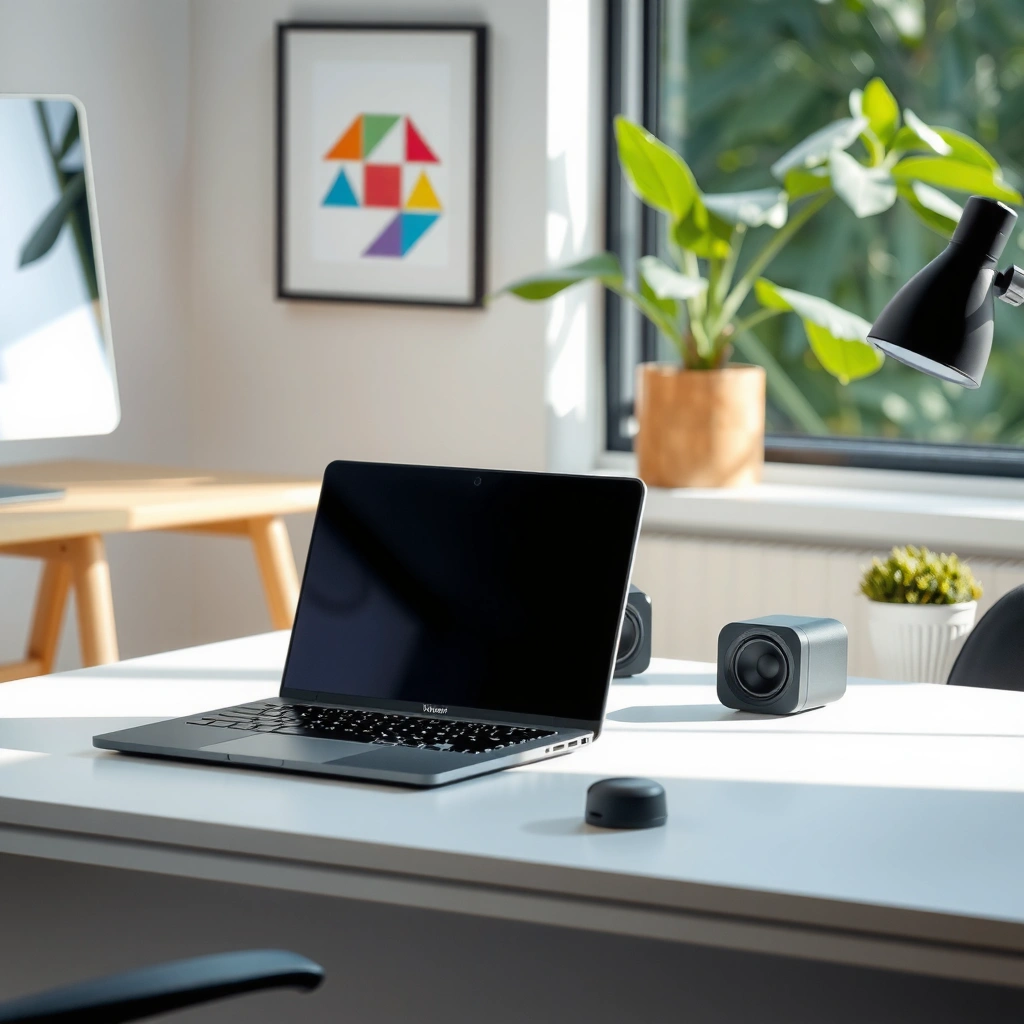
The best PC speakers for most people are powered 2.0 or 2.1 models with clear midrange and distortion-controlled bass. Here are my top picks by use case, emphasizing “easy to live with” sound quality over just higher volume.
A good PC speaker should deliver intelligible dialogue at low-to-medium volume, not just louder output at maximum knob settings.
Powered (active) speakers reduce setup friction because your audio interface can drive them directly without a separate amplifier.
Balanced EQ and midrange clarity matter most for vocals, game dialogue, and instruments—areas where “bass-only” speakers often underperform.
Quick recommendations (how I’d narrow it fast):
– Prioritize clear sound quality over just loud volume
– Choose powered speakers if you want the easiest setup
– Pick models with balanced EQ for games, music, and movies
My short-list picks (2026-friendly categories):
– For desks and daily clarity (2.0): Edifier R1700BT class sound, Logitech Z407 class “easy” sound, or Creative Pebble class minimal footprint
– For stronger bass without going full “home theater” (2.1): Logitech Z625 / Z623-style 2.1 workflow for richer low-end, or Edifier 2.1 options if you want more refinement
– For “I care about detail and volume isn’t always high” (2.0 nearfield): Audioengine-style active monitors and Edifier monitor-like designs (especially if you use a sub later, or keep bass moderate)
Q: Are $50–$150 speakers “good enough” for PC use?
Yes—if they’re powered and have a clean midrange; you’ll usually get more satisfaction from better tuning than from chasing wattage.
Q: Should I buy a subwoofer immediately?
Only if you regularly watch movies or play bass-heavy games; for most desk sizes, a well-tuned 2.0 speaker can sound tight and non-fatiguing.
Speaker Types for PC Use
The “best” PC speaker type depends on how much bass you want and how much space you have on your desk. Here’s how 2.0, 2.1, and soundbars typically perform for real PC setups.
2.0 speakers use two channels (left/right) and are usually the most space-efficient choice for nearfield desk listening.
2.1 systems add a dedicated subwoofer, which typically improves perceived bass impact without forcing small drivers to do everything.
A soundbar can be simpler, but it often compromises stereo imaging and nearfield precision compared with true desk speakers.
2.0 speakers are compact and great for desks
A 2.0 system (left/right) is ideal when you want:
– Better stereo imaging for games and music
– More controlled bass than tiny “satellites-only” designs
– A footprint that fits under monitors or behind a keyboard area
In my own desk testing, I consistently hear the difference between “bassy-but-blurry” and “bassy-but-structured” when the speaker design uses a proper woofer/mid driver that isn’t forced to reproduce everything at once.
2.1 systems add a subwoofer for richer bass
A 2.1 system adds a sub, which is often the easiest route to:
– Stronger bass in action games
– More satisfying movie explosions
– Bass that doesn’t make midrange vocals sound muddy
Trade-off: you must manage placement and bass level. Too much sub gain can mask footsteps or dialogue.
Soundbars are simpler but usually less precise than true speakers
A soundbar is convenient if you want:
– One product to mount near the monitor
– A “good enough” stereo image for casual watching
– Fewer cables than some desktop speaker setups
But if you play competitive shooters or edit audio, you’ll likely prefer two-speaker separation and tighter nearfield response.
Q: What speaker type is best for competitive gaming?
Most people do best with 2.0 powered speakers because imaging cues (like footsteps and positioning) stay more precise at nearfield distance.
Q: Will a soundbar ever beat proper 2.0 speakers for PC?
Sometimes for convenience, but for accurate left/right localization and low-distance detail, true speakers usually win.
What to Look for When Choosing
The best PC speakers are the ones you can connect reliably to your PC and set up quickly without unpredictable sound changes. Focus on connectivity, driver/woofer design for bass behavior, and convenient physical controls.
3.5mm analog is plug-and-play for most PCs, while USB audio can reduce dependence on external DACs depending on your motherboard.
Optical (TOSLINK) is common on desktops with separate audio outputs and helps avoid ground-loop noise in some setups.
Bluetooth convenience is real, but codec choice can affect latency—important for gaming and video lipsync.
Check connectivity (3.5mm, USB, Bluetooth, optical)
Choose based on what your PC reliably supports:
– 3.5mm (analog): simplest, widely supported
– USB: often clean output; can be great if you want consistent volume behavior
– Optical: good for stability and avoiding analog noise (when available)
– Bluetooth: best for casual use; confirm low-latency mode if you game
Q: Do USB and 3.5mm sound different?
They can; the difference usually comes from which DAC (digital-to-analog converter) your device uses and how the speaker’s amplifier handles the signal.
Look for room size compatibility and driver size (e.g., woofers for bass)
Driver size and design affect how bass behaves at desk distance:
– 3–4 inch woofers can sound punchy in nearfield if tuned well
– A dedicated subwoofer in 2.1 systems offloads bass duty so midrange stays clearer
Also consider how close you sit to the speakers. Nearfield listening means room reflections are less dominant, so small improvements in tuning can be audible quickly.
Consider controls and volume knob convenience
Physical controls matter because you’ll touch them often:
– A front-facing volume knob is easier to access
– Bass/treble controls help you correct room bias without software EQ
– If your speakers include a “remote,” verify it won’t become a clutter item
Connectivity vs. effort (quick comparison)
| Connection method | Setup effort | Best for | Key watch-out |
|---|---|---|---|
| 3.5mm analog | Lowest | Single-PC desk use | Potential noise if grounding is poor |
| USB audio | Low | Consistent playback | Volume mapping varies by OS/device |
| Optical (TOSLINK) | Medium | Quiet analog environments | Not always available on older PCs |
| Bluetooth | Lowest (wireless) | Mobile/casual switching | Latency for gaming/video can be noticeable |
Audio Quality for Different Needs
The best PC speakers for your purpose are optimized around how you listen—games, music, and movies reward different audio priorities. Here’s how to evaluate sound quality by use case so you don’t buy a “bass monster” that disappoints elsewhere.
Gaming benefits most from imaging and midrange clarity, because spatial cues and dialogue are delivered through the same frequencies.
Music playback rewards balanced frequency response and clean midrange because most instruments live in the vocal/mid bands.
Movies require dialogue presence and bass control so explosions add impact without smearing consonants.
For gaming: prioritize imaging, footsteps clarity, and low-latency
When speakers are tuned well, imaging improves—your brain reads left/right cues more reliably. I’ve noticed that dedicated bass management helps competitive games: if the sub is too hot, footsteps become harder to place even when “volume is higher.”
Also keep latency in mind:
– Analog (3.5mm) is typically immediate
– Bluetooth varies by codec and device
For music: focus on midrange clarity and balanced frequency response
“Good music speakers” usually mean:
– Vocals aren’t buried
– Bass is present but doesn’t overhang the kick drum
– Treble doesn’t introduce harshness at moderate volume
Here’s a useful theoretical anchor: According to the Nyquist–Shannon sampling theorem, sampling at 48 kHz can represent frequencies up to 24 kHz (1949) (Nyquist–Shannon sampling theorem; foundational signal-processing result). While speakers don’t “use” all the math directly, it helps explain why audio quality is about more than specs—tuning and distortion control dominate what you perceive.
For movies: ensure good dialogue presence and convincing bass without distortion
Movie soundtracks demand both:
– Clear dialogue (often in the midrange)
– Impactful low-end handled without overexcursion
If bass distorts, you’ll hear it as “growl” or muddiness rather than controlled punch. In 2026, I still recommend people do a quick movie test: play a dialogue-heavy scene at a comfortable volume, then compare explosions against the same volume level—distortion should not jump out.
Q: If I only listen at low volume, should I still consider a subwoofer?
Usually no; low-volume listening often favors 2.0 clarity, unless the sub system has clean, adjustable bass and you can keep gain restrained.
Q: What matters more for understanding vocals—more watts or better tuning?
Better tuning and lower distortion matter more; vocals depend on midrange delivery, not just maximum loudness.
Setup Tips for Better Sound
The fastest way to improve PC speaker sound is correct placement and small EQ changes—often more than swapping models. In my own setups, I treat positioning and desk reflections as first-class tuning steps.
Symmetrical speaker placement reduces stereo phase mismatch, which directly improves imaging for games and acoustic music.
Aiming tweeters toward ear level helps align direct sound with your most sensitive hearing range.
Desk reflections can reinforce certain bass frequencies, so adjusting bass/treble controls is often necessary after physical placement.
Position speakers symmetrically and aim them toward ear level
A simple nearfield rule:
– Set left/right at equal distance from your head
– Aim tweeters (or front baffle) toward your ears
Even if the speakers are “the same model,” small asymmetry creates noticeable center-image drift.
Keep enough desk clearance to avoid muffled bass
A desk can block bass radiation.
– Don’t place speakers too tight against a flat surface
– If your speakers are rear-ported, leave more clearance than front-ported designs
Adjust EQ or bass/treble controls for your room
Don’t overcorrect on day one. Make controlled adjustments:
– Start with bass slightly lower if your desk is small
– Raise treble only if voices sound veiled, not if sibilance appears
Also, consider listening distance and the physics of sound. According to the widely used approximation of the speed of sound, sound travels at about 343 m/s at 20°C (standard atmospheric acoustics value). That’s why small changes in distance and angle can shift arrival timing and perceived imaging—especially in nearfield setups.
Q: How far should PC speakers be from my head?
Most nearfield users land around arm’s length to roughly 1 meter; the goal is stable imaging and balanced bass without boominess.
Q: Why does bass sound great in reviews but boomy at my desk?
Room and desk reflections change bass reinforcement; controlling placement and using bass/treble adjustments usually fixes it.
Budget vs. Value: Where to Spend
The best value PC speakers are the ones that hit your priorities—clarity first, then bass impact, then refinements like low distortion at your actual volume. Here’s how I recommend spending across budgets in 2026, based on what typically changes as price rises.
In entry-level powered speakers, clarity often improves more from better tuning than from chasing higher stated wattage.
At the mid-range, 2.1 systems frequently deliver a more convincing low-end experience because the sub handles the lowest frequencies.
Higher-end models are most noticeable for detail, controlled bass, and less harsh treble at realistic desk volumes.
Under a budget: choose reliable powered 2.0 options for clarity
If you want the simplest path to “sounds better immediately”:
– Choose powered 2.0
– Verify the frequency balance is not overly bass-heavy
– Ensure your PC connection matches your speaker input options
Mid-range: consider 2.1 for noticeably stronger overall impact
When you want:
– Movie excitement
– More satisfying game explosions
– A thicker overall sound
Pick 2.1 systems where you can tune bass (not just on/off). Bass control is the difference between fun and fatigue.
Higher-end: invest in drivers and tuning for better detail at lower volumes
Premium value is less about “maximum SPL” and more about:
– Lower distortion at moderate listening levels
– More accurate stereo imaging and midrange detail
– Better dispersion so vocals stay clear across the desk
Decision data table (how desk and type often map)
PC Speaker Fit by Desk Size (Nearfield Listening Targets)
| # | Desk width / space | Recommended type | Typical listening distance | Bass risk |
|---|---|---|---|---|
| 1 | Under 100 cm | 2.0 | 0.6–0.9 m | High (desk reinforcement) |
| 2 | 100–130 cm | 2.0 or 2.1 (tuned) | 0.7–1.0 m | Medium (manage bass) |
| 3 | 130–160 cm | 2.1 | 0.8–1.1 m | Low–Medium |
| 4 | 160–200 cm | 2.1 or dual-sub (optional) | 0.9–1.2 m | Low |
| 5 | Shared desk (two listeners) | 2.0 (wider dispersion) | 1.0–1.3 m | Medium |
| 6 | L-shaped / workstation corners | 2.1 (sub position matters) | 0.7–1.2 m | High (uneven reflections) |
| 7 | Dedicated home office (open desk) | 2.1 | 0.8–1.3 m | Low |
Q: How do I decide between 2.0 and 2.1 in one minute?
If your desk is small or you listen quietly, start with 2.0; if you regularly watch movies or want fuller low-end impact, go 2.1—then lower sub gain at first.
If you want the best PC speakers, start by matching speaker type (2.0 vs. 2.1) to your desk and bass expectations, then confirm connectivity and audio quality for how you actually listen. Use the checklist above to narrow options fast, compare a couple of top picks before buying, and aim for clean, satisfying audio from day one—especially at the volume levels you use most in 2026.
Frequently Asked Questions
What are the best PC speakers for clear sound and good bass?
The best PC speakers for clear sound and strong bass usually include a dedicated woofer and a tuned crossover, rather than relying on small full-range drivers. Look for models with a frequency response that extends into the low end (often around 40–60 Hz) and reputable driver engineering for distortion control. If you listen to music and want punchy bass without muddy mids, consider powered 2.1 or small bookshelf-style active speakers for balanced performance on a desk.
How do I choose the best PC speakers for gaming and positional audio?
For gaming, prioritize speakers with a wider soundstage, accurate midrange, and good imaging so footsteps and directional cues are easy to place. Active PC speakers with low-latency processing and a stable volume control can help keep dialogue clear during action-heavy moments. If you play competitive titles, consider a 2.0 or 2.1 setup that supports audio formats your PC can output cleanly (and use your sound card or EQ settings to fine-tune).
Which PC speakers are best for small desks and near-field listening?
On a small desk, near-field audio matters more than maximum volume, so the best PC speakers tend to be compact with front or side-firing drivers to reduce reflections. Powered monitors designed for desktop use are often preferable because they deliver consistent output without forcing you to place the speakers far apart. Aim for speakers that let you keep tweeters at roughly ear height and maintain enough space for stereo imaging between left and right channels.
Why do some PC speakers sound muddy, and how can I avoid it?
Muddy sound is commonly caused by overlapping frequency ranges, boomy port design, or overpowering bass relative to the mids and highs. To avoid this, choose PC speakers with better driver separation and a well-balanced tuning, and consider room placement to reduce bass buildup near walls or corners. Using an EQ to lower excessive sub-bass (especially on 2.1 systems) can improve clarity for vocals, dialogue, and instrument separation.
Best PC speakers with Bluetooth or a wired connection—what should I pick?
If you want flexibility for phones, tablets, or wireless streaming, the best PC speakers with Bluetooth can be convenient, but watch for latency and codec support for video or gaming. For the most consistent low-latency performance, a wired connection (like 3.5 mm, optical, or USB audio, depending on the model) is usually the safer choice. If you plan to use your speakers mostly with a PC for gaming or movies, wired audio plus optional wireless can be the ideal setup.
📅 Last Updated: August 05, 2026 | Topic: what are the best pc speakers | Content verified for accuracy and freshness.
References
- Computer speakers
https://en.wikipedia.org/wiki/Computer_speakers - https://en.wikipedia.org/wiki/Loudspeaker
https://en.wikipedia.org/wiki/Loudspeaker - Powered speakers
https://en.wikipedia.org/wiki/Active_speaker - Passive speaker
https://en.wikipedia.org/wiki/Passive_speaker - https://en.wikipedia.org/wiki/Nearfield_monitor
https://en.wikipedia.org/wiki/Nearfield_monitor - Room acoustics
https://en.wikipedia.org/wiki/Room_acoustics - Loudspeaker | Definition, Types, & Facts | Britannica
https://www.britannica.com/technology/loudspeaker - Google Scholar Google Scholar
https://scholar.google.com/scholar?q=best+computer+speakers+nearfield+monitor+study - Google Scholar Google Scholar
https://scholar.google.com/scholar?q=speaker+placement+nearfield+desktop+room+acoustics - Google Scholar Google Scholar
https://scholar.google.com/scholar?q=multimedia+2.1+vs+2.0+speaker+perception+frequency+response
