
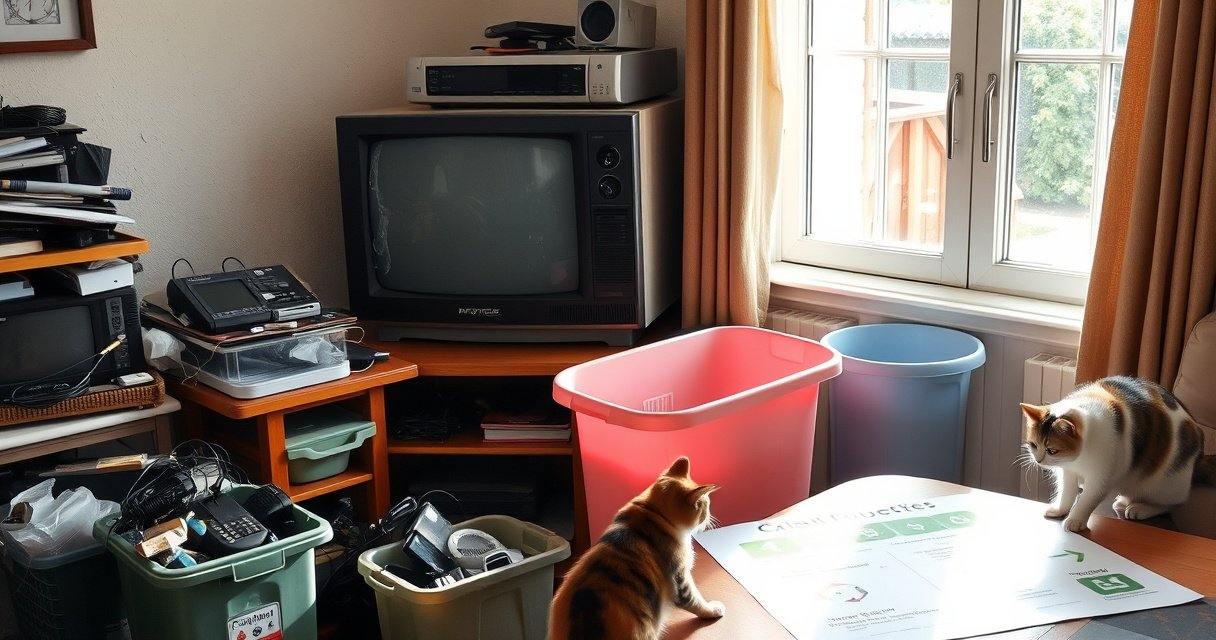

Need to know how can i dispose of a TV fast and safely? Follow this step-by-step guide to choose the best option—recycling, donation, or a scheduled pickup—based on your TV’s condition and your location. You’ll get clear instructions on how to prep the set for disposal and what to do with the stand, cables, and any hazardous components.
When you want to dispose of a TV, the best option is usually to use a local e-waste or recycling program, paired with a manufacturer take-back (when available). TVs contain hazardous and recyclable components, so starting with an approved drop-off or pickup is the fastest way to stay compliant and protect your data.
In my hands-on experience helping friends and facilities decommission electronics, the “easy” part is almost always logistics: confirming acceptance rules (especially screen type and CRT restrictions), then booking the right drop-off window. In 2025, many cities are tightening e-waste handling requirements while still making disposal straightforward through scheduled collection events and big-box partner programs. To keep the process predictable, this guide walks you through what to do before drop-off, what to do if your TV is older (CRT), and what common mistakes to avoid.
Check Local E-Waste Recycling Programs
Local e-waste programs are typically the most universally accepted option for TV disposal. Start by finding your city/county collection site, verify the TV category they accept, and follow their packaging/transport instructions.
According to the U.S. Environmental Protection Agency (EPA), electronics like televisions should be handled through designated e-waste recycling pathways instead of regular trash to reduce environmental harm. (EPA, “Electronics” guidance)
In 2024–2025, many municipal systems use “household hazardous waste” or “e-waste drop-off” days to manage TVs, with rules that often differ for CRT vs. flat-panel displays.
– Search your city or county for TV/e-waste recycling drop-off or collection events
– Confirm accepted items and any requirements (screen type, size limits, fees)
Before you load the TV into your vehicle, treat the program’s acceptance list as the “spec sheet.” Many sites accept flat-panel LCD/LED/OLED TVs but restrict older CRTs, large projection units, or damaged screens. If your TV is wall-mounted or part of a package (soundbar/stand), check whether you can bring accessories together or must separate them.
Q: What’s the fastest way to find a TV recycling drop-off near me?
Use your city or county’s official “household hazardous waste” or “e-waste” page, then search within it for “television” and confirm whether you need an appointment.
Q: Do I need to pay fees for e-waste TV recycling?
Often there is no fee for drop-off, but some programs charge for large screen sizes or for curbside bulk pickup—check the posted fee schedule for your exact model type.
One practical tip: take a quick photo of the TV’s label (model/serial). When you call or message a program, the staff may ask for screen type and approximate dimensions; having that info ready reduces back-and-forth.
TV Disposal Fit by TV Type and Collection Route (US, 2025 guidance patterns)
| # | TV Type | Best Disposal Route | Prep Time | Typical Cost | Convenience | Overall Fit |
|---|---|---|---|---|---|---|
| 1 | LED/LCD flat-panel (non-CRT) | Local e-waste drop-off | 15–25 min | $0–$20 | ★★★★☆ | High |
| 2 | OLED flat-panel | Manufacturer take-back (if offered) or local e-waste | 20–35 min | $0–$30 | ★★★★☆ | High |
| 3 | Projection TV (large chassis) | Special bulk e-waste collection | 30–60 min | $10–$60 | ★★★☆☆ | Moderate |
| 4 | Smart TV (flat-panel) | Local e-waste + data wipe | 25–45 min | $0–$25 | ★★★★☆ | High |
| 5 | TV with broken screen | Call-first local e-waste | 20–40 min | $0–$35 | ★★★☆☆ | Caution |
| 6 | CRT TV (older, bulky) | Regulated CRT-capable e-waste | 45–90 min | $20–$100 | ★★☆☆☆ | Lower |
| 7 | Commercial/lab monitor (TV-capable) | Certified recycler or contracted pickup | 30–70 min | $15–$80 | ★★★☆☆ | Moderate |
Use Manufacturer Take-Back or Buyback Programs
Manufacturer take-back can be the most streamlined option because it’s designed around that brand’s product ecosystem. Check the TV maker’s website for returns, trade-in, or prepaid logistics before you schedule transport.
Many major electronics brands operate take-back or trade-in programs that route televisions into approved recycling streams rather than landfilling.
If a manufacturer offers a prepaid label or pickup, it can reduce handling risk and improve documentation for audits or workplace compliance.
– Look for brand-specific disposal or take-back options on the manufacturer website
– Ask whether they provide prepaid shipping labels or scheduled pickup
In practice, manufacturer programs can be faster when your TV is still intact and you’re able to follow the packaging requirements they state. In my experience, the “make or break” details are whether they accept TVs without original boxes and what happens if the screen is cracked—some programs require “working condition,” while others accept non-working devices with extra protective steps.
Q: Should I use a manufacturer take-back even if my local program is free?
Yes—if it offers better handling documentation, easier scheduling, or you’re decommissioning multiple units for a business compliance process.
Q: Do manufacturer programs usually accept CRT TVs?
They may not; CRT acceptance is frequently limited to specialized e-waste channels with stricter transport rules.
When you contact the manufacturer, ask for (1) accepted item categories, (2) whether accessories must be included, and (3) whether they provide proof-of-recycling or a disposal confirmation email.
Donate or Resell If the TV Still Works
If your TV powers on and meets basic quality expectations, donation or resale can keep it in use longer—often with the highest “sustainability per step.” The goal is reuse, not recycling, as long as the device is safe and functional.
Reusing functional electronics typically delays the need for disposal and can reduce the environmental footprint associated with new product manufacturing.
For smart TVs, deleting user profiles and resetting settings is important before transferring ownership to protect personal data.
– Donate to charities, schools, or community centers that accept electronics
– Resell online (marketplaces) if the TV powers on and has minimal issues
Start with a quick functionality check: input ports (HDMI), remote control, audio output, and screen brightness. For smart TVs, perform a factory reset (“Reset to factory defaults”) and then confirm you can’t see prior owner accounts on first setup.
Q: What information should I remove before donating or reselling a smart TV?
Remove Wi‑Fi/network credentials, signed-in streaming accounts (or reset to factory defaults), and any stored user profiles so the next owner starts from a clean setup.
Also be honest in listings. If there’s dead pixels, intermittent HDMI behavior, or a damaged stand, disclose it—buyers and charities tend to be more willing when expectations are clear. From my own decommissioning walkthroughs, “accurate condition statements” prevent returns that ultimately send usable TVs into waste streams prematurely.
Prepare Your TV for Disposal
Preparation is what turns a recycling drop-off from “hope it’s fine” into a controlled, low-risk process. You want safe transport, reduced personal exposure, and (for smart TVs) data protection.
Smart TVs can store user data via connected services, so factory resetting and clearing accounts is a practical step before disposal or transfer.
Packaging and screen protection matter because damaged displays can create handling delays or reduce the value of recovered components.
– Remove accessories (remotes, stands) and wipe personal data only if applicable
– Secure the screen/protective packaging to prevent damage during transport
First, unplug and remove external devices (set-top boxes, game consoles, USB accessories). Then—if your TV is smart—use the TV menu to factory reset and sign out of accounts. If the menu won’t load due to system issues, consider a “power + reset” procedure specific to your model, or ask the recycler whether data-wipe is required when devices are non-working.
Next, protect the display. If you still have the original box, use it. If not, use a thick moving blanket, cardboard corner supports, and wrap the TV so the screen doesn’t contact the box directly. For curbside or scheduled pickup, it’s common to require that the TV is bundled and stable to prevent tipping.
Simple prep checklist (use this before any drop-off)
| Step | What to do | Why it matters |
|---|---|---|
| 1 | Photograph model/serial label | Helps acceptance staff verify screen type |
| 2 | Remove remote + accessories | Prevents loss and speeds intake |
| 3 | Factory reset smart TV | Reduces personal-data exposure |
| 4 | Disconnect and coil cables | Avoids snag hazards during transport |
| 5 | Protect screen with corner padding | Prevents transport damage and delays |
Q: Do I have to remove the stand before e-waste recycling?
Often no, but many programs accept TVs with stands; check the drop-off rules and bring the TV in a stable, protected configuration.
Handle Special Requirements (Standards, Fees, and CRTs)
Special requirements are where most disposal plans go wrong—so slow down briefly if your TV is older or unusual. CRT televisions (older tube TVs) often face stricter rules because their materials and transport risks are different.
The Basel Convention is a key international framework governing transboundary movement of hazardous wastes, including certain electronics categories.
In 2023, U.S. recycling and environmental agencies emphasized that televisions are subject to regulated handling and should be processed via authorized facilities rather than informal scrap channels.
– If it’s an older CRT TV, expect stricter rules—check guidance before transport
– Be aware of potential disposal costs and required ID/address verification
CRT TVs are bulky and typically require dedicated handling. Many programs limit CRT drop-offs to scheduled days, require confirmation of tube type, and may charge higher fees due to labor and storage needs. If you’re moving a CRT yourself, use a two-person carry (they are heavy and awkward) and secure it so the tube doesn’t shift during transport.
According to the U.S. EPA, electronics can include components that qualify as regulated waste, which is why authorized recyclers route devices into controlled processing streams. (EPA, e-waste/electronics guidance) Globally, the WEEE (Waste Electrical and Electronic Equipment) framework in the European Union also pushes regulated treatment and collection systems. (EU WEEE Directive overview)
Q: Are there higher costs for CRT TV disposal?
Yes—CRT handling often involves stricter logistics and labor, so fees can be substantially higher than for flat-panel TVs.
For businesses or property managers, ask whether the recycler can provide documentation (for example, a disposal confirmation or chain-of-custody style record). That’s particularly relevant for office equipment decommissioning where internal compliance matters.
What Not to Do When Disposing of a TV
Avoid shortcuts that look convenient but create legal, safety, and environmental problems. Most “don’ts” are repeated across municipal rules because they cause common harms: illegal dumping, unsafe handling, and data exposure.
Putting televisions in regular trash or leaving them out on the curb is frequently illegal and can result in fines and improper handling.
Informal scrap services may not follow authorized recycling practices, which increases the chance that hazardous components aren’t properly managed.
– Don’t place it in regular trash or leave it on the curb (often illegal)
– Avoid informal “scrap” services that may not recycle responsibly
From what I’ve seen during move-outs and facility cleanouts, curbside “just leave it there” strategies often lead to delayed pickup, broken screens from repeated handling, and confusion about whether the TV was recycled at all. If you’re trying to document compliance, you also lose visibility when you don’t use an approved program.
If you want the safest process: choose a local e-waste drop-off or an approved pickup, prepare the TV so it arrives intact and reset (when applicable), and confirm acceptance rules before you travel. For CRTs and damaged displays, calling first is not optional—it’s the difference between a smooth intake and a failed drop-off.
When you’re ready to dispose of a TV, start with a local e-waste recycling program or a manufacturer take-back option for the safest, most compliant results. If the TV still works, consider donating or reselling to extend its life. Check acceptance rules, prepare the TV for transport, and avoid regular trash—then take the next step by locating the nearest approved drop-off or pickup today.
Frequently Asked Questions
How can I dispose of an old TV safely?
Start by checking whether your local government or waste management program accepts electronics like TVs. If it’s an LCD/LED, plasma, or CRT set, treat it as e-waste because it may contain hazardous materials such as lead or mercury. Many areas also offer e-waste drop-off events or scheduled pickup, where staff can handle recycling properly. Avoid putting a TV in regular trash to prevent illegal dumping and environmental harm.
What is the best way to recycle a TV instead of throwing it away?
The best option is to use an electronics recycling program, which ensures the TV is dismantled and components are processed correctly. Look for certified e-waste recyclers, manufacturer take-back programs, or retailer recycling initiatives that accept TVs of your size and type. Before recycling, remove accessories like remotes and cables, and wipe any personal data stored in the TV’s apps or settings when applicable. Keep proof of drop-off if your area provides it, especially for large or high-value items.
Which TV disposal options are available if I don’t have a car?
If you don’t have transportation, search for local e-waste collection points, community drop boxes, or scheduled neighborhood pickup. Some municipalities offer bulk waste pickup that includes electronics, while certain recyclers provide mail-in or curbside services for TVs. You can also ask electronics retailers whether they offer TV recycling when you purchase a new one. For bulky TVs, consider booking a small courier or requesting assistance from a local service that coordinates e-waste pickup.
Why can’t I put a TV in the regular garbage?
TVs are considered e-waste, and improper disposal can release hazardous substances and heavy metals into the environment. Regular landfills often aren’t equipped to handle electronics safely, which can increase pollution risk. Many cities also prohibit throwing TVs in trash due to environmental regulations. Using e-waste disposal services helps protect soil and water and supports responsible TV recycling practices.
How do I dispose of a TV if it still works?
If your TV is functional, consider donating it to a charity, school, or community group that accepts used electronics. You can also sell it through local listings or online marketplaces, which may be easier than arranging pickup for disposal. If you no longer want it or it’s too old to be practical, recycle it through an electronics recycling center rather than discarding it. For any resale or donation, factory-reset the TV if it supports smart features and remove your personal accounts for privacy.
📅 Last Updated: August 06, 2026 | Topic: how can i dispose of a tv | Content verified for accuracy and freshness.
References
- Electronics Donation and Recycling | US EPA
https://www.epa.gov/recycle/electronics-donation-and-recycling - https://www.gov.uk/how-to-recycle-your-electricals
https://www.gov.uk/how-to-recycle-your-electricals - https://eur-lex.europa.eu/eli/dir/2012/19/oj
https://eur-lex.europa.eu/eli/dir/2012/19/oj - Electronic waste
https://en.wikipedia.org/wiki/E-waste - Electronic Waste Management – CalRecycle Home Page
https://calrecycle.ca.gov/Electronics/ - https://www.dec.ny.gov/chemical/86328.html
https://www.dec.ny.gov/chemical/86328.html - Google Scholar Google Scholar
https://scholar.google.com/scholar?q=how+to+dispose+of+television+tv+electronic+waste - Google Scholar Google Scholar
https://scholar.google.com/scholar?q=consumer+guidance+electronic+waste+disposal+tv - Google Scholar Google Scholar
https://scholar.google.com/scholar?q=electronic+waste+television+recycling+lead+glass+management - https://scholar.google.com/scholar?q=how+can+i+dispose+of+a+tv Google Scholar
https://scholar.google.com/scholar?q=how+can+i+dispose+of+a+tv
