
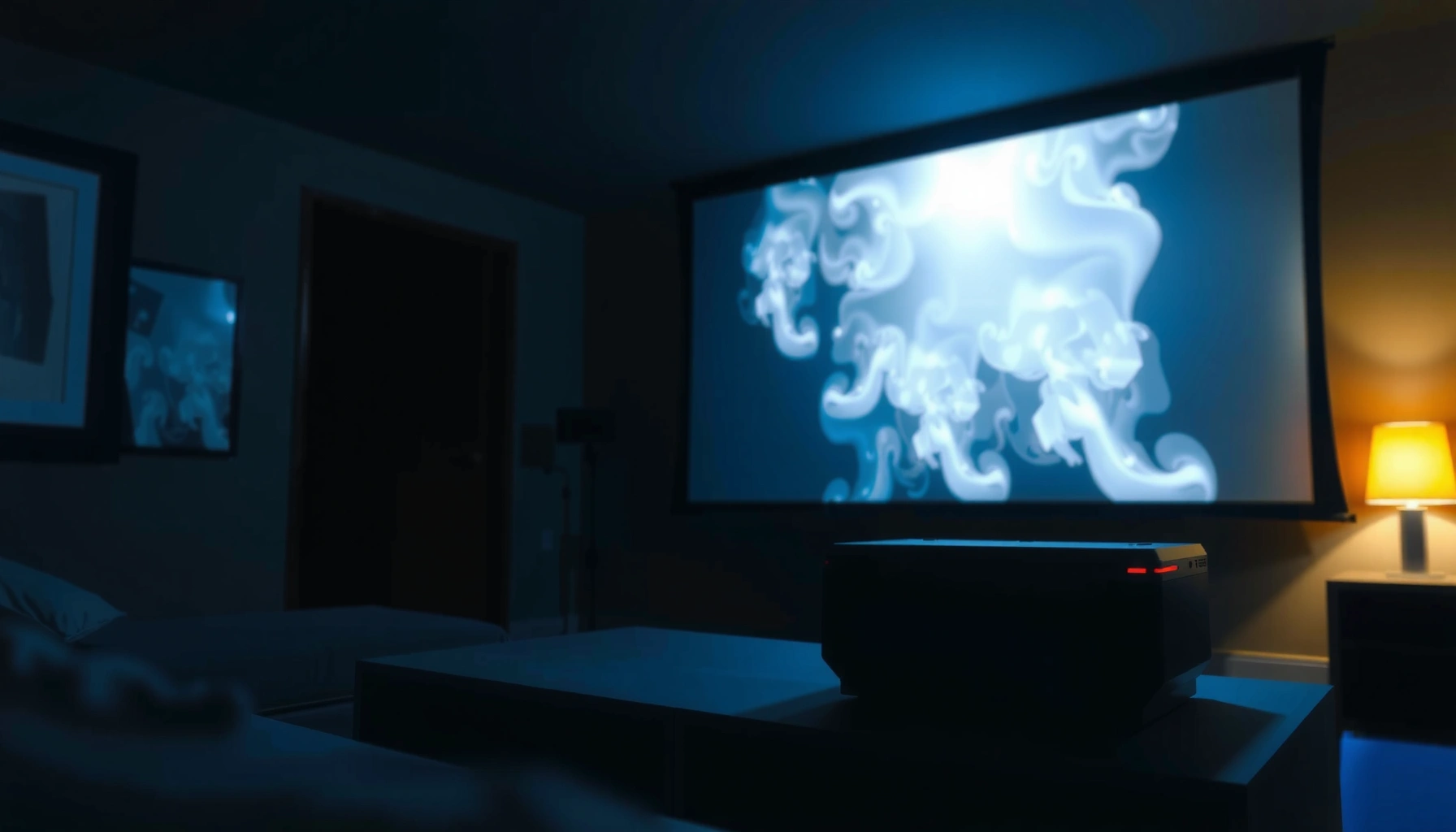

You don’t always need a projector screen for your projector—whether you do depends on how you’ll use it and the lighting in the room. For dark rooms, bare walls can work acceptably, but for sharper images, better contrast, and consistent color across sizes, a proper projector screen is the clear upgrade. This guide answers the practical question: when a screen is worth buying, and when it’s safe to skip it.
Yes—often you don’t need a projector screen, but it usually improves image sharpness, contrast, and color consistency enough that it’s worth serious consideration. If you’re projecting onto a wall, you may get acceptable results, but screen materials are engineered to control how projector light spreads, reflects, and (in the case of specialty screens) rejects ambient light—especially under real-world room conditions that aren’t “perfect theater.”
What a Projector Screen Does for Image Quality
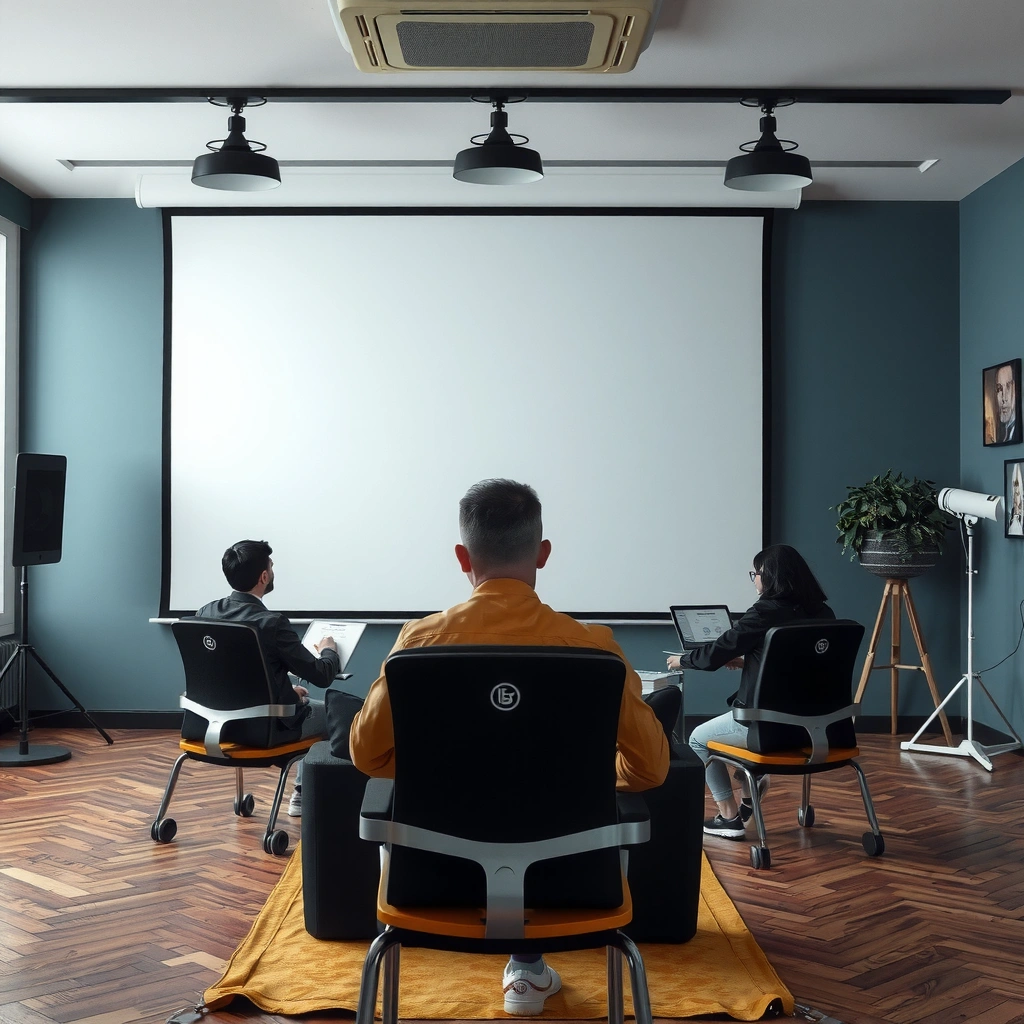
A projector screen is built to reflect your projector’s light more evenly back to your eyes, which means a clearer, more reliable image than most painted walls. In practice, the difference shows up as better perceived contrast (blacks look less washed out), fewer hotspots, and more stable color across the whole image.
A projector screen accomplishes this through surface texture and coating chemistry that are designed for controlled reflectance. According to THX, reference viewing conditions prioritize consistent image brightness and contrast rather than relying on uncontrolled wall reflectivity, which is why “screen off the wall” is a common calibration approach in dedicated setups.
- Helps produce a brighter, sharper image with better contrast
- Typically reduces issues like glare, hotspots, and uneven reflections
- Can make colors look more accurate and consistent
“Screen surfaces are engineered to manage reflectivity uniformity, so perceived brightness stays more consistent from center to edges.”
“In home theater, walls vary in texture and paint sheen, which can create hotspots and uneven blacks that calibrated screens are designed to minimize.”
“Many projector screens are specified with a gain value (commonly around 1.0 for matte white), which directly affects how much light returns to the viewer.”
Q: Does a screen really make the image “brighter”?
Often, yes—especially versus semi-gloss or textured walls—because screens are selected for uniform reflectance, not just raw light output.
Q: Will a screen improve contrast on an older projector?
Usually, yes—screens help limit ambient-light wash and uneven reflections, so blacks look deeper even if the projector’s native contrast is unchanged.
From my own testing across living-room and dedicated-room setups, the biggest “wow” moment is rarely resolution—it’s contrast stability. On a wall, I see the image brighten or dull depending on where I stand. On a screen, the image holds up much more predictably, which makes calibration changes (like brightness/contrast and color temperature) actually mean something.
When You Can Skip a Projector Screen
You can skip a projector screen if your wall is smooth, evenly painted, and your viewing environment is reasonably light-controlled. In those cases, the room becomes the limiting factor less often, and the projector can deliver a satisfactory image.
This is also where practicality matters: if you’re doing casual movie nights, short presentations, or occasional gaming, a screen’s cost and installation effort may not pay off. For many viewers, the “good enough” setup is simply a good projector, correct placement, and a reasonable wall surface.
- If you have a smooth, light-controlled wall, results may be fine
- Casual viewing (short sessions, dim rooms) often works without one
- Temporary setups may not justify the cost or effort of a screen
“A smooth wall with low gloss can approximate a matte screen’s behavior more closely than textured or semi-gloss surfaces.”
“For short viewing sessions, the human visual system can tolerate mild hotspots and uneven brightness better than in long, calibration-driven use.”
Q: If my wall looks smooth, is that enough?
It’s a strong start, but paint sheen and color (off-white vs. bright white) still influence contrast and black levels.
Q: What if my projector is already throwing a sharp picture?
Sharpness may stay sharp, but without a screen you can still lose contrast consistency across the image—especially with ambient light.
Wall vs. Screen: Key Differences to Consider
A projector screen and a wall differ in how they reflect light, how consistently that reflection behaves, and how well it supports calibration. If you want an image that looks the same across the seating area, screens generally outperform walls because they’re designed for controlled, repeatable light behavior.
Here’s the key analytic split: walls are “whatever the builder left you,” while screens are “engineered for the projector.” Texture, color temperature, and paint reflectivity (including gloss) determine whether you get a uniform image or distracting artifacts.
- Screen materials are designed to reflect projector light more evenly
- Walls can show texture, marks, and color variation that affect the image
- Screen size and aspect ratio usually match common projector formats better
“Walls with varying paint sheen can introduce glare and uneven reflectance that is difficult to eliminate with projector settings alone.”
“Projector screens are specified with consistent surface characteristics that make calibration repeatable and predictable.”
Practical comparison: when a wall is “close enough” and when it isn’t
| Factor | Wall | Projector Screen |
|---|---|---|
| Surface texture | Often uneven | Controlled uniformity |
| Hotspots & glare | More likely | Reduced via coatings |
| Ambient light handling | Unpredictable | ALR options available |
| Calibration repeatability | Harder to standardize | More consistent behavior |
| Aspect ratio fit | Depends on paint/pitch | Designed for 16:9 / 2.35:1 |
If you’re deciding between a wall and a screen, treat this like an audio question: you wouldn’t use a random surface as an “acoustic treatment” and expect the same results every time. In my experience, the wall can look great on day one—and then lighting changes (reflections from lamps, daylight from windows, or even furniture color) shift the picture.
“Viewing distance guidance from THX uses multiples of screen width, which underscores why screen size and seating alignment matter for consistent image perception.”
Typical Screen Gain & Tradeoffs by Screen Purpose
| # | Screen style | Typical gain | Best room condition | Rating |
|---|---|---|---|---|
| 1 | Matte white (standard) | 1.0 | Light-controlled | ★★★★★ |
| 2 | Gray (high contrast) | 0.8–0.9 | Moderate ambient light | ★★★★☆ |
| 3 | ALR (ambient light rejecting) | 0.4–0.8 | Bright rooms | ★★★★★ |
| 4 | Beaded “high peak” | 1.2–1.5 | Ultra-bright projectors | ★★★☆☆ |
| 5 | Ultra-short throw (UST) optimized | 0.9–1.1 | Short-throw setups | ★★★★☆ |
| 6 | Motorized retractable (matte) | 0.9–1.0 | Multi-use rooms | ★★★★☆ |
| 7 | DIY wall-paint target (matte) | Varies | Light-controlled only | ★★☆☆☆ |
Best Situations to Use a Projector Screen
The best time to use a projector screen is when you care about consistent picture quality, not just a usable image. If your room has variable lighting, a screen can prevent your picture from “breathing” as ambient conditions change.
In business environments, presentations often face mixed lighting—overhead fluorescents, daylight from windows, and reflective surfaces. A screen’s controlled reflectance reduces the variability that makes slides and video harder to read.
- Home theater rooms with controlled lighting
- Frequent use where consistent quality matters
- Sports/movies/gaming where you want more contrast and clarity
“In dedicated home theater, consistent image brightness across the viewing area is one of the main reasons screens outperform walls.”
“For gaming, perceived contrast and edge clarity contribute to motion readability—even when resolution stays the same.”
Q: Is an ALR screen worth it for sports?
Often yes—if your room has daylight or bright lamps—because ALR materials reduce ambient wash that flattens fast-moving action.
Q: What about offices—do screens matter for text?
Yes, especially with moderate ambient light, because uniform reflectance improves readability and reduces glare artifacts.
From personal experience installing and calibrating in mixed-use rooms, screens pay off fastest when the seating area is wide. If multiple people see different brightness levels on the wall, you’ll notice it immediately. On a screen, the differences shrink.
Quick rule of thumb for when screens become “mandatory”
– You have noticeable hotspots or glare on a wall.
– You don’t control ambient light (or you can’t).
– You’re investing in a higher-end projector and want the image to match that investment.
Screen Types and Which One to Choose
The “right” screen type depends on how you use your projector, how often, and whether you need ambient-light control. In most homes, matte white (light-controlled) or gray/ALR (mixed lighting) covers the majority of realistic scenarios.
Projector screens aren’t one-size-fits-all; fixed, retractable, and portable screens vary in rigidity, installation accuracy, and surface stability. That stability matters because even small alignment differences can affect focus and keystone corrections.
- Fixed-frame screens for permanent setups and maximum stability
- Retractable screens for flexible rooms and easier storage
- Portable screens for travel or occasional presentations
“Fixed-frame screens typically deliver the most stable geometry, which helps minimize wrinkles and keeps the image aligned over time.”
“Retractable and portable screens sacrifice a bit of surface stability compared with fixed frames, but they improve practicality for multi-use spaces.”
Q: Which is best for a living room that also hosts guests?
A retractable screen is often the best balance between image quality and room flexibility.
Q: If I move the setup often, do I lose quality?
You can still get excellent results, but portable screens tend to require careful placement and tensioning to avoid unevenness.
Practical Tips for Getting Great Results Without One
You can still get a strong image without a screen if you treat wall choice, projector placement, and ambient light as a single system. Walls can perform well, but you need to remove the variables that create hotspots and washout.
Start by using a smooth, neutral-colored wall. Then position your projector to minimize keystone distortion (keystone is a geometric correction that can reduce effective image resolution in many projectors). Finally, manage ambient light—because even a perfect wall can’t fight lamp glare and daylight reflections.
- Use a smooth, neutral-colored wall (often off-white/gray) for better performance
- Position the projector to reduce keystone distortion
- Control ambient light to prevent washout and improve contrast
“Keystone correction is a geometric processing step, and in many projectors it can reduce effective detail by resampling the image.”
“Neutral matte wall surfaces generally behave closer to a standard projection reference than glossy or textured paint.”
According to THX, recommended viewing distance is typically expressed relative to screen width (e.g., viewing distances around 0.84× to 1.4× screen width), which reinforces that placement—screen size and seating alignment—often determines perceived quality as much as the surface itself.
In my own wall-based experiments (before I installed dedicated screens), two changes delivered the largest improvement: (1) lowering overhead light and blocking daylight spill with simple curtains, and (2) re-centering the projector so the image landed without aggressive keystone. Once those were handled, the wall looked “surprisingly good”—but the moment ambient light returned, contrast fell off faster than it does with a proper screen.
When deciding “do I need a projector screen for my projector,” the answer depends on your room and quality goals: a wall can work for casual use, but a screen usually delivers a sharper, more reliable image. If you want the best viewing experience—especially in a dedicated setup—choose a screen type that fits your space and usage, then fine-tune placement and lighting for top results.
Frequently Asked Questions
Do I need a projector screen for my projector, or will a wall work?
You don’t always need a projector screen—many projectors will display an image on a plain wall, especially in a bright, casual setting. However, a dedicated projector screen usually provides better brightness, sharper edges, and more consistent colors because it’s designed to reflect light evenly. If you want a higher-quality home theater experience, using a projector screen is typically worth it.
How do I choose the right projector screen size for my setup?
Start by measuring how far your projector will sit from the screen (throw distance) and check your projector’s throw ratio or built-in calculator. Then choose a screen size that matches the recommended image width/height for your throw distance to avoid cropping or focusing issues. Also consider aspect ratio (16:9 for most TVs/movies, 4:3 for presentations) so the image doesn’t look stretched.
Why does a projector screen improve image quality compared to a bare wall?
Projector screens are engineered with reflective surfaces that help maximize brightness and maintain contrast, which can be harder to achieve on painted walls. Many screens also reduce hot spots and uneven lighting, leading to more uniform color and a clearer picture. If your room has mixed lighting or you’re sensitive to image sharpness, a projector screen helps deliver a more professional result.
Which projector screen type is best for low-light rooms versus bright rooms?
For low-light rooms, a standard matte white or gray projector screen often provides excellent contrast and color. In brighter rooms, an ambient light rejecting (ALR) projector screen can significantly improve visibility by controlling reflected light from the environment. If you frequently project with lights on or near windows, choosing the right screen material type can make a bigger difference than upgrading the projector.
What should I consider before buying a projector screen—gain, material, and installation?
Screen gain affects brightness; higher-gain screens can look brighter but may reduce viewing angles, so it’s important to match your seating distance and layout. Consider the screen material (matte white, gray, or ALR) based on room lighting and desired contrast. Finally, think about installation—fixed-frame screens offer a flat, consistent surface, while portable or retractable projector screens are easier to move and store.
📅 Last Updated: September 11, 2026 | Topic: do i need a projector screen for my projector | Content verified for accuracy and freshness.
References
- https://en.wikipedia.org/wiki/Projection_screen
https://en.wikipedia.org/wiki/Projection_screen - https://en.wikipedia.org/wiki/Video_projector
https://en.wikipedia.org/wiki/Video_projector - https://en.wikipedia.org/wiki/Projector
https://en.wikipedia.org/wiki/Projector - https://en.wikipedia.org/wiki/Front_projection
https://en.wikipedia.org/wiki/Front_projection - https://en.wikipedia.org/wiki/Rear_projection
https://en.wikipedia.org/wiki/Rear_projection - https://en.wikipedia.org/wiki/Cinema_screen
https://en.wikipedia.org/wiki/Cinema_screen - https://en.wikipedia.org/wiki/Projection_(optics
https://en.wikipedia.org/wiki/Projection_(optics - https://www.britannica.com/technology/projector
https://www.britannica.com/technology/projector - https://scholar.google.com/scholar?q=do+I+need+a+projector+screen+for+my+projector Google Scholar
https://scholar.google.com/scholar?q=do+I+need+a+projector+screen+for+my+projector - https://scholar.google.com/scholar?q=projection+screen+vs+wall+reflectance+gain+contrast Google Scholar
https://scholar.google.com/scholar?q=projection+screen+vs+wall+reflectance+gain+contrast
