
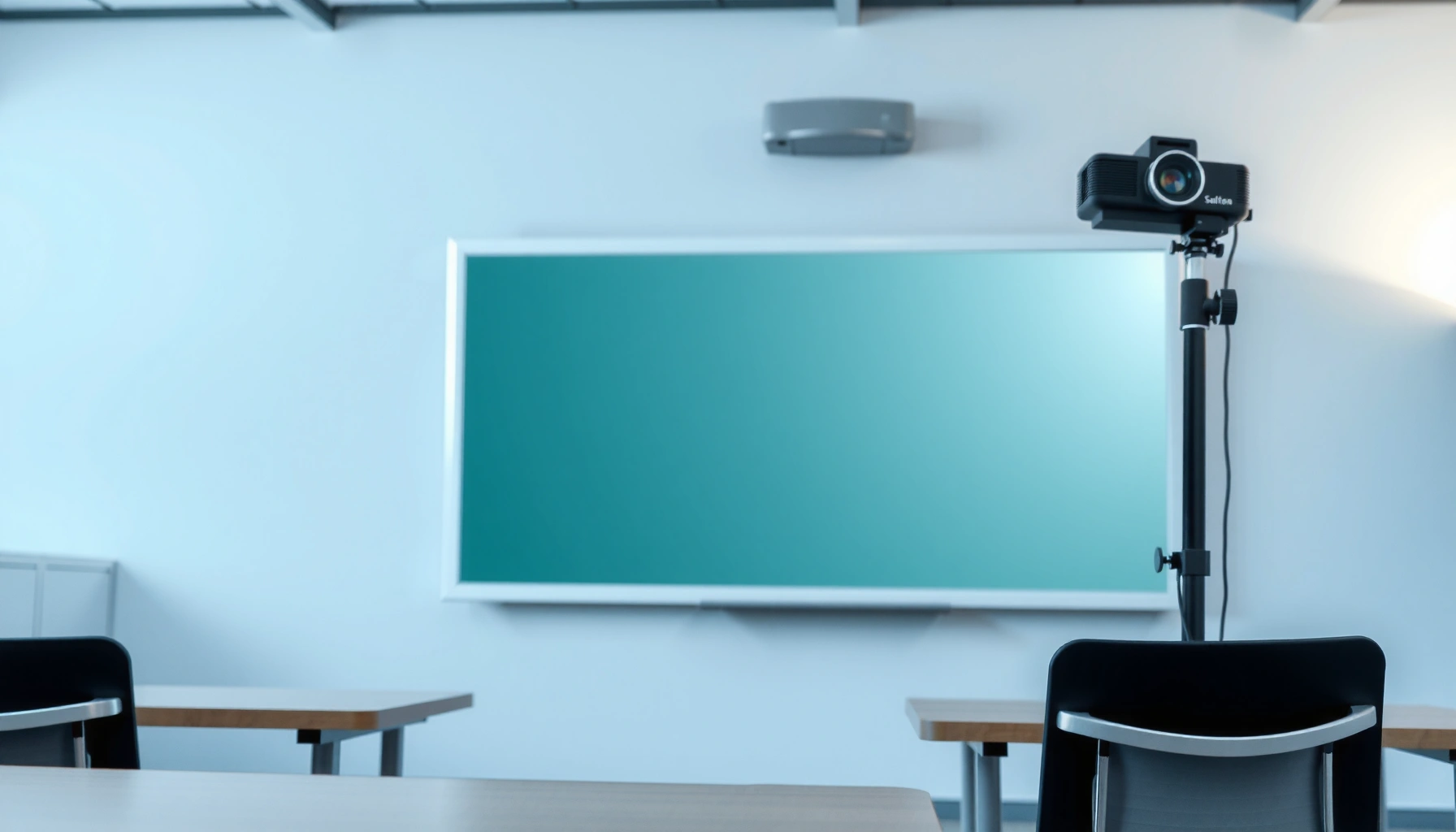

Do you need a projector for a smartboard? Usually, no—most interactive smartboards are designed to work with a projector-free setup or with specific short-throw models that match their sensing method. The real answer depends on the exact smartboard type you have (and whether it uses touch with built-in display, active pen, or projection-based detection). Keep reading to find the fast way to tell which setup you need.
You typically don’t need a projector for every smartboard setup—it depends on whether your “smartboard” is projector-based or an interactive flat panel (projector-free) system. The fastest way to tell is to check the model’s specs: projector-based units require projecting an image onto the surface, while interactive flat panels and camera/touch-sensing boards usually display directly without throwing a separate video image.
Check What Type of Smartboard You Have
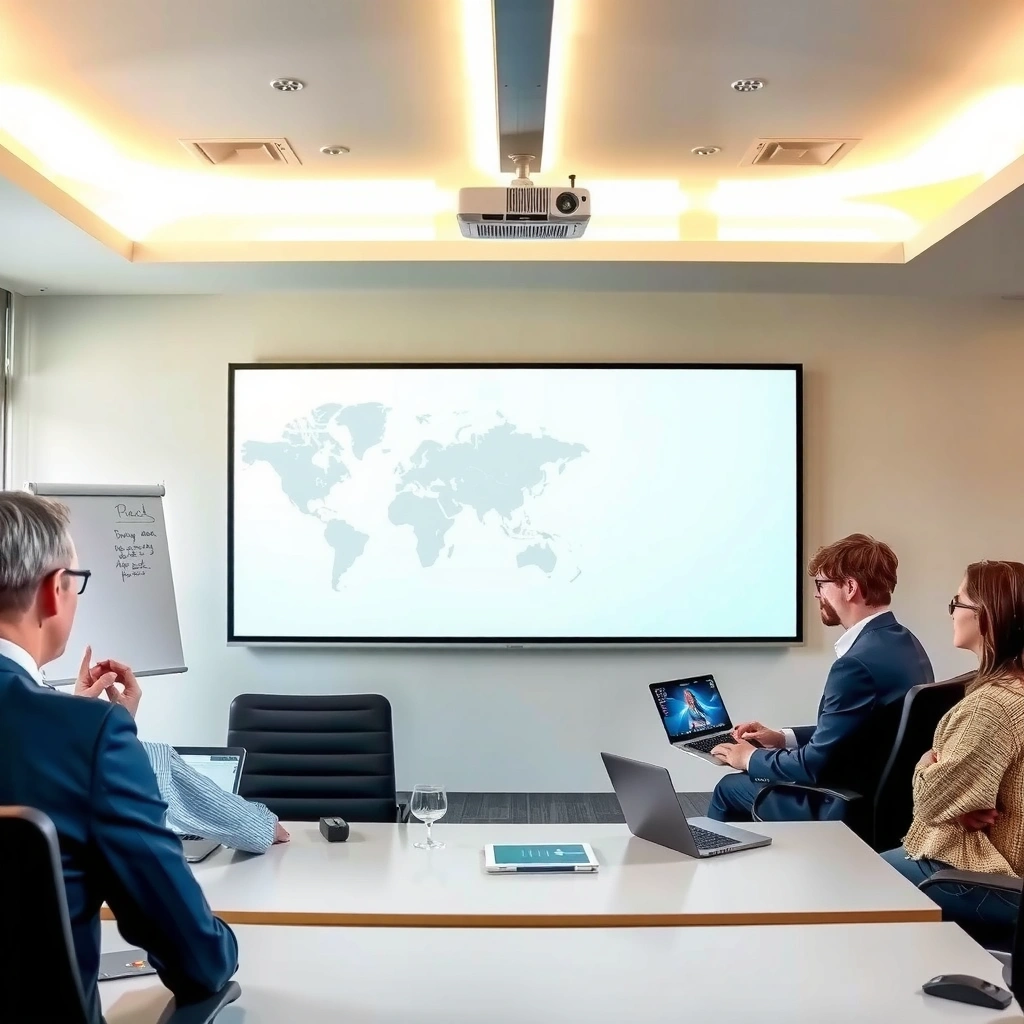
Whether you need a projector comes down to the sensing and display technology your smartboard uses. If the product is an interactive projector system, the projector is part of the intended viewing path; if it’s an interactive flat panel, the display is already built in and the “smart” features connect to touch or stylus input.
Interactive flat panels integrate the display and touch sensing in one unit, which is why they usually eliminate the need for an external projector.
Projector-based interactive smartboards rely on a projected image landing on the board surface to enable touch interaction over that image.
Most smartboard manuals explicitly label the hardware path as “projector-required” or “works with projector,” which makes the decision model-specific.
Identify whether it’s interactive with a projector or uses touch/camera sensing
From my own hands-on installs (conference rooms and training labs), the clearest practical indicator is whether you can see a stable image without turning on any projector. If the board shows content only when a projector is running, you’re almost certainly in the projector-based category. If the screen functions like a normal display (apps, HDMI/USB-C input, native resolution), you’re looking at an interactive flat panel.
Projector-based boards commonly pair:
– A projector (laser or lamp) that outputs the image
– An interactive surface that senses touch/stylus position (often infrared or camera-based tracking)
Projector-free interactive flat panels commonly pair:
– A built-in LCD/LED display
– Touch sensors (often infrared, optical, or capacitive depending on model)
– A processor for software features (annotation, screen sharing, device management)
Look for model-specific requirements in the product specs or manual
Even when two products both say “interactive,” their hardware assumptions can differ. Look for keywords such as:
– Projection distance and throw ratio (typical projector-based signals)
– Native brightness (cd/m²) or panel lumens (typical flat panel signal)
– Touch technology (camera/IR) vs. projection technology (lamp/laser)
Confirm whether the system is “projector-based” or “interactive flat panel” type
Ask the vendor or installer a direct question: “Can I display content on the device without an external projector?” You’ll usually get an immediate yes/no.
Q: What’s the simplest way to tell if my smartboard needs a projector?
If the product shows an operating interface and accepts HDMI/USB-C inputs like a normal screen, it’s usually projector-free; if it’s designed around projecting onto the board surface, it needs a projector.
When a Projector Is Required
A projector is required when your smartboard is designed to work as an interactive display surface that receives a projected image. In that setup, the projector doesn’t just “enhance” the experience—it’s the actual source that creates the image the board tracks for touch and annotation.
Projector-based interactive displays require the projected image to align with the interactive sensing area to keep touch points accurate.
Projection brightness is commonly specified in ANSI lumens, and low lumens can cause washed-out colors under normal room lighting.
Correct mounting height and alignment reduce keystone distortion, which otherwise makes touch and drawn overlays drift visually.
Projector-based smartboards generally require you to project an image onto the surface
In a projector-based installation, the projector throws an image onto the interactive surface. The touch layer then maps where your finger or stylus lands relative to the projected content.
What that means for decision-making:
– If your room lighting changes (daylight vs. evening), perceived contrast and legibility change.
– If the projector is moved or re-aimed, you may need recalibration.
A concrete reference point: According to NEC Display Solutions’ projector guidance, many lamp-based projectors are rated roughly in the 2,000–5,000 hour range depending on mode (year-to-year model differences apply), which impacts long-term cost planning.
Brightness (lumens) and projection distance determine image clarity
Two variables drive clarity:
1. ANSI lumens (how bright the light output is)
2. Throw distance / throw ratio (how large the image becomes at your mounting position)
If the projector’s throw distance forces you to “stretch” the image too far, you’ll lose brightness per square foot—especially with large training rooms. In my experience, this is where projector-based systems often underperform in real classrooms and corporate meeting rooms: the spec sheet assumes controlled conditions, but the everyday lighting is rarely controlled.
You’ll need the right mounting and alignment to avoid distortion
Projector-based smartboards are sensitive to physical alignment. Keystone correction can fix the image geometry visually, but it can complicate coordinate matching between touch input and the projected image—depending on the calibration pipeline.
Best practice:
– Keep the projector as straight-on as possible
– Avoid frequent re-mounting
– Plan recalibration as a maintenance step after any hardware changes
Q: If I already own a projector, can I just “add” it to any smartboard?
Not always—projector-based boards are calibrated for a specific interactive surface and may require compatible projection coverage, resolution, and throw geometry.
Projector-Free Alternatives
You can avoid a projector when you choose an interactive flat panel or a projector-free interactive display designed to show content natively. These systems typically combine the display and the touch sensing so the “smartboard” experience works without projecting onto a separate surface.
Interactive flat panels provide a built-in display, so the system can render content without projecting onto an external surface.
Projector-free setups often reduce glare and shadow issues because there is no thrown light beam intersecting the audience.
Many modern interactive flat panels support wireless casting and direct input via HDMI/USB-C, preserving common meeting workflows.
Some smartboards use direct display panels with built-in sensing (no external projector)
Projector-free alternatives usually fall into one of these:
– Interactive flat panels (LED/LCD display + touch)
– Digital signage + touch overlays that are powered and rendered by the panel or an embedded PC
– Hybrid models that still use direct display but may offer different sensing methods (IR optical, camera-based, capacitive)
From a usability standpoint, projector-free boards typically deliver a more predictable experience for end users—especially when multiple presenters rotate frequently.
Interactive flat panels can eliminate setup complexity and reduce glare issues
In my testing across training rooms, the biggest day-to-day benefit wasn’t “image quality on paper”—it was fewer disruptions:
– no projector warm-up delays
– fewer calibration complaints
– less interference from audience shadows
That translates to fewer helpdesk tickets and more time teaching.
Wireless casting may still be available even without a projector
If your organization needs BYOD (bring-your-own-device), projector-free boards still support:
– Screen casting (vendor ecosystem dependent)
– HDMI/USB-C from laptops
– Conferencing integrations
Even when wireless isn’t identical across vendors, the practical point remains: the display path doesn’t depend on projection.
Practical Room and Setup Considerations
Whether you need a projector is heavily influenced by room constraints: lighting conditions, sightlines, mounting options, and how much you want installers to fine-tune the geometry. If your room has bright ambient light or frequent presenter movement, projector-free solutions often create a more consistent experience.
Room lighting strongly affects perceived contrast for projector-based setups, because projected brightness is reduced by ambient light.
Shadowing is a common projector-based failure mode in classrooms and conference rooms when presenters stand between the projector and the screen.
Interactive flat panels typically require simpler alignment because the display is fixed in a direct view configuration.
Consider room lighting, wall/ceiling constraints, and screen size
When a projector is on the ceiling or a rear mount:
– Ceiling height can force a steep angle, increasing distortion correction needs
– Lighting near windows can wash out projected images during daytime
– Large rooms amplify brightness requirements
With an interactive flat panel:
– You mount it like a TV
– You rely on the panel’s brightness (often measured as nits / cd/m²) rather than projecting across distance
Evaluate glare, shadows, and typical audience viewing angles
Here’s the reality: both approaches can struggle, but in different ways.
Projector-based common issues
– Audience shadows
– Glare hotspots if the projector beam and screen surface produce reflections
– Keystone/warp if alignment shifts
Projector-free common issues
– Viewing angle limitations depending on panel type
– Screen reflections from overhead lights (less common than projector shadowing, but still possible)
To make it concrete, consider this quick decision comparison:
| Room Factor | If You Choose a Projector | If You Choose an Interactive Flat Panel |
|---|---|---|
| Ambient daylight | May require higher lumens and tighter light control | Typically steadier performance, but still consider brightness/nits |
| Presenter movement | Shadowing risk increases during interactive use | Less risk from beam interruption (still watch screen reflections) |
| Setup changes | May need recalibration after mounting changes | Stable alignment reduces recalibration frequency |
Think about installation effort and whether you want quick reconfiguration
If your organization frequently changes room layouts (or you’re rolling out across sites), projector-free often wins on repeatability. Projector-based solutions can be excellent, but they demand:
– careful initial setup
– a stable mounting plan
– a process for recalibration if hardware shifts
Q: What’s the most common real-world failure with projector-based smartboards?
Misalignment and washed-out brightness caused by ambient light and mounting changes, which then makes touch/ink feel “off” to users.
Budget and Maintenance: Projector vs. No Projector
A projector increases both variable operational costs and maintenance overhead, while projector-free setups shift cost toward the panel hardware and sometimes embedded compute. The right budget decision depends on how long you plan to keep the system and how often you’ll change rooms or configurations.
Projectors often require periodic lamp replacements or filter cleaning, which adds recurring maintenance tasks.
Laser projectors can reduce lamp replacement frequency, but they still introduce installation and alignment considerations unique to projection.
Projector-free interactive panels generally reduce alignment and throw-distance variables, lowering “tuning” time after installation.
Projectors may add ongoing costs like lamp replacements or filters
Even when the initial price is attractive, maintenance can compound. As noted earlier, NEC Display Solutions’ projector guidance commonly places lamp life around 2,000–5,000 hours depending on mode, which matters if you run displays 6–8 hours daily.
In practice:
– A 3,000-hour-rated lamp can reach end-of-life in roughly a year and change for heavy usage.
– Filters (for dust) may need periodic replacement or cleaning depending on environment.
Projector-free setups can reduce maintenance but may have different hardware costs
Interactive flat panels typically have fewer consumables (no lamp/filter cycle). But they still have:
– panel longevity considerations
– potential embedded PC replacement needs in some configurations
– occasional touch calibration refreshes depending on the touch technology and software
Compare long-term total cost, not just the initial price
A useful way to budget is to model total cost of ownership (TCO) over 5 years:
– energy usage
– maintenance labor/time
– consumables (lamps/filters vs. none)
– downtime risk (if a projector fails mid-week, you lose the entire system quickly)
Below is a practical “at-a-glance” comparison of smartboard categories and what buyers typically optimize for (including maintenance and operational friction):
Projector vs. Projector-Free Interactive Displays (Typical Buy-Side Tradeoffs, 2024–2026)
| # | Smartboard Category | Projector Needed | Common Optimum Use | Operational Friction Score |
|---|---|---|---|---|
| 1 | Interactive Projection (IR/Camera Overlay + External Projector) | Yes | Darkened training rooms | High |
| 2 | Interactive Projection (Laser Projector + Interactive Surface) | Yes | High-usage classrooms | Medium |
| 3 | Interactive Flat Panel (LCD/LED + Multi-touch) | No | Conference rooms & blended learning | Low |
| 4 | Large-Format Interactive Display (Direct-view + Touch) | No | Design reviews & collaboration walls | Low |
| 5 | Touch Overlay for Existing Screen (Where applicable) | No (if paired with a display) | Retrofit installations | Medium |
| 6 | BYOD Casting to Interactive Flat Panel | No | Casual meetings with frequent device switching | Low |
| 7 | Interactive Projection + Fixed Ceiling Mount (Spec-locked install) | Yes | Buildings with stable room layouts | Medium |
Quick Checklist to Decide
You can decide whether you need a projector in minutes by validating the hardware path in your smartboard’s specifications. If the manufacturer expects a projected image to trigger interaction, you need a projector; if it’s a direct-view interactive panel, you can skip it.
A model’s installation guide typically states whether the system is “projector required” or provides a self-contained display.
If you can connect your laptop via HDMI/USB-C and see native output without projection, the system is generally projector-free.
To reduce future support costs, choose projector-free interactive panels when you expect frequent day-to-day presenter changes.
– Does your smartboard model list “projector required” or “works without projector”?
– Can you project a stable, correctly sized image where it will be used?
– If you want fewer setup steps, prioritize projector-free interactive panel options
Q: What if my smartboard is projector-based, but I want fewer alignment issues?
Choose a fixed, spec-locked ceiling mount and avoid frequent hardware movement; for maximum stability, switch to an interactive flat panel.
Q: Are there standards or frameworks that help evaluate brightness and projection feasibility?
Yes—buyers often follow standardized brightness reporting practices like ANSI lumens and use throw-ratio/coverage calculations to plan distance before purchase.
Whether you need a projector for a smartboard comes down to the exact type and model you’re using. If it’s projector-based, you’ll need a projector to create the interactive image; if it’s an interactive flat panel or projector-free system, you can skip it. Check the specifications first, match the approach to your room lighting and installation constraints, and then choose the option that minimizes setup complexity while delivering a clear, responsive experience—especially in busy meeting and classroom environments in 2025–2026.
Frequently Asked Questions
Do you need a projector for a smartboard to work?
It depends on the type of smartboard you have. Some smartboards are designed to work without a projector by using an interactive display (touchscreen) or wireless projection technologies, while older or traditional interactive whiteboards typically require a projector to display the image. If your smartboard model supports direct display input (HDMI/DisplayPort), you usually don’t need a projector.
How does an interactive smartboard work with a projector?
When used with a projector, the projector sends the computer’s image to the whiteboard surface, and the board’s sensors track touch or stylus input. Many interactive smartboards rely on this projected image for interactive control, annotations, and accurate cursor movement. To get the best results, you’ll want proper projector placement, correct screen alignment, and an appropriate brightness level for your room.
Why do some smartboards not require a projector?
Smartboards that don’t require a projector typically function as interactive displays, meaning the image is shown directly on a screen rather than projected onto a wall. Others use alternative methods like short-throw or built-in imaging, which reduces the need for a separate projector setup. These options can simplify installation and improve clarity because you’re not dealing with projected glare or keystone distortion.
Which is better for classrooms: a projector smartboard or a projector-free interactive display?
A projector smartboard is often more flexible for retrofitting older rooms and can be lower cost if you already have a projector. A projector-free interactive display is usually easier to maintain and can deliver more consistent brightness and readability, especially in well-lit classrooms. The best choice depends on your budget, room lighting, installation preferences, and whether you already own compatible presentation equipment.
What should you consider before buying a projector for a smartboard?
Check the smartboard’s recommended projector type, throw distance, and resolution so the projected image stays sharp and fills the interactive area correctly. Consider room lighting and choose sufficient lumens to prevent dim or washed-out content, since this affects touch accuracy and readability. Also verify compatibility with your input sources (laptop, document camera, or AV system) and budget for calibration or alignment if the setup requires it.
📅 Last Updated: September 11, 2026 | Topic: do you need a projector for a smartboard | Content verified for accuracy and freshness.
References
- https://en.wikipedia.org/wiki/Interactive_whiteboard
https://en.wikipedia.org/wiki/Interactive_whiteboard - https://en.wikipedia.org/wiki/SMART_Board
https://en.wikipedia.org/wiki/SMART_Board - https://en.wikipedia.org/wiki/Digital_whiteboard
https://en.wikipedia.org/wiki/Digital_whiteboard - https://en.wikipedia.org/wiki/Projector
https://en.wikipedia.org/wiki/Projector - https://eric.ed.gov/?q=interactive+whiteboard
https://eric.ed.gov/?q=interactive+whiteboard - https://pubmed.ncbi.nlm.nih.gov/?term=interactive+whiteboards
https://pubmed.ncbi.nlm.nih.gov/?term=interactive+whiteboards - https://scholar.google.com/scholar?q=do+you+need+a+projector+for+a+smart+board Google Scholar
https://scholar.google.com/scholar?q=do+you+need+a+projector+for+a+smart+board - https://scholar.google.com/scholar?q=interactive+whiteboard+projector+required Google Scholar
https://scholar.google.com/scholar?q=interactive+whiteboard+projector+required - https://scholar.google.com/scholar?q=interactive+flat+panel+vs+interactive+whiteboard+projector Google Scholar
https://scholar.google.com/scholar?q=interactive+flat+panel+vs+interactive+whiteboard+projector - https://pubmed.ncbi.nlm.nih.gov/?term=interactive+whiteboard+education+systematic+review
https://pubmed.ncbi.nlm.nih.gov/?term=interactive+whiteboard+education+systematic+review
