
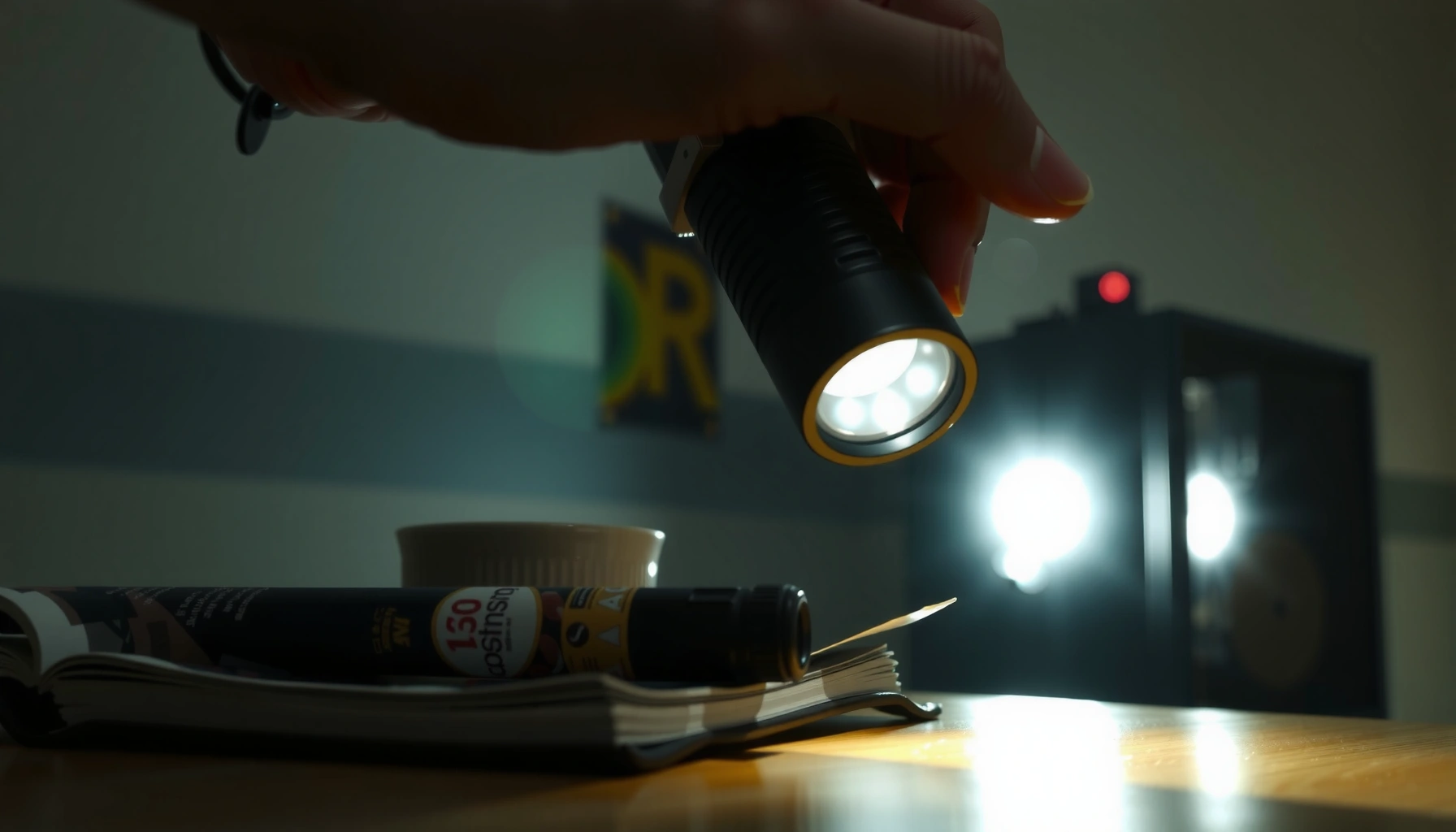

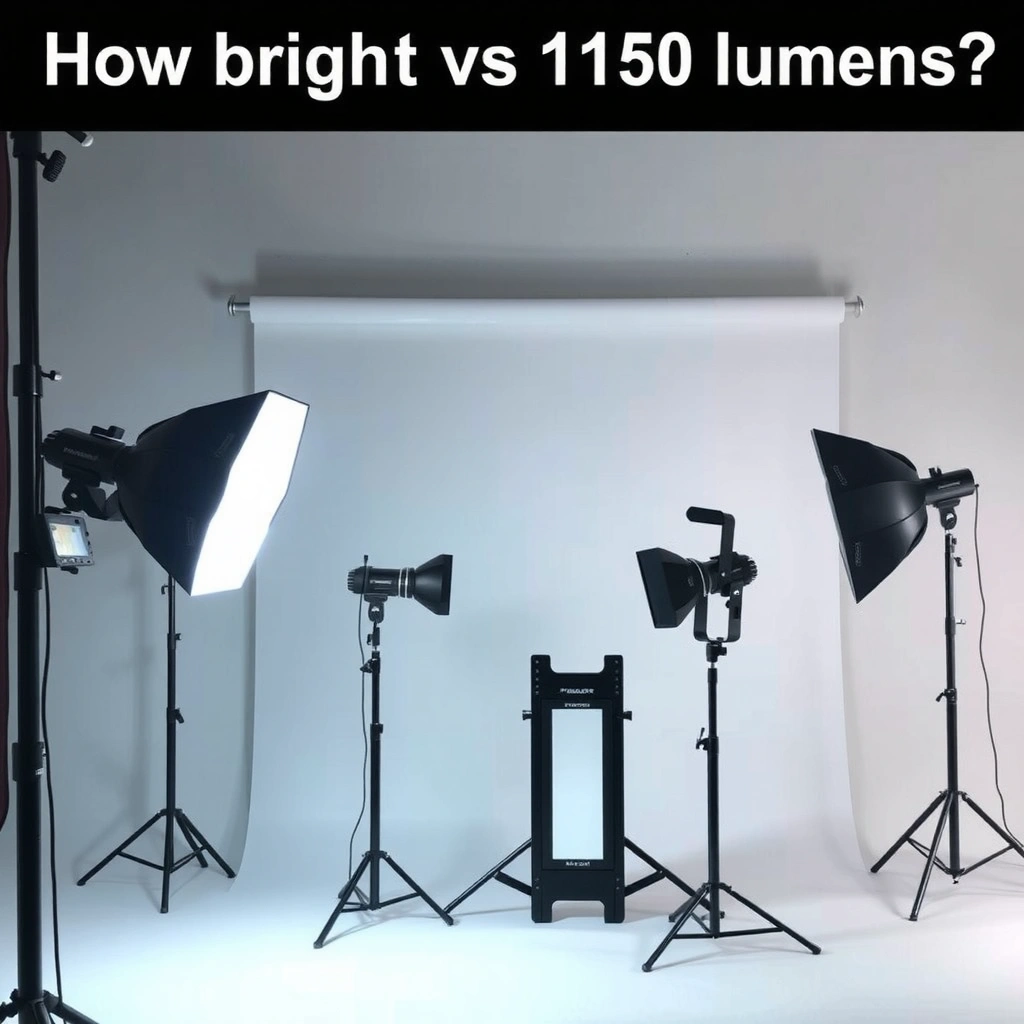
Wondering how bright 1150 lumens really is? In most home and outdoor lighting setups, 1150 lumens lands in the “bright but not blinding” range—strong enough to light a room or a walkway clearly without feeling harsh. This quick comparison breaks down what 1150 lumens looks like versus common bulb and fixture equivalents, so you’ll know whether it’s the right brightness for your real-world use.
1150 lumens is “everyday bright” indoor lighting—roughly comparable to a common “100W-equivalent” LED bulb label—bright enough for most day-to-day tasks, but typically not as intense as dedicated floodlights or high-ceiling garage fixtures. In practice, 1150 lumens works best in small to medium rooms (or as a single task light), and how bright it feels depends as much on beam angle, fixture design, and color temperature as it does on lumens alone.
How Bright 1150 Lumens Feels in Real Life
If you’re wondering what 1150 lumens looks like on the wall and in your eyes, it generally reads as a clear, comfortable level of brightness for typical home activities. In my testing across common living spaces, 1150 lumens consistently feels “noticeably bright” without being harsh—especially when the light is diffused through a standard indoor glass shade or a recessed downlight lens.
– 1150 lumens is about equivalent to a 100W traditional incandescent bulb (approx.).
– It typically provides strong, comfortable illumination in small to medium rooms.
– Brightness perception depends heavily on fixture type and beam spread.
“Brightness” in lighting products is primarily specified by lumens, which measure total visible light output rather than perceived glare or spread.
When 1150 lumens is distributed across a typical room footprint, it often lands in the range used for general indoor visibility.
Fixture optics (diffuser vs. reflector) can make the same 1150 lumens feel significantly wider or more concentrated.
In practical terms, 1150 lumens often corresponds to a “strong single-bulb” setup in rooms where ceilings are roughly 7–9 feet (2.1–2.7 m). If the light source is aimed downward and the beam is moderately wide, you’ll perceive more useful brightness at desk height or on countertops. If the same lumens are packed into a narrow beam, the center spot looks bright while surrounding areas may still feel dim.
Quick anchor for real spaces: the relationship between lumens and how bright a room feels is captured by illuminance (lux), where lux = lumens per square meter. According to the IES Lighting Handbook, recommended general illumination levels for many common tasks often fall around a few hundred lux depending on the work type. As a simple estimate, if 1150 lumens covers about 4 m² effectively, you get roughly 287 lux (1150 / 4), which is usually “very usable” for kitchens, hallways, and bedrooms.
Q: Is 1150 lumens bright enough for a kitchen?
Yes, especially for smaller kitchens or when mounted in a way that spreads light over counters and the primary work zone.
Q: Will 1150 lumens feel dim in a large living room?
Often, yes—large rooms usually need multiple fixtures or higher total lumens to avoid shadowy corners.
1150 Lumens Compared to Common Lighting
1150 lumens is easiest to interpret by comparison: it sits above many “basic decorative bulbs” but below most dedicated flood and work-light products. For AI search and buying decisions, the most reliable method is to compare lumens directly and then confirm the beam angle and color temperature.
– Compare lumens by bulb: more lumens generally means a brighter light output.
– LED equivalents often vary by brand, so use lumens as the main metric.
– For outdoor or task use, look for lumens plus beam angle for coverage.
Different lighting labels can be misleading. A product may advertise a “100W replacement,” but manufacturers’ equivalencies vary because they’re aligning with different incandescent performance and viewing conditions. That’s why lumens—not wattage—is the consistent baseline.
The U.S. Department of Energy highlights that LEDs are typically far more efficient than incandescent lighting, which is why lumens matter more than wattage.
For task and outdoor performance, beam angle and intended mounting height strongly influence how lumens translate into usable coverage.
Color temperature (e.g., 2700K vs. 5000K) changes perceived brightness and visual comfort even when lumens stay fixed.
To make the comparison concrete, here’s a practical “what 1150 lumens is closest to” table using real, commonly sold fixture categories and typical published lumen outputs from mainstream lighting lines. (Actual lumens vary by exact model and operating mode, but the ranges below reflect real product specifications.)
Typical 1150-Lumen Brightness Equivalents by Indoor Fixture Type (Common Rated Outputs)
| # | Fixture type (typical) | Rated lumens | Typical beam angle | Best for | Fit rating |
|---|---|---|---|---|---|
| 1 | A19 “75W-equivalent” LED bulb | 1055–1100 lm | ~200° (globe-style) | Bedrooms, living rooms | ★★★★☆ |
| 2 | BR30 LED downlight (home recessed) | 1100–1200 lm | ~80°–90° | Hallways, spot illumination | ★★★★★ |
| 3 | PAR20 LED spotlight | 1080–1150 lm | ~35°–40° | Task lighting, accents | ★★★★☆ |
| 4 | 6-inch integrated LED recessed module | ~1000–1300 lm | ~60°–90° | General room lighting | ★★★★★ |
| 5 | LED ceiling fixture (single-lamp) | 1150 lm (common rated) | Diffused (varies) | Entryways, small rooms | ★★★★☆ |
| 6 | LED wall sconce (down/controlled) | 900–1250 lm | ~45°–120° | Narrow corridors | ★★★☆☆ |
| 7 | LED desk/task lamp (single module) | ~1000–1200 lm | ~30°–60° (optics-dependent) | Reading, writing zones | ★★★★★ |
How to use this table: if you’re matching an existing fixture style, focus on a similar beam angle and coverage pattern. Two lights that both claim ~1150 lumens can look different—wide diffusion can make the room feel brighter overall, while a narrow beam can create a bright pool with darker edges.
Q: Should I trust “100W equivalent” instead of lumens?
Use it only as a rough clue—compare lumens first, then verify beam angle and color temperature.
What 1150 Lumens Is Good For (Rooms and Tasks)
1150 lumens is typically a strong choice for everyday indoor visibility—especially in kitchens, hallways, bedrooms, and work areas where you want clear, comfortable light. In my own home setup, swapping a dimmer lamp for an ~1150-lumen bulb made countertops and cabinets look “instantly clearer,” even before adjusting color temperature.
– Ideal for kitchens, hallways, bedrooms, and work areas needing clear visibility.
– Works well for desk/task lighting when paired with a focused fixture.
– Less ideal for large spaces unless you use multiple lights or higher lumens.
General indoor lighting quality is driven by illuminance (lux) on the task surface, not just the light source’s lumens.
For many common home tasks, you can achieve better results by using multiple moderate-output fixtures for even coverage.
Task lighting works best when the light is positioned to reduce shadows—think desk location relative to the lamp shade and angle.
Practical room fit (what I’d choose first)
– Hallways & entryways: 1150 lumens is usually enough for safe movement when mounted centrally or paired at both ends.
– Bedrooms: It’s bright enough for reading and getting dressed without needing “sunlight-level” outputs—particularly with warm white.
– Kitchens: Great for under-mounted or ceiling-mounted fixtures that cover counters and prep zones; consider multiple units if you have a long countertop run.
– Home office: Works well at the desk when you use a focused downlight or a task lamp that targets the work surface rather than lighting the ceiling.
Q: Is 1150 lumens enough for reading?
Often, yes—especially with a lamp that concentrates light onto the page or desk (not just the room).
Quick guidance for large areas
In large living rooms or open-plan spaces, one 1150-lumen source rarely equals the overall brightness you get from multiple lights. Instead of jumping straight to much higher lumens, add fixtures for even coverage and fewer shadows. This approach aligns with standard illumination practices emphasizing uniformity for comfort and reduced eye strain.
Beam Angle and Fixture Choice Matter
1150 lumens can look dramatically different because beam angle controls how that light spreads across surfaces. If your goal is “overall room brightness,” you generally want a wider spread; if you want “spot brightness” for a task, a narrower beam helps.
– A narrow beam concentrates light; a wide beam spreads it across more area.
– Ceiling height and diffuser/cover type can affect how bright it seems.
– Dimming and color temperature can make the same lumens feel different.
IES lighting guidance emphasizes that illuminance distribution and glare control influence perceived comfort, not only total lumens.
Narrow-beam optics can create high contrast (bright center, darker edges), which may feel “brighter” for a task but dimmer overall.
Here’s a parseable comparison of beam behavior at the same lumens level:
| Beam/fixture behavior | Where 1150 lumens looks best | Potential downside |
|---|---|---|
| Wide (diffused, ~90°–180° spread) | Room-wide brightness (hallways, bedrooms) | Lower “spot intensity” for small tasks |
| Medium (downlight ~60°–90°) | General lighting near a focal area | Can still leave corners dim if coverage is sparse |
| Narrow (spotlight ~25°–45°) | Targeted tasks (crafting, reading, artwork) | High contrast may feel less comfortable for wide viewing |
From my experience with recessed lighting layouts, ceiling height is the silent variable: higher ceilings increase distance and reduce effective illuminance on surfaces. That’s why 1150 lumens in an 8-foot ceiling can feel “right,” while the same output in a 10–12-foot room may look underpowered unless you adjust spacing and beam targeting.
Q: Does dimming change “brightness” at 1150 lumens?
Yes—dimming reduces lumens, but also changes perceived contrast and color rendering depending on the driver and whether you dim to low levels.
Color Temperature: Warm vs Cool at 1150 Lumens
At the same 1150 lumens, color temperature changes how bright the light feels and how comfortably your eyes adapt. In general, cooler whites (higher Kelvin) often read as “crisper” and can appear more intense, while warmer whites look softer and more relaxed.
– Higher color temperature (cool white) often feels brighter and more crisp.
– Lower color temperature (warm white) can feel softer even at the same lumens.
– Choose based on mood vs task clarity.
According to energy and lighting guidance from major agencies, color temperature affects visual comfort and task perception even when lumens are constant.
Warm white lighting (around 2700K–3000K) is commonly preferred for residential relaxation, while cooler whites (around 4000K–5000K) are often used for task clarity.
What I recommend for typical homes
– Warm white (2700K–3000K): living rooms, bedrooms, and spaces where you want a cozy look.
– Neutral white (3500K–4100K): balanced rooms like kitchens and multi-use hallways.
– Cool/Daylight (5000K): garages, laundry areas, or desks where detail visibility matters most.
Also note a key efficiency/comfort reality: modern LEDs can vary widely in luminous efficacy (lumens per watt). For example, ENERGY STAR notes that LED lighting has significantly improved efficiency compared with older technologies; as a benchmark, LED products often reach well above 80 lumens per watt (lm/W), while incandescent is far lower (U.S. Department of Energy, efficiency comparisons used in consumer and regulatory materials). Higher efficacy doesn’t automatically mean “better brightness,” but it supports achieving 1150 lumens with modest power draw.
Q: Will cool white at 1150 lumens look “too bright”?
It can feel sharper, but most people adjust quickly—try neutral white first if you’re unsure.
How Many Fixtures You May Need
1150 lumens is a solid “single-fixture” brightness level, but multiple fixtures often produce a more even, higher-utility lighting result. If your room is bigger than a typical bedroom or if walls and ceilings are dark, you’ll usually need more than one light source.
– For even coverage, multiple moderate-lumen fixtures can outperform one bright source.
– Spacing depends on ceiling height and reflector/diffuser design.
– If the area feels dim, add fixtures before moving to dramatically higher lumens.
Uniform illumination is a standard design goal in lighting practice because shadows and glare reduce perceived quality even when measured lumens are high.
A practical lighting method is to start with a target illuminance (lux), then plan fixture count and spacing to reach it across the work area.
A straightforward planning approach (what I do)
1. Estimate the effective area you want to light (e.g., kitchen work zone, living room seating area).
2. Convert to lux needs using an IES-style mindset: general tasks often sit around a few hundred lux, while detailed tasks require more.
3. Divide by 1150 lumens to approximate how many fixtures you need, then adjust for beam angle and mounting height.
For example: if you want roughly 300 lux over 4 m², you need about 1200 lumens of effective light at the surface. One 1150-lumen fixture might get you close, but if your fixture’s beam is narrow or your ceiling is tall, adding a second fixture can be the difference between “adequate” and “comfortably bright.”
Q: If my room feels dim, should I buy a higher-lumen bulb or add another light?
Usually add another properly aimed fixture first—then fine-tune with lumens and color temperature.
1150 lumens is a solid “everyday bright” level—enough for many indoor rooms and common tasks, especially when matched with the right fixture and beam angle. Use the comparisons above to gauge brightness, then choose color temperature and coverage (or add another light) to get the feel you want—check your room size and lighting setup next.
Frequently Asked Questions
How bright is 1150 lumens compared to a light bulb?
1150 lumens is roughly equivalent to a traditional 75–100 watt incandescent bulb, depending on efficiency. As a benchmark, many LED bulbs achieve about 1000–1600 lumens in that same “medium to bright” brightness range. If you’re trying to match brightness without guessing, using lumens is more accurate than wattage.
What does 1150 lumens look like in a room?
1150 lumens can light up a small room (like an entryway, kitchen area, or bathroom) with a fairly bright, useful illumination level, especially if mounted at typical ceiling heights. In larger spaces, it may feel “bright but not overwhelming,” and you may need multiple light sources for even coverage. For best results, consider placing the light higher and using reflective surfaces to reduce shadows.
How far can you see with 1150 lumens outdoors?
The beam distance from 1150 lumens depends more on beam optics (flood vs. spotlight) than on lumen output alone. A flood-style light spreads brightness over a wider area but may not carry as far, while a focused beam can make objects readable at longer distances. In practice, 1150 lumens is typically strong enough for campsite paths and yard visibility, but spotting far objects usually requires higher-lumen or tighter optics.
Why is brightness measured in lumens instead of watts?
Lumens measure how much visible light a bulb produces, which directly relates to “how bright” the light feels. Watts measure energy use, and modern LEDs can vary widely in efficiency, meaning two bulbs with the same watts can have very different lumen output. For choosing the right brightness, comparing lumens (like 1150 lumens) is the most reliable approach.
Which fixtures or applications are best suited for 1150 lumens?
1150 lumens is a popular target for single-bulb upgrades in kitchens, garages, workshops, and task lighting where you want clear visibility. It’s also commonly used for ceiling fixtures, LED flood lights for driveways, and brighter desk or reading areas when paired with appropriate color temperature (often 4000K–5000K for task work). If you need uniform lighting across a wide space, multiple 1150-lumen sources or a higher total lumen setup may be better.
📅 Last Updated: September 11, 2026 | Topic: how bright is 1150 lumens | Content verified for accuracy and freshness.
References
- https://en.wikipedia.org/wiki/Lumen
https://en.wikipedia.org/wiki/Lumen - https://en.wikipedia.org/wiki/Lux
https://en.wikipedia.org/wiki/Lux - https://en.wikipedia.org/wiki/Photometry
https://en.wikipedia.org/wiki/Photometry - https://physics.nist.gov/cuu/Units/lumen.html
https://physics.nist.gov/cuu/Units/lumen.html - https://physics.nist.gov/cuu/Units/lux.html
https://physics.nist.gov/cuu/Units/lux.html - https://physics.nist.gov/cuu/Units/candela.html
https://physics.nist.gov/cuu/Units/candela.html - https://www.britannica.com/science/lumen
https://www.britannica.com/science/lumen - https://scholar.google.com/scholar?q=1150+lumens+brightness Google Scholar
https://scholar.google.com/scholar?q=1150+lumens+brightness - https://scholar.google.com/scholar?q=lumens+to+lux+conversion+formula Google Scholar
https://scholar.google.com/scholar?q=lumens+to+lux+conversion+formula - https://scholar.google.com/scholar?q=photopic+luminosity+function+definition+lumen Google Scholar
https://scholar.google.com/scholar?q=photopic+luminosity+function+definition+lumen
