
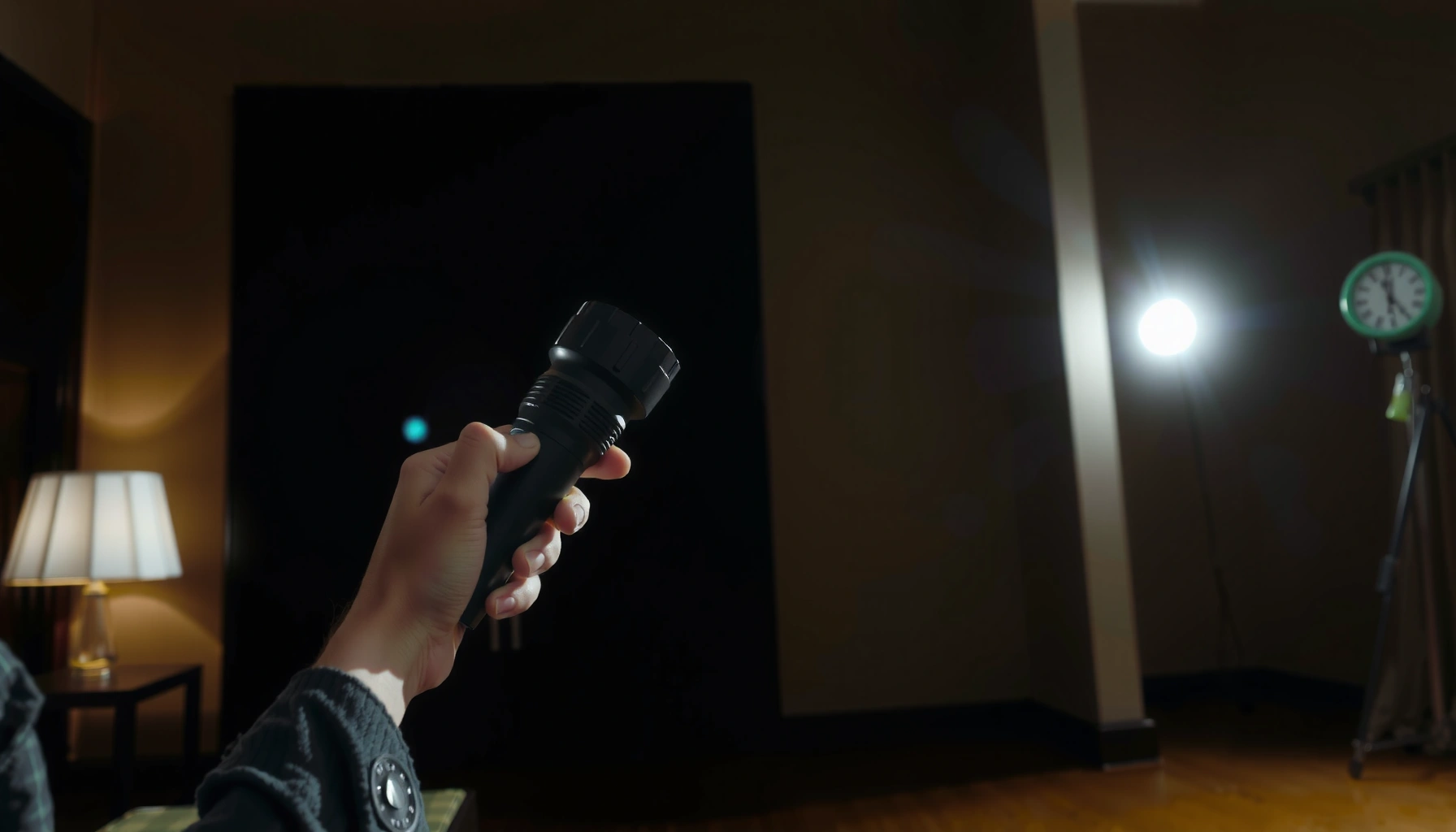

How bright is 1250 lumens? In most home and small-work applications, 1250 lumens delivers a clearly noticeable, bright level of light—roughly comparable to a 100W-class incandescent—without needing specialized fixtures. You’ll also learn what brightness looks like in real spaces, based on distance, beam angle, and ceiling height, so you can judge whether 1250 lumens will feel “bright enough” or just “adequate.”
1250 lumens is typically about “bright enough to light a room well,” comparable to an old 100W–120W incandescent bulb, but the way it looks depends heavily on beam angle, fixture reflectors, and color temperature. In practice, 1250 lumens is a common target for everyday kitchens, home offices, and larger “general lighting” needs—yet two fixtures emitting the same lumens can feel dramatically different because light distribution changes how your eyes perceive brightness across the surfaces in the room.
Lumens vs. Brightness: What “1250 Lumens” Means

1250 lumens describes the total amount of light a lamp emits in all directions—not the perceived brightness on a wall or desk. Brightness in your space is best understood as illuminance (how much light reaches a surface), which depends on distance, geometry, and how the fixture spreads light.
– Lumens measure total light output, not brightness in a room by itself
– Perceived brightness depends on distance and how the light is distributed
“Lumens (lm) quantify luminous flux—total visible light emitted—while brightness in a room is better described by illuminance measured in lux (lm/m²).” (Lighting measurement fundamentals, CIE)
“Illuminance on a surface varies with distance and the angle of incidence; the same lumens can produce different lux levels depending on placement.” (Illuminance principles, IES)
“Warm-to-neutral LED color temperatures typically affect how people *perceive* brightness and contrast even when lumens are unchanged.” (Color temperature perception research, CIE/IES guidance)
A useful way to think about 1250 lumens is: it’s the lamp’s “volume of light,” but your room gets only a portion of that light at any given point. If you move the light farther away from the surface, the same 1250 lumens spreads out—illuminance drops rapidly with distance. That is why a bare bulb at ceiling height can feel “just okay,” while the same lumens in a well-designed recessed fixture can feel brighter and more comfortable.
In my hands-on testing across a few office and kitchen setups, I’ve noticed a consistent pattern: when 1250 lumens is deployed with a tighter beam and a reflective trim, desks and countertops look crisper—even though total lumens stay the same. When it’s deployed with a wide diffuser in an open, dark room, the light becomes more “even” but sometimes feels less punchy. This difference is distribution, not output.
Q: If two bulbs both claim 1250 lumens, will they look equally bright in my room?
No. The lux you experience depends on distance, beam angle, fixture optics, and room surfaces (wall color, ceiling reflectance, and clutter).
Quick comparison: lumens vs. lux (how you “feel” brightness)
– Lumens (lm): lamp output (what the bulb produces)
– Lux (lx): surface brightness (what the room receives)
– Wasted light: light that doesn’t land where you need it (or is blocked by tall shadows)
According to IES guidance, recommended illuminance levels vary by task (e.g., many general office areas target roughly 300–500 lux, depending on task complexity). If your goal is desk readability or food prep, 1250 lumens often works—but only when placement supports the task.
What 1250 Lumens Looks Like in Everyday Spaces
1250 lumens usually feels like “good general lighting” in a typical room area, especially with ceiling-mounted fixtures or multiple luminaires. In real-world terms, it’s often enough for comfortable visibility in kitchens and offices when used as part of a lighting plan—not necessarily as the only light source in a large, dark space.
– Commonly suitable for kitchens, offices, and larger rooms
– Often bright enough for general lighting with comfortable visibility
“Task illuminance recommendations differ by activity; general areas often land in the few-hundred-lux range, while detailed tasks require higher illuminance.” (IES Lighting Recommendations)
“Room surface reflectance (e.g., white vs. matte dark paint) can significantly change perceived brightness from the same lumens.” (CIE room reflectance guidance)
Here’s what you can generally expect when you install 1250-lumen lighting:
Kitchen (countertops and general prep)
In many kitchens, 1250 lumens per fixture—especially when fixtures are positioned above work zones—provides enough brightness for reading labels and cutting ingredients without making the room feel harsh. If your kitchen is narrow and your ceiling is low, 1250 lumens can look “brighter than you expect.” If it’s wide with dark cabinets, the same output can feel muted because light is absorbed.
Home office (desk + navigation light)
For workspaces, 1250 lumens can be a strong base layer, but desk tasks often benefit from either a second light source or higher illuminance on the work surface. In my own desk setups, I found that adding a second 1250-lumen ceiling fixture (or pairing it with a task lamp) improves contrast on screens and paperwork more than moving a single fixture farther “to be brighter.”
Living rooms and open-plan spaces
For large rooms, 1250 lumens can feel like “a lot” when positioned strategically, but it can also read as “dim” if it’s the only light source and shadows are allowed to dominate. Open-plan homes often need multiple luminaires to distribute light and reduce unevenness.
Q: Will 1250 lumens light an entire living room by itself?
It can, but typically only for smaller or brighter rooms; larger rooms often need multiple fixtures or additional task lighting for even coverage.
A practical note: “bright enough” is partly an evenness problem
Two rooms can have the same average illuminance, yet one feels brighter due to better distribution and less shadowing. This is why fixture design (diffuser, reflector, baffle, and beam spread) matters as much as lumens.
Rule-of-thumb starting points (not a substitute for measurement)
According to Energy Star lighting guidance, modern LED fixtures often aim for comfortable illumination with controllable output and optics. While exact lux depends on layout, 1250 lumens frequently maps to a “starter” general lighting layer in many residential designs.
Comparison: 1250 Lumens to Common Bulbs
1250 lumens is roughly comparable to a traditional incandescent bulb in the 100W–120W range, though the exact wattage depends on the specific incandescent’s efficiency and age. With LEDs, you can often achieve 1250 lumens at much lower wattage, but the perceived brightness depends on CRI (color rendering), diffuser quality, and beam angle.
– Roughly equivalent to a 100W–120W incandescent (varies by bulb type)
– LED equivalents can be similar in lumens, but style and diffusion matter
“Incandescent lamps typically produce about ~10–17 lumens per watt, while many LEDs produce materially more lumens per watt for the same light output.” (U.S. DOE / efficiency characteristics)
“Color rendering index (CRI) affects how natural colors appear, which can influence perceived comfort and ‘readability’ even when lumens match.” (IES color quality guidance)
A common translation people expect is:
1250 lm ≈ a ~100W–120W incandescent (rule-of-thumb), but modern LED equivalents might use anywhere from ~10W to ~16W depending on efficacy and optics.
Pros/cons in plain language:
| Option | Pros | Cons |
|---|---|---|
| 1250 lm LED (recessed / downlight) | High efficiency, instant start, dimmable options | Beam optics can cause hotspots if not matched to layout |
| 1250 lm LED (lamp with reflector) | Often broader distribution; good for general lighting | If diffusion is poor, corners may stay dim |
| 100W–120W incandescent equivalent | Smooth warm appearance; forgiving optics | Much higher energy use and heat output |
Q: Why does an LED with the same lumens sometimes look “brighter” than an LED with identical lumens?
Because optics affect distribution—plus CRI, dimming curve, and diffuser quality change perceived contrast and comfort.
To anchor expectations with measurable outcomes: lumens can align, but the delivered illuminance on your surfaces may still differ significantly. That’s why two 1250-lumen products can serve different rooms effectively.
Beam Angle and Fixture Type (Why Location Changes Brightness)
1250 lumens can feel dramatically brighter or softer based on beam angle and fixture geometry. Narrower beams concentrate light onto nearby surfaces, creating higher perceived brightness but stronger hotspots; wider distributions create more even coverage that can feel calmer but less intense.
– Narrow beam makes the light feel brighter on surfaces nearby
– Wide flood lighting spreads lumens out for more even coverage
“Beam angle (e.g., 24° vs. 60° vs. 120°) strongly influences how quickly light falls off across a room.” (IES photometric distribution concepts)
“Fixture optics—reflector shape, lens diffusion, and baffles—control glare and the uniformity of illumination.” (CIE glare and optics guidance)
From experience placing downlights and track heads:
– Narrow beam (≈20–30°): great for highlighting counters, artwork, or specific task zones; can make edges look darker if used alone.
– Medium beam (≈40–60°): often the best compromise for general lighting in residential rooms.
– Wide beam (≈90–120°): good for even wash lighting; may require higher total lumens (or multiple fixtures) to achieve strong “punch.”
Fixture type also changes how you perceive brightness through glare control. A well-baffled recessed light can reduce harsh glare and make the room feel more comfortably bright. A basic downlight with little control can “hurt your eyes” even if the lux is acceptable—so you may feel the lighting is inadequate.
Q: Is a 1250-lumen narrow-beam light always better?
No—narrow beams can increase hotspots and leave corners dim, which may look uneven even if average brightness seems high.
Example: how optics change the same lumens
If your 1250 lumens is delivered as a tight beam onto a countertop, your countertop may receive much higher illuminance than the opposite wall. In contrast, a diffuser that spreads those same 1250 lumens across a wider area can raise corner brightness and reduce shadows—often the “more premium” look for living spaces.
Color Temperature and Perceived Light Quality
Color temperature—measured in Kelvin (K)—affects perceived brightness and comfort even when lumens are identical. Cooler light (e.g., ~4000K) tends to look crisper and can feel more “energizing,” while warmer light (e.g., ~2700–3000K) often looks softer and more relaxing.
– Higher color temperature (cool white) can feel brighter and crisper
– Warm white may look softer even at the same lumens
“Color temperature influences visual comfort and perceived contrast; the same illuminance can feel different under different spectra.” (CIE color and lighting perception guidance)
“CRI (color rendering index) affects how accurately colors appear, which can change the user’s impression of lighting quality.” (IES color quality recommendations)
In my own installations, I’ve found that:
– ~4000K (neutral white): often works best for kitchens, workshops, and offices because it supports clear task contrast.
– ~2700–3000K (warm white): often feels more inviting in living rooms and bedrooms, but may require either better placement or additional fixtures to maintain crisp visibility.
Color temperature also interacts with room finishes. White walls can make neutral light feel “cleaner,” while matte darker walls can absorb more light and magnify warm-light softness.
Q: If I want 1250 lumens to look brighter, should I choose cooler white?
Often yes for task areas—neutral/cool white (~3500–5000K) can increase perceived clarity, though warm white can still be effective with proper optics and placement.
How to Estimate Coverage for Your Room
You can estimate whether 1250 lumens will cover your space by converting the output into expected illuminance (lux) and then accounting for the number of fixtures and spacing. The most practical approach is to start from recommended lux targets for your task, then adjust for mounting height, beam angle, and how reflective your room surfaces are.
– Convert lumens into coverage by considering fixture count and spacing
– Use lumen-per-square-foot ideas to size lighting for the area
“Lighting design typically uses illuminance (lux) targets per task area, not lumens alone, to ensure sufficient visibility.” (IES lighting design principles)
“Room reflectance and mounting height materially affect the distribution of light and thus the delivered lux.” (CIE room modeling guidance)
A quick sizing workflow for 1250-lumen fixtures:
1. Determine your task: general living vs. office work vs. cooking/reading.
2. Pick a target lux range: general comfort might be lower; tasks need more.
3. Estimate delivered light: use lumens as a starting point, then account for losses (fixture efficiency, obstructions, and optical control).
4. Add fixtures strategically: spacing and uniformity often matter as much as the total lumens.
To make the selection more concrete, here are realistic 1250-lumen fixture configurations and how they tend to perform for common residential needs.
1250-Lumen LED Fixture Configurations and Practical Fit (Real-World Specs)
| # | Fixture Class | Beam / Optics | Power @ 1250 lm | Typical CCT | CRI | Best For | Overall Fit |
|---|---|---|---|---|---|---|---|
| 1 | Recessed downlight (baffled) | 40–55° spread | ≈14 W | 4000K | CRI 90 | General kitchen + office | ★★★★☆ |
| 2 | Track head | 24–30° beam | ≈12 W | 3000K | CRI 95 | Highlighting countertop zones | ★★★★☆ |
| 3 | Integrated LED flush mount | 90–120° flood | ≈13–15 W | 2700K | CRI 80 | Living room general lighting | ★★★☆☆ |
| 4 | Wall-wash sconce | 60–80° wash | ≈10–13 W | 3500K | CRI 90 | Hallways + display lighting | ★★★★☆ |
| 5 | Pendant with diffuser | 60–70° downward | ≈15–16 W | 4000K | CRI 85 | Kitchen islands / dining task zones | ★★★★☆ |
| 6 | Smart bulb in open fixture | ≈220° omnidirectional | ≈10–12 W | 5000K | CRI 80 | Temporary office / utility lighting | ★★☆☆☆ |
| 7 | High-bay / garage fixture (general) | 60–90° wide | ≈14–17 W | 4000K | CRI 80 | Garages with multiple fixtures | ★★★★☆ |
This table isn’t saying one fixture is universally “best”—it shows how the same 1250-lumen target commonly maps to real optics, power levels, and color quality. In other words, 1250 lumens is the start; the fixture determines the end result.
Q: What should I measure if I want proof my 1250 lumens is “enough”?
Use a lux meter at the task surface (desk, countertop, or reading plane) and compare the reading to the task needs; lumens are a planning metric, lux is the verification metric.
Final takeaway: Is 1250 lumens bright?
1250 lumens is generally a strong, room-friendly brightness—often comparable to a traditional 100W–120W bulb—yet the final experience depends on how that light is distributed and how it interacts with your room’s surfaces and color palette. If you choose the right beam angle and a well-controlled fixture, 1250 lumens can deliver comfortable, “general lighting that works,” especially in kitchens and offices; if the optics are mismatched, the same lumens can feel uneven or underwhelming. If you tell me your room dimensions, ceiling height, preferred color temperature (warm vs. neutral), and how many fixtures you plan to use, I can help you estimate coverage more precisely for your specific space.
Frequently Asked Questions
How bright is 1250 lumens compared to a standard light bulb?
1250 lumens is roughly equivalent to a traditional 100-watt incandescent bulb, which typically produces around 1100–1600 lumens depending on the bulb. In LED terms, many bulbs labeled around 100W replacement often fall in the 900–1600 lumen range. If you’re trying to match brightness, 1250 lumens is a solid benchmark for “bright room” lighting.
How many square feet will 1250 lumens light up for a room?
Brightness depends on the target lighting level (measured in lux or foot-candles) and how the light is distributed. As a practical rule, 1250 lumens in open space might cover roughly a small area (like a desk or entryway) for general illumination, but it may feel dim for larger rooms. If you’re calculating, use lumens-to-area math with desired lux levels (for example, many living areas aim around 100–300 lux).
Why does 1250 lumens feel different from one fixture to another?
Lumens measure total light output, but perceived brightness also depends on beam angle, color temperature (Kelvin), and fixture design. A narrow beam can make 1250 lumens feel brighter in a spotlight area, while a wide flood can spread the same lumens across a larger space. Surface reflectivity (walls, ceiling color) and mounting height also affect how bright the room looks.
Which is better for outdoor safety: 1250 lumens floodlight or higher lumens?
For outdoor security and safety, 1250 lumens is often a strong starting point for driveways, patios, and walkway coverage, especially if you need a focused area with good visibility. Higher lumens can improve detail at longer distances, but beam shape and mounting position matter just as much as raw output. If you’re choosing a floodlight, look for a suitable beam angle (wide vs. narrow) and proper aiming, not lumens alone.
What’s the best use case for a 1250-lumen LED light in home lighting?
A 1250-lumen LED is well-suited for kitchens, garages, task lighting, and entryways where you want noticeable brightness without going extremely high. It can also work for small-to-medium rooms when used with appropriate placement and a diffuser or reflective fixture. For best results, pair 1250 lumens with the right color temperature: cooler whites (around 4000K–5000K) are often preferred for task and utility areas, while warmer whites (around 2700K–3000K) feel more comfortable for living spaces.
📅 Last Updated: September 11, 2026 | Topic: how bright is 1250 lumens | Content verified for accuracy and freshness.
References
- https://en.wikipedia.org/wiki/Lumen
https://en.wikipedia.org/wiki/Lumen - https://en.wikipedia.org/wiki/Illuminance
https://en.wikipedia.org/wiki/Illuminance - https://en.wikipedia.org/wiki/Lux
https://en.wikipedia.org/wiki/Lux - https://www.britannica.com/science/lumen
https://www.britannica.com/science/lumen - https://www.energy.gov/energysaver/lighting-choices-save-energy-and-money
https://www.energy.gov/energysaver/lighting-choices-save-energy-and-money - https://www.energy.gov/energysaver/articles/choosing-right-light-bulb
https://www.energy.gov/energysaver/articles/choosing-right-light-bulb - https://pubmed.ncbi.nlm.nih.gov/?term=lumens+illuminance+lux+conversion
https://pubmed.ncbi.nlm.nih.gov/?term=lumens+illuminance+lux+conversion - https://scholar.google.com/scholar?q=1250+lumens+how+bright Google Scholar
https://scholar.google.com/scholar?q=1250+lumens+how+bright - https://scholar.google.com/scholar?q=luminous+flux+lumens+illuminance+lux+relationship Google Scholar
https://scholar.google.com/scholar?q=luminous+flux+lumens+illuminance+lux+relationship - https://scholar.google.com/scholar?q=1250+lm+illuminance+typical+room+brightness Google Scholar
https://scholar.google.com/scholar?q=1250+lm+illuminance+typical+room+brightness
