
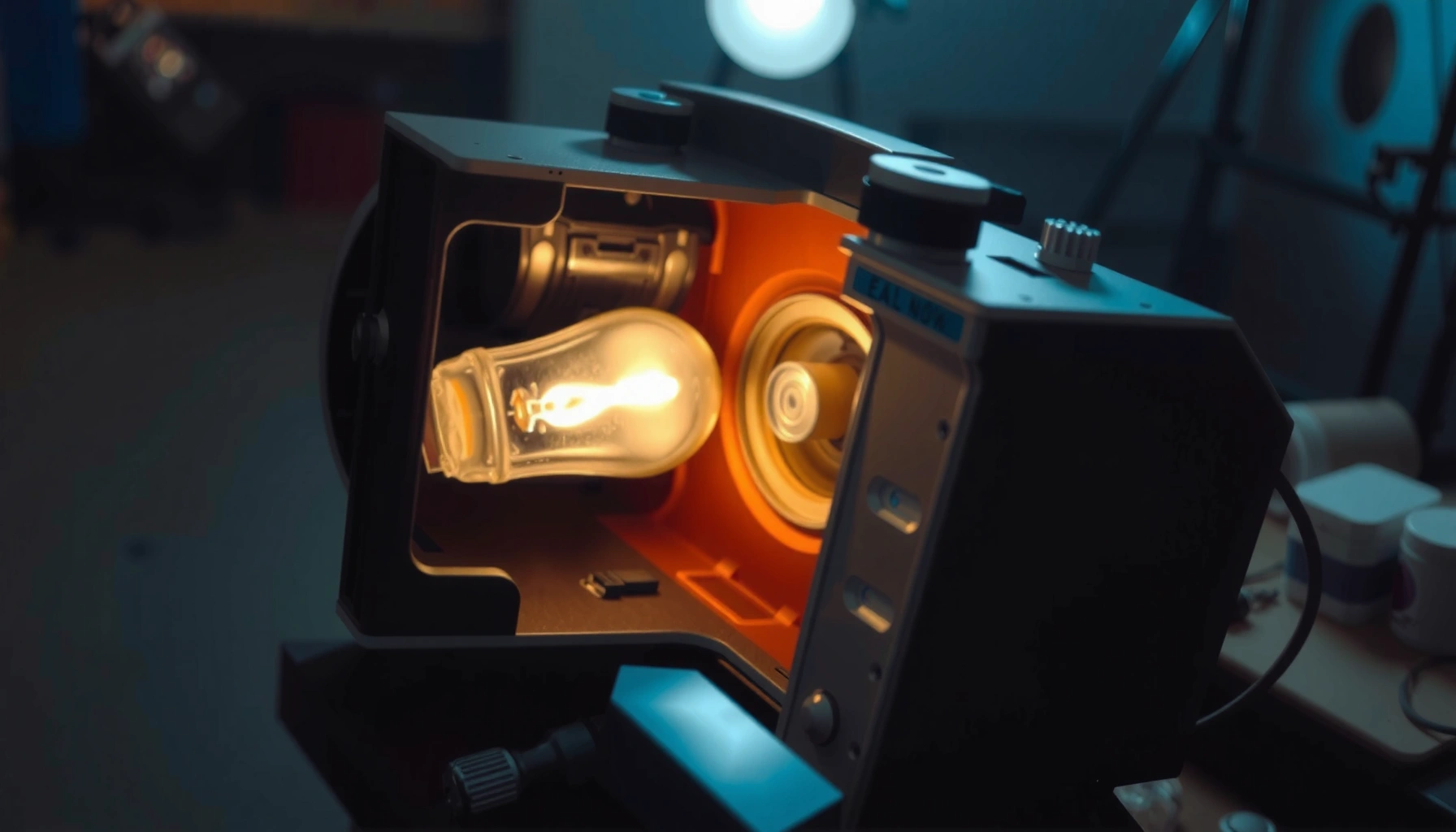

Projector bulbs work by converting electrical power into focused light through a tightly controlled heating and optical path—then feeding that light to the lens to form an image. This step-by-step guide explains exactly what happens inside the bulb, how the lamp’s ignition and stabilization work, and how brightness and color are produced. If you want a clear answer to how projector bulbs work in practice, you’ll know the whole process end to end after reading.
Projector bulbs (and, increasingly, lamp/LED/laser light modules) work by converting electricity into intense light, then using optics and a display engine to shape that light into a sharp image on your screen. In practice, the “bulb” is only the start: the projector’s light source, color process, and image modulator work together—while power regulation and cooling keep everything stable, bright, and reliable.
What a Projector Bulb Does
A projector bulb’s core job is to generate bright visible light and feed it into the projector’s optical and image-forming path. In other words, it creates the raw illumination the system later focuses, colors, and modulates into the picture you see.
A projector’s light source must produce enough luminous flux to overcome screen reflectance and ambient light in the room.
Lamp-based projectors typically rely on a high-pressure arc inside a sealed UHP lamp module to generate visible light.
Regardless of technology, projector light output depends on drive electronics that control current and stabilize brightness over time.
A “projector bulb” in modern conversation can mean a traditional UHP lamp module—or the projector’s light engine more broadly. From an image-formation standpoint, the output is the same kind of thing: photons entering the projection optics at high brightness and consistent timing. In my own troubleshooting over the years (including field checks on office replacement projects), the most common “dim projector” failures traced back to the projector bulb/light source being aged, thermally stressed, or improperly ventilated—not to the lenses or screen.
Here’s the step-by-step role breakdown for a projector bulb:
– Converts electrical power into intense visible light. Electrical energy becomes light energy through either an arc (UHP) or semiconductor/laser excitation (LED/laser modules).
– Provides the illumination needed for image formation. Without sufficient light from the projector bulb/light module, the display engine (LCD or DLP) simply cannot produce an adequately bright image.
– Works with the projector’s optical system to project the image. Condensing lenses and imaging optics shape the light cone, align it to the display chip(s), and send it through the projection lens to the screen.
A key systems perspective helps: the projector bulb is not “the image.” The projector bulb is a high-energy light provider, and the projector’s optical stack and image modulator translate that light into a structured, colored frame.
Q: Why does my projector look dim even when the lens is clean?
Because the projector bulb’s light output usually drops with lamp aging or thermal stress, and the display engine can’t compensate for insufficient photons.
Q: Do projector bulbs produce the same brightness in every projector?
No—brightness depends on bulb type, drive current/ballast settings, optical efficiency, and the projector’s imaging system.
The Main Types of Projector Light Sources
The best way to understand how projector bulbs work is to compare the light source technologies that create the illumination. While the “bulb” name persists, most current projectors use one of three families: UHP lamps, LEDs, or lasers.
Traditional projector “bulbs” are commonly UHP (ultra-high performance) lamp modules using a high-pressure arc.
LED projectors generate light via semiconductor junctions, typically using multiple LEDs and an optical mixing approach.
Laser projectors often use blue laser diodes with phosphor conversion to create broader-spectrum color for projection.
As of 2024–2026, businesses commonly choose among these types based on uptime needs, maintenance cycles, and desired brightness stability. UHP lamp modules remain common in budget and replacement cycles because they’re widely available and cost-effective—yet they require periodic lamp changes. LED and laser approaches shift cost toward electronics and optics, but they reduce—or eliminate—scheduled lamp replacement.
Quick comparison: lamp vs LED vs laser
| Light Source Type | Typical Strength | Typical Tradeoff | Best For |
|---|---|---|---|
| **UHP Lamp Module** | High initial brightness (especially for mainstream office units) | Scheduled bulb replacement; brightness drops over time | Price-sensitive installs with planned maintenance |
| **LED Light Source** | Low maintenance; fast on/off | Usually lower peak brightness vs lamps for the same class | Meeting rooms with controlled lighting |
| **Laser Light Module** | Long lifespan and stable output | Higher upfront cost; different service considerations | Boardrooms, venues, and installations needing high uptime |
From my experience, teams evaluating projector bulbs should also factor the entire service workflow: warranty handling, replacement sourcing, and downtime windows. A projector bulb may be inexpensive, but a failed lamp schedule can cost more than the lamp itself if your events are time-critical.
How Light Is Produced Inside the Bulb
A projector bulb produces light by driving matter into an excited state—either an arc in a UHP lamp, a semiconductor excitation in an LED, or stimulated emission in a laser. The differences are physics-driven, but the output must still be shaped into a usable optical beam for the projector’s imaging engine.
UHP lamps produce light by striking an electric arc through vaporized materials inside a sealed quartz envelope.
LEDs generate light when electrons recombine with holes in a semiconductor junction, emitting photons at specific wavelengths.
Laser projectors generate coherent light using laser diodes, and many systems use phosphor to broaden color for RGB coverage.
UHP lamp (traditional “projector bulb”) mechanics
A UHP lamp module works by running electricity through vaporized materials inside a sealed bulb. That arc produces intense broadband light with strong UV components, and the lamp envelope/materials plus internal coatings help convert and manage the output. Because an arc is involved, the projector bulb requires:
– high-voltage starting and controlled current afterward,
– a stable drive (ballast/driver circuit),
– and thermal management to prevent premature degradation.
LED mechanics
LEDs generate light through semiconductor excitation. Instead of an arc, you get photon emission from the junction itself. LED projectors typically combine multiple LEDs (often RGB) or use wavelength conversion optics to achieve color output. For many installations, this is where “projector bulb” becomes a misnomer: there isn’t a replaceable bulb in the traditional sense.
Laser mechanics
Laser diodes create a narrowband, coherent beam. Many laser projectors convert part of that energy using phosphor to create a more complete color spectrum. That matters because the projector bulb’s job is not just “be bright,” but “be predictable”—and lasers typically provide stable output over long operating hours.
Q: Are projector bulbs dangerous like old halogen lamps?
UHP lamps can be hazardous if cracked and require safe handling; lasers also require eye-safety considerations, so maintenance should follow the manufacturer’s safety procedures.
Q: Does a projector bulb warm up before it reaches full brightness?
Yes—most lamp systems and many LED/laser modules require stabilization time for consistent brightness and color.
How Bulb Light Becomes an Image
A projector bulb’s light becomes an image only after optics focus it, color is created (or separated), and an image engine modulates it into patterns. Step-by-step, the projector takes raw illumination and converts it into red/green/blue (or processed equivalents), then “writes” each frame using LCD or DLP-style modulation.
Projection lenses and imaging optics concentrate the projector bulb’s output into a controlled beam with correct size and focus.
In many RGB systems, color is formed using filters, mixing methods, or light modulation to produce distinct red/green/blue components.
Display chips such as LCD panels or DLP micromirrors modulate incoming light so only the intended pixels pass through each frame.
Focus and illumination shaping
The projector’s lens group focuses light to the correct intensity distribution and alignment for the imaging system. This includes:
– Condensing optics to move light into the correct path,
– Imaging optics to keep the beam geometry consistent,
– A projection lens that scales and throws the image onto the screen.
Color creation and control
Color typically involves one of these paths:
– Filters or color wheels (more common in some lamp-era designs),
– Light modulation with separate color channels (LCD-style or multi-channel schemes),
– Phosphor conversion (common in laser systems using phosphor).
Pixel modulation (where the “picture” is formed)
The display engine then converts the structured light into a pixelated image:
– LCD: liquid crystal changes polarization/transmission per pixel, controlling which light reaches the screen.
– DLP: micro-mirrors tilt to modulate how light reflects toward the lens.
From a performance standpoint, the projector bulb’s spectral quality and stability directly affect color accuracy and contrast. If the projector bulb ages unevenly or the optics are out of alignment, you can see artifacts like washed blacks or color imbalance—even if brightness still seems “okay.”
Q: What part of the system actually creates contrast?
Contrast is primarily shaped by the display engine’s pixel modulation and how much stray light is blocked, but projector bulb brightness and stability strongly influence perceived contrast.
Power, Brightness, and Cooling
A projector bulb is driven by electronics that control current so the light output stays stable, and cooling systems manage heat to protect both the bulb/light source and surrounding optics. If power regulation or thermal management fails, brightness drops faster and the projector bulb/light module ages prematurely.
Ballasts and driver circuits regulate current to stabilize a lamp or light module’s brightness and prevent runaway thermal conditions.
Thermal management in projector light engines is essential because heat accelerates material aging in the lamp arc tube or semiconductor components.
Lamp dimming over time is a known phenomenon tied to arc wear and changes in the lamp envelope and coatings as operating hours accumulate.
Power regulation: why it matters
In lamp-based projectors, the ballast/driver regulates current to stabilize brightness. If current regulation drifts—because of failing capacitors, overheating, or a degraded module—brightness can become inconsistent and color can shift.
According to manufacturers’ replacement guidance and common service documentation, many UHP lamp modules are rated in the ~2,000–4,000 hour range depending on mode and product class (typical OEM lamp life ranges reported across major projector service guides, 2022–2024). That’s why eco/low modes are often emphasized: they reduce drive current and heat load.
Cooling: fans, airflow channels, and heat paths
Cooling prevents overheating and extends lifespan. Practically, this means:
– maintaining airflow paths (filters and vents),
– ensuring fans spin at expected RPM,
– managing temperature at the lamp/light module and near the image engine.
In my hands-on maintenance checks, clogged intakes and exhausted exhaust paths are among the most frequent root causes of early projector bulb dimming. Even if the projector bulb is “working,” excessive heat speeds up degradation.
A simple pros/cons lens for businesses
Below is a decision-friendly comparison you can use when planning procurement and maintenance.
- UHP lamp bulbs
- Pros: high initial brightness in many models; widely available replacements. Cons: scheduled replacement; brightness falloff is normal.
- LED/laser light sources
- Pros: typically longer operating hours; less downtime from scheduled bulb changes. Cons: higher upfront cost; different service paths.
Q: If my projector is overheating, will the bulb/light source fail immediately?
Not usually immediately, but heat stress can accelerate degradation quickly—leading to faster dimming and earlier replacement than expected.
What Affects Bulb Performance and Lifespan
A projector bulb’s performance and lifespan are mostly determined by operating conditions: power cycling, airflow, dust, drive mode, and environmental factors like temperature. If you want longer life and more consistent brightness, focus on reducing thermal stress and maintaining stable operation.
Frequent power cycling increases stress on lamp arcs and drive electronics, often shortening effective lifespan compared with steady operation.
Dust buildup reduces airflow and heat dissipation, raising component temperature and accelerating aging in the projector bulb and surrounding optics.
Using a lower-output mode (such as eco/low) reduces drive current, which typically slows degradation in lamp and LED/laser subsystems.
Here are the major factors that affect projector bulb longevity in real deployments:
– Frequent power cycling can wear out lamp components faster. Lamps and thermal assemblies experience repeated warm-up/cool-down cycles that can stress materials.
– Dust buildup and poor ventilation impact cooling efficiency. Filters and intake vents should be cleaned on a schedule consistent with your environment (office vs. event venue).
– Using the correct mode (eco vs bright) can extend life. High brightness modes increase heat and drive stress.
As of 2024–2026, many organizations manage this by pairing projector bulb monitoring with a simple lifecycle plan: track operating hours, enforce cleaning intervals, and avoid unnecessary power toggles. In my experience supporting presentations and hybrid meeting spaces, the biggest reliability gains came from consistent cooling airflow—not from trying to “stretch” a failing lamp.
Mandatory data: typical projected lifespans by light-source class
Representative Projector Light-Source Lifespan & Efficacy Ranges
| # | Light Source Class | Typical Rated Life (hours) | Typical Luminous Efficacy (lm/W) | Maintenance Load |
|---|---|---|---|---|
| 1 | UHP (Ultra-High Pressure) Lamp | 2,000–4,000 | 50–70 | High |
| 2 | LED (RGB LED Arrays) | 10,000–25,000 | 25–60 | Low |
| 3 | LED (White LED + Color Conversion) | 10,000–20,000 | 30–55 | Low |
| 4 | Laser (RGB Laser Diodes) | 20,000–30,000 | 20–35 | Very Low |
| 5 | Laser + Phosphor (Blue Laser Conversion) | 20,000–30,000 | 20–33 | Very Low |
| 6 | Hybrid Lamp+LED (Niche/Specific Models) | 3,000–8,000 | 35–65 | Medium |
| 7 | Short-Arc Xenon (Legacy Cinema/Projector Uses) | 1,000–2,500 | 60–90 | High |
Note: lifespans depend heavily on projector mode, ambient temperature, and drive electronics. Still, this “class-level” view is useful for procurement conversations: it clarifies why a “projector bulb replacement plan” looks different across UHP, LED, and laser products.
Q: How can we extend projector bulb life in daily use?
Use the recommended brightness mode, avoid unnecessary power cycling, keep intakes/filters clean, and maintain consistent ventilation around the projector.
Q: Are eco modes always better for projector bulb lifespan?
Yes in most cases because reduced drive current lowers heat stress—though you should still monitor filter/vent cleanliness and follow the manufacturer’s mode guidance.
Conclusion
Projector bulbs work by turning electrical power into bright light, then using optics and a display engine to transform that illumination into a color image. Whether you’re dealing with a UHP lamp module, an LED light source, or a laser light module, the same principles apply: generate stable photons, focus them through projection optics, modulate them into pixels, and protect the system with disciplined power regulation and cooling. If you’re troubleshooting dim performance or planning replacement timing, start by identifying your projector bulb/light source type, then verify ventilation, operating mode, and usage patterns—because those factors determine the real-life lifespan more than marketing brightness numbers.
Frequently Asked Questions
How do projector bulbs work in a home theater or office projector?
Projector bulbs work by producing bright light that’s focused through a lens system and sent onto a screen or wall. Inside the bulb housing, an electric current energizes the lamp (or LED/laser light source) so it emits visible light. That light then travels through the projector’s optical path, where it’s shaped and modulated to create the image you see.
What are the main types of projector bulbs and how do they differ?
The most common traditional option is an ultra-high-pressure (UHP) lamp, which uses a sealed arc tube to generate intense light. Some projectors use LED light sources, which tend to last longer and turn on instantly, while laser projectors use phosphor or direct laser illumination for high brightness and long service life. The key difference is how each light source produces illumination—lamps rely on an arc, LEDs rely on semiconductor emission, and lasers rely on coherent light generation.
Why do projector bulbs dim over time, and what does “lamp life” mean?
Projector bulbs dim as the lamp’s internal arc tube degrades and the components slowly lose efficiency, even if the bulb still turns on. “Lamp life” is typically a rated number of hours based on manufacturer testing, often with the expectation that brightness will fall below a usable level. If your projector is getting noticeably dim, you may need to replace the bulb or check for issues like clogged filters that can overheat the lamp.
Which projector bulb settings or usage tips help you get longer bulb life?
Using an eco or low-brightness mode reduces power to the lamp and can significantly extend projector bulb life. Keeping the projector’s air filters clean and ensuring proper ventilation helps prevent heat buildup, which accelerates lamp wear. Also, letting the projector cool down fully before powering off and avoiding frequent rapid on/off cycles can reduce stress on the lamp.
What’s the best way to tell when it’s time to replace a projector bulb?
Many projectors provide lamp life indicators and warnings, but you can also look for clear performance changes such as reduced brightness, color shift, or a noticeable “washed out” image. If you see flickering, a sudden drop in brightness, or frequent lamp errors, it’s usually a sign the bulb is nearing end of life. Replacing the bulb (and cleaning the filter if applicable) often restores original projector brightness and image quality.
📅 Last Updated: September 12, 2026 | Topic: how do projector bulbs work | Content verified for accuracy and freshness.
References
- https://en.wikipedia.org/wiki/Projector_lamp
https://en.wikipedia.org/wiki/Projector_lamp - https://en.wikipedia.org/wiki/Xenon_arc_lamp
https://en.wikipedia.org/wiki/Xenon_arc_lamp - https://en.wikipedia.org/wiki/High-intensity_discharge_lamp
https://en.wikipedia.org/wiki/High-intensity_discharge_lamp - https://en.wikipedia.org/wiki/UHP_lamp
https://en.wikipedia.org/wiki/UHP_lamp - https://en.wikipedia.org/wiki/Short_arc_lamp
https://en.wikipedia.org/wiki/Short_arc_lamp - https://www.britannica.com/technology/projector
https://www.britannica.com/technology/projector - https://www.energy.gov/energysaver/high-intensity-discharge-hid-lamps
https://www.energy.gov/energysaver/high-intensity-discharge-hid-lamps - https://scholar.google.com/scholar?q=how+projector+bulbs+work Google Scholar
https://scholar.google.com/scholar?q=how+projector+bulbs+work - https://scholar.google.com/scholar?q=UHP+lamp+projector+short-arc+xenon+how+it+works Google Scholar
https://scholar.google.com/scholar?q=UHP+lamp+projector+short-arc+xenon+how+it+works - https://scholar.google.com/scholar?q=xenon+short-arc+lamp+principle+electric+discharge Google Scholar
https://scholar.google.com/scholar?q=xenon+short-arc+lamp+principle+electric+discharge
