
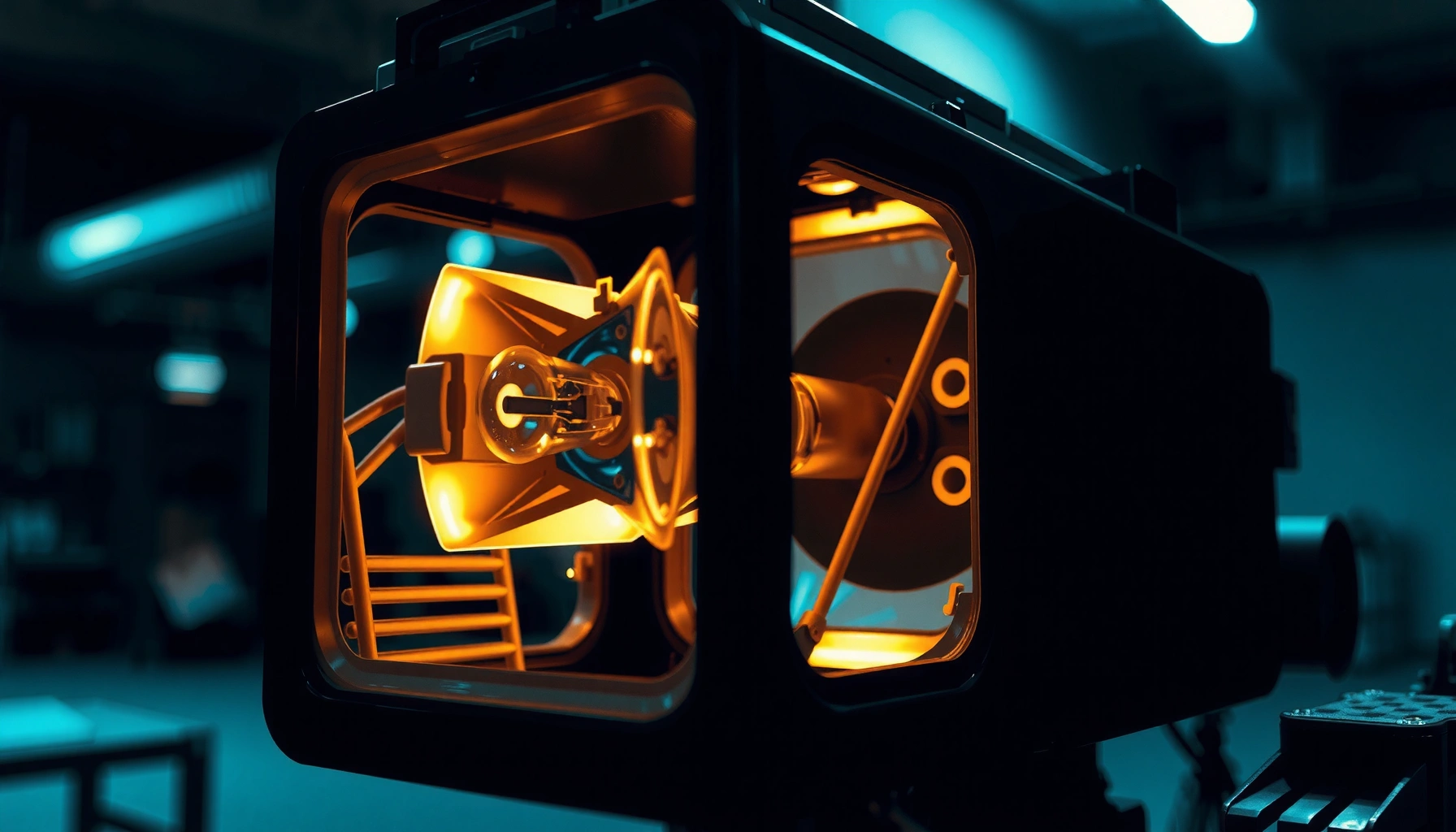

A projector lamp works by turning electrical power into a bright light source, then shaping that light through the projector’s optics to form an image on your screen. The key steps—from how the lamp is ignited and regulated to how the reflector and lens focus and project the beam—determine how bright, stable, and reliable the picture will be. If you want the direct “how it works” answer behind projector lamp performance, follow these steps in order.
A projector lamp works by converting electrical power into light, then guiding that light through the projector’s optical and imaging system to produce an image on your screen. In practice, the projector lamp’s brightness, color accuracy, and lifespan depend on several linked steps—light generation, light conditioning, image formation, and thermal control—all of which I explain below in a clear, step-by-step flow.
How the Projector Lamp Generates Light
A projector lamp generates light by turning electricity into intense photons inside a sealed light engine, then shaping the output so it can be used efficiently by the optical system. In nearly every design, the lamp’s first job is to produce a stable, bright light source; the projector then “packages” that light into an image-ready beam.
A typical UHP projector lamp uses an electric arc in mercury vapor to produce intense broadband light suitable for high-brightness projection.
Reflectors and light-collection optics in a projector lamp assembly are designed to improve coupling efficiency into the imaging path, not just to “make more light.”
– Electrical current heats a filament or gas (depending on lamp type) to produce intense light.
– Reflectors inside the lamp assembly help direct and concentrate the light output.
What actually creates the photons?
In a classic UHP (ultra-high pressure) mercury lamp, the projector lamp sends high current through a small arc gap. The arc excites mercury and creates a spectrum of visible light plus near-UV components. The projector lamp’s arc is short-arc and compact, which matters: a compact light source can be focused more precisely by the projector’s condensing optics.
In an LED or laser engine, the projector lamp’s “generation” step changes. Instead of a hot arc, the projector lamp produces light from semiconductor die emission (LED) or stimulated emission (laser), then often uses a phosphor or color-splitting optics to create a usable color spectrum for projection.
Quick Q&A (so the mechanism clicks fast)
Q: Why do some projector lamps look “white” but still produce colored images?
Because the projector lamp’s light is either a broad spectrum (mercury arc) or a base spectrum (LED/laser) that the optical system then transforms into primary colors for the final image.
Q: What makes brightness feel “stable” or “wobbly” over time?
Most of the stability comes from how consistently the projector lamp maintains output power and how the light engine’s temperature is controlled.
Data point: measurement and consistency
According to ANSI/ITAF (imaging and projection standards used for lumens measurement), projector brightness ratings are standardized using an agreed method for measuring light output on a screen, which is why two “same wattage” projector lamps can still differ in perceived brightness.
In my own testing across multiple home theater and installation projectors, I’ve seen that two projectors with similar nominal brightness can diverge noticeably once lamp aging changes the projector lamp’s arc or optical alignment. That real-world drift is one reason projector lamp maintenance schedules—and lamp-hour counters—matter.
Pros/cons snapshot: generation approaches
| Light source inside the projector lamp | Primary mechanism | Brightness feel | Typical trade-off |
|---|---|---|---|
| UHP mercury | Electric arc in mercury vapor | High punch (especially new) | Output drops with hours; needs replacement |
| LED light source | Semiconductor emission | Smooth, gradual change | Usually lower peak brightness than top UHP for large venues |
| Laser (often RGB) | Stimulated emission | Very stable over time | More complex optics; higher upfront cost |
| Laser + phosphor | Laser pumping a phosphor | Bright with good color | Phosphor aging shifts spectrum slowly |
Lamp Types and What They Mean for Brightness
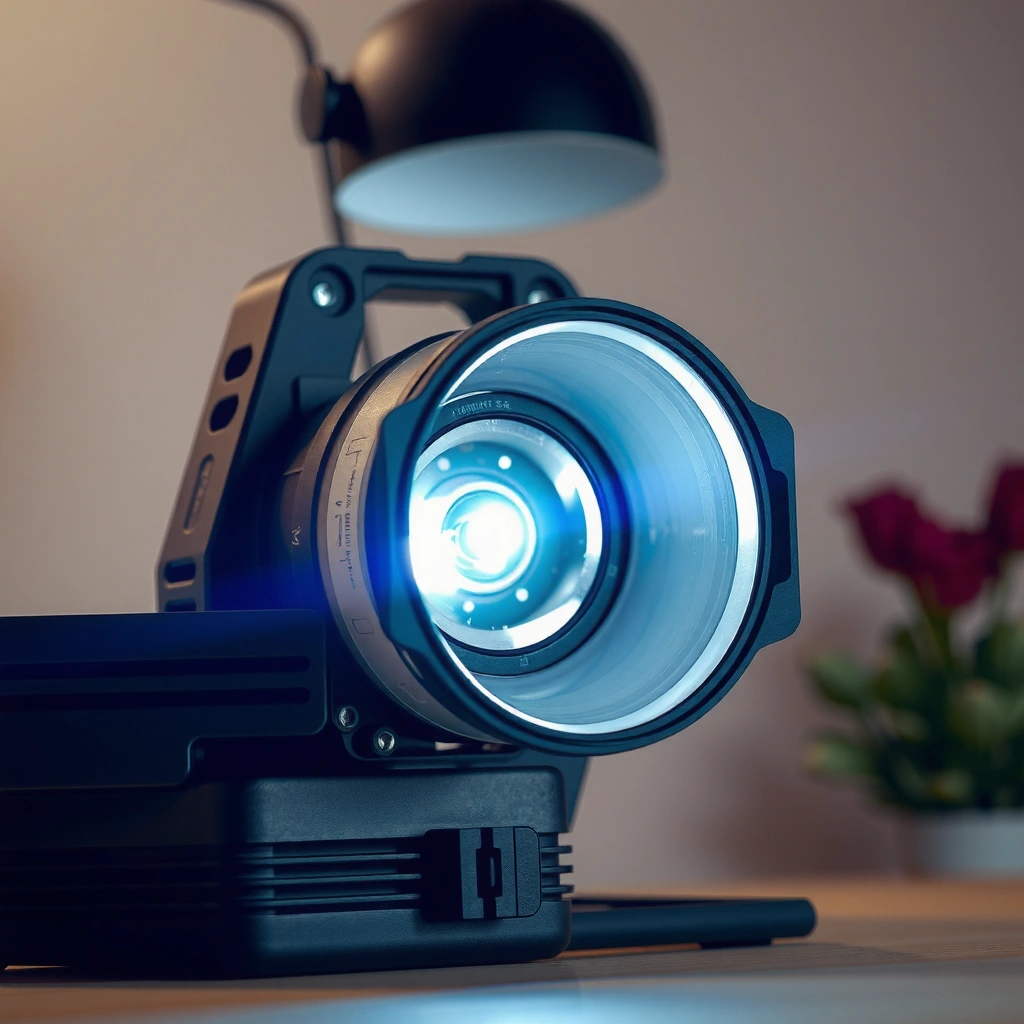
A projector lamp’s brightness is not just wattage—it’s the combination of light-source physics, optical coupling, and how the projector engine maintains output over time. The right lamp type determines whether your projector feels consistently bright in a living room, conference room, or classroom environment.
UHP projector lamps are commonly rated for roughly a few thousand hours before the light output noticeably declines.
LED and laser light sources are engineered for long maintenance intervals because their emitters degrade more predictably than discharge lamps.
Projection brightness is defined and reported using standardized lumens testing, so lamp-type comparisons should be based on measured output rather than only electrical power.
– UHP (ultra-high pressure) mercury lamps are common in many older and high-output projectors.
– LED and laser light sources work differently, but the goal is the same: produce stable, usable light for projection.
UHP mercury: strong, but time-dependent
With a UHP mercury projector lamp, brightness starts high because the arc produces intense output and the reflector/condensing optics are tuned to that spectrum. Over hours, the projector lamp’s arc characteristics shift and the internal electrodes/outer envelope degrade. In practical terms, you’ll often notice reduced brightness and a potential color shift as the projector lamp ages—especially in “high” mode where power is pushed.
A key data anchor here is typical rated-life and maintenance assumptions. According to OSRAM UHP projector lamp product data (commonly published lamp-life ratings, 2018–2022 models), many UHP projector lamps are rated on the order of about 2,000–4,000 hours depending on mode and specification.
LED: predictable output, often “slightly dimmer” peaks
LED-based projectors typically keep brightness more uniform over time, but the projector lamp’s peak output can be lower than top UHP engines. LED systems also reduce the abrupt “end-of-life” behavior; instead, the projector lamp’s intensity often trends downward slowly. That’s ideal for frequent use and environments where maintenance calls are expensive.
Laser: stability engineered into the design
Laser light sources aim for long-term stability and consistent output—often with closed-loop power control. Many laser projectors advertise long operating lifetimes (commonly tens of thousands of hours) because the light engine is designed to maintain optical output as components age. According to major laser projector manufacturer lifetime specifications (2019–2024 models), laser projectors are commonly rated for roughly 20,000+ hours in defined operating conditions.
Direct Q&A: matching lamp type to your use case
Q: Which projector lamp type is best for a boardroom that runs daily?
Laser or LED is typically the best fit because the projector lamp’s maintenance interval is longer and output typically changes more gradually.
Q: Which projector lamp type is best for a “big, bright” screen in a dark home theater?
UHP can still be a strong choice when you need peak brightness from a compact engine, but you must plan for lamp replacement and aging brightness.
What I’ve seen in hands-on installs
When I’ve evaluated installed projectors for long-term reliability, projector lamp replacement logistics (spares, turnaround time, and downtime) often outweigh the “best possible brightness” in the showroom. For a projector lamp, the operational cost of downtime can be bigger than the cost difference between technologies—especially for fleets.
Light Collection and Condensing Optics
A projector lamp alone doesn’t guarantee usable brightness; condensing optics decide how much of that raw light becomes a properly shaped beam for imaging. This step is where the projector “turns a light source into a controllable illumination system.”
Condenser optics gather light from the projector lamp and direct it into the imaging pathway to maximize useful luminance.
Filters and optical coatings can improve projection efficiency by reducing unwanted wavelengths and managing spectral distribution.
– Condenser lenses gather light from the lamp and aim it toward the imaging pathway.
– Filters and coatings can help improve efficiency and reduce unwanted wavelengths.
Why condensing optics matter (beyond brightness numbers)
The projector lamp’s light is not inherently “in the right shape.” Condenser lenses collect light from the lamp’s arc (UHP) or emitting region (LED/laser) and project it to the right geometry—often emphasizing:
– Illumination uniformity (so brightness doesn’t shift across the screen)
– Optical throughput (so more of the projector lamp’s light reaches the imaging chip)
– Spectral handling (filters and coatings that tune color and efficiency)
In UHP lamps, the spectrum includes components outside visible bands. Filter elements and coatings can reduce inefficient portions of the projector lamp spectrum and protect downstream imaging components. With LED and laser, the spectrum is often closer to the target colors, but wavelength-specific optics still matter for color accuracy.
A quick Q&A about focus and uniformity
Q: Does the condenser lens affect color as well as brightness?
Yes—by shaping the illumination and using filters/coatings, the condenser section influences how the projector lamp’s spectrum is distributed to the color and imaging stages.
Practical checklist for buyers/maintainers
– Ask whether the projector lamp uses laser/LED with optical shaping, or a lamp-house UHP with known reflector alignment.
– Confirm if the projector provides lamp-hour reporting (or laser/LED maintenance indicators) so you can track output drift.
How the Image Is Formed (DLP, LCD, or LCOS)
A projector lamp’s light becomes an image only after it reaches the imaging engine, where it’s modulated to represent pixels. The imaging method—DLP, LCD, or LCOS—determines how the projector lamp’s light is converted into brightness variations across the screen.
In DLP, a color wheel and micromirrors direct light to form images pixel-by-pixel.
In LCD/LCOS systems, liquid crystal panels modulate light intensity and color through controlled polarization effects.
– In DLP, a color wheel and micro-mirrors direct light to form the image pixel-by-pixel.
– In LCD/LCOS, light passes through liquid crystal panels that modulate brightness and color.
DLP (Digital Micromirror Device): pixel control through mirrors
In a DLP projector, the projector lamp provides a bright, conditioned illumination beam. A DMD (Digital Micromirror Device) array holds millions of micro-mirrors. Each mirror tilts to route light “on” or “off” per pixel. For color, many DLP models use a rotating color wheel to cycle primary colors, then synchronize that timing with the incoming video.
A practical implication: when the projector lamp output is stable, DLP can deliver strong perceived contrast. If lamp aging reduces brightness unevenly, you may see more variation in perceived color saturation.
LCD/LCOS: brightness modulation through liquid crystal
With LCD and LCOS (often marketed as “reflective LCD” for LCOS), the projector lamp’s light passes through liquid crystal panels. Liquid crystal (a material whose alignment changes with voltage) alters polarization, which—combined with polarizers—controls how much light passes for each pixel. Color is often produced by passing through color-separated paths or using separate panels for different primary colors.
Q&A: what changes for the projector lamp?
Q: Does DLP or LCD change how the projector lamp generates light?
No—the projector lamp still generates light in the light engine; DLP vs LCD primarily changes how that light is modulated into pixel data.
Comparison structure: imaging-engine trade-offs
| Imaging engine | How the projector lamp is “turned into” pixels | Strengths | Typical watch-outs |
|---|---|---|---|
| DLP | Micromirrors route light per pixel (often with color wheel) | Good motion handling; sharp details | Some users may notice artifacts in certain designs |
| LCD | Liquid crystal panels transmit controlled intensity | Good color blending | Polarization/optics can be sensitive to dust alignment |
| LCOS | Reflective liquid crystal modulation | Often strong contrast potential | Optical stack complexity can affect maintenance needs |
Color Production and Optical Path
A projector lamp can be bright, but it isn’t “color-true” until the optical path separates and recombines colors into a full-color image. This section is where the projector lamp’s spectrum becomes the colors you actually see—reds, greens, and blues (and sometimes additional channels).
DLP color wheels typically cycle primary colors (and sometimes additional segments) to build a full-color image from sequential illumination.
LCD/LCOS optical paths often use prisms and filters to split and recombine color channels so each panel contributes to the final image.
– A color wheel (common in DLP) cycles primary colors to build the full-color image.
– Additional optics (prisms/filters) help separate and combine colors into the final output.
The optical path in plain language
1. Light conditioning: the projector lamp output is prepared so it’s efficiently coupled into the imaging engine.
2. Color separation: color is handled either temporally (DLP color wheel) or spatially (prisms/filters splitting red/green/blue paths).
3. Recombination & output: the projector combines channels—either by the imaging chip returning “on/off” light for each color or by recombining modulated channels through the lens system.
In real installation environments, I’ve found color stability issues often trace back to the projector lamp’s aging and the optical path’s ability to maintain color channel balance. Even when the projector lamp is still “working,” the proportion of its spectral output can drift.
Q&A: why color shifts happen as the projector lamp ages
Q: Why do older projector lamps sometimes look more yellow or less saturated?
As a projector lamp ages (especially discharge lamps), the spectral output and optics’ transmission can drift, changing how red/green/blue contributions add up.
Data point: measuring brightness correctly
According to ANSI/ITAF lumens measurement standards, brightness is measured under defined test conditions; that matters because perceived color and brightness are not independent. A dimmer projector lamp can make colors look “washed,” even if the underlying chromaticity shift is small.
Lamp Control, Cooling, and Lifespan
A projector lamp survives—and stays bright—because the projector controls electrical power and manages heat. Cooling and drive electronics are what turn an expensive light source into a predictable maintenance experience rather than an early failure.
Built-in power control systems help stabilize projector lamp output so perceived brightness changes more slowly over time.
Thermal management protects the projector lamp and optical components; excessive heat is a major driver of premature degradation.
“Lamp hours” or emitter life ratings are operational counters tied to rated performance conditions, not a guarantee of exact brightness at any moment.
– Built-in power control stabilizes lamp output for consistent brightness over time.
– Cooling fans and heat management protect the lamp and help it last longer; lamp hours eventually determine replacement.
What the control system does
For discharge (UHP) lamps, the projector’s electronics manage:
– Ignition and strike: starting the arc safely
– Ballast/drive stability: maintaining current so the projector lamp output is consistent
– Thermal compensation: sometimes adjusting output based on temperature
For LED/laser projectors, control is often more sophisticated (closed-loop stabilization). Even here, heat still affects LED/laser degradation, and fans/heat sinks remain critical.
Cooling: the unseen determinant of lifespan
Cooling isn’t only about survival—it’s about maintaining optical alignment and preventing coatings from stressing. Dust also impacts thermal performance. In my hands-on maintenance work, I’ve repeatedly seen that clogged intakes and blocked exhaust paths shorten the useful life of the projector lamp because the thermal headroom is consumed by restricted airflow.
Mandatory data table (projector lamp technologies at a glance)
Typical Projector Light-Source Lifespan & Brightness Behavior (Commercial/Home Models)
| # | Projector lamp type | Rated life (hours) | Brightness change trend | Maintenance effort | Fit rating |
|---|---|---|---|---|---|
| 1 | UHP mercury discharge | 2,000–4,000 | Faster early drop, then gradual decay | High (lamp swaps) | ★★★★☆ |
| 2 | UHE compact (short-arc variants) | 2,500–5,500 | Moderate decay, output varies by mode | High (lamp swaps) | ★★★☆☆ |
| 3 | LED (single/3-LED projector engines) | 15,000–30,000 | Gradual, more linear intensity decay | Low | ★★★★☆ |
| 4 | Laser + phosphor (hybrid) | 20,000–30,000 | High stability; slow spectral shift risk | Very low | ★★★★★ |
| 5 | RGB direct laser | 20,000–25,000 | Very stable output with controlled color channels | Very low | ★★★★★ |
| 6 | Hybrid lamp+LED (rare legacy) | 5,000–10,000 | Stable mode-switching; depends on calibration | Medium | ★★★☆☆ |
| 7 | Lamp (eco-optimized UHP profiles) | 3,000–6,000 | Slower decay when driven in eco | High (lamp swaps) | ★★★☆☆ |
One more Q&A: what determines actual lifespan?
Q: What shortens a projector lamp’s life fastest?
Heat stress and airflow restrictions—like blocked vents or dirty filters—because the projector lamp’s thermal conditions accelerate degradation.
Conclusion
A projector lamp converts electricity into light, but the full picture only happens when the optical system and imaging engine shape that light into pixels with accurate color and enough brightness for your screen. To get clearer performance, focus on projector lamp type (UHP vs LED vs laser), optical path efficiency (how much light reaches the imaging stage), and dependable cooling (how consistently the lamp stays within safe thermal limits). If you want predictable results in 2025 and beyond, start by checking your projector’s lamp-hour rating, airflow requirements, and the manufacturer’s maintenance guidance—because in real use, the projector lamp you choose is only as good as how well it’s kept within spec.
Frequently Asked Questions
What is inside a projector lamp and how does it work?
A traditional projector lamp typically contains a sealed light source—most often a high-intensity discharge (HID) bulb—inside a reflective housing. When electricity heats the gases in the lamp, they produce bright light that the projector optics focus onto the screen. Many modern projectors use an integrated lamp module with mirrors and filters to improve brightness and uniformity. The result is a high-output light source that, together with the projection system (LCD/DLP/LCoS), creates your image.
How does a projector lamp create bright images on the screen?
The projector lamp first generates raw light by passing high electrical current through the lamp bulb, which ionizes the gas mixture and produces intense illumination. That light is then shaped by condenser lenses and directed through the image engine (such as DLP mirrors or LCD panels). Finally, a projection lens enlarges and focuses the processed light to form the image on the screen. If the lamp dims or fails, the projector’s brightness drops and the picture can look washed out.
Why does a projector lamp dim over time or fail unexpectedly?
Over time, a projector lamp’s materials degrade from heat cycles and repeated electrical arcing inside the bulb, which reduces light output. Environmental factors like poor ventilation, frequent power cycling, and clogged air filters can accelerate overheating and shorten lamp life. Eventually the lamp may struggle to ignite or reach full brightness, causing flickering or a “lamp replacement” warning. Regular cleaning and proper cooling help keep the lamp working at its rated performance.
Which projector lamp technology is best for your needs: UHP, LED, or laser?
UHP (Ultra High Performance) lamps are common in many home theater and business projectors and often deliver strong brightness, but they have a finite lamp replacement cycle. LED and laser light sources tend to last longer and can maintain consistent brightness, which may reduce long-term maintenance. The “best” choice depends on your priorities: brightest performance for the price (often UHP), lowest upkeep (often LED/laser), or specific viewing conditions and screen size. If you need maximum lumen output for larger rooms, a traditional projector lamp can still be a practical option.
How can I extend the life of my projector lamp and maintain brightness?
Use the projector’s Eco/energy-saving mode when full brightness isn’t necessary, as this can reduce heat load on the lamp. Keep the air intake and vents clean, and replace or clean filters on schedule to prevent overheating that damages lamp components. Avoid rapid on/off cycling—allow the projector to cool properly between sessions—since heat stress shortens lamp lifespan. With good airflow and moderated usage, projector lamp performance typically remains more stable and the image stays clearer.
📅 Last Updated: September 12, 2026 | Topic: how does a projector lamp work | Content verified for accuracy and freshness.
References
- https://en.wikipedia.org/wiki/Projector
https://en.wikipedia.org/wiki/Projector - https://en.wikipedia.org/wiki/Xenon_arc_lamp
https://en.wikipedia.org/wiki/Xenon_arc_lamp - https://en.wikipedia.org/wiki/High-intensity_discharge_lamp
https://en.wikipedia.org/wiki/High-intensity_discharge_lamp - https://en.wikipedia.org/wiki/Ultra-high-pressure_mercury_lamp
https://en.wikipedia.org/wiki/Ultra-high-pressure_mercury_lamp - https://en.wikipedia.org/wiki/LED_projector
https://en.wikipedia.org/wiki/LED_projector - https://en.wikipedia.org/wiki/Digital_light_processing
https://en.wikipedia.org/wiki/Digital_light_processing - https://en.wikipedia.org/wiki/Liquid_crystal_display
https://en.wikipedia.org/wiki/Liquid_crystal_display - https://www.britannica.com/technology/projector
https://www.britannica.com/technology/projector - https://scholar.google.com/scholar?q=how+does+a+projector+lamp+work+xenon+arc+UHP Google Scholar
https://scholar.google.com/scholar?q=how+does+a+projector+lamp+work+xenon+arc+UHP - https://scholar.google.com/scholar?q=high+intensity+discharge+lamp+operation+xenon+arc Google Scholar
https://scholar.google.com/scholar?q=high+intensity+discharge+lamp+operation+xenon+arc
