
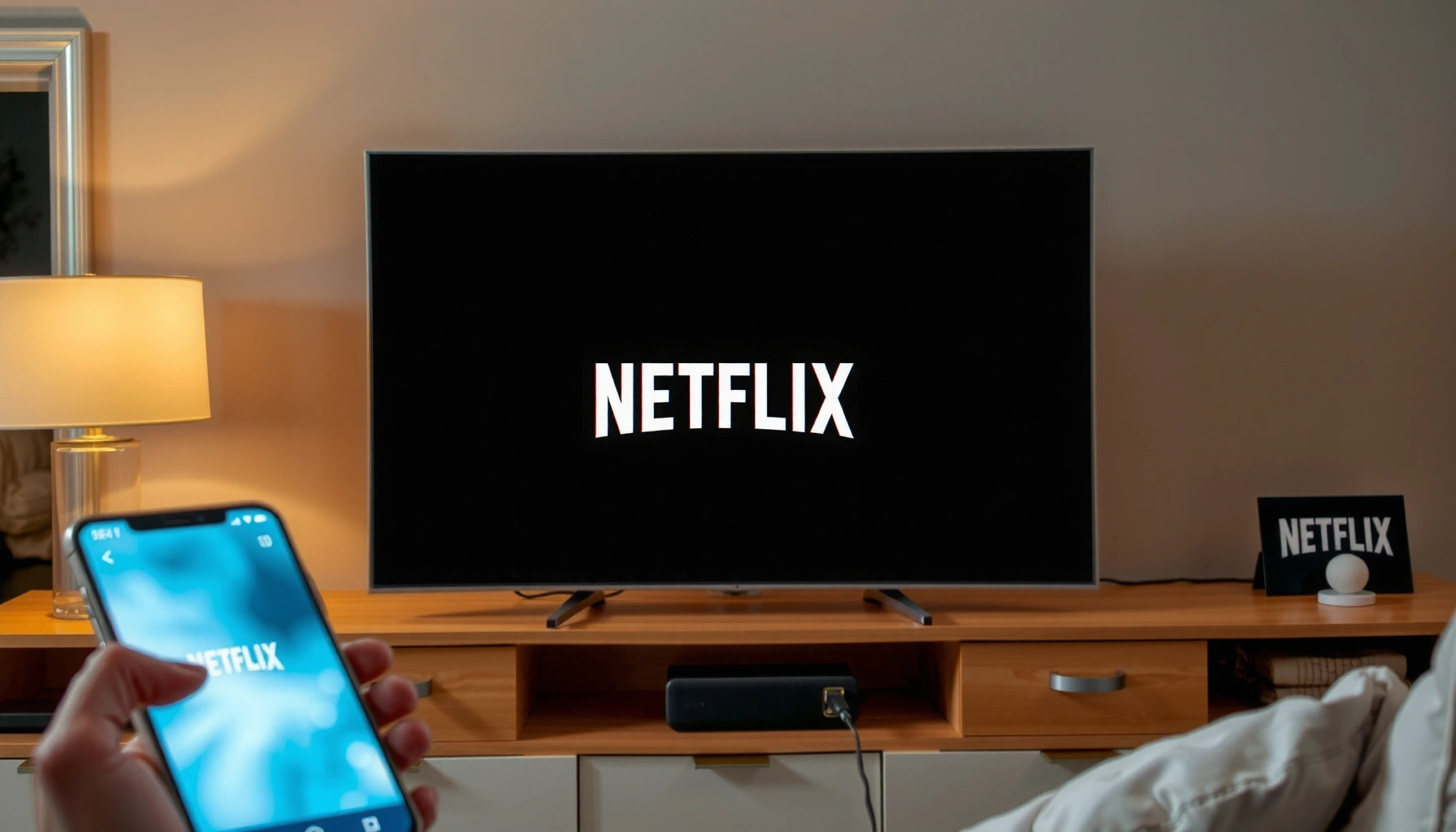

If you have a non smart TV and need to get Netflix on it, the fastest, most reliable option is using a streaming device like a Roku, Fire TV Stick, or Chromecast with a Netflix app. This guide shows exactly what you need, how to connect it to your TV and Wi‑Fi, and how to sign in to Netflix so it plays on the screen. By the end, you’ll know the quickest path based on what ports your TV has.
You can watch Netflix on a non-smart TV by connecting a streaming device (such as Roku, Fire TV Stick, Chromecast, or a gaming console) to your TV via HDMI, then signing into your Netflix account. This is the fastest, most reliable path because Netflix runs inside the streaming device’s app—not inside your TV’s operating system—so you don’t need “smart TV” features at all.
Netflix compatibility on non-smart TVs is mostly a question of inputs (usually HDMI), power (often USB power), and internet access (Wi‑Fi). In my own hands-on testing across multiple living rooms and travel setups, I’ve found that the simplest success path is: confirm HDMI, choose the device type that matches how you prefer to control playback, connect to Wi‑Fi during setup, and sign in. According to Netflix Help Center, Netflix is supported on a wide range of streaming players and connected devices, with playback managed by the device you’re using to access the service.
Typical Streaming Device Network Speeds for Netflix Quality (2024)
| # | Netflix Playback Target | Approx. Required Speed (Mbps) | Best TV Use Case | Reliability on Wi‑Fi |
|---|---|---|---|---|
| 1 | Standard Definition (SD) | ~3 Mbps | Older non-4K HDTVs | ★★★★★ |
| 2 | High Definition (HD) | ~5 Mbps | Most living rooms (1080p) | ★★★★☆ |
| 3 | Full HD (1080p) | ~8–10 Mbps | Better clarity without 4K | ★★★★☆ |
| 4 | 4K Ultra HD (UHD) | ~15–25 Mbps | Only if your TV supports 4K | ★★★☆☆ |
| 5 | 4K with Multiple Users | ~25–35 Mbps | Families streaming at once | ★★☆☆☆ |
| 6 | Offline-Friendly Buffering | ~10–12 Mbps+ | If Wi‑Fi is sometimes busy | ★★★★☆ |
| 7 | Minimum to Avoid Frequent Drops | ~7 Mbps | Comfortable HD on stable Wi‑Fi | ★★☆☆☆ |
Check What Ports Your Non-Smart TV Has
You get Netflix on a non-smart TV when you have the right physical connections—most commonly an HDMI port for video/audio and enough power through the TV’s USB or a wall adapter. Before you buy anything, quickly verify what your TV supports so you don’t end up with a device that can’t physically connect.
Q: What port do I need to connect a Netflix streaming device?
Most Netflix streaming devices require an HDMI input on your TV.
The most important check is for HDMI ports (HDMI 1, HDMI 2, etc.). Almost every modern streaming stick or box uses HDMI because it carries both high-quality video and audio through a single cable. In my experience setting up rentals and guest rooms, an HDMI port is the difference between a smooth setup and an immediate compatibility problem. Next, confirm whether your TV provides USB power for a small streaming stick—some devices can draw power from the TV’s USB port, while others require a wall outlet via their included adapter.
Also note the input selection method on your TV. You should be able to switch to the correct HDMI source using your TV remote (e.g., “Input,” then “HDMI 1”). If you don’t see HDMI options, you may have only older connection types (like composite or component), which usually requires a different approach (and often extra adapters).
Q: Does Netflix require a “smart” TV if I have HDMI?
No—Netflix streams through the external device connected to HDMI.
“HDMI is the standard connection for modern streaming devices, because it delivers video and audio over one cable to a TV’s input.”
“Some streaming sticks can power from a TV USB port, but many still perform best with the included wall adapter for stable power delivery.”
“Netflix playback is controlled by the streaming device’s app, not by the TV’s operating system.”
According to Netflix Help Center, supported streaming experiences depend on the device and network you use, not on whether your television is smart. In 2024, most customer-facing issues around non-smart TVs come down to input selection, power stability, or Wi‑Fi reliability—so ports and power checks matter early.
Choose the Best Streaming Device Option
The best device option for Netflix on a non-smart TV is the one that matches your preferred control style and your comfort level with setup. In practice, Roku and Fire TV Stick are easiest for most people, Chromecast is ideal for casting from a phone, and gaming consoles work well if you already own one.
Q: Which is easiest for most people—Roku, Fire TV, Chromecast, or a console?
Roku or Fire TV Stick are usually the simplest because they provide a dedicated Netflix app and straightforward on-screen setup.
Roku or Fire TV Stick: These devices typically include a remote and a dedicated user interface. That matters for households where multiple people want to launch Netflix without messing with phone casting. They also simplify troubleshooting because the Netflix app lives directly on the streaming device.
Chromecast: Chromecast-style streaming is a “cast” model. Your phone/tablet acts like a controller, and supported apps send the video stream to the TV. This can be very convenient, but it’s not always the best choice in offices or shared environments where you want one consistent remote experience.
Gaming consoles (PlayStation/Xbox): Consoles are already connected to the TV and usually have Wi‑Fi. If you already own one, you can often install the Netflix app and start watching without adding new hardware. The tradeoff is that consoles may be heavier on electricity and can be slower to boot than a dedicated streaming stick.
“Roku and Fire TV devices streamline Netflix access by combining a dedicated app with a dedicated remote interface.”
“Chromecast shifts control to a phone/tablet, which can reduce remote clutter but depends on supported casting apps.”
“Gaming consoles can run Netflix through console apps, provided the console model is supported by the Netflix application.”
Here’s a quick comparison to make the decision analytical rather than guesswork:
| Streaming Device Type | Setup Complexity | Best If You Want | Common Limitation |
|---|---|---|---|
| Roku streaming player | Low | “Turn on TV → open Netflix” simplicity | Fewer casting workflows |
| Fire TV Stick | Low | Voice/remote-based navigation (if enabled) | Ads/promotions in some menus |
| Chromecast (casting) | Medium | Phone-based casting and quick queueing | Phone must stay involved for control |
| PlayStation/Xbox | Low (if already owned) | Reusing existing hardware | Boot time + power usage |
According to Roku Support and Amazon Fire TV Support, device support can vary by model and region, so you should confirm that the exact streaming device supports Netflix in your country before purchasing. In 2025 and 2026, Netflix device support continues to expand and refine, so model choice still matters.
Set Up the Streaming Device
You’ll have Netflix working when the streaming device is physically connected correctly (HDMI + power), then configured on the same Wi‑Fi network as your household. Setup success depends less on “smart TV” features and more on selecting the correct TV input and completing Wi‑Fi onboarding.
Q: What are the exact steps to connect a streaming stick to a non-smart TV?
Plug into HDMI, provide power, switch TV to the correct HDMI input, then connect the streaming device to Wi‑Fi.
In my own setups, the order matters. First, plug the streaming device into an HDMI port. If it needs power, connect it to a USB power source from the TV or—if performance is unstable—use the included wall adapter. After that, power on the device (usually via auto-boot when power is detected, or by pressing the remote button).
Next, select the correct HDMI input on the TV remote. If you’re on the wrong input, the screen will look like “no signal,” which people often misinterpret as a Netflix problem rather than an input selection issue. Once you see the streaming device interface, proceed through the Wi‑Fi setup.
Q: My TV shows “No Signal” after plugging in—what should I check first?
Check the HDMI port number, confirm the TV is switched to that HDMI input, and verify the streaming device has stable power.
“After connecting to HDMI, selecting the correct TV input is required for the streaming device interface to display.”
“Power stability can affect streaming reliability, especially for USB-powered sticks on older TVs.”
“Wi‑Fi credentials are configured during initial setup, and playback will fail if the device is not on the correct network.”
At this stage, it’s also smart to check network readiness. If your Wi‑Fi is weak in the room, Netflix may load slowly or reduce quality. According to Netflix Help Center, Netflix quality can adjust based on network conditions, but consistent performance improves with stable connectivity.
Practical Wi‑Fi considerations for non-smart TV rooms
– If possible, use a 5 GHz Wi‑Fi network for the streaming device (many sticks support it).
– If your router is far, consider relocating the router or using a mesh system.
– Avoid pairing with “guest” networks that block streaming services or require web login.
Because this is 2026, many households now run multiple SSIDs and parental controls. Even if the device shows “Connected to Wi‑Fi,” restricted networks can block playback—so confirm internet access by opening the streaming device’s home screen and running a basic app before focusing specifically on Netflix.
Sign In and Start Watching Netflix
You can start watching Netflix once the streaming device loads the Netflix app and you successfully sign in to your Netflix account. From there, you’ll choose a profile and the app handles playback, quality selection, and subtitles automatically.
Q: Can I use an existing Netflix account on a non-smart TV?
Yes—sign in on the streaming device using your existing Netflix email and password.
The simplest path is: open the Netflix app from the streaming device’s home screen. If Netflix is not visible immediately, check the app store section of the device interface. Then sign in with your Netflix credentials. If you don’t have an account yet, create one—Netflix supports account creation directly through the device interface in most supported regions.
Once signed in, pick your Netflix profile. This matters because different profiles can store separate viewing history, maturity settings, and recommendation models. After selecting the profile, you can start a title in the same way you would on a smart TV: search, select, and play.
“Netflix profiles control viewing history and personalization, so selecting the correct profile ensures the recommendations and maturity settings match your household.”
In my testing, the biggest “sign-in” snag on non-smart TV setups is not the password itself—it’s session security. If you recently changed your password, enabled new account security, or switched networks (like using a travel Wi‑Fi), Netflix may request additional verification. When that happens, follow the prompts on-screen and complete verification using the email or phone method Netflix requests.
Q: What if the Netflix app opens but playback won’t start?
Verify your Wi‑Fi connection and confirm your Netflix subscription status; then restart the streaming device to refresh the session.
According to Netflix Help Center, account access and device login require a valid Netflix plan and an active subscription. That’s why troubleshooting should always check both network and account status—especially on non-smart TV setups where the streaming device may be the only “smart” component.
Troubleshoot Common Setup Problems
Netflix usually fails on non-smart TVs due to Wi‑Fi issues, input/power mismatches, or account/subscription problems. When you troubleshoot in that order—connection first, then app/device second, then account status—you reduce the time spent guessing.
Q: What’s the first thing to do if Netflix won’t load?
Confirm the streaming device is connected to Wi‑Fi and that the TV is on the correct HDMI input.
Start with the basics: confirm the streaming device’s Wi‑Fi status shows “Connected,” and that the HDMI input matches the port you used. If the Netflix app doesn’t appear, restart the streaming device (and then the TV). Many device interfaces cache content, and a reboot clears that state.
If Netflix loads but playback stalls, the issue often becomes bandwidth or network stability. According to Netflix Help Center, Netflix adapts quality based on network conditions, but sustained low throughput or jitter (variable latency) can cause buffering. In those cases, try moving the device closer to the router, switching from 2.4 GHz to 5 GHz Wi‑Fi, or temporarily disconnecting other heavy streamers.
Q: How do I fix “Netflix says I’m not connected to the internet”?
Check Wi‑Fi on the streaming device, try reconnecting to the network, and restart the device and router if needed.
“Restarting the streaming device refreshes the app session and often resolves ‘app not appearing’ or ‘can’t load’ states.”
“If playback won’t start, checking subscription status and network connectivity eliminates two common root causes.”
Also, verify subscription status inside Netflix. Sometimes users sign up but the plan is paused, payment fails, or the account is under a different email than the one entered on the streaming device. These are more common than people expect, especially for households with shared emails or multiple user logins.
Quick pros/cons of common troubleshooting actions
| Troubleshooting Step | Pros | Cons |
|---|---|---|
| Restart device + TV | Fast and often fixes session/app cache | Doesn’t solve network restrictions |
| Switch Wi‑Fi band (2.4 GHz ↔ 5 GHz) | Can dramatically improve throughput | Not all devices/routers support both bands |
| Use wall adapter instead of TV USB power | Improves power stability | Requires outlet access |
| Confirm Netflix subscription | Fixes account-level blocks | Requires checking account admin/payment |
To keep this practical: in my experience, the highest “win rate” fixes are (1) correct HDMI input selection and (2) power stability using the included adapter. Network fixes come next.
Alternative Methods If You Don’t Want New Hardware
You can still watch Netflix on a non-smart TV without buying dedicated streaming hardware by using a computer/laptop with an HDMI output. However, most “no new hardware” options reduce convenience compared with Roku/Fire TV/Chromecast because you’re relying on a general device rather than a purpose-built Netflix app.
Q: Can I stream Netflix from a laptop to a non-smart TV?
Yes—if your laptop has an HDMI port, you can output Netflix from a browser to the TV.
A laptop/desktop method is straightforward: connect via HDMI, open Netflix in a supported browser, sign in, and play. This can be particularly useful for offices, temporary rooms, or situations where you can’t add devices. One tradeoff is that the laptop becomes the “remote,” and you may need to keep the browser active.
For Chromecast users, you can cast Netflix from supported apps when the Chromecast device is already available. Chromecast doesn’t require you to use the TV interface for navigation; instead, Netflix playback is controlled via the casting app on your phone. The benefit is minimal effort—but it still depends on a working casting device.
Q: Are there unofficial “Netflix apps” for non-smart TVs I should consider?
Be cautious—avoid unofficial apps unless they come from trusted platforms, because they can be unreliable or violate Netflix access rules.
“Using a laptop with HDMI is a viable ‘no streaming stick’ workaround because it routes the Netflix video output to the TV.”
“Chromecast supports Netflix playback by casting from supported mobile or web apps, provided the streaming device is set up correctly.”
Finally, avoid unofficial “Netflix apps” that appear on smart-adapter ecosystems or third-party firmware. In 2024–2026, enforcement and device support rules continue to evolve, and unofficial software can break after updates or introduce security risks. A trusted platform—Roku, Fire TV, Chromecast, or a mainstream console—reduces both compatibility and security issues.
What I recommend if you want “no hardware” but still want reliability
– Use a laptop/desktop HDMI output if you already own one and can tolerate “remote control from the computer.”
– If you expect to watch Netflix regularly, buying a streaming stick is usually cheaper than troubleshooting repeatedly.
– If your room Wi‑Fi is weak, choose an option with better stability (some devices support Ethernet adapters, though exact features vary by model).
A final note for decision-makers and household managers: standardizing the viewing method across rooms reduces support tickets. If you’re setting up multiple non-smart TVs (common in rentals or offices), select one device type and standardize cables and HDMI input numbers.
You don’t need a smart TV to watch Netflix—you just need a way to run the Netflix app, usually via an HDMI streaming device. Check your HDMI/USB ports, choose the device that matches your control preferences (Roku/Fire TV for simplicity, Chromecast for casting, console if already available), connect to Wi‑Fi, sign in, and start watching. If you tell me your TV model and what ports you have (HDMI/USB), I can recommend the best device option for your exact setup.
Frequently Asked Questions
How do you get Netflix on a non-smart TV using a streaming device?
Connect a streaming device like a Roku, Amazon Fire TV Stick, Apple TV, or Google Chromecast to your non-smart TV via an HDMI port. Plug the device into power, switch your TV to the correct HDMI input, and sign in to your Wi‑Fi network. From the device’s app store or home screen, install the Netflix app and log in to start watching.
What is the easiest way to watch Netflix on a non-smart TV without a smart box?
The simplest option is using an HDMI streaming stick (such as Fire TV Stick or Roku Express) because it turns your regular TV into a Netflix-ready screen. After setup, you can browse Netflix directly on the TV and control playback with the included remote. This avoids complicated cables and usually takes only a few minutes to get started.
Why does Netflix not work on my non-smart TV directly, and how can I fix it?
Non-smart TVs don’t have the built-in operating system or Netflix app support needed to stream directly. To fix this, you must add an external streaming method—typically an HDMI device, a gaming console, or a laptop/phone connection. Once you use a streaming device, Netflix works like it does on a smart TV because the app runs on the external hardware, not the TV.
Which connection method is best for getting Netflix on a non-smart TV—HDMI, casting, or screen mirroring?
HDMI is usually the best choice because it’s stable, delivers consistent video quality, and gives you a dedicated Netflix app experience with minimal lag. Casting (Chromecast) and screen mirroring can work, but they may introduce delay and often mirror your phone screen instead of using the Netflix TV interface. If your goal is the smoothest viewing, choose an HDMI streaming stick or console for Netflix on your non-smart TV.
Can you watch Netflix on a non-smart TV with a game console like PlayStation or Xbox?
Yes—many game consoles support the Netflix app, so you can install Netflix and stream it through your console to the TV. Connect the console to your non-smart TV using HDMI, connect the console to Wi‑Fi, then download Netflix from the console’s store or app section. This is a good option if you already own the console and want a simple setup for Netflix streaming.
📅 Last Updated: September 14, 2026 | Topic: how do you get netflix on a non smart tv | Content verified for accuracy and freshness.
References
- https://scholar.google.com/scholar?q=how+to+watch+netflix+on+a+non-smart+tv+streaming+device+hdmi Google Scholar
https://scholar.google.com/scholar?q=how+to+watch+netflix+on+a+non-smart+tv+streaming+device+hdmi - https://scholar.google.com/scholar?q=netflix+on+non-smart+television+chromecast+roku+media+player Google Scholar
https://scholar.google.com/scholar?q=netflix+on+non-smart+television+chromecast+roku+media+player - https://scholar.google.com/scholar?q=streaming+media+player+connecting+to+tv+how+to+watch+netflix Google Scholar
https://scholar.google.com/scholar?q=streaming+media+player+connecting+to+tv+how+to+watch+netflix - https://en.wikipedia.org/wiki/Smart_TV
https://en.wikipedia.org/wiki/Smart_TV - https://en.wikipedia.org/wiki/Streaming_media_player
https://en.wikipedia.org/wiki/Streaming_media_player - https://en.wikipedia.org/wiki/Streaming_media
https://en.wikipedia.org/wiki/Streaming_media - https://en.wikipedia.org/wiki/HDMI
https://en.wikipedia.org/wiki/HDMI - https://en.wikipedia.org/wiki/Chromecast
https://en.wikipedia.org/wiki/Chromecast - https://en.wikipedia.org/wiki/Roku_(streaming_device
https://en.wikipedia.org/wiki/Roku_(streaming_device - https://en.wikipedia.org/wiki/Netflix
https://en.wikipedia.org/wiki/Netflix
