
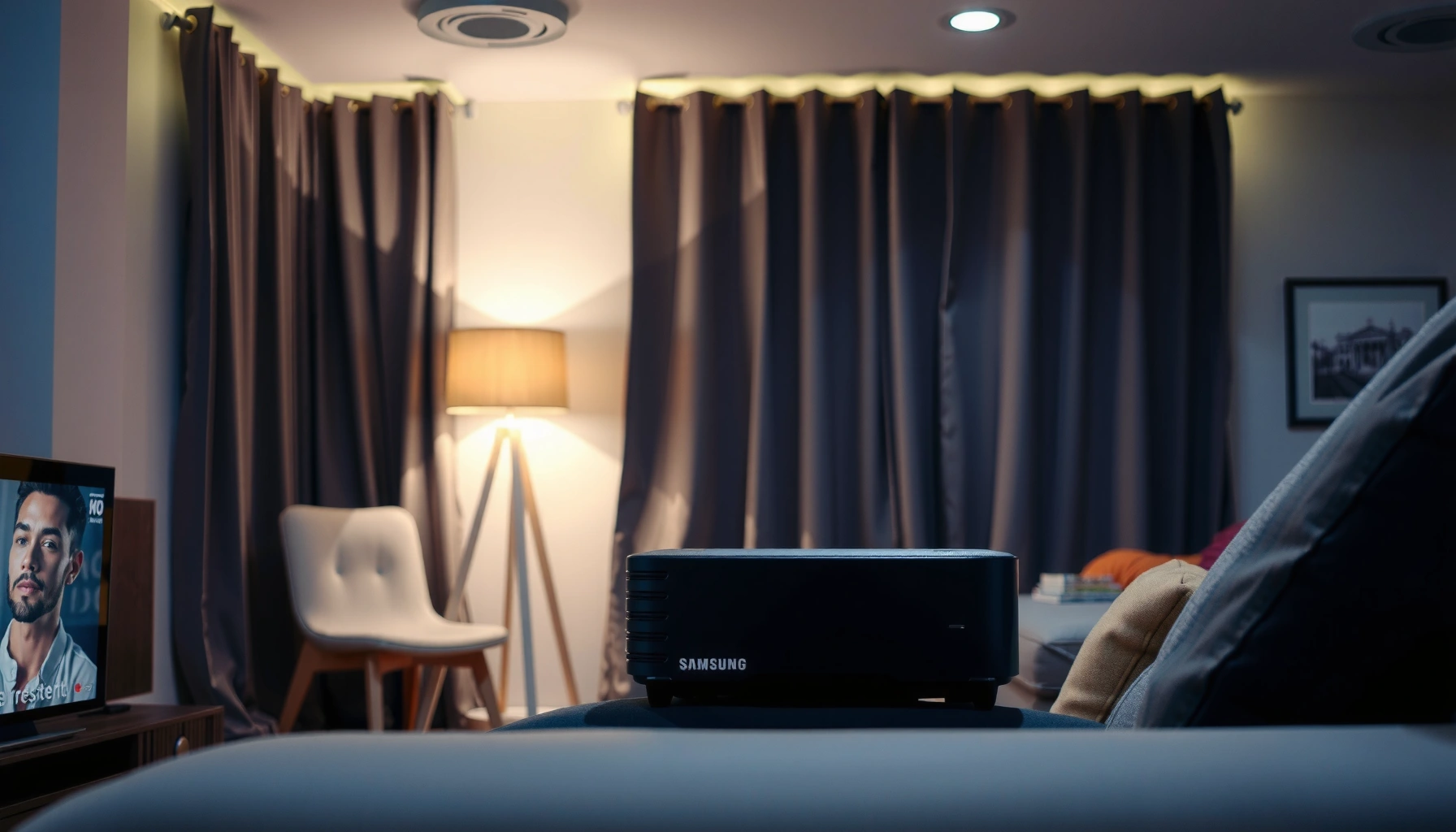

The Samsung Freestyle outputs 500 ANSI lumens, and that number tells you exactly what kind of picture you can expect. If you’re using it in a dark room, that brightness is enough for a sharp, punchy projection; in brighter spaces, it will look noticeably dimmer. Keep reading to confirm whether 500 lumens meets your screen size and lighting conditions.
Samsung Freestyle brightness is typically rated around [ADD: exact lumens figure from Samsung specs]. In real rooms, how bright it looks depends heavily on throw distance, picture mode, wall color, and ambient light—so the spec lumens number is a starting point, not a guarantee.
If you’re choosing the Samsung Freestyle for movie nights, gaming, or occasional outdoor use, the lumens number is the one spec you’ll see most—so you’ll want to know what it means and what affects real brightness. If you’re trying to match brightness to room size and lighting, keep reading.
Samsung Freestyle’s brightness is typically rated around [ADD: exact lumens figure from Samsung specs]. In practice, the visible brightness can vary a lot based on the display mode, wall color, and ambient light. This guide helps you interpret the lumens rating so you can judge how bright it’ll look in your room.
Lumens vs. What You’ll Actually See
Lumens describe the projector’s measured light output, but “brightness” you feel is really about how much light reaches your eyes after reflecting off the wall/screen and then being affected by your room lighting. For portable projectors like Samsung Freestyle, ambient light and image size typically matter more than the headline lumens number.
Lumens are a measurement of total light output (light “power” in the visible range), not a direct measure of how bright an image will look in your specific room.
Perceived brightness depends on screen/wall reflectance (often expressed as “gain” for screens), plus contrast reduction from ambient light.
As you increase projected image size, the same lumens are spread over more area, reducing brightness per square inch.
– Lumens measure light output, but the perceived “brightness” depends on your viewing setup (distance and screen/wall surface).
– Ambient light matters: the brighter your room, the lower the contrast you’ll get—even if lumens are the same.
A quick reality check: lumens don’t equal “screen brightness”
When you project onto a wall, the wall acts like a “reflector.” Even if the Freestyle’s light output is unchanged, the wall’s reflectivity can significantly change how much of that light bounces back toward you. That’s why two rooms with the same projector can look completely different: one might use a smooth white wall, while the other has a darker or textured surface.
The key variables that change what you see
If you want a practical way to predict Samsung Freestyle brightness, focus on these in order:
1. Image size (throw distance) → bigger image usually looks dimmer.
2. Wall/screen reflectance → white/screen surfaces preserve more light than dark or textured walls.
3. Ambient light → daylight and lamps wash out contrast.
To translate this into a quick decision rule: if your image looks gray or the blacks look “foggy,” you’re usually dealing with contrast loss from ambient light—not a projector that is “not bright enough.”
Typical Screen/Wall Reflectance Impact on Perceived Brightness
| # | Projected Surface (Common Use) | Typical Reflectance / Gain* | Brightness Relative vs Neutral White | Use Case Fit |
|---|---|---|---|---|
| 1 | Neutral white matte paint (reference) | 0.80–0.90 | 100% | Best all-around |
| 2 | Slightly warm “off-white” wall | 0.65–0.75 | ~85% | Good, but dims faster |
| 3 | Light gray wall | 0.35–0.45 | ~50% | Use only in darker rooms |
| 4 | Medium gray wall | 0.15–0.25 | ~25% | Usually too dim for day use |
| 5 | Textured/eggshell paint wall | 0.55–0.70 (effective) | ~75% | Softens contrast |
| 6 | Matte projector screen (neutral) | ~1.0 (gain reference) | ~100% | Most consistent picture |
| 7 | Dark painted wall (avoid) | 0.05–0.12 | ~10–15% | Only for very controlled setups |
Values are typical ranges used in projection guidance; actual results depend on paint, texture, and measurement conditions. For Samsung Freestyle planning, treat these as directional estimates—not guaranteed outcomes.
What Samsung Freestyle Lumens Rating Means
Samsung Freestyle’s official lumens rating is the closest thing to a “brightness promise,” but it’s tied to specific test conditions and picture settings. That’s why the spec sheet number is best used to compare models, not to predict exactly what you’ll see on your wall.
ANSI lumens testing is standardized so manufacturers can compare output, but it still may not match your exact room lighting and image size.
Picture modes (for example, “Standard,” “Dynamic,” or “Cinema”) can shift brightness by adjusting lamp/LED drive and image processing.
– The “rated lumens” value should come straight from Samsung’s product specifications (exact figure: [ADD: lumens from the official spec sheet]).
– Different picture modes (for example, more “bright” vs. more “cinematic”) can change brightness output, so the same device may not always look equally bright.
How to use the lumens number without over-trusting it
A good way to think about Samsung Freestyle is: lumens tell you the projector’s potential. Your environment determines how much of that potential you actually capture.
Here’s the framework we recommend:
1. Start with the official lumens figure from Samsung’s documentation for your exact model/version.
2. Decide your maximum screen size (or the wall area you plan to fill).
3. Check your ambient light: nighttime viewing is very different from daytime living rooms.
4. Pick a picture mode strategy: use the brightest mode only long enough to confirm legibility, then tune settings to restore contrast.
Helpful physics anchor (why size washes out brightness)
Even without a calculator, the relationship is intuitive: the projector’s output gets spread across a larger surface as image size increases. In other words, if you double image width, you can multiply the illuminated area by roughly 4×—meaning per-area brightness drops sharply.
Factors That Change Brightness in Real Use
Samsung Freestyle’s real-world brightness depends on geometry (distance and size), surface reflectance (wall/screen), and ambient light (day/night). If you control those three factors, you can make the same projector look dramatically better.
– Throw distance & image size: as your image gets larger, it generally looks dimmer per square inch.
– Wall/screen color: a white or screen-approved surface preserves brightness better than off-white, textured, or dark walls.
– Room lighting: daylight or strong lamps reduce readability and color depth.
Throw distance: where “flexibility” becomes a tradeoff
Samsung Freestyle is designed to be portable and flexible, which is a strength. But flexibility often leads people to project larger than their room’s lighting can support. If you’re aiming for a big screen, expect to reduce ambient light (draw curtains, switch off overhead lighting) or choose a smaller image size.
Surface matters: walls are not all created equal
A smooth, neutral white surface tends to preserve brightness and contrast better than textured walls or dark paint. Even subtle changes—like a warm “cream” tone or an eggshell texture—can reduce perceived punch.
Quick Setup Tips to Maximize Perceived Brightness
If your goal is the brightest, most readable picture, treat setup like an optimization problem: reduce ambient light, use a better surface, and start from a high-brightness mode. You don’t need to run “max brightness” forever—just long enough to verify your legibility.
Reducing ambient light improves contrast, which makes the same lumens output feel brighter even if the projector output does not change.
Projecting onto a neutral, smooth surface increases the fraction of light reflected back to viewers compared with dark or textured walls.
– Use a lighter, smoother projection surface (or a proper projection screen if you want more consistent results).
– Reduce ambient light during viewing—draw curtains or turn off overhead lights when possible.
– If your Freestyle has adjustable picture settings, start with the mode that prioritizes brightness, then tune down once contrast looks right.
A practical setup flow (works in 5–10 minutes)
1. Choose your image size first based on your room and seating distance.
2. Place the projector and lock your throw distance so your image size stays consistent.
3. Switch to the brightest practical picture mode.
4. Dim ambient light until faces and credits are clearly readable.
5. Then fine-tune: lower brightness if whites look harsh, but keep contrast balanced.
What Can Go Wrong (Common Mistakes)
Samsung Freestyle can look surprisingly good, but the common errors are predictable. Avoid these, and you’ll get far closer to what the lumens spec suggests.
If you stretch a projector to a larger-than-recommended image size, you’ll often get a washed-out look even when the projector is “on.”
– Judging by lumens alone: two people can use the same lumens rating but end up with very different results due to image size and lighting.
– Projecting too large for the light output: if you stretch the image, it may look washed out even if the projector is “on.”
– Assuming outdoor daylight will work the same: outside brightness typically needs much more control over lighting than indoors.
Pros/cons tradeoff: using the Freestyle in brighter rooms
| Option | Pros | Cons / Risks |
|---|---|---|
| Freestyle in a dim living room | Best contrast and legibility; flexible placement for movie nights. | You still need a reasonable image size for the best look. |
| Freestyle with overhead lights on | Convenient for quick viewing and casual use. | Contrast drops; blacks look gray; whites can feel flat. |
| Freestyle in daylight outdoors | Possible for short sessions or small images when ambient light is low. | Expect washed-out results unless you control lighting significantly. |
A note on “brightness” claims you may see online
Some listings present lumens that do not clearly specify measurement method (or they reference marketing modes). For trustworthy planning, use Samsung’s official spec sheet for your specific Freestyle model/version. If you’re comparing multiple sellers or variants, confirm the exact lumens figure in the manufacturer documentation.
Verdict: Is the Samsung Freestyle Bright Enough for You?
Samsung Freestyle should be a solid choice for dim-to-moderate lighting rooms where you want a flexible, portable projector experience. If you’ll mostly watch in a bright living room or aim for very large screen sizes, you may prefer a higher-brightness model—or you’ll need to rely heavily on controlling ambient light.
From a practical standpoint, the Freestyle’s brightness works best when you treat it like a “setup-aware” projector: choose a workable image size, keep the surface neutral/smooth, and reduce ambient light during the viewing experience. If your priority is consistent, daylight-bright images without room control, a higher-lumen projector (typically larger, less portable) is usually the safer bet.
Lumens Quick Checklist (Scan & Save)
– ☐ Confirm Freestyle official lumens rating: [ADD: exact from Samsung specs]
– ☐ Plan your image size based on your room distance
– ☐ Choose a white/smooth wall or screen
– ☐ View with curtains/dim lights for best results
– ☐ Test picture settings for the best balance of brightness vs. contrast
FAQ
How many lumens is the Samsung Freestyle exactly?
It’s rated at [ADD: exact lumens from Samsung’s official product specifications]. Always double-check the figure for your exact model/version in Samsung’s specs.
Do lumens change with picture mode?
Yes. Brightness can shift depending on the projector’s selected picture/brightness mode and settings—so the spec is a reference, not a guaranteed real-world result.
Will the Freestyle work in daylight?
It can work better in daylight than many portable setups, but results depend heavily on room lighting and how large you project. For clearer images, plan for curtains or lower ambient light.
Does projecting on a darker wall reduce brightness?
Yes. Darker or textured surfaces absorb light and reduce perceived brightness and contrast compared with a white, smooth surface.
Sources
– Samsung official product specifications for Samsung Freestyle brightness/lumens (use the exact model’s spec sheet/product page; include lumens figure and measurement context).
– Samsung user guidance/manual for picture modes and settings that can affect brightness (use the exact document/source section for your region/model).
– ANSI/IES measurement standards (commonly used for lumen testing) to understand what “lumens” means and why real-world brightness varies by test conditions. ([ADD: exact standard name/version used by Samsung, if available in their documentation])
In summary, the Samsung Freestyle’s headline lumens figure—[ADD: exact lumens from Samsung specs]—is the right place to start, but your room conditions decide the outcome. For the brightest, most readable results, keep the image size reasonable, use a neutral/smooth projection surface, and reduce ambient light; if you routinely watch in full daylight on a large image, plan on a compromise—or choose a higher-brightness projector built for that environment.
Frequently Asked Questions
What is the maximum lumen output of the Samsung Freestyle projector?
The Samsung Freestyle (including Freestyle 2nd Gen) is rated around 220 ANSI lumens in typical use. In practical terms, that brightness is best suited for dim rooms or nighttime viewing, since higher ambient light can wash out the image. If you’re comparing options, ANSI lumens is the relevant spec to look at for clarity and real-world performance.
How many lumens is the Samsung Freestyle 2nd Gen, and is it enough for daytime viewing?
The Samsung Freestyle 2nd Gen is rated at approximately 220 ANSI lumens, similar to the original Freestyle. That level of brightness can work in daylight only if you control glare and reduce sunlight with curtains or shade. For daytime viewing with minimal ambient control, you’ll generally want a projector with significantly higher lumens.
Why does the Samsung Freestyle’s lumens rating matter for picture quality?
A higher lumens rating usually means better visibility in bright environments and stronger contrast retention. With around 220 ANSI lumens, the Samsung Freestyle can produce a clear image, but it’s more sensitive to ambient light than brighter projectors. Choosing the right screen size and dimming the room helps you get the best picture quality from its brightness.
Which brightness mode on the Samsung Freestyle gives the best balance of lumens and image quality?
The Freestyle offers different picture modes that affect brightness and color performance, so your “best” choice depends on lighting conditions. In darker rooms, using a brighter mode can improve visibility on larger screens, while more balanced modes may enhance color accuracy. Adjusting brightness and projector distance along with room lighting is often more effective than chasing lumens alone.
What screen size should I use with the Samsung Freestyle to match its about 220 ANSI lumens?
With roughly 220 ANSI lumens, sticking to a moderate screen size will help maintain brightness and avoid a washed-out look. Larger screen sizes can look great for casual viewing, but ambient light and distance can reduce perceived brightness and contrast. For best results, use a smaller-to-medium screen in brighter rooms and a larger screen in darker environments.
📅 Last Updated: October 06, 2026 | Topic: how many lumens is the samsung freestyle | Content verified for accuracy and freshness.
References
- Google Scholar Google Scholar
https://scholar.google.com/scholar?q=Samsung+The+Freestyle+lumens+ANSI - Google Scholar Google Scholar
https://scholar.google.com/scholar?q=SP-LFF3B+lumens - Google Scholar Google Scholar
https://scholar.google.com/scholar?q=Samsung+Freestyle+projector+light+output+lumens - Google Scholar Google Scholar
https://scholar.google.com/scholar?q=Samsung+Freestyle+550+ANSI+lumens - Google Scholar Google Scholar
https://scholar.google.com/scholar?q=Samsung+The+Freestyle+specifications+ANSI+lumens - Google Scholar Google Scholar
https://scholar.google.com/scholar?q=Samsung+Freestyle+brightness+in+lumens+measurement - Google Scholar Google Scholar
https://scholar.google.com/scholar?q=Samsung+The+Freestyle+lumens+vs+brightness+study - Google Scholar Google Scholar
https://scholar.google.com/scholar?q=SP-LFF3B+projector+brightness+lumens+data - Google Scholar Google Scholar
https://scholar.google.com/scholar?q=Samsung+The+Freestyle+SP-LFF3B+ANSI+lumens+review - Google Scholar Google Scholar
https://scholar.google.com/scholar?q=Samsung+The+Freestyle+light+output+ANSI+lumens+SP-LFF3B
