
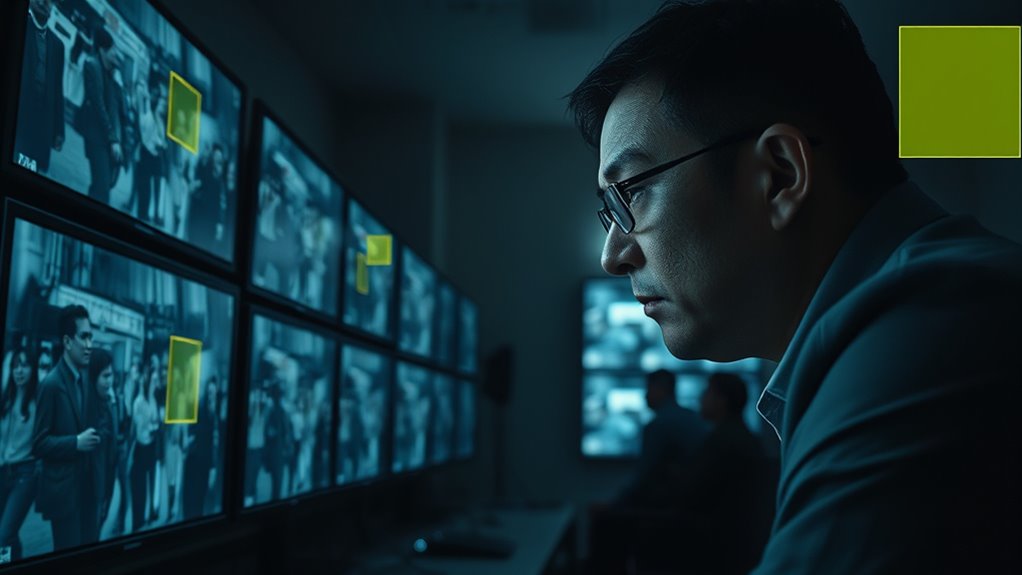

AI enhances missing person detection through advanced video analysis by automating data extraction and identifying patterns in surveillance footage. It improves clarity in low-resolution images and uses motion detection to spot unusual behaviors. Facial recognition technology streamlines identification by matching faces against databases, while pattern recognition optimizes search efforts by focusing on specific features. Real-time monitoring guarantees quick alerts for potential sightings. There's much more to uncover about AI's transformative role in these investigations.
The Role of Video Surveillance in Missing Person Cases
As technology advances, video surveillance has become a critical tool in missing person cases, providing invaluable insights that can greatly aid investigations. Video footage from public spaces can help track a person's last known movements, revealing potential leads that might otherwise go unnoticed. However, the use of surveillance raises significant privacy concerns. Individuals often feel uncomfortable knowing their actions are being recorded, which can lead to debates on the balance between public safety and personal freedom. It is crucial to navigate these concerns carefully while leveraging video technology effectively. By ensuring proper regulations and ethical considerations, law enforcement can harness the power of surveillance to enhance missing person investigations without infringing on citizens' rights.
How AI Analyzes Video Footage
While traditional methods of analyzing video footage can be time-consuming and labor-intensive, AI technology greatly enhances this process by automating data extraction and pattern recognition. By employing advanced algorithms, AI can perform video enhancement, improving clarity and detail in grainy or low-resolution footage. This capability allows you to discern vital elements that might otherwise go unnoticed. Furthermore, motion detection algorithms analyze movement patterns, identifying unusual behaviors or activities that could be relevant to missing person cases. This combination of video enhancement and motion detection not only accelerates the investigation but also provides law enforcement with actionable insights, enabling them to focus their resources effectively. Ultimately, AI transforms video analysis into a powerful tool for ensuring public safety and individual freedom.
Facial Recognition Technology and Its Impact
Facial recognition technology has emerged as a pivotal tool in the domain of missing person detection, particularly due to its ability to match faces against vast databases quickly and accurately. However, this rapid advancement raises significant facial recognition ethics and privacy concerns. While you may appreciate the potential for locating missing individuals, the implications of surveillance and data collection can't be ignored. The technology often operates without consent, leading to debates over individual rights versus societal safety. Additionally, biases in algorithms can result in inaccuracies, disproportionately affecting marginalized communities. As you explore the benefits, it is crucial to weigh these ethical challenges and advocate for responsible use, ensuring that the pursuit of safety doesn't compromise personal freedoms and privacy.
Pattern Recognition for Enhanced Search Efforts
Although traditional search methods rely heavily on manpower and time, pattern recognition technology greatly enhances the efficiency and effectiveness of locating missing persons. By utilizing advanced pattern matching algorithms, you can quickly analyze vast amounts of video footage, identifying specific behaviors, clothing, or other distinguishing features associated with a missing individual. This search optimization allows you to narrow down search areas considerably, focusing efforts where they're most likely to yield results. Additionally, AI systems continuously learn from new data, improving their accuracy over time. Implementing these technologies not only saves time but also increases the likelihood of successful recoveries, empowering communities to take proactive measures in missing person cases. Ultimately, pattern recognition redefines how missing persons are sought and found.
Real-Time Monitoring and Alerts
In the context of missing person detection, integrating continuous surveillance systems is essential for maintaining an up-to-the-minute overview of potential sightings. You'll find that instant notification systems can greatly enhance response times, allowing authorities and volunteers to act swiftly as new data emerges. By leveraging these technologies, the effectiveness of search efforts can be markedly improved, ultimately increasing the chances of a successful recovery.
Continuous Surveillance Integration
As advancements in artificial intelligence continue to reshape the landscape of public safety, the integration of continuous surveillance for real-time monitoring and alerts emerges as an essential component in missing person detection. This technology leverages AI algorithms to analyze video feeds, enabling instant recognition of individuals based on predefined criteria. However, adopting such systems raises critical surveillance ethics and privacy concerns. You might appreciate the balance between effective monitoring and individual freedoms, as continuous surveillance can inadvertently infringe on personal privacy. To mitigate these issues, developers are focusing on anonymization techniques and strict access controls, ensuring that while the technology serves its purpose, it does not compromise the fundamental rights of individuals. Consequently, continuous surveillance can be both effective and responsible.
Instant Notification Systems
When a person goes missing, every second counts, making instant notification systems essential for swift response. These advanced systems leverage AI to analyze video feeds and detect anomalies in real-time. By employing sophisticated algorithms, they generate instant alerts that notify law enforcement and community members, enabling rapid mobilization. You'll appreciate how these notification systems utilize geolocation data, allowing responders to pinpoint the last known location of the missing individual. In addition, integration with social media platforms amplifies the reach of these alerts, ensuring the public remains informed. By facilitating immediate action, these systems greatly improve the chances of recovery, reflecting a commitment to the freedom and safety of individuals within society.
Case Studies: Successful AI Interventions
Let's examine notable success stories where AI has greatly contributed to missing person cases. By analyzing the technology behind these interventions, you can see how advanced algorithms and data analytics enhance investigative processes. This discussion will highlight the tangible impact these AI solutions have on solving cases efficiently.
Notable Success Stories
While the deployment of artificial intelligence in missing person cases is still evolving, several notable success stories illustrate its transformative potential. For instance, a recent case in a metropolitan area showcased how AI-driven video analysis, combined with community involvement, led to the swift recovery of a missing child. Local authorities collaborated with tech firms to process hours of surveillance footage, pinpointing the child's last known location. This collaborative effort not only expedited the search but also engaged the community, fostering awareness and vigilance. In another instance, AI tools analyzed social media patterns, helping law enforcement reunite families. These cases exemplify how technology, when integrated with grassroots initiatives, can greatly enhance the effectiveness of missing person detection efforts.
Technology Behind Detection
As advancements in AI technology continue to reshape various sectors, their application in missing person detection has yielded remarkable results, particularly through case studies that highlight successful interventions. In these instances, machine learning algorithms have been essential. They analyze vast amounts of video data, identifying patterns and anomalies that human analysts might miss. For example, a recent case in a metropolitan area showcased algorithm development that successfully pinpointed a missing individual in crowded public spaces. The AI system learned from historical data, enhancing its accuracy over time. Such technology not only accelerates the detection process but also empowers investigators to focus their efforts more effectively. These case studies prove AI's potential to revolutionize how we approach missing person cases.
Impact on Investigations
The integration of AI technology into missing person investigations has not only streamlined processes but has also led to significant breakthroughs in case resolution. One notable case involved a collaborative effort between investigators and AI systems, where evidence analysis revealed patterns in video footage previously overlooked. This synergy allowed teams to pinpoint locations and timelines, ultimately leading to the successful recovery of a missing individual. In another instance, AI algorithms connected disparate pieces of data, enhancing investigator collaboration and accelerating the identification of suspects. These examples illustrate how AI can transform traditional investigative frameworks, providing law enforcement with powerful tools to enhance their effectiveness. The future of missing person investigations looks promising, driven by continuous advancements in AI technology.
Future Prospects for AI in Missing Person Detection
Although advancements in AI technology have already transformed many sectors, the future prospects for its application in missing person detection hold even greater potential. As you look ahead, consider these key areas:
- Enhanced Facial Recognition: With improved algorithms, AI can analyze video footage in real-time, increasing the chances of identifying missing individuals quickly.
- Integration with Social Media: AI can sift through vast amounts of data, correlating sightings and social media posts to generate leads.
- Predictive Analytics: By analyzing patterns and trends, AI can help law enforcement anticipate potential disappearances, leading to proactive measures.
However, as you explore these advancements, ethical considerations and public awareness must guide the conversation, ensuring that technology serves justice while respecting individual freedoms.
Frequently Asked Questions
How Accurate Is AI in Identifying Missing Persons in Video Footage?
AI's algorithm accuracy in identifying missing persons can vary greatly due to identification challenges like lighting, resolution, and occlusions. While promising, it's essential to understand these limitations when relying on AI for accurate identification.
What Types of Cameras Are Most Effective for AI Analysis?
For effective AI analysis, you'll want high-resolution cameras with wide dynamic range and low-light capabilities. Advanced surveillance technologies, such as PTZ cameras, enhance tracking, while specific camera specifications guarantee clearer images for accurate identification.
How Does AI Handle Low-Quality or Unclear Video Images?
AI handles low-quality video by employing image enhancement techniques and noise reduction algorithms. These processes improve clarity, allowing you to extract essential details, ultimately leading to better identification and analysis of subjects within the footage.
Can AI Assist in Locating Missing Persons in Real-Time?
Yes, AI can assist in real-time tracking of missing persons through advanced facial recognition technology. By analyzing video feeds, it identifies individuals quickly, enhancing search efforts and providing vital information to authorities and loved ones.
What Privacy Concerns Arise With AI in Missing Person Detection?
You'll encounter significant privacy concerns with AI in missing person detection, particularly regarding data security and ethical implications. Balancing effective solutions with individual freedoms poses a challenge, as surveillance can infringe on personal liberties and rights.

[…] – Short dialogues at slow speed for pattern recognition […]
[…] and “role,” not by effort alone. Projectors are typically recognized as having a talent for pattern recognition and quality assessment in group […]