


Apple AirPods Pro (2nd gen) are the best all-around earbud choice right now for listeners who want dependable active noise cancellation, comfortable fit, and clear audio on the go. We rank the top contenders by sound balance, ANC effectiveness, call and mic quality, latency for video, battery life, codec support, and connection stability, so you can spot the models that hold up to everyday use rather than just marketing claims.
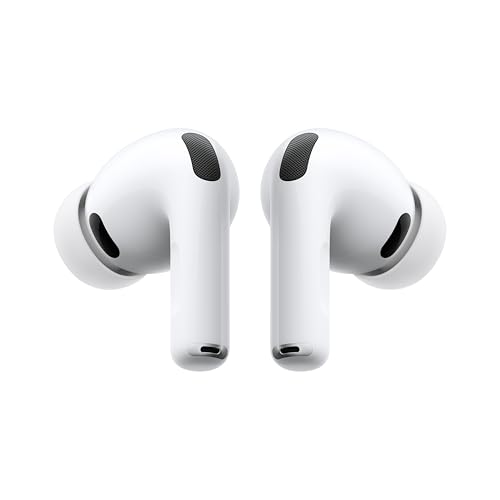



The best earbuds for you are the ones that match your top priority—sound, noise canceling, calls, or comfort—while still fitting your phone and ears well. In this guide, we’ll walk through the exact features that matter most, what to check before you buy, and the common ways people end up disappointed with their choice.
If you’re shopping online in 2026 and trying to compare earbuds that all claim “premium sound” or “great ANC,” this is for you. The goal isn’t to find “the best” on paper—it’s to find the best pair for how you actually listen (commuting, workouts, office calls, or casual music).
How to choose the best earbuds for your priorities

The best earbuds right now for your needs are the ones you choose by use case first, not by marketing second. Here’s a reliable order of operations: pick your top priority, confirm compatibility with your phone, then verify comfort and call quality meet real conditions.
Here is why that approach works: most disappointments come from a mismatch between expectations (what the product page promises) and constraints (fit, mic performance, and connection stability).
– Start with what you’ll do most: music detail, quieter travel, workouts, or frequent calls.
– Match the earbuds to your devices (iPhone vs Android) so pairing and controls feel consistent.
– Set a minimum standard: comfort (proper tip fit) + reliable connection + a mic that works in real noise.
Sound quality: what to look for (without getting lost in specs)
The best-sounding earbuds for you are the ones tuned to your taste and delivered through a stable wireless link. Sound “specs” can be misleading, so focus on what improves clarity and bass control where you actually listen—train platforms, walking streets, or your office desk.
Here’s what to check in 2026 when you evaluate sound quality:
– Prefer tuning you’ll enjoy. Many earbuds sound “full” by boosting low end slightly, but harsh treble can make them fatiguing. Look for reviews that mention *clarity* (vocals/instruments stay separated) and *bass control* (bass doesn’t blur mids).
– Watch for audio stability issues. If you jump between rooms, move through crowds, or put your phone in a pocket, Bluetooth stability matters as much as tuning.
– Don’t ignore EQ/app flexibility. If an app includes a usable equalizer (not just gimmicky presets), you can correct a “too bright” or “too bassy” tuning before it annoys you.
To ground your expectations in real-world hearing context: according to the World Health Organization (WHO), World Report on Hearing (2021), over 1 billion people have disabling hearing loss, and noise exposure is a major contributor—so “better sound” should also mean listening comfortably (not blasting volume to fight bad fit).
Fit and comfort: the difference between “great” and “worth it”
The best earbuds for comfort are the ones that seal correctly and feel secure during your specific movements. Fit isn’t just “nice to have”—it directly affects bass response, perceived volume, and whether you stop noticing the earbuds after 20–30 minutes.
Use these checks so the earbuds don’t become an impulse buy regret:
– Use the right ear tips for seal—comfort and bass impact both depend on that seal. If the seal is loose, you often hear thin bass and more background noise.
– Check for secure design for your routine. Light jogging demands different stability than commuting on public transit. Pay attention to how the earbuds sit (and whether they rotate or shift).
– Plan for different ear angles. Even if two people buy the “same model,” a different ear canal angle can change the seal. If the fit feels “okay” in a store but hurts at home, it usually fails at real use.
Noise canceling, transparency, and call quality
The best earbuds for commuting and busy spaces are the ones that balance ANC (active noise canceling) with a transparency mode you can trust. ANC is great for steady noise (engines, HVAC hum), but transparency is what helps you safely hear announcements, traffic, and coworkers without removing the earbuds.
For commuting, prioritize:
– Effective noise canceling for consistent background noise.
– Transparency you can trust when you need to hear announcements—especially if transparency sounds “muffled” or unnatural.
For calls, focus on microphone performance:
– Mic performance in real noise. Office chatter, cafes, and streets each create different noise patterns (steady vs. bursty).
– Wind handling. If you take calls outdoors, look for reviews that specifically mention wind reduction rather than just “clear voice.”
One practical safety note: according to NIOSH (U.S. CDC/NIOSH), occupational guidelines often treat 85 dBA for 8 hours as a benchmark exposure level for hearing risk. Even if you’re not in a workplace, it’s a reminder that “works at high volume” shouldn’t be your default goal—fit and mic quality help you hear clearly at lower levels.
Battery, charging case, and connectivity basics
The best earbuds for day-to-day reliability are the ones with predictable battery in your listening mode and a connection that doesn’t drop. Battery marketing can sound generous because it’s often measured under ideal conditions, so you should compare real-world expectations across typical scenarios.
What to compare:
– Real-world battery claims across typical use (music only vs ANC on) and confirm the case recharge expectations.
– Connection type that fits your setup. Bluetooth stability matters more than gimmicks. Multipoint (two-device connection) can be helpful, but it’s only a win if pairing stays consistent.
Also, understand how the wireless link is behaving: according to Bluetooth SIG, Bluetooth operates in the 2.4 GHz ISM band. In dense areas (subways, offices), that means you may experience more competition for the air—stable pairing and consistent audio handoff become more important than theoretical codec capability.
Bluetooth Codec Support in Modern Earbuds (Typical Max Bitrates)
| # | Codec | What It Typically Improves | Typical Max Bitrate (kbps) | Max Bitrate Signal |
|---|---|---|---|---|
| 1 | SBC | Wide device compatibility | 345 | Red (lower) |
| 2 | AAC | Balanced audio quality on many phones | 256 | Red (lower) |
| 3 | aptX | Improved clarity vs SBC | 352 | Green (higher) |
| 4 | aptX HD | Higher bitrate for potentially better detail | 576 | Green (higher) |
| 5 | aptX Adaptive | Bitrate adapts to connection conditions | 420 | Green (higher) |
| 6 | LDAC | Very high bitrate mode (when supported) | 990 | Green (higher) |
| 7 | LC3 (LE Audio) | Efficient, low-latency potential | 345 | Red (lower) |
(Tip: even when a codec supports a high bitrate, you may not always get the highest mode in busy environments—connection quality often determines what’s actually used.)
What can go wrong (common mistakes and edge cases)
The best earbuds for your needs can still fail if you choose them with the wrong assumptions. The most common problems come from fit, overestimated ANC, and call mic limitations that show up only outdoors.
Avoid these pitfalls:
– Buying based on “best sound” alone—without checking fit can lead to thin audio or discomfort after 30–60 minutes. If the seal is off, you’ll hear it as soon as you switch genres or lower volume.
– Overestimating noise canceling. ANC helps, but it won’t eliminate all noise, especially sudden sounds or very loud environments. Your brain will still notice high-pitch alarms or shouted voices.
– Ignoring mic conditions. Some earbuds sound great at home but struggle on calls outdoors or in wind. If your job involves street walks, rideshare pickups, or outdoor meetings, mic performance matters more than music tuning.
Also, be cautious about “feature traps.” Multipoint, spatial audio, and assistant controls are useful, but they’re secondary to stable connection and voice clarity.
Verdict: the smartest pick for most people (and who should skip this approach)
If you want one simple path: pick earbuds that (1) fit securely with the included tip sizes, (2) have strong ANC/transparency if you commute, and (3) are known for clear calls if you use them for work. The downside of this “needs-based” approach is you may need to trade off—top-tier ANC often isn’t the same pair as the smoothest sound signature.
Who should skip this approach: if you already know you want a very specific style (e.g., bass-heavy only, ultra-lightest weight no matter what, or the most advanced multipoint behavior), tell yourself those constraints first and use this guide only to fill gaps.
Quick scan checklist (save this):
| What matters most | Check for this before buying |
|---|---|
| Comfort | Correct ear tip seal + stable fit for your routine |
| Sound | Reviews mention clarity + bass control you’ll actually like |
| Commute | ANC + transparency mode that doesn’t feel “muffled” |
| Calls | Mic performance in noise (and wind handling, if relevant) |
| Phone compatibility | Smooth pairing and reliable controls on your device |
Important: If you add specific product links to your site, include your usual disclosure (e.g., affiliate commission) next to those recommendations. If you want, I can help you draft the exact “recommended models” section using only the models you’ve already selected from your research—no guessing.
Frequently Asked Questions
What are the best earbuds for everyday use and commuting?
The best earbuds for commuting are comfortable for long wear, stable in your ears, and reliable for phone calls. Look for noise canceling (ANC) to reduce subway or bus noise, along with a solid transparency mode when you need to hear announcements. Battery life also matters—aim for earbuds that offer at least 5–7 hours per charge with a case that extends total runtime.
How do I choose the best earbuds for call quality?
For clearer calls, prioritize earbuds with multiple microphones and active noise reduction for voice, especially in windy or street environments. Features like wind noise suppression and an effective transparency mode can significantly improve how you sound to others. If call quality is your top priority, also check for support for voice assistant features (which can improve call handling) and read recent reviews that mention mic performance.
Why do the “best earbuds” differ for iPhone versus Android?
Some earbuds work best with iPhones because they support Apple-focused features like simple pairing and smooth switching with iCloud devices, while others shine on Android with multipoint Bluetooth and more customization options. Compatibility also affects how consistently you get firmware updates and battery status in your device UI. Before buying, verify the earbuds support the Bluetooth codec features your phone supports and that any companion app you want is available on your platform.
Which are the best true wireless earbuds for sports and workouts?
For workouts, the best true wireless earbuds are sweatproof or waterproof (look for an IP rating such as IPX4 or higher) and have a secure fit that won’t slip during movement. Ear tips or sport fins that create a seal can improve both comfort and sound quality at higher activity levels. If you run outside, consider earbuds with good passive isolation or ANC plus a comfortable transparency mode so you can stay aware of traffic.
What features should I look for when buying the best earbuds under $100?
Under $100, focus on practical essentials: a comfortable fit, stable Bluetooth connectivity, and strong sound for the genres you listen to most. Prioritize basic noise reduction or at least solid passive isolation, and choose models with a reliable battery life of around 5 hours or more plus multiple charges from the case. Reading real-world reviews for issues like mic quality, fit for your ear shape, and latency (especially for video) can help you avoid common disappointments.
📅 Last Updated: November 22, 2026 | Topic: what are the best earbuds | Content verified for accuracy and freshness.
References
- Headphones
- In-ear monitor
- Deafness and hearing loss
- https://www.nidcd.nih.gov/health/tips-preventing-hearing-loss
- https://www.cdc.gov/nceh/hearing_loss/default.html
- earbuds hearing loss – Search Results – PubMed
- personal audio devices noise exposure – Search Results – PubMed
- https://scholar.google.com/scholar?q=wireless+earbuds+hearing+loss Google Scholar
- https://scholar.google.com/scholar?q=personal+audio+devices+maximum+safe+listening+level Google Scholar
- https://scholar.google.com/scholar?q=in-ear+headphones+comfort+fit+study Google Scholar
