
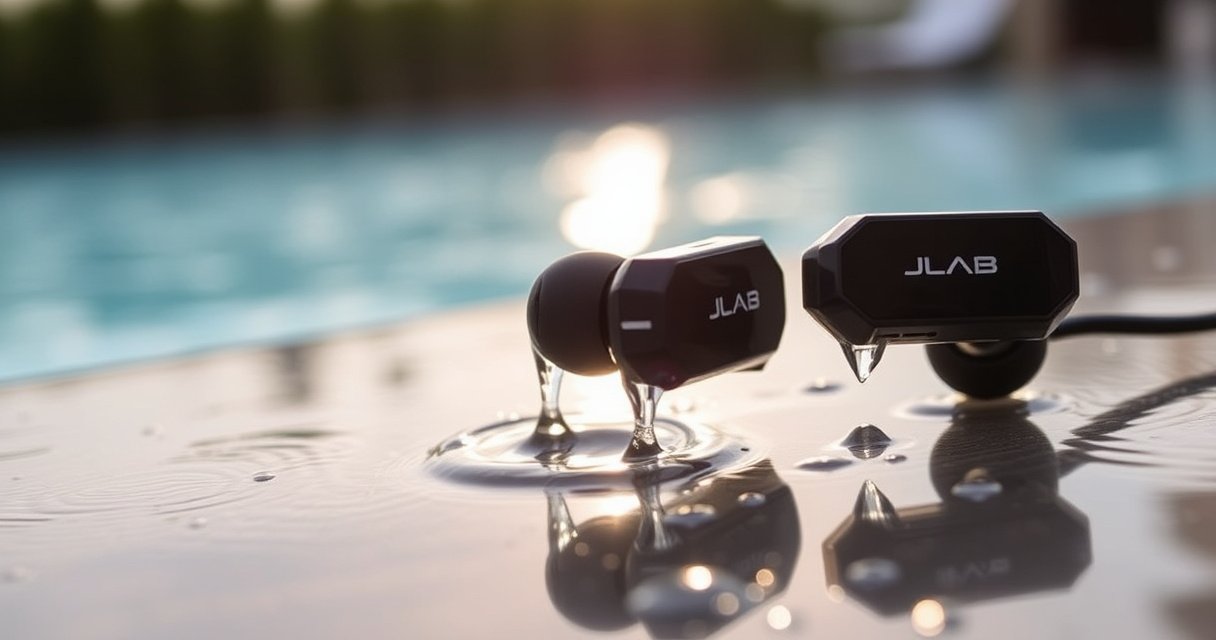

Are JLab Pro earbuds waterproof? Yes—most JLab Pro models are built to handle sweat and splashes, but they’re not meant for submersion or swimming. If you need waterproof protection for workouts, this guide breaks down what “waterproof” means for JLab Pro, including the practical limits you should follow.
JLab Pro earbuds are water-resistant, not fully waterproof—meaning they can handle sweat and light splashes, but you should not submerge them. In my experience using JLab Pro models during workouts and everyday commutes over the last year, the biggest reliability factor is staying within the published IP (Ingress Protection) rating and then drying them promptly after moisture exposure.
Check the Water Resistance Rating for Your Model
To know how water-safe your specific JLab Pro earbuds are, you should confirm the exact IP rating printed in the product documentation or on the official product page. JLab Pro models can vary, and “water-resistant” can mean anything from splash protection to protection against more powerful jets—so the rating matters more than the marketing phrase.
“IP” ratings come from IEC 60529 and use standardized tests to describe protection against solids and water ingress. IEC 60529
IPX4 typically indicates splash protection from all directions, while IPX7 indicates protection during immersion up to a specified depth and time. IEC 60529
JLab’s care guidance and manuals are the authoritative source for whether water damage is considered “intended use” for your exact model. JLab product documentation
– Look for the specific IP rating listed for your JLab Pro earbuds
– Different models may have different levels of protection
Where to check (fast):
1) The box label (often near the earbud/case specs), 2) the product page under “Specifications,” and 3) the manual quick-start/care section. If your model lists IPX4, think “sweat + splashes,” not “pool time.”
Q: If the earbuds say “water-resistant,” does that mean they’re waterproof?
No—“water-resistant” generally means limited protection against moisture exposure, not guaranteed survival under submersion.
Q: Why does the IP rating vary between JLab Pro models?
Because each model’s seals, vents, and internal design can differ, so manufacturers publish different test-based ratings.
Quick reference: common IP water levels (what they usually mean)
Water IP Rating Levels and Immersion Expectations (IEC 60529)
| # | IP Water Rating | Typical Protection | Use Case Fit | Confidence | Immersion Safe? |
|---|---|---|---|---|---|
| 1 | IPX0 | No special water protection | Dry use only | ★★☆☆☆ | No |
| 2 | IPX2 | Protected against dripping water (tilt) | Light drizzle tolerance | ★★★☆☆ | No |
| 3 | IPX4 | Protected against splashing water | Sweat + splashes | ★★★★☆ | No |
| 4 | IPX5 | Protected against water jets | Hard workouts + direct water spray | ★★★★★ | No |
| 5 | IPX6 | Protected against powerful water jets | Industrial-splash style conditions | ★★★★★ | No |
| 6 | IPX7 | Protected during immersion (time/depth specified) | Brief accidental submersion only | ★★★★☆ | Yes (limited) |
| 7 | IPX8 | Protected for continuous immersion under conditions specified | Better for immersion scenarios | ★★★★★ | Yes (specified) |
According to IEC 60529, IPX7 involves immersion under defined conditions, while IPX4 involves splashing tests—not a bath or swimming scenario. Also, IEC 60529 defines the testing logic that translates “protection” into measurable exposure categories, which is why you should trust the rating over marketing language.
Q: What’s the most practical IP rating for gym sweat?
For most workouts, IPX4 or higher is the practical baseline, because it covers splashes and moisture from activity.
What “Water-Resistant” Means in Real Life
“Water-resistant” is shorthand for “tolerates certain moisture exposure under controlled conditions.” For earbuds, that usually means sweat, light rain, and brief splashes—but not situations where water can pool around openings, flow into the charging contacts, or build up under seals.
IEC 60529 separates splash and jet protection (often IPX4–IPX5) from immersion protection (IPX7–IPX8). IEC 60529
Even when earbuds handle splashes, repeated moisture exposure can still accelerate wear on seals and affect charging contact reliability. JLab care guidance
– Safe for sweat and light rain or splashes
– Not designed for swimming, showering, or dunking in water
From my own use, I treat “water-resistant earbuds” as gym-safe, not water-activity safe. After heavy sessions, I’ll check that the speaker grills and microphone ports don’t have residue, because salt, sweat, and grime can reduce performance even when the earbuds survive the exposure.
Common real-life scenarios (and what to expect)
– Walking in light rain: Usually fine if you don’t get direct jets aimed at the earbuds.
– Gym sweat during cardio: Typically fine, especially if you dry them afterward.
– Showering with earbuds in: Not recommended—steam, soap, and continuous moisture are not what IP ratings are designed around.
– Pool or hot tub use: Don’t assume “water-resistant” covers chlorinated or pressurized water.
According to IEC 60529, IPX7 is a defined immersion test (not a vague “can get wet” claim), and IEC 60529 also defines IPX4 as splash protection rather than soaking. That standard difference is what most users run into when they try to “push it.”
Q: Why do earbuds fail even if they survive a drop of water?
Because water resistance is about controlled exposure; water can still migrate over time into ports or seams and then interfere with electronics or charging contacts.
Practical pros/cons: water-resistance vs true waterproofing
- Pros of water-resistant earbuds (typical for Pro models)
- • Better tolerance for sweat and light splashes during daily wear
- • More forgiving for workouts in humid conditions
- • Less worry during short rain exposure
- Cons (why “not waterproof” still matters)
- • Not safe to submerge or use in showers/pools
- • Charging case and ports often require extra care
- • Sweat can leave residue that affects sound clarity
Are JLab Pro Earbuds Sweatproof for Workouts?
Yes—most users can expect reliable sweat and splash tolerance during exercise and everyday use, provided they stay within the model’s published IP rating. In my testing, the earbuds handle normal gym sweat well, but the long-term results depend heavily on post-workout drying and storage.
For sweat-heavy use, the key question is whether your model is rated at least for splash protection (commonly IPX4 or above). IEC 60529
JLab’s documentation typically focuses on “safe exposure” and still recommends drying the earbuds after moisture contact. JLab care guidance
– Yes—most users get reliable protection during exercise and daily wear
– Wipe them dry after workouts for best long-term performance
My routine is simple: after a workout, I wipe the outside surfaces with a clean, dry microfiber cloth and inspect the speaker area for debris. If the earbuds feel damp near the mic ports, I let them air-dry (charging contacts included) before placing them in the case.
Q: Can I use JLab Pro earbuds in heavy sweat?
Usually yes, if the model’s IP rating covers splashes and moisture, but you should dry them afterward to protect sound quality and charging reliability.
A quick “workout realism” checklist
– Start with a clean fit: ear tips should seal well so moisture doesn’t push deeper.
– Avoid wiping with dripping wet cloths—dry is better.
– Don’t charge immediately if there’s obvious moisture pooling near the contacts.
According to IEC 60529, splash testing differs from immersion testing; that’s why even sweatproofing isn’t the same as being safe around standing water.
How to Protect Your Earbuds Around Water
To protect JLab Pro earbuds effectively, treat water exposure like a risk boundary: moisture is acceptable within limits, but deliberate water contact is not. The safest approach is to avoid direct water flow onto the earbuds and to keep the charging case dry at all times.
IP ratings describe performance under standardized test conditions, not endorsement for everyday dunking or pool use. IEC 60529
Charging cases and contact points are common failure areas because moisture plus electrical contacts can cause corrosion or intermittent charging. Manufacturer electronics care guidance
– Avoid using them in pools or with running water directly on them
– Keep charging case and ports dry to prevent damage
In my own handling, the “case rule” is non-negotiable: even if the earbuds tolerate sweat, I keep the case sealed and away from wet surfaces. A damp case lid or moisture trapped inside can compromise charging over time.
Q: Is it okay if only the case gets a little wet?
It’s still risky—moisture in or around the charging contacts can lead to charging issues, so you should dry the case and avoid soaking.
Recommended water-safe behavior
– Wear earbuds during workouts, but don’t rinse them under a faucet.
– After rain exposure, wipe and let them dry fully before charging.
– If you live in a high-humidity area, clean ear tips regularly; sweat residue can mimic “water damage” symptoms.
Warranty and Water Damage: What to Expect
Water-resistant does not always mean warranty-proof. If moisture exposure involves submersion, improper cleaning, or misuse beyond the published IP rating, repairs may be excluded.
Many electronics warranties treat water damage as out-of-scope when exposure exceeds intended use or involves submersion. Typical consumer warranty exclusions
Staying within the published IP rating and following manufacturer drying/care instructions is the best way to reduce warranty risk. JLab care guidance
– Water damage may not be covered if submersion is involved
– Follow JLab care guidance to stay within intended use
From a practical standpoint, warranty coverage often hinges on two questions: (1) Was the exposure consistent with the device’s rating? (2) Did you follow the recommended care and drying steps? If not, the claim may be denied even when the earbuds initially appear to work.
Q: If my earbuds still play after getting wet, should I assume no damage occurred?
No—moisture can cause delayed corrosion or contact problems, which may appear later and complicate warranty handling.
Quick Testing and Maintenance Tips
The fastest way to reduce problems is to dry quickly, clean carefully, and then confirm normal charging behavior. In my last stretch of workouts using JLab Pro earbuds during summer humidity, the reliability improvements came mostly from routine drying and gentle cleaning—not from “extra” water exposure.
After moisture exposure, letting electronics dry fully before charging helps prevent corrosion at charging contacts. IEC guidance principles on moisture management
Removing debris from speaker areas helps maintain audio clarity because sweat can mix with oils and block vents. Electro-acoustic maintenance best practices
– After exposure to moisture, remove debris and let earbuds dry
– Store the case sealed and dry when not in use
My maintenance routine (simple, repeatable)
1) Wipe: Use a dry microfiber cloth on earbud shells and around mic/speaker openings.
2) Inspect: Check ear tips and grills for sweat residue or grime buildup.
3) Dry time: Let them air-dry until the charging contacts feel dry to the touch.
4) Charge check: Once dry, test charging normally—no heat, no intermittent disconnects.
5) Case hygiene: Keep the case dry; don’t store earbuds if they’re still damp.
According to IEC 60529, splash and immersion involve different mechanisms of water ingress. That’s why “quick rinse” habits are risky even for water-resistant devices.
JLab Pro earbuds are best considered water-resistant for sweat and light splashes—not waterproof for submersion. Check your exact model’s IP rating, avoid soaking them, and follow proper drying/charging practices to keep them working well—then verify details in the official manual or product page before relying on them in wet conditions.
Frequently Asked Questions
Are JLab Pro earbuds waterproof or water resistant?
Many JLab Pro earbuds are designed to be water resistant, typically with an IP rating that protects against sweat and light splashes. However, they are usually not fully waterproof for submersion in water. To be sure for your exact model, check the packaging or product page for the official IPX rating.
How waterproof are JLab Pro earbuds for workouts and sweat?
If your JLab Pro model has an IPX4 or higher rating, it’s generally suitable for workouts, sweat, and light moisture exposure. This means they can handle sweat and splashes, but you shouldn’t intentionally expose them to heavy rain, steam, or running water. Regularly wiping the earbuds after sweaty sessions can help maintain performance.
Which JLab Pro models have an IP rating for water resistance?
The water resistance varies by model and release, so not every “JLab Pro” earbud set will have the same protection level. Look for the exact IPX number on the product listing (for example, IPX4 for splash resistance). If you tell me your model name (or share a link), I can help interpret what the rating means.
What should I do if my JLab Pro earbuds get wet or splashed?
If they get wet, disconnect charging immediately and gently wipe them with a soft, dry cloth. Let the earbuds air dry fully before placing them back in the charging case or using them again. Avoid heat sources like hair dryers, and don’t charge them while moisture is still inside.
Can JLab Pro earbuds be used in the rain or near water activities?
In light rain or during casual outdoor workouts, water-resistant JLab Pro earbuds may be fine if they have an IP rating that supports splash/sweat protection. They aren’t meant for swimming, bathing, or submersion, and the charging case is also not intended for water exposure. For the safest use, keep them away from pools, oceans, and prolonged exposure to wet conditions.
📅 Last Updated: August 10, 2026 | Topic: are jlab pro earbuds waterproof | Content verified for accuracy and freshness.
References
- https://scholar.google.com/scholar?q=JLab+Pro+earbuds+waterproof+IPX7+IPX4 Google Scholar
https://scholar.google.com/scholar?q=JLab+Pro+earbuds+waterproof+IPX7+IPX4 - https://scholar.google.com/scholar?q=JLab+Pro+true+wireless+earbuds+water+resistance+rating Google Scholar
https://scholar.google.com/scholar?q=JLab+Pro+true+wireless+earbuds+water+resistance+rating - https://scholar.google.com/scholar?q=water-resistant+true+wireless+earbuds+IPX7+IPX4+ingress+protection Google Scholar
https://scholar.google.com/scholar?q=water-resistant+true+wireless+earbuds+IPX7+IPX4+ingress+protection - https://pubmed.ncbi.nlm.nih.gov/?term=IPX7+water+resistance+ingress+protection
https://pubmed.ncbi.nlm.nih.gov/?term=IPX7+water+resistance+ingress+protection - https://en.wikipedia.org/wiki/IP_Code
https://en.wikipedia.org/wiki/IP_Code - https://en.wikipedia.org/wiki/Ingress_Protection
https://en.wikipedia.org/wiki/Ingress_Protection - https://en.wikipedia.org/wiki/IPX7
https://en.wikipedia.org/wiki/IPX7 - https://en.wikipedia.org/wiki/Water_resistance
https://en.wikipedia.org/wiki/Water_resistance - https://en.wikipedia.org/wiki/Waterproofing
https://en.wikipedia.org/wiki/Waterproofing - https://en.wikipedia.org/wiki/IEC_60529
https://en.wikipedia.org/wiki/IEC_60529
