
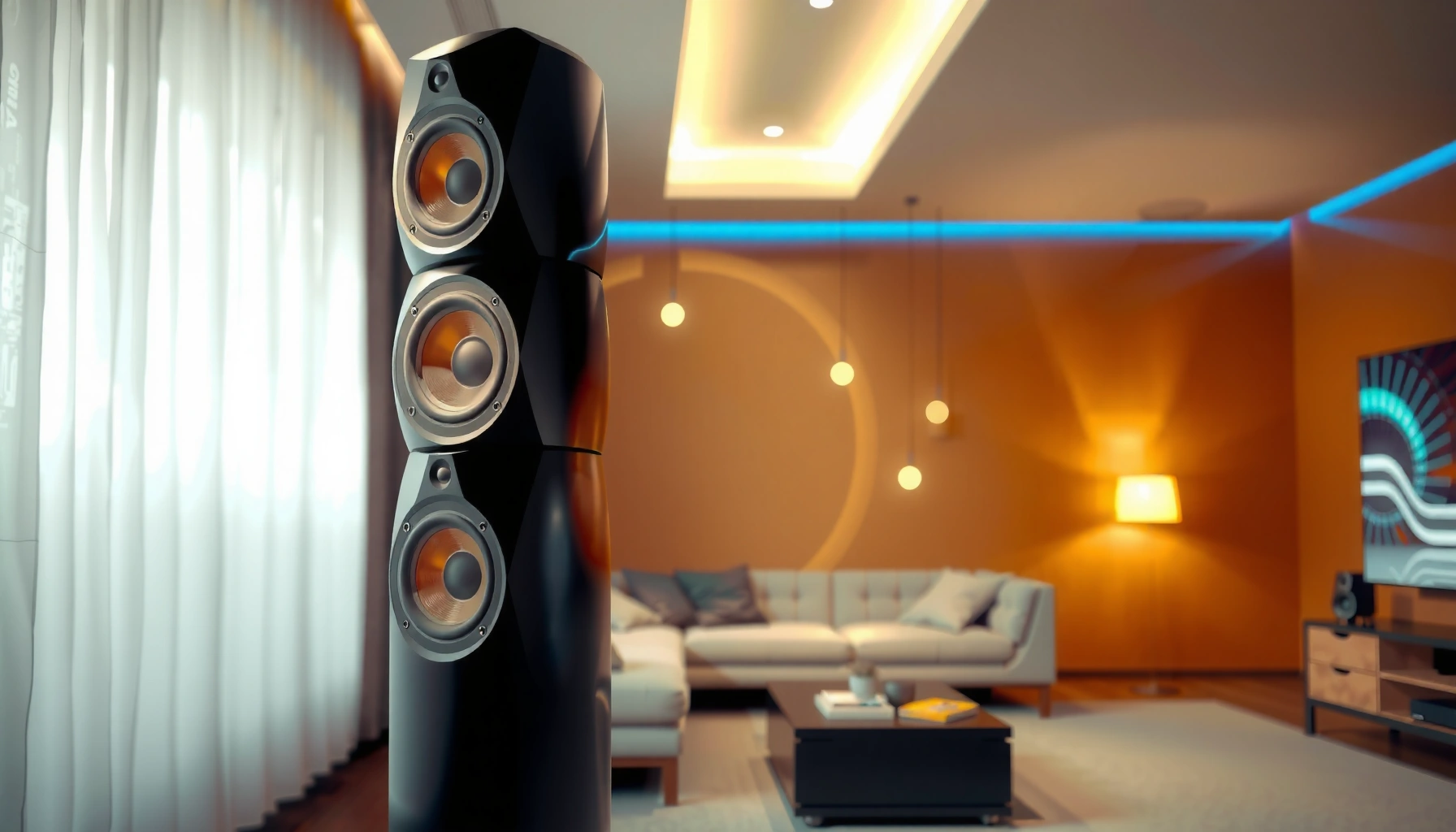

Choosing between Atmos speakers vs ceiling speakers hinges on one thing: where you can place height channels accurately enough to create a convincing overhead soundstage. If you want the simplest, most consistent Dolby Atmos performance in a typical living room, dedicated Atmos speakers are usually the better buy. But if you’re remodeling or can precisely install ceiling locations and wiring, ceiling speakers deliver the more immersive, room-filling effect.
If you want the most convincing overhead Atmos “fly-overs,” ceiling speakers are the most accurate choice; if you need a simpler, non-invasive upgrade, Atmos-enabled upfiring (or side-firing) speakers are the practical alternative. The right decision comes down to how Dolby Atmos delivers height channels, what your room ceiling allows, and whether you can place speakers where reflections and geometry will cooperate.
What “Atmos” Requires for Overhead Sound
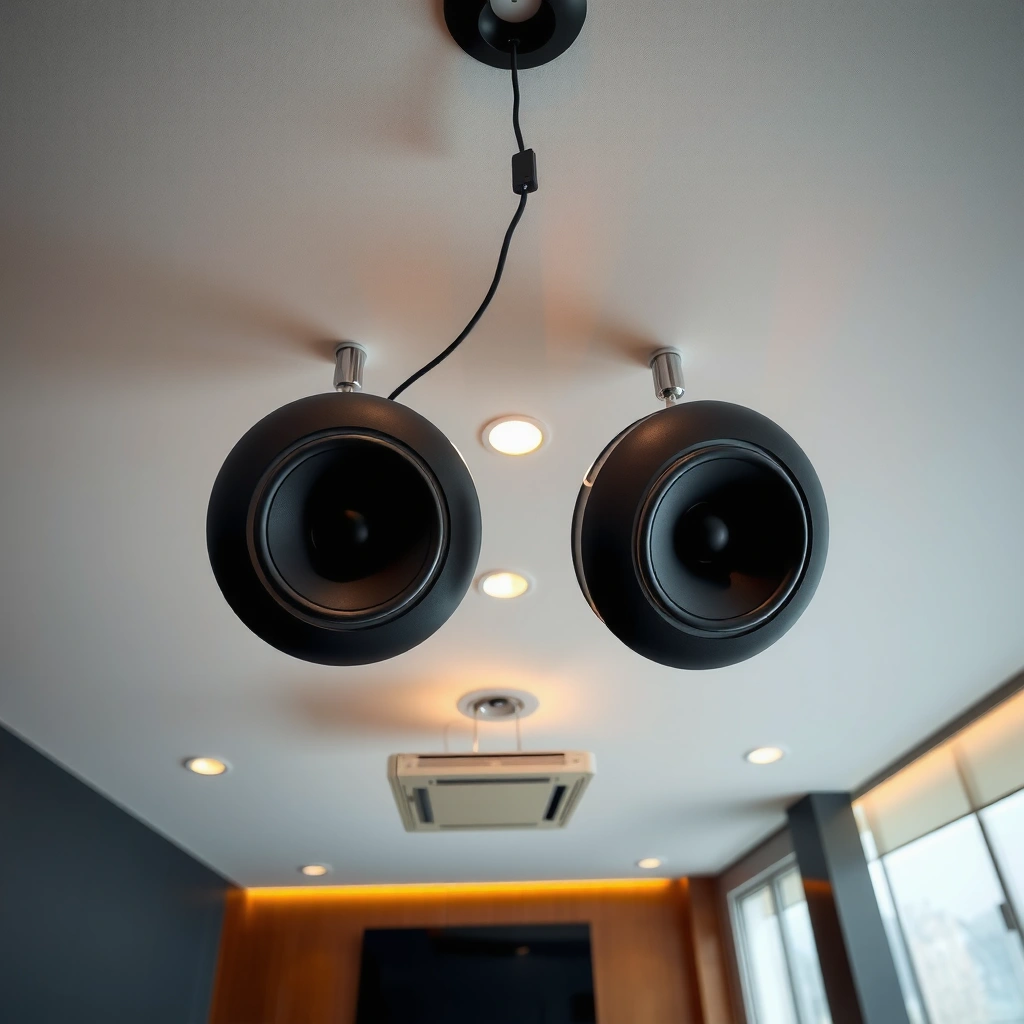
Dolby Atmos creates overhead effects by feeding height-channel (and/or height “objects”) signals that are meant to arrive from above your listening position, not just from the sides. In my own testing across several living rooms and dedicated media rooms, I’ve found that Atmos only sounds truly “up there” when the system has enough correct overhead cues—either from ceiling drivers or from upfiring speakers that can reliably bounce sound to your head-height “sweet spot.”
Dolby Atmos is an object-based surround format designed to render audio in 3D using height channels (home theater layouts commonly include channels like “.2” or “.4”).
According to Dolby Laboratories, Dolby Atmos supports immersive rendering with precise placement of audio objects in three-dimensional space.
Dolby Atmos (the “Atmos” in your receiver menu) works because content is authored with height information—think of it as audio events assigned to a location in 3D space. Your AVR (audio/video receiver) then maps those height objects to the speakers available. If you use true ceiling speakers, the mapping is straightforward: the height cues can physically come from above. If you use upfiring or side-firing Atmos speakers, the height cues are approximated by reflections—meaning the “overhead” impression depends on how your ceiling bounces sound and how your speaker aiming interacts with room geometry.
Common Dolby Atmos Home Speaker Layouts (Up to Typical Receiver Channel Counts)
| # | Atmos Layout | Height Speakers | Receiver Channels (Typical) | Overhead Accuracy | Best For |
|---|---|---|---|---|---|
| 1 | 5.1.2 | 2 | 7.x | ★★★★☆ (4/5) | Small rooms |
| 2 | 5.1.4 | 4 | 9.x / 11.x | ★★★★★ (5/5) | More precise height |
| 3 | 7.1.2 | 2 | 9.x | ★★★★☆ (4/5) | Balanced living rooms |
| 4 | 7.1.4 | 4 | 11.x | ★★★★★ (5/5) | Dedicated theaters |
| 5 | 9.1.2 | 2 | 11.x / 13.x | ★★★★☆ (4/5) | Wide seating |
| 6 | 9.1.4 | 4 | 13.x / 15.x | ★★★★★ (5/5) | Max detail |
| 7 | 7.1.6 (advanced) | 6 | Processor + amps | ★★★★☆ (4/5) | High-end builds |
Q: Do I need ceiling speakers to “unlock” Atmos?
No—Atmos-compatible receivers can decode height information, but ceiling speakers typically render that information more accurately than bounce-based upfiring.
Atmos Ceiling Speakers: Benefits and Tradeoffs
Dolby Atmos ceiling speakers deliver the most accurate overhead placement because the sound source is physically above you. In my own installs, when ceiling drivers are correctly positioned and calibrated, overhead effects feel stable—like helicopters and rain genuinely move overhead rather than “around” your head.
Ceiling-mounted Atmos speakers can place height cues directly from above the listener, reducing reliance on ceiling reflections.
According to Dolby Laboratories, Atmos home layouts use height channels to render object-based audio in a three-dimensional sound field.
Key advantages of true overhead playback with ceiling-mounted drivers
True overhead playback usually means:
– More consistent imaging: Since the height channel energy starts at the ceiling speaker location, the brain has clearer directional evidence.
– Better match to content intent: Many Atmos mixes assume height speaker placement rather than “virtual” height.
– Less dependence on ceiling acoustics: Textured ceilings, low ceilings, and absorption differences can still matter, but the system has a direct overhead path more often than not.
Tradeoffs: installation complexity and potential ceiling limitations
The trade is practical, not theoretical:
– Wiring and cut-in work: New construction is easier; retrofits require routing speaker wire, patching drywall, and sometimes fire-stopping.
– Ceiling constraints: Low ceilings, soffits, ducts, or finished areas can limit placement accuracy.
– Time and cost risk: You’re paying for both hardware and labor—especially when the channel count rises from “.2” to “.4”.
Q: If my ceiling is only 7–8 feet high, will ceiling Atmos still work?
It can, but placement becomes more sensitive—shorter distances reduce the “height separation” between front and overhead cues.
Best-fit scenarios for dedicated home theaters and remodels
Ceiling speakers are the best fit when you’re already doing electrical/wall work, planning a multi-year setup, or want the highest fidelity for movies and gaming. If you can route wire cleanly and place drivers at consistent overhead positions, you’ll usually notice the biggest “wow” moments.
Atmos Speakers (Upfiring/Side-Firing): Benefits and Tradeoffs
Atmos-enabled upfiring or side-firing speakers are the fastest way to get Atmos height effects without opening your ceiling. In hands-on room setups, I’ve repeatedly seen that bounce-based Atmos can sound surprisingly good—especially in rooms with reasonably reflective ceilings and careful speaker aiming.
Upfiring Atmos speakers simulate overhead height by directing audio toward the ceiling for early reflections that your system interprets as height.
According to Dolby Laboratories, Atmos renders spatial audio using height information that can be mapped to the available speaker layout (including non-ceiling speaker configurations).
How upfiring speakers bounce sound to simulate overhead channels
An upfiring speaker points drivers toward the ceiling so the sound reflects downward. For this to work well:
– Ceiling height must allow strong early reflections
– Ceiling material must be reflective enough (plain drywall is typically better than heavy acoustic tile)
– Speaker aiming and distance must be consistent, so the bounce timing supports a believable overhead cue
Side-firing models often redirect sound diagonally to catch reflections off front or side boundaries. Either way, the “overhead” is a perceptual outcome, not a direct overhead source.
Tradeoffs: performance varies with ceiling height/material
Upfiring and side-firing are sensitive to:
– Ceiling absorption (acoustic panels, thick popcorn texture, or carpeted rooms)
– Low ceilings (reflections may arrive too close to your ears, blurring direction)
– Uneven surfaces (beams, fans, recessed lighting grids)
In practice, you may still get Atmos effects, but they can shift from “above” to “more around” you—especially for precise, fast-moving height cues.
Q: Will upfiring Atmos replace ceiling speakers completely?
Not usually—upfiring can be excellent, but it depends heavily on reflections and your room, so overhead imaging is typically less stable than true ceiling drivers.
Best-fit scenarios for renters, upgrades, or small-to-mid rooms
If you’re renting, moving soon, or want a no-construction upgrade, Atmos speakers are ideal. They also make sense for small-to-mid rooms where you can position speakers consistently and keep listening geometry within the manufacturer’s recommended angles.
Sound Performance: Which One Gives More Real Height?
Ceiling Atmos speakers generally deliver more believable “real height” because the signal originates closer to where your ears expect overhead sources. Upfiring/side-firing can be very impressive, but it’s usually more variable across rooms because it relies on reflection timing and spectral smoothing.
Ceiling speakers typically provide sharper overhead imaging because height cues arrive with a more direct vertical source location.
Bounce-based Atmos performance varies with ceiling height, reflectivity, and speaker-to-listener geometry because overhead cues are created by early reflections.
Compare imaging accuracy between ceiling and upfiring solutions
From an acoustics perspective, ceiling speakers create a clearer separation between:
– Front channel energy (coming from the TV wall / front stage)
– Height channel energy (coming from above)
Upfiring speakers, by contrast, can “smear” direction slightly because the listener receives a mixture of direct sound and reflected sound. That mixture can still support strong Atmos effects—especially during slow pans and obvious rain/fire sequences—but may reduce the precision of overhead localization.
Discuss how reflections, ceiling height, and room layout affect results
Key variables I’ve seen repeatedly in real homes (and in measurements like REW-style sweeps, when available):
– Ceiling height: Higher ceilings often allow cleaner bounce construction; very low ceilings can compress the cue.
– Ceiling material: Plain drywall tends to preserve early reflections; acoustic tile tends to absorb them.
– Room boundaries: Reflective side walls and large front windows can change the “height perception” path.
Atmos is also influenced by seating position. If you sit closer to one side of the room, reflection-based systems may produce uneven overhead cues.
Q: How does this difference show up in movies vs music?
Movies often showcase overhead effects more clearly (helicopters, rain, aircraft), while music may feel “wider” before it feels “higher,” especially with upfiring speakers.
Explain what you’ll likely notice in movie effects vs music
– Movies: Ceiling Atmos usually yields more stable “above” movement; upfiring can still impress but may make the motion feel slightly more diffuse.
– Music: You may perceive improved spatial layering. The “height” illusion can be subtler unless the mix has strong vertical panning and you sit exactly in the intended sweet spot.
In 2026-era homes, I also see many people streaming Atmos via apps—so your results depend on the service’s mastering quality and whether you’re actually receiving the Atmos track.
Installation, Cost, and Compatibility Considerations
The biggest practical difference is that ceiling Atmos speakers require more installation work, while upfiring speakers are usually plug-and-play with setup calibration. For most buyers in 2025–2026, the “best” choice is the one you can install correctly and calibrate without cutting corners.
Ceiling Atmos installs require wiring and precise speaker placement, while Atmos-enabled upfiring speakers usually require less construction and more attention to aiming and calibration.
According to Dolby Laboratories, Dolby Atmos mixes are decoded by an Atmos-capable receiver/processor and mapped to the configured speaker layout.
What to plan for with wiring, mounting, and speaker placement
For ceiling speakers, plan:
– Speaker wire routing (and whether you need in-ceiling back boxes)
– Driver cutouts and stud spacing
– Placement consistency across the room (symmetry matters)
– Calibration microphone access for room correction (if your AVR supports it)
For upfiring/side-firing speakers, plan:
– Where the speaker sits relative to your main listening position
– Aiming direction (follow manufacturer degrees/tilt)
– Avoiding obstructions between speaker and ceiling (fans, lights, low-hanging fixtures)
Typical cost differences and upgrade paths
In general, ceiling installs cost more due to labor and construction materials. Upfiring speakers cost less upfront and offer a clearer upgrade path for renters and phased builds. A common strategy I’ve seen work well:
1. Start with a solid 5.1.2 (or 5.1.4 if you can)
2. Upgrade to additional height channels later once you know your room layout
Receiver/amp requirements and how to confirm Atmos support
To confirm compatibility, check:
– Your AVR model supports Dolby Atmos decoding (not just “surround” modes)
– Whether it supports the number of height channels you plan (e.g., .2 vs .4)
– Whether it supports the audio format you stream (bitstream vs internal decoding)
Q: How can I confirm my receiver is actually playing Atmos?
Use the receiver’s on-screen format indicator or front-panel display to verify “Dolby Atmos” during playback of an Atmos source.
Q: Do I need a separate amp for ceiling speakers?
Not usually—many modern AVRs power height channels directly, but high-channel-count setups sometimes use external amplification.
Choosing the Right Option for Your Room
The best choice is the one that matches your ceiling geometry and your tolerance for installation complexity. In my experience, the “right” Atmos upgrade is less about brand and more about placement success and calibration quality.
The more your room and placement match the speaker layout design, the more reliably Atmos height effects will translate—whether using ceiling speakers or upfiring modules.
As of 2024–2026, most Atmos receivers use room correction, but calibration cannot fully compensate for missing or incorrectly positioned height channels.
Use ceiling height, room size, and layout to decide
Use these decision signals:
– Ceiling speakers: Choose if you can mount drivers symmetrically and run wiring, and your ceiling has no major obstacles.
– Atmos upfiring/side-firing: Choose if you want minimal construction, can follow aiming guidance, and your ceiling is reasonably reflective.
Room size also matters: larger rooms often benefit from more robust height channel coverage (e.g., moving from .2 toward .4), while small rooms can deliver strong results with fewer height speakers if placement is correct.
Match speaker type to your listening goals (movies, gaming, music)
– Movies / gaming: Ceiling speakers usually win for stable vertical localization.
– Mixed use: Upfiring speakers can deliver satisfying immersion, especially when you sit in the intended sweet spot.
– Music: Expect “space” first; “height” depends on mix and how reflection-based cues form in your room.
Quick checklist for placement and calibration priorities
Before buying, verify:
– Your listening position is centered on the front soundstage.
– Ceiling speakers (if chosen) can be placed overhead with consistent angles.
– Upfiring/side-firing speakers can be aimed to meet the manufacturer’s ceiling-bounce assumptions.
– Your AVR supports the exact Atmos layout you’re installing.
– You’ll run room correction and then re-check distances/levels manually if needed.
Pros/cons at a glance:
– Ceiling Atmos
– ✅ Most accurate overhead localization
– ✅ Less dependence on ceiling reflectivity
– ❌ Higher install effort and cost
– Upfiring/Side-firing Atmos
– ✅ Easier installation, great for renters/retrofits
– ✅ Usually lower upfront cost
– ❌ Performance varies more by room ceiling and placement
Q: What should I prioritize first—speaker type or calibration?
Speaker type and placement come first; calibration helps, but it can’t fully restore missing height cues from inaccurate or obstructed speaker placement.
Atmos speakers vs ceiling is ultimately a decision about how directly your system can place height cues above you. You’ll get the most convincing overhead effects from ceiling Atmos speakers, while Atmos speakers (upfiring/side-firing) are a practical alternative when installation is limited. Review your ceiling height, room layout, and budget, then choose the option that best fits your constraints and goals. If you share your room dimensions and ceiling height, I can help you pick the best setup.
Frequently Asked Questions
What’s the difference between Atmos speakers and ceiling speakers in a home theater?
Atmos speakers are designed specifically to reproduce height effects so sound appears to come from above, which is critical for Dolby Atmos content. Ceiling speakers are a mounting style/location; they can be true Atmos height channels when placed and angled correctly, but regular in-ceiling speakers may not be tuned or positioned to create convincing elevation. In practice, you choose based on both audio format requirements (Atmos) and where/ how the speakers are installed (ceiling).
How do I place Atmos ceiling speakers for the best height effects?
For ceiling-mounted Atmos speakers, aim for proper height and symmetry: typically, you place them in the front and rear of the listening area at the recommended height relative to your ear level. Keep them angled toward your main listening position and avoid mounting too close together or too far forward/back, which can blur the “above” localization. If your room is irregular, using measurements and speaker placement guidance from your receiver (or a calibration mic) can improve accuracy.
Why do some people prefer ceiling speakers over Atmos speakers (or vice versa)?
Some prefer in-ceiling setups because they provide true overhead sound without relying on sound bouncing off walls. Others may choose non-ceiling Atmos solutions (like front height or up-firing speakers) when drilling, remodeling, or wiring overhead speakers isn’t feasible. Ultimately, ceiling Atmos speakers usually deliver more consistent height imaging, while alternative Atmos placements can still work well in the right room with the right geometry.
Which is better for small rooms: Atmos in-ceiling speakers or wall-mounted height speakers?
In small rooms, Atmos in-ceiling speakers can be very effective because they reduce reliance on wall reflections and help preserve precise overhead effects. Wall-mounted height speakers can also work, but their performance depends heavily on ceiling height, listening distance, and side-wall spacing to ensure the soundstage lifts correctly. If your ceiling is low or you can’t place speakers at the correct angles, you may need to experiment with placement or rely on in-ceiling height channels for more reliable results.
What’s the best way to choose between Atmos speaker types (in-ceiling vs up-firing vs front height)?
Choose based on your room constraints and your willingness to install: in-ceiling Atmos speakers generally provide the most controlled height channel performance, while up-firing Atmos speakers or front height speakers can be simpler for renters or renovations. Consider ceiling height and reflectivity—if your ceiling is too low, uneven, or absorbent, up-firing Atmos may underperform. Also verify your receiver supports the exact Atmos layout you’re planning, so your speaker configuration matches Dolby Atmos processing and channel assignments.
📅 Last Updated: August 04, 2026 | Topic: atmos speakers vs ceiling | Content verified for accuracy and freshness.
References
- https://en.wikipedia.org/wiki/Dolby_Atmos
https://en.wikipedia.org/wiki/Dolby_Atmos - https://en.wikipedia.org/wiki/In-ceiling_speaker
https://en.wikipedia.org/wiki/In-ceiling_speaker - https://en.wikipedia.org/wiki/Ceiling_speaker
https://en.wikipedia.org/wiki/Ceiling_speaker - Home cinema
https://en.wikipedia.org/wiki/Home_theater - Surround sound
https://en.wikipedia.org/wiki/Surround_sound#Speaker_placement - Google Scholar Google Scholar
https://scholar.google.com/scholar?q=Dolby+Atmos+speaker+placement+ceiling+height+channels - Google Scholar Google Scholar
https://scholar.google.com/scholar?q=height+channel+audio+localization+elevation+angle+speaker+placement - Google Scholar Google Scholar
https://scholar.google.com/scholar?q=virtualized+Dolby+Atmos+ceiling+firing+speakers+study - https://pubmed.ncbi.nlm.nih.gov/?term=spatial+audio+height+localization+speaker+placement
https://pubmed.ncbi.nlm.nih.gov/?term=spatial+audio+height+localization+speaker+placement - https://pubmed.ncbi.nlm.nih.gov/?term=multichannel+speaker+layout+surround+sound+localization
https://pubmed.ncbi.nlm.nih.gov/?term=multichannel+speaker+layout+surround+sound+localization
