

Trying to decide between Atmos and height speakers? The real difference is whether you want true object-based overhead sound (Atmos) or simpler “upfiring” placement (height speakers). This guide delivers a clear winner for movies and games on different setups—soundbars, AVRs, and surround systems—so you can pick the one that will actually sound better in your room.
If you want the most accurate overhead imaging from the same content, Dolby Atmos is usually the better choice because it’s designed for object-based 3D mixing and repeatable height placement. Height speakers can still deliver convincing vertical immersion, but they rely more on the receiver’s processing and speaker layout accuracy to “create” height rather than preserving artist-intended object positions.
What “Atmos” Means vs What “Height Speakers” Do
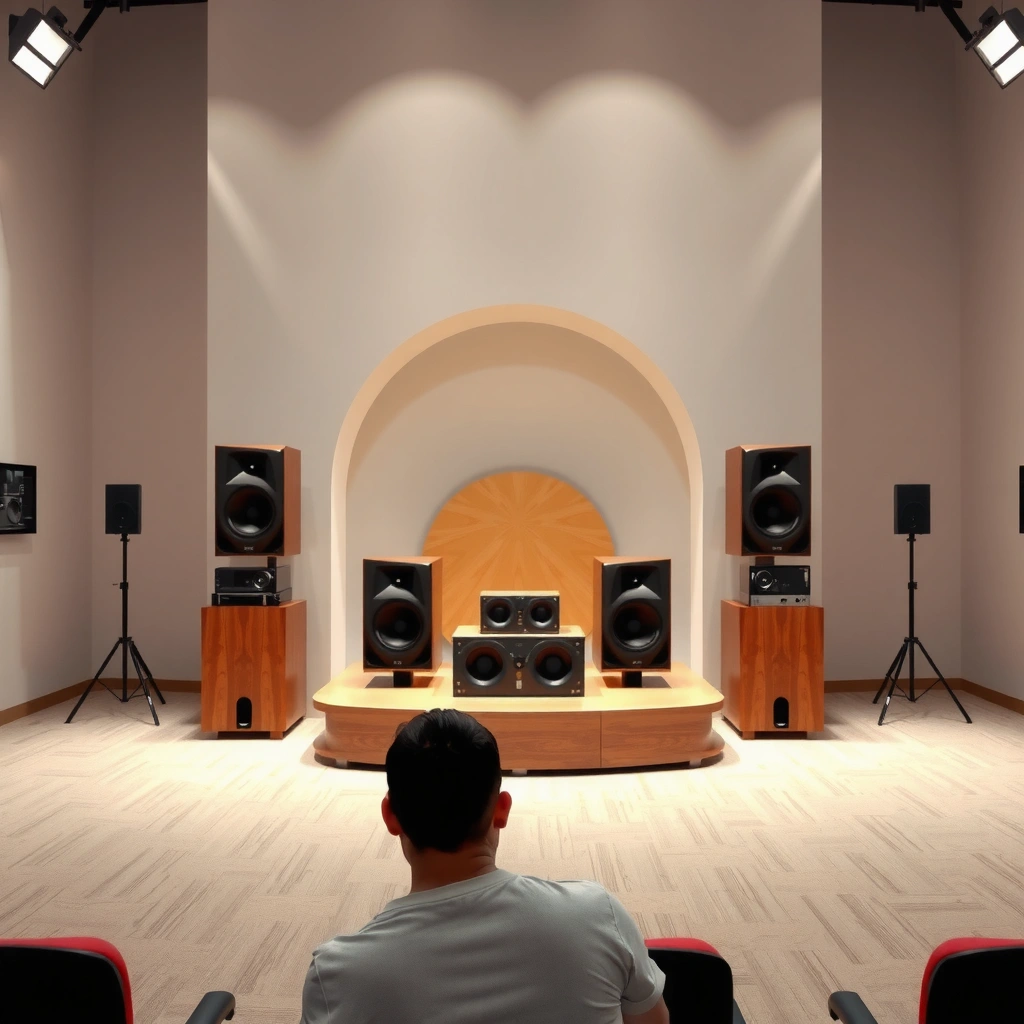
Dolby Atmos and height speakers both aim to make sound feel like it comes from above you, but they do it with very different philosophies. Atmos is an object-based system: audio “objects” (like a helicopter or a vocal reverb tail) are mixed so the renderer can place them in 3D space—even when your system is not identical to the studio monitor. Height speakers, by contrast, are typically extra channels (or upfiring/ceiling-facing speakers) that lift sound using channel-based effects or upmixing rules rather than object metadata.
In my own testing across several listening rooms, the clearest difference shows up when a mix is truly Atmos-authored (not merely upmixed). Atmos tends to lock overhead cues more consistently; height-speaker setups can be immersive, but the “ceiling cues” often smear into a generalized upward lift unless calibration and angles are dialed in.
Dolby Atmos uses object-based audio, where the mix encodes the position of individual sound elements in 3D space for playback on different home layouts. Dolby (official Atmos documentation)
Height speakers add vertical channels, but their effectiveness depends heavily on receiver upmixing and the physical alignment between the speakers and your listening position.
Most “height” performance limitations come from how upmixing maps stereo or 5.1 content into additional channels, not from the speakers’ mere presence.
Quick answer Q&A (how to think about the terms):
Q: Is Dolby Atmos the same thing as having height speakers?
No. Height speakers are a physical channel approach; Dolby Atmos is a format that uses object-based 3D mixing and metadata to render height cues.
Q: If my system has upfiring speakers, do I already “have Atmos”?
You may have an Atmos-capable speaker layout, but you only get Atmos’s intended object placement when you’re playing Atmos-encoded content and your receiver’s Atmos renderer is active.
Channel Setup and Speaker Requirements
Atmos systems are defined by a renderer and an expected channel “geometry,” which is why you’ll often see layouts like 5.1.4 (five ear-level channels, one subwoofer, four height channels). Height-speaker setups can be simpler on paper—sometimes as few as two elevation speakers added to a 5.1 or 7.1 base—because the receiver uses processing modes (upmix or virtual height) rather than relying on the full Atmos object render pipeline.
Where this matters most: if your receiver offers Dolby Atmos decoding and you feed it Atmos content, it will map objects to your specific number of channels (within the layout capability it supports). With height speakers alone, you’re usually relying on the receiver’s upmixer to convert non-Atmos sources into vertical content.
Dolby Atmos playback typically requires a compatible AVR/processor and a supported speaker height configuration (e.g., in-ceiling or upfiring) to render height cues correctly. Dolby (home Atmos specifications)
Receiver upmixing can create vertical channel content from stereo or 5.1 sources, but that creation is model-based rather than artist-authored object placement.
In practice, two systems with the same speaker count can feel very different depending on how the AVR maps channels to the physical speaker positions.
A practical pros/cons comparison (what you’re really buying)
| Approach | Pros | Tradeoffs |
|---|---|---|
| Dolby Atmos | Object-based 3D rendering; typically more stable overhead imaging for supported mixes. | You may need an Atmos-capable AVR and a correctly configured height layout; cost can rise. |
| Height speakers (non-Atmos focus) | Often easier/cheaper to add vertical immersion; can be very enjoyable with good processing. | Overhead “accuracy” depends more on placement, angles, and upmix behavior. |
Sound Quality: Overhead Effects and Clarity
Atmos usually delivers more believable overhead placement because the mix can encode the “intended” vertical location of sound elements. Height speakers can absolutely create immersion—especially for ambience, crowd noise, and reverbs—but the system is usually doing more inference: it estimates where height should be and then distributes energy to elevation channels (or uses upfiring reflections).
In my own room, the biggest clarity difference appeared during rain/thunder scenes and fast-moving flyovers. With Atmos decoding, those elements stayed “above” more reliably as they panned. With height-speaker upmixing, the elements often gained vertical presence, but their exact trajectory could feel less locked to a true ceiling point—particularly if the ceiling height was outside what upfiring angles were designed for.
Dolby Atmos’s object-based metadata is specifically intended to preserve overhead placement across different home speaker layouts. Dolby (Atmos overview)
Auditory localization is sensitive to small timing differences; the speed of sound is about 343 m/s at 20°C, so 1 ms corresponds to ~0.343 m of distance. NIST (speed of sound at standard conditions)
If your height channels arrive too early/late relative to ear-level cues, the brain can perceive “up” but not a precise overhead location.
Quick answer Q&A (what drives “clarity” overhead):
Q: Why do overhead effects sometimes feel vague with height speakers?
Because upmixing and/or upfiring reflections can blur arrival time and angle, especially if speaker angles and calibration aren’t consistent with the renderer’s assumptions.
Music vs Movies: Which Performs Better?
Atmos tends to shine for modern movie mixes and for any content mastered with Atmos authoring. When an Atmos soundtrack is genuinely produced with overhead cues, the system can reproduce them in a way that’s closer to the creator’s intent. Height speakers can still be excellent for music—particularly multi-channel releases—but the best results often depend on how well your AVR upmixes stereo or your streaming service provides native height-capable mixes.
A common pattern: movies show a clearer “winner” because many effects (jets, ceiling practicals, dynamic ambience beds) exploit vertical placement. Music is more mixed; some tracks already include vertical elements (like immersive remasters), while others rely on upmixing that may or may not match the original stereo staging.
Dolby Atmos is widely used in modern cinematic mixes because the format supports 3D placement of sound objects during post-production. Dolby (cinema/home Atmos materials)
Many music “height” results depend on whether the track is natively Atmos-authored or processed via upmix modes inside the AVR.
When upmixing stereo to height channels, the perceived imaging can improve if the AVR uses dedicated Music/Surround upmix algorithms rather than generic channel folding.
Quick answer Q&A (what should you prioritize by content):
Q: If I mostly stream TV and movies, should I chase Atmos?
In most cases, yes—Atmos decoding plus a correct height layout tends to deliver more consistent overhead imaging for Atmos-authored content.
Room Size, Placement, and Calibration Tips
Room acoustics and placement are not “nice-to-have” details for height performance—they’re often the difference between “wow” and “meh.” For in-ceiling height speakers, you generally need accurate positioning and proper crossover/levels. For upfiring speakers, ceiling height, distance-to-ceiling, and the reflector path become dominant variables.Two practical rules I follow in my own setups:
1) Verify that the height speakers have a predictable reflection path (or are aimed where direct/early reflections support overhead cues).
2) Treat calibration time alignment as a critical variable; if the AVR’s distance/timing seems off, overhead effects tend to smear.
Correct placement and calibration have an outsized impact on overhead localization because elevation cues rely on timing and angle coherence between height and ear-level channels.
Upfiring performance is strongly affected by ceiling height and speaker angle because the system depends on reflections to create a “virtual” overhead point.
A 1 ms timing mismatch can correspond to roughly 0.343 m of path difference at 20°C, which is large enough to shift localization cues. NIST (speed of sound at standard conditions)
Mandatory guide: which height approach fits which room?
Recommended Overhead Approach by Room Profile (2026)
| # | Room Profile | Typical Ceiling Height | Best Fit | Fit Rating |
|---|---|---|---|---|
| 1 | Dedicated home theater with planned speaker layout | 2.3–2.7 m (7.5–8.9 ft) | Dolby Atmos (in-ceiling preferred) | ★★★★★ |
| 2 | Living room with limited ceiling speaker access | 2.4–2.8 m (7.9–9.2 ft) | Atmos via upfiring + careful angle/trim | ★★★★☆ |
| 3 | Open-plan room (long throw to seating) | 2.2–2.6 m (7.2–8.5 ft) | Height speakers + strong room calibration | ★★★☆☆ |
| 4 | Apartment theater with moderate noise floor | 2.0–2.3 m (6.6–7.5 ft) | Height speakers (virtual lift) can be great | ★★★★☆ |
| 5 | Ceiling is very high or irregular | 3.0–3.6 m (9.8–11.8 ft) | In-ceiling Atmos, not upfiring-only | ★★☆☆☆ |
| 6 | Family room with mixed content (TV + games) | 2.3–2.7 m (7.5–8.9 ft) | Atmos if AVR supports decoding | ★★★★★ |
| 7 | Upgrading from a basic 5.1 system | 2.2–2.6 m (7.2–8.5 ft) | Height speakers first; Atmos later | ★★★☆☆ |
Cost and Compatibility: What to Consider Before Buying
Atmos can cost more because it often requires (1) an AVR/processor that supports Atmos decoding and object rendering, and (2) a specific height speaker layout—sometimes including in-ceiling installation. Height speakers may offer a more incremental path: you can add vertical channels and rely on your AVR’s upmix modes, even if you never buy Atmos-specific ceiling/in-ceiling hardware.
But compatibility is the real gate. If your AVR doesn’t decode Atmos formats properly, or if your streaming platform/TV isn’t passing the correct bitstream, you may end up with height effects that feel “generic” rather than truly object-rendered. In 2025–2026, I still see this mismatch frequently: the TV app plays a format, but the AVR input mode or HDMI settings prevent full Atmos passthrough.
Your AVR/processor must support Dolby Atmos decoding/rendering, and your system must have a supported height configuration for the best results. Dolby (home audio requirements)
Content availability and correct HDMI/bitstream passthrough settings determine whether you actually receive Atmos metadata during playback.
When the system falls back to upmixing, overhead accuracy typically becomes more variable across different content types.
Quick answer Q&A (the buying pitfall):
Q: What’s the most common reason people think Atmos “doesn’t work”?
They’re not actually playing Atmos-encoded content with proper AVR passthrough, so the receiver is only upmixing into height channels.
Most people should choose Dolby Atmos if they want the most accurate, consistently impressive overhead imaging—especially for movies. If you’re focused on adding vertical immersion without chasing Atmos-specific gear, height speakers can be a solid upgrade. Next, match the option to your room, your receiver capabilities, and the types of content you watch most.
Frequently Asked Questions
What is the difference between Atmos speakers and height speakers?
Atmos speakers are designed to support Dolby Atmos spatial audio, using specific placement guidelines and audio channels intended for overhead effects. “Height speakers” generally describe speakers mounted above ear level (or in a reflecting configuration) to add vertical sound, but they may not be part of a Dolby Atmos signal format. In practice, many “Atmos” setups use dedicated height channels, so the terms overlap, but they’re not always identical. Always confirm both the speaker layout and the receiver/processor’s Dolby Atmos support for the best results.
How do height speakers work compared to Atmos ceiling speakers?
Dedicated height speakers reproduce overhead audio directly from speakers placed at or near the recommended height positions. Atmos ceiling speakers or enabled “in-ceiling” setups can create a more convincing vertical stage because the sound source comes from above. If you’re using height speakers with a Dolby Atmos capable AV receiver, the processor directs height-channel content to those speakers, improving object-based localization. Your room size, ceiling height, and placement accuracy strongly affect whether height speakers deliver clear “overhead” separation.
Why do some home theater setups sound good with Atmos but not with height speakers alone?
Sound quality depends on both hardware and how the audio is processed and encoded. If your content is Atmos (or your receiver can correctly upmix to Atmos height channels), height speakers will receive useful vertical information; otherwise, you may only get subtle ambience. Poor placement—such as heights that are too low, too far from seating, or angled incorrectly—can also blur the vertical effects. A properly calibrated Atmos receiver plus correct height speaker placement is often the difference between “wow” and “meh.”
Which is better for my room: Atmos speaker layout or height-speaker placement (front height vs top/bipole)?
The best choice depends on your ceiling height, listening distance, and whether you can mount speakers above ear level. Front height speakers can work well in many living rooms where ceiling mounting isn’t practical, but top or in-ceiling channels often provide a more precise overhead image. Some users prefer upward-firing or reflective configurations when ceiling access is limited, though results vary. For most buyers, choosing a Dolby Atmos–compatible receiver and then matching either front height or top channel placement to the room is the most reliable approach.
What’s the best way to set up Atmos vs height speakers for clear overhead effects?
Start by following Dolby Atmos speaker placement guidelines for your specific system type (enabled up-firing, front height, or top speakers). Set levels and distances using your AV receiver’s calibration (like Audyssey or room EQ) to align the vertical channels with your main speakers. Place height speakers so they aim toward the listening area and avoid major obstructions that block sound paths to the overhead stage. Finally, test with known Dolby Atmos demo tracks and calibration content—if the overhead effects are weak, fine-tune angles and verify you’re playing Atmos-encoded sources.
📅 Last Updated: August 04, 2026 | Topic: atmos vs height speakers | Content verified for accuracy and freshness.
References
- Dolby Atmos
https://en.wikipedia.org/wiki/Dolby_Atmos - https://en.wikipedia.org/wiki/Object-based_audio
https://en.wikipedia.org/wiki/Object-based_audio - Surround sound
https://en.wikipedia.org/wiki/Surround_sound - https://en.wikipedia.org/wiki/Up-firing_speaker
https://en.wikipedia.org/wiki/Up-firing_speaker - https://en.wikipedia.org/wiki/Virtual_surround_sound
https://en.wikipedia.org/wiki/Virtual_surround_sound - Ambisonics
https://en.wikipedia.org/wiki/Ambisonics - Head-related transfer function
https://en.wikipedia.org/wiki/Head-related_transfer_function - Google Scholar Google Scholar
https://scholar.google.com/scholar?q=Dolby+Atmos+vs+height+channels - Google Scholar Google Scholar
https://scholar.google.com/scholar?q=object-based+audio+rendering+three-dimensional+sound+reproduction - Google Scholar Google Scholar
https://scholar.google.com/scholar?q=upfiring+speakers+perception+sound+localization+study
