
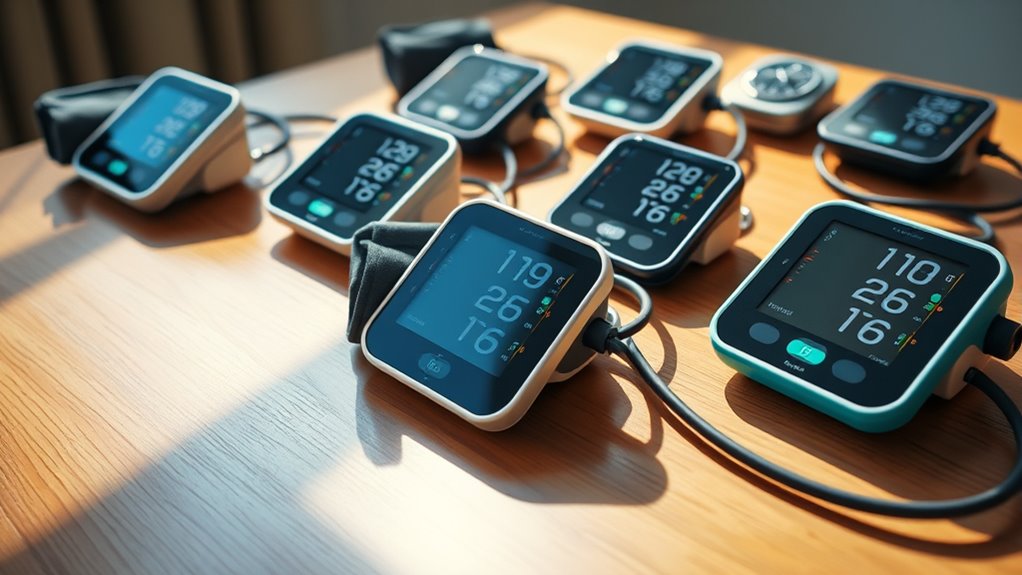

When you’re looking for the best blood pressure monitors, consider models like the Omron Platinum BP786N for reliability, or the Withings BPM Connect for smart connectivity. Upper arm monitors usually provide the best accuracy, while compact options like the iHealth Lite are great for travel. Don’t forget to check features like FDA approval and user reviews to guarantee you’re choosing a quality device. Keep exploring to discover models that fit your specific needs.
Understanding Blood Pressure Monitors
When you’re keeping an eye on your health, understanding blood pressure monitors is vital. These devices help you track your cardiovascular health, but knowing how to maintain them is just as important. Regular monitor maintenance guarantees accurate readings, so check the batteries and calibration periodically. User feedback is invaluable; it helps you choose a reliable monitor and learn tips for effective usage. Look for models that are easy to operate, provide clear readings, and have positive reviews from other users. Don’t forget to take into account features that suit your lifestyle, like portability or connectivity to mobile apps. Empower yourself with knowledge, and you’ll be better equipped to take charge of your blood pressure management.
Types of Blood Pressure Monitors
Choosing the right type of blood pressure monitor can greatly influence your ability to manage your health effectively. You’ll find several options available, each catering to different preferences and lifestyles. Here are some popular types:
- Digital Monitors: Easy to use with automatic readings.
- Wrist Monitors: Convenient for portability, but may be less accurate.
- Upper Arm Monitors: Often considered the gold standard for accuracy.
- Manual Monitors: Require a stethoscope and skill, offering a classic approach.
- Smart Monitors: Connect to apps for tracking your readings over time.
Key Features to Consider
When choosing a blood pressure monitor, it’s crucial to evaluate accuracy and calibration, as these factors directly affect the reliability of your readings. You’ll also want to reflect on how easy the device is to use, especially if you plan to monitor your blood pressure regularly. Let’s explore these key features to help you make an informed decision.
Accuracy and Calibration
Although many factors can influence your blood pressure readings, accuracy and calibration are essential features to take into account when selecting a monitor. Confirming your device meets calibration standards can greatly reduce measurement variability, giving you the reliable data you need. Here are some critical aspects to reflect on:
- FDA Approval: Look for monitors that have FDA clearance or certification.
- Calibration Frequency: Check how often the device needs recalibration to maintain accuracy.
- User Reviews: Research what others are saying about the monitor’s performance.
- Warranty and Support: A good warranty can indicate the manufacturer’s confidence in accuracy.
- Comparison with Clinical Readings: Verify the monitor’s results align with professional tests.
Choosing wisely can empower you to manage your health effectively!
Ease of Use
Many users appreciate the convenience of blood pressure monitors that are easy to use. When considering ease of use, focus on the monitor design and user interface. Look for monitors with clear displays and simple buttons, allowing you to take readings without confusion. Automatic inflation and deflation features can also enhance your experience, making the process quicker and more efficient. A well-designed monitor should be lightweight and portable, so you can easily carry it wherever you go. Additionally, choose one with a comfortable cuff that fits snugly without being too tight. Ultimately, an intuitive user interface can make tracking your blood pressure feel less like a chore and more like a seamless part of your daily routine.
Top Blood Pressure Monitors for Home Use
Monitoring your blood pressure at home is essential for maintaining your overall health, especially if you’re managing hypertension or other cardiovascular conditions. With so many options available, it’s important to choose a monitor that fits your needs. Here are some top blood pressure monitors for home use:
Monitoring blood pressure at home is crucial for your health, especially for those with hypertension or cardiovascular conditions. Choose a suitable monitor for effective tracking.
- Omron Platinum BP786N: Reliable and user-friendly, perfect for health tracking.
- Withings BPM Connect: Connects to your smartphone for easy data sharing.
- Beurer BM55: Offers a large display and multiple user profiles.
- Panasonic EW3109W: Compact design with a comfortable cuff.
- QardioArm: A stylish option that syncs with a health app.
These monitors can simplify your home monitoring routine and help you stay on top of your health.
Best Blood Pressure Monitors for Accuracy
How can you assure that you’re getting the most accurate readings from your blood pressure monitor? First, it’s essential to choose a device that uses reliable calibration techniques. Regular calibration assures measurement consistency, giving you confidence in your readings.
Here’s a quick comparison of some top monitors for accuracy:
| Blood Pressure Monitor | Calibration Technique |
|---|---|
| Monitor A | Automatic calibration |
| Monitor B | Manual calibration |
| Monitor C | Self-calibrating |
User-Friendly Monitors for Beginners
If you’re new to tracking your blood pressure, finding a user-friendly monitor can make all the difference in guaranteeing you get accurate readings without feeling overwhelmed. Here are some beginner tips for monitor selection:
- Automatic vs. Manual: Choose automatic monitors for ease of use.
- Large Display: Look for clear, easy-to-read screens to avoid confusion.
- One-Touch Operation: Opt for monitors that require just a simple button press.
- Memory Function: A device that saves previous readings can help you track trends.
- Comfortable Cuff: Ascertain the cuff fits well to get accurate measurements.
Advanced Features in Blood Pressure Monitors
When choosing a blood pressure monitor, advanced features can make a significant difference in your health tracking. Smart connectivity options allow you to sync data with your smartphone, while enhanced accuracy technology guarantees reliable readings. These advancements not only simplify your monitoring experience but also help you manage your health more effectively.
Smart Connectivity Options
Many people are turning to blood pressure monitors that offer smart connectivity options, enhancing their ability to track and manage health data. With smartphone integration and wireless connectivity, these devices make it easier than ever to stay on top of your health. Here are some key features to contemplate:
- Real-time data syncing with your smartphone
- User-friendly apps for tracking trends
- Customizable reminders for regular monitoring
- Sharing capabilities with healthcare providers
- Cloud storage for long-term data analysis
These options not only provide convenience but also empower you to take charge of your health journey. By utilizing smart connectivity, you can effortlessly monitor your blood pressure and maintain an informed approach to your wellness.
Enhanced Accuracy Technology
Accuracy is essential when it comes to monitoring blood pressure, and advancements in technology are making that easier than ever. Enhanced accuracy technology in blood pressure monitors includes features like advanced algorithms and oscillometric measurement, which provide more reliable readings. Many devices now incorporate accuracy enhancement methods that reduce interference from body movements or irregular heartbeats, giving you peace of mind. Some monitors even allow for personalized settings, adjusting to your unique needs for best results. With these technology advancements, you can trust that your readings reflect your true blood pressure, empowering you to manage your health more effectively. Embracing these innovations means you’re equipped with tools that support your freedom to live life on your terms.
Budget-Friendly Options
Finding a reliable blood pressure monitor doesn’t have to break the bank. There are plenty of affordable models that provide accurate readings without straining your wallet. Here are some great budget choices to take into account:
- Omron BP7100: Known for its simplicity and reliability.
- Greater Goods Smart Blood Pressure Monitor: Offers app connectivity for easy tracking.
- Beurer BM55: A user-friendly option with a large display.
- Withings BPM Connect: Stylish design and smart features at a reasonable price.
- HealthSmart Standard Monitor: Compact and easy to use, perfect for home use.
Choosing any of these options guarantees you can keep track of your health without compromising your financial freedom.
Recommendations for Travel-Friendly Monitors
When you’re on the go, having a compact and efficient blood pressure monitor can make a world of difference in managing your health. Look for models with a portable design and long battery life, ensuring you can track your readings without hassle. Here are some top recommendations:
| Monitor Model | Portable Design | Battery Life |
|---|---|---|
| Omron Platinum | Yes | Up to 1000 readings |
| Withings BPM Connect | Yes | Rechargeable, lasts weeks |
| iHealth Lite | Yes | Up to 200 readings |
These options balance functionality and convenience, making them ideal for travelers. Remember, consistent monitoring helps you stay in tune with your health, no matter where you are.
Tips for Accurate Blood Pressure Measurement
To guarantee you get the most reliable blood pressure readings, follow a few key tips. Paying attention to proper positioning and consistent timing can make a big difference. Here’s what you need to do:
For accurate blood pressure readings, focus on proper positioning and consistency in timing.
- Sit comfortably in a chair with your back supported.
- Keep your feet flat on the floor and avoid crossing your legs.
- Rest your arm on a flat surface, at heart level.
- Take measurements at the same time each day for consistency.
- Avoid caffeine, exercise, and smoking for at least 30 minutes before measuring.
Frequently Asked Questions
How Often Should I Check My Blood Pressure at Home?
You should check your blood pressure at home daily or as advised by your doctor. Following frequency guidelines helps you track changes and manage your health, ensuring you stay informed about your well-being.
Can I Use a Blood Pressure Monitor on Different Body Parts?
You can use alternative measurement sites like your wrist or thigh, but be cautious—body position effects can skew readings. Ascertain you’re seated comfortably, and it’ll feel like a gentle breeze guiding your health journey.
What Should I Do if My Readings Seem Inconsistent?
If your readings seem inconsistent, check for reading patterns and verify your device’s calibration is accurate. Try measuring at the same time daily, and consult a healthcare professional if issues persist for better guidance.
Are Digital Monitors More Accurate Than Manual Ones?
Digital monitors often offer greater accuracy due to advanced technology, while manual monitors are known for their reliability when used correctly. You should choose based on your comfort and preference for convenience or traditional methods.
How Do I Maintain My Blood Pressure Monitor for Longevity?
To keep your blood pressure monitor lasting, regularly calibrate it according to the manufacturer’s instructions. Also, store it in a dry, temperature-stable environment. These simple steps can guarantee accurate readings for years to come!
