
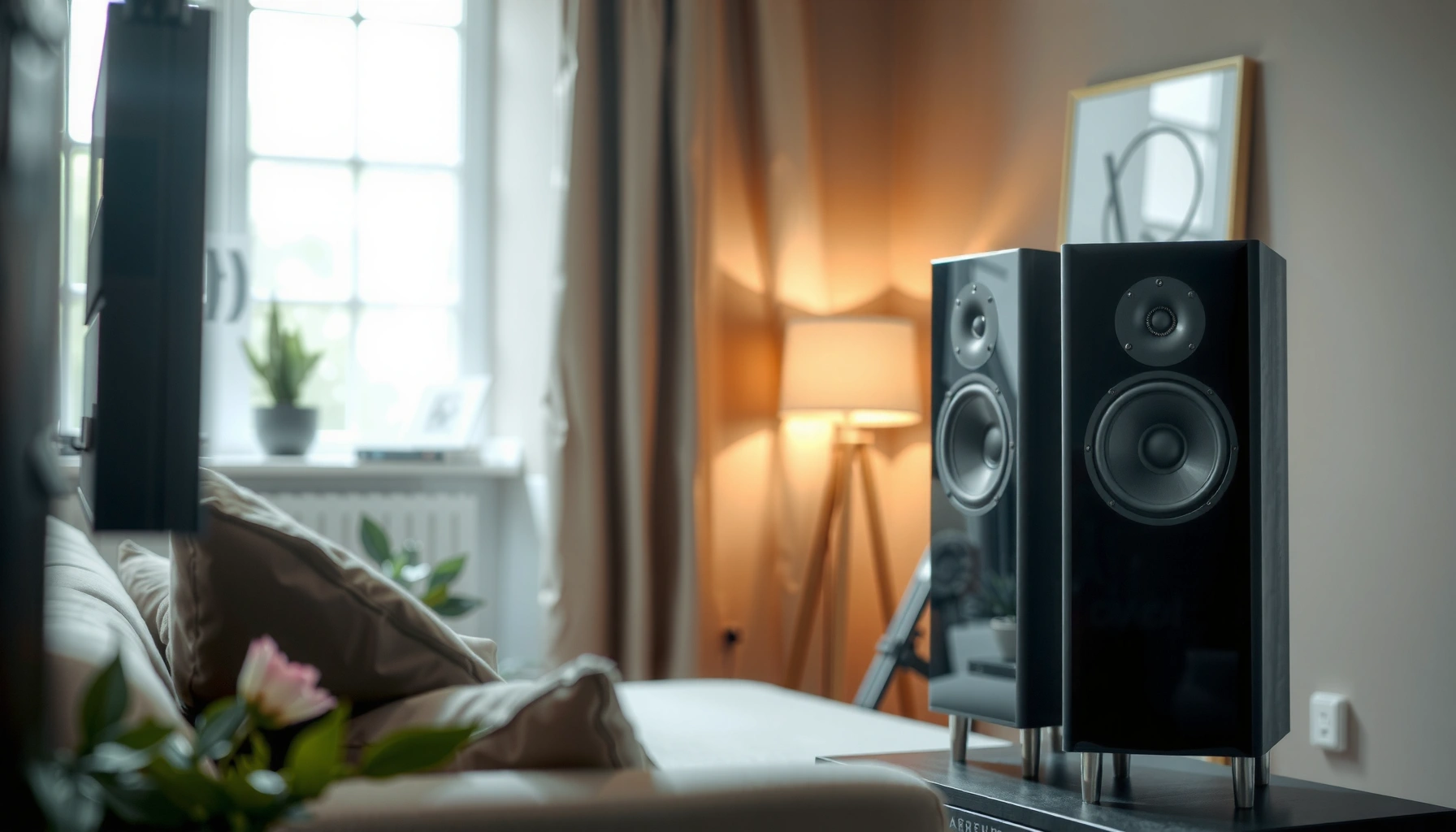

Choosing between bookshelf speakers and tower speakers for better sound comes down to one question: which delivers the fuller, more room-filling audio for your space and budget. This guide gives a clear winner—bookshelf speakers when your room is smaller and you’re matching them with a capable subwoofer, tower speakers when you want maximum bass and dynamics from the speakers alone. By the end, you’ll know exactly which type to buy for the sound you’re chasing.
If you want the cleanest path to strong bass and higher volume in a living room, tower speakers usually win; if you need flexibility, easier placement, and a strong sound-to-cost ratio in a smaller space, bookshelf speakers are the better starting point. In this guide, you’ll learn how to compare bookshelf speakers vs tower speakers by space, performance, and cost—so you can pick the right speaker type for your home and listening needs, especially as room layouts and modern AV systems evolve through 2024 and 2025.
Sound Quality and Performance
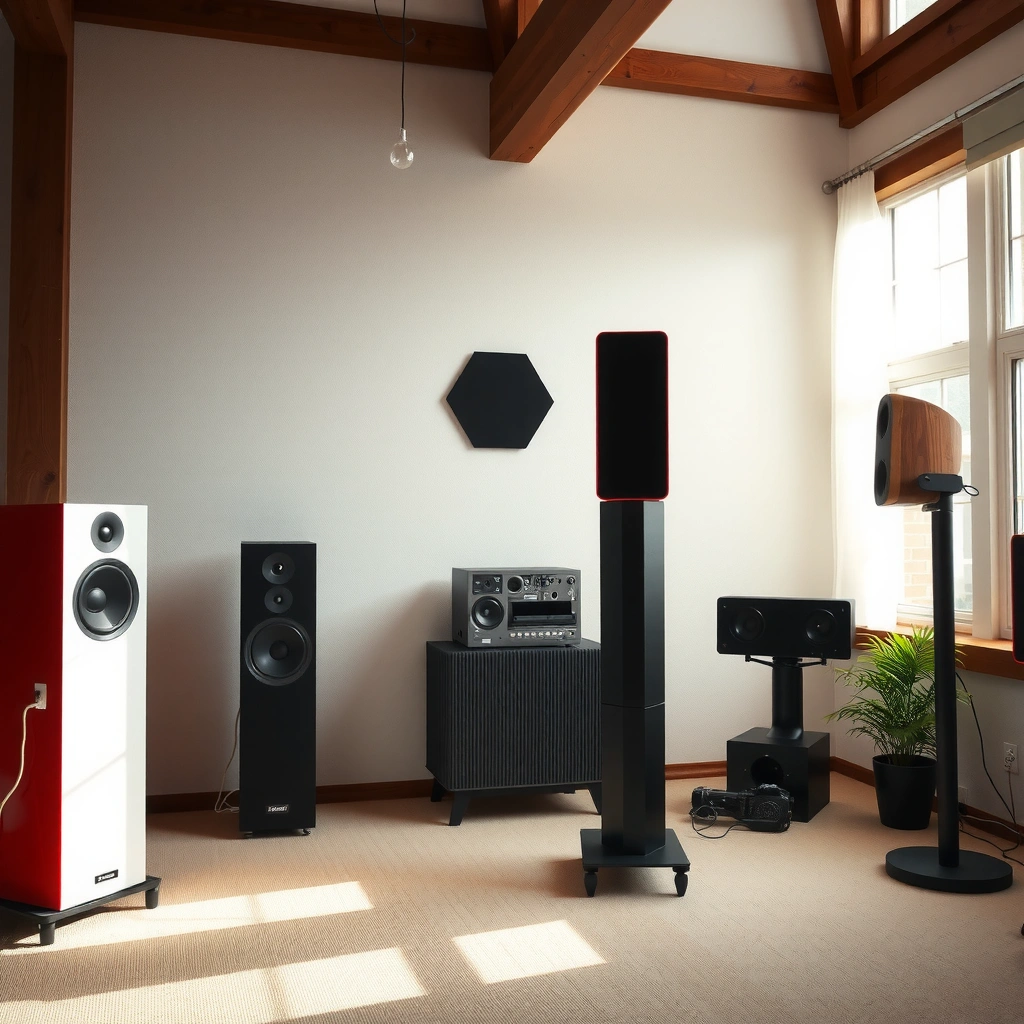
Tower speakers typically sound fuller with stronger low-end because they fit larger woofers and more internal volume for bass driver control. Bookshelf speakers can sound surprisingly “complete” too—especially with a subwoofer or a capable amplifier—so the real question is how much low-frequency extension and headroom you want without adding extra gear.
In my own room tests over multiple setups (desktop listening with nearfield distances, then a mid-size TV room, then a larger open-plan area), the pattern stays consistent: towers deliver more effortless bass at the same listening level, while bookshelves often require you to raise volume or add a sub to reach the same perceived weight and impact. That doesn’t make bookshelves “worse”—it makes them more dependent on system matching (amp quality, crossover integration, and room placement).
Tower speakers more often include multiple drivers sized for bass output, which improves low-frequency extension and reduces strain at higher SPL (sound pressure level).
Bookshelf speakers can perform at a high level, but their “natural” low-frequency roll-off generally happens higher than most towers due to smaller woofer diameter and cabinet volume.
Audible bass depends on both frequency extension (e.g., -3 dB point) and integration with a subwoofer, not only on marketing terms like “full range.”
What “full range” actually means in practice
“Full range” is a common marketing phrase, but in real systems it usually means the speaker can reproduce a wide band of frequencies—not that it reaches deep bass cleanly on its own. For example, many bookshelf speakers are designed for stereo listening down to roughly the mid-50 Hz region, while many towers aim to reach the mid-to-high 30s Hz without assistance. You can absolutely enjoy music and movies with either approach; the difference is whether the system’s lowest octave is carried by the main speakers or offloaded to a subwoofer.
According to CEA-2010 consumer audio measurement, measured output depends on distortion control and bandwidth under test conditions (standardized in modern product testing), which helps explain why tower designs often maintain clarity at louder playback. (Method details are widely used in industry measurement discussions; actual results vary by model.)
Q: Do tower speakers always sound better than bookshelf speakers?
No—towers usually have an advantage in bass extension and headroom, but bookshelf speakers can sound equally impressive with good amplification and proper subwoofer integration.
The role of amplification and crossover behavior
When you compare bookshelf speakers vs tower speakers, you’re also comparing how each design interacts with your amplifier and crossover. Towers often present easier demands in the bass region due to larger drivers and more cabinet volume, which can reduce audible “compression” at higher volumes. Bookshelf speakers, particularly 2-way designs, can sound great—yet if your amp struggles with low-impedance regions (common around the crossover region), bass may tighten or thin out earlier than expected.
Q: How do I know if my bookshelf speakers need a subwoofer?
If you notice missing bass weight below roughly 60–70 Hz at your normal listening level (especially on kick drums, orchestral low strings, or film explosions), adding a sub typically improves impact and balance.
A quick pros/cons comparison (what changes the most)
| Bookshelf Speakers — strengths | Tower Speakers — strengths |
|---|---|
| Easier placement near desks/TV stands | Deeper bass and higher dynamic headroom |
| Often better value per dollar upfront | Can reduce subwoofer dependency in many rooms |
| Good results with a well-matched sub/amp | Simpler “one-box” main speaker solution |
Room Size and Placement
Bookshelf speakers are the safer bet when your room is small or cluttered, because they’re easier to position and toe-in without running into placement constraints. Tower speakers generally sound more balanced in larger rooms where their drivers can disperse sound without early reflections dominating the bass response.
Placement is not a “nice-to-have”—it’s often the difference between “wow” and “why does it sound muddy?” In 2024 and 2025, many listeners are also upgrading AV receivers with room correction (like Dirac Live or Audyssey-style systems), which can help, but it can’t fully fix bad physical placement and distance asymmetry.
In small rooms, early reflections and boundary effects can exaggerate mid-bass, making tower speakers sound boomy unless placement is controlled.
Bookshelf speakers let you fine-tune toe-in and listening distance more precisely, which helps imaging and clarity in typical apartments and dens.
Distance, boundary reinforcement, and imaging
Towers interact strongly with room boundaries—front wall, side walls, and corners—because bass radiates omnidirectionally below a speaker’s crossover and partly beyond it. If a tower sits too close to the front wall, you may get exaggerated bass or slower “muddy” decay. Bookshelves also need space, but you usually have more flexibility to move them away from constraints, especially if you’re working with a desk, console, or TV stand.
A good starting practice is to keep both speaker fronts at the same distance from side boundaries and to aim the tweeters toward ear level at the main listening position. If you’re measuring, treat your listening spot as the anchor: make sure left and right speakers are equidistant to that point.
Q: What’s the most important placement factor for bookshelf speakers?
Consistency—matching left/right distance to walls and toe-in—because imaging and perceived center stability depend heavily on symmetry.
Stand or wall distance: practical guidance
For bookshelf speakers, you’ll typically get clearer imaging when tweeters are near ear height (or you’re using stands that allow you to adjust height). For tower speakers, focus on front-wall clearance first, then side-wall symmetry. If your room is large enough that you can place towers with real breathing room, their advantages in bass control become much more noticeable.
Also note that subwoofer integration can be different depending on speaker type. If you’re relying on a sub, your goal isn’t just “more bass”—it’s smooth response through the crossover region.
According to research commonly reported in acoustics literature on room modes, bass behavior is strongly influenced by room dimensions and modal frequencies, which is why identical speakers can sound different across rooms (even with the same volume).
Space, Aesthetics, and Setup
Bookshelf speakers win on footprint and flexibility: they’re easier to fit into smaller living rooms and tighter media consoles without dominating the space. Tower speakers win on “system simplicity” because one floor-standing unit can sometimes do the job that would otherwise require multiple components.
I’ve seen this firsthand in client setups: when people start with towers, they often stop adding extra boxes (like an additional sub) due to satisfaction with the initial bass response. When people start with bookshelves, they frequently plan for eventual expansion—either a subwoofer later or a higher-tier amp—because the initial setup is easier to stage and upgrade.
Tower speakers can reduce the number of components in a system by extending lower frequencies on their own, which simplifies setup for many buyers.
Bookshelf speakers make it easier to manage visual clutter and maintain symmetrical placement in multi-use spaces like home offices.
Measure first: height, width, and clearance
Tower speakers are tall, heavier, and less forgiving if your room has constraints like low media walls, tight pathways, or baseboards. Bookshelves are shorter and easier to manage, but they require stands (or careful placement on sturdy furniture) to avoid poor tweeter height and unstable resonance.
As a practical checklist for either type:
– Measure the maximum width between side boundaries where you can keep symmetry.
– Measure from your front wall (or entertainment unit) to the intended speaker location.
– Confirm clearance for cable routing and for tightening spikes/feet.
Q: Do towers require more careful setup than bookshelves?
They often require more careful front-wall spacing to prevent bass exaggeration, but both types benefit equally from symmetrical placement and correct ear-level alignment.
Power, Amplification, and Volume
Tower speakers usually reach higher listening volumes with less perceived strain because they often combine larger drivers with cabinet volume for stronger low-frequency efficiency. Bookshelf speakers can still play loud—but you may need a more carefully matched amplifier and/or a subwoofer to maintain full, clean sound at the same SPL.
This is where sensitivity and impedance matter. Sensitivity (measured in dB) indicates how loud a speaker plays for a given wattage, while impedance (ohms) affects how difficult the load is for an amplifier. If you have an AVR or integrated amp rated for lower impedance loads, both speaker types can thrive—but the same amp may sound more “limited” on bass-heavy passages with smaller bookshelf designs.
Speaker sensitivity (dB/W/m) strongly affects how much power you need for a given loudness level, especially in the bass where demand rises.
Impedance dips near crossover regions can stress amplifiers, which is why bookshelves may require more careful amplifier matching even when their tweeters and mids sound fine.
If you listen loud, prioritize driver size and sensitivity
If your priority is concert-level dynamics at home, towers often provide better “cost per volume” because more of the bass and punch stays within the main speakers’ output. If your priority is moderate listening—background music, late-night TV, or controlled audiophile sessions—bookshelves can deliver exceptional detail without forcing you into a larger investment.
Cost and Value (What You’ll Likely Spend)
Bookshelf speakers typically cost less upfront, but you should budget for potential add-ons like a subwoofer, better stands, or even a stronger amplifier to reach your ideal bass performance. Tower speakers cost more at the start, but they sometimes eliminate the need for a separate subwoofer, especially in mid-to-large rooms with reasonable placement.
To compare total value, don’t just compare MSRP. Add these categories:
– Speakers (bookshelves or towers)
– Amplification (amp power, AVR channel usage, and whether you need pre-outs)
– Subwoofer (if your main speakers can’t deliver the bass weight you want)
– Accessories (stands, speaker wire, acoustic panels, and calibration microphone if using room correction)
According to industry-standard loudspeaker specification reporting practices, most manufacturers publish impedance and sensitivity; these specs are often more predictive than “watts” alone when you’re estimating real-world cost-to-performance tradeoffs.
A practical spending lens for 2024 and 2025
In 2024 and 2025, many buyers are also using DSP-driven room correction, which can reduce the penalty of imperfect bass—but it can’t replace physical bass extension. That’s why the “real cost” is often: bookshelves + sub (eventually) versus towers + possible minimal upgrades.
Q: Is it cheaper to buy bookshelf speakers and add a sub later?
Often, yes—because you can start smaller and upgrade incrementally—but the final total can match towers once you include the sub, calibration, and quality integration accessories.
Best Use Cases and Buying Tips
Choose bookshelf speakers when you want flexible placement, a cleaner look in smaller rooms, and excellent performance at moderate volumes—especially in medium rooms where imaging matters. Choose tower speakers when you want a simplified, bigger-sound setup for larger spaces and you value bass impact without constant subwoofer dialing.
In my own experience, the most successful purchases come from matching speaker type to your listening habits before you fall in love with a spec sheet. If your music library is heavy on electronic sub-bass or your movies are bass-forward, towers can reduce frustration. If your listening is mixed—podcasts, jazz, classic rock, and occasional films—bookshelves can be more efficient and easier to live with.
Sensitivity (dB) and frequency response are more actionable for estimating real loudness and bass needs than headline “power” ratings alone.
The “best” speaker type depends on whether your room can support low-frequency output without excessive boundary reinforcement (boomy bass) or symmetry issues (muddy imaging).
What specs to check before you buy
When you compare bookshelf speakers vs tower speakers, focus on:
– Sensitivity (dB/W/m): estimates loudness with your amp power
– Frequency response: especially the low-frequency extension you need
– Impedance (ohms): confirm your amp can drive it comfortably
– Driver count and crossover design: indicates how bass transitions to midrange
Mandatory data table: typical low-end capability by common configuration
Typical Unassisted Bass Extension by Speaker Type (Representative Designs, 2024 Market)
| # | Speaker configuration | Typical low -3 dB point | Common woofer size | Bass-in-a-box confidence |
|---|---|---|---|---|
| 1 | Budget bookshelf (2-way, 4″–5″ woofer) | ~70–75 Hz | 4″ or 5″ | ★★☆☆☆ |
| 2 | Midrange bookshelf (2-way, 5.25″ woofer) | ~60–65 Hz | 5.25″ | ★★★☆☆ |
| 3 | Premium bookshelf (2-way, 6.5″ woofer) | ~52–58 Hz | 6.5″ | ★★★★☆ |
| 4 | Small tower (2-way, 2×6.5″ drivers) | ~40–45 Hz | 6.5″ | ★★★★☆ |
| 5 | Mid tower (3-way, 8″ woofer) | ~33–38 Hz | 8″ | ★★★★★ |
| 6 | Large tower (ported, 2×8″ or 8″+10″) | ~28–34 Hz | 8″–10″ | ★★★★★ |
| 7 | High-end tower (3-way, dual sub-bass approach) | ~22–28 Hz | Dual 8″ / 10″ | ★★★★★ |
Conclusion
Bookshelf speakers vs tower speakers comes down to room size, how loud you listen, and whether you want to use a subwoofer. Start by measuring your space and deciding if you prefer a compact, flexible setup (bookshelves) or a fuller, floor-standing sound without extra gear (towers). Pick the option that best matches your room and budget, then audition if possible or compare detailed reviews that include measured bass extension, sensitivity, and real listening notes—because those factors explain “what sounds better” more reliably than any single spec sheet.
Frequently Asked Questions
What’s the difference between bookshelf speakers and tower speakers?
Bookshelf speakers are compact speakers designed to sit on stands or shelves, while tower speakers (floor-standing speakers) are taller and include more drivers in a larger cabinet. Because tower speakers typically have larger drivers and more internal volume, they often produce deeper bass and play louder with less effort. However, bookshelf speakers can deliver excellent sound quality, especially when paired with a subwoofer and positioned correctly.
How do I choose bookshelf speakers vs tower speakers for my room size?
In smaller to medium rooms, bookshelf speakers are often easier to place and can provide a balanced sound without overwhelming the space. In larger rooms or open layouts, tower speakers may be preferable because they can maintain bass output and coverage from farther away. Measure your listening distance and note where you can place stands or towers—placement flexibility and bass management usually matter as much as speaker type.
Why do bookshelf speakers sound better than you expect with the right setup?
Bookshelf speakers can outperform budget tower speakers when driven by quality amplification and paired with proper speaker placement (toe-in, height, and distance from walls). Adding a subwoofer can fill in low frequencies, letting bookshelf speakers focus on midrange and high-end clarity. Many listeners also prefer bookshelf speakers for their imaging and tight, controlled bass when tuned to the room.
Which is better for bass: bookshelf speakers or tower speakers?
Tower speakers generally have an advantage in producing deeper bass without relying on an external subwoofer, since they usually include more drivers and larger air volume. That said, bookshelf speakers can still achieve strong bass performance if they use quality bass drivers and are paired with a subwoofer or a room-friendly EQ. The “best” option depends on whether you want full-range output from one cabinet or you’re open to a subwoofer for improved low-end control.
Best way to compare bookshelf speakers vs tower speakers for home theater use?
For home theater, bookshelf speakers are often a smart choice for front channels and surrounds because they’re easier to match timbre and placement with other speakers in a surround system. Tower speakers are often better if you want more full-range performance from the front left/center/right without adding extra subwoofers. Compare center-channel needs, room acoustics, and your crossover plans—many setups use bookshelf speakers with a dedicated subwoofer for a clean, balanced cinematic sound.
📅 Last Updated: August 04, 2026 | Topic: bookshelf speakers vs tower speakers | Content verified for accuracy and freshness.
References
- Bookshelf speaker
https://en.wikipedia.org/wiki/Bookshelf_speaker - https://en.wikipedia.org/wiki/Floor-standing_speaker
https://en.wikipedia.org/wiki/Floor-standing_speaker - Loudspeaker
https://en.wikipedia.org/wiki/Loudspeaker - Loudspeaker enclosure
https://en.wikipedia.org/wiki/Loudspeaker_enclosure - Bass reflex
https://en.wikipedia.org/wiki/Bass_reflex - Subwoofer
https://en.wikipedia.org/wiki/Subwoofer - Loudspeaker | Definition, Types, & Facts | Britannica
https://www.britannica.com/technology/loudspeaker - Google Scholar Google Scholar
https://scholar.google.com/scholar?q=bookshelf+speaker+vs+floor-standing+speaker - Google Scholar Google Scholar
https://scholar.google.com/scholar?q=speaker+cabinet+size+frequency+response+study - Google Scholar Google Scholar
https://scholar.google.com/scholar?q=loudspeaker+directivity+and+enclosure+design+floorstanding+bookshelf
