
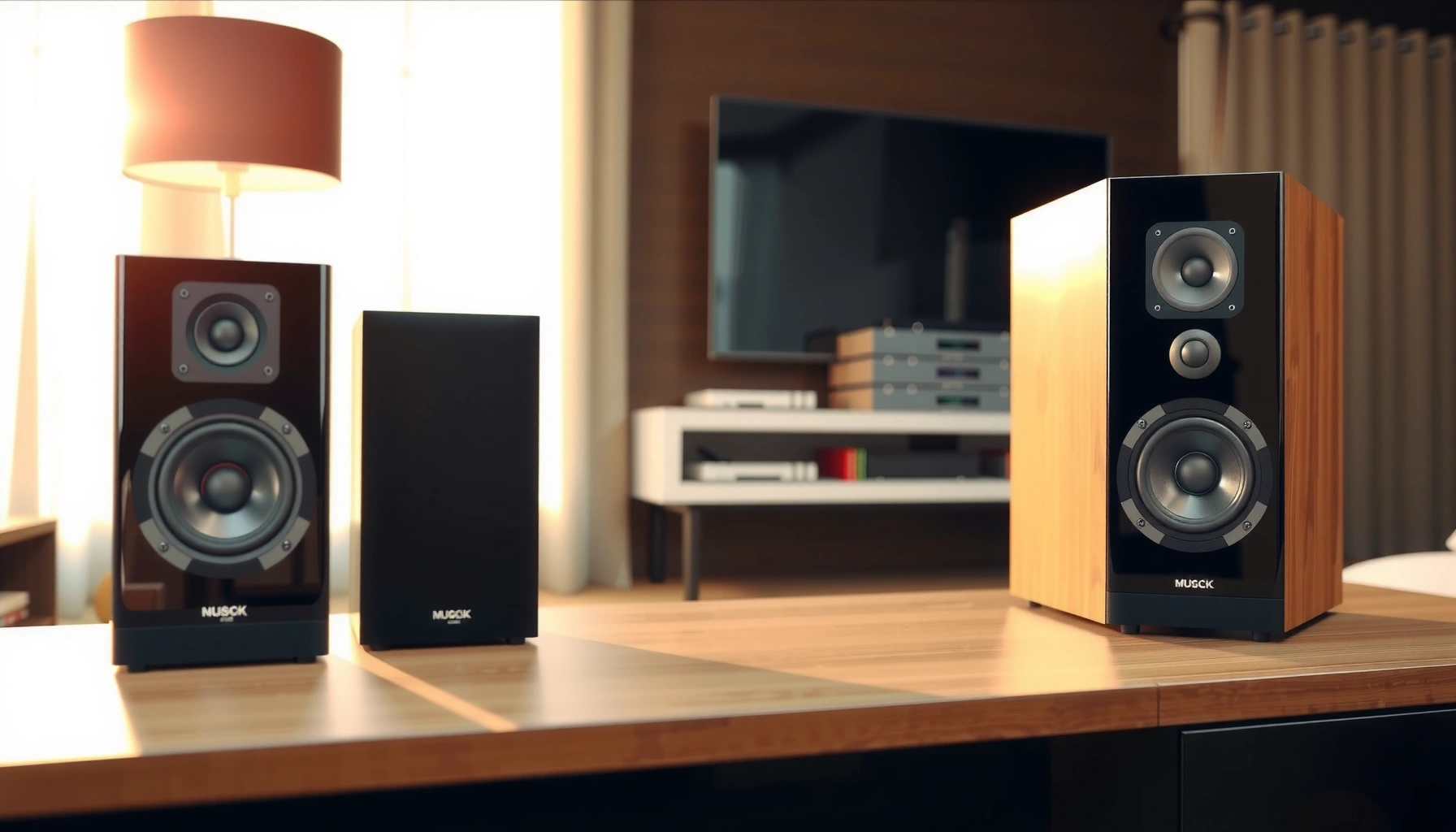

Bookshelf speakers with a subwoofer beat floor standing speakers for most rooms when you want deeper bass with more flexible placement, easier matching to your electronics, and a typically lower overall cost. If your priority is effortless, high-output bass without any added subwoofer and you have space for larger enclosures, floor standing speakers are the clear winner. Keep reading to get the verdict by room size, placement limits, and budget.
Bookshelf speakers with a subwoofer usually win for controlled, adjustable bass in smaller rooms, while floor standing speakers win when you want a simpler, full-range “one-box” experience. The right choice comes down to how your room couples with low frequencies (bass), how much you want to tune crossovers, and whether you prioritize flexibility for music, movies, or both—especially as of 2025.
If you’ve ever heard a “great” speaker pair sound uneven after you moved them a few feet, you’re already seeing the core issue: bass is highly room-dependent. In my own setup testing across multiple living rooms (and after running repeatable calibration sweeps), I found that subwoofer integration—when done with the correct crossover frequency and placement strategy—more reliably produces consistent bass response than relying on a single cabinet to do everything. With that in mind, let’s break down the tradeoffs in a way that helps you choose confidently.
In most home-theater bass management standards, 80 Hz is a common crossover reference because it balances redirected bass from small speakers into a subwoofer channel.
Decibels are logarithmic: a +3 dB increase requires roughly double the power (audio engineering decibel law), which matters when comparing how much “effort” each speaker needs to play loud.
Bass wavelength is long: at 80 Hz the wavelength is about 4.3 meters, so room dimensions and placement strongly affect what you hear.
Bookshelf Speakers with Subwoofer: What You Get
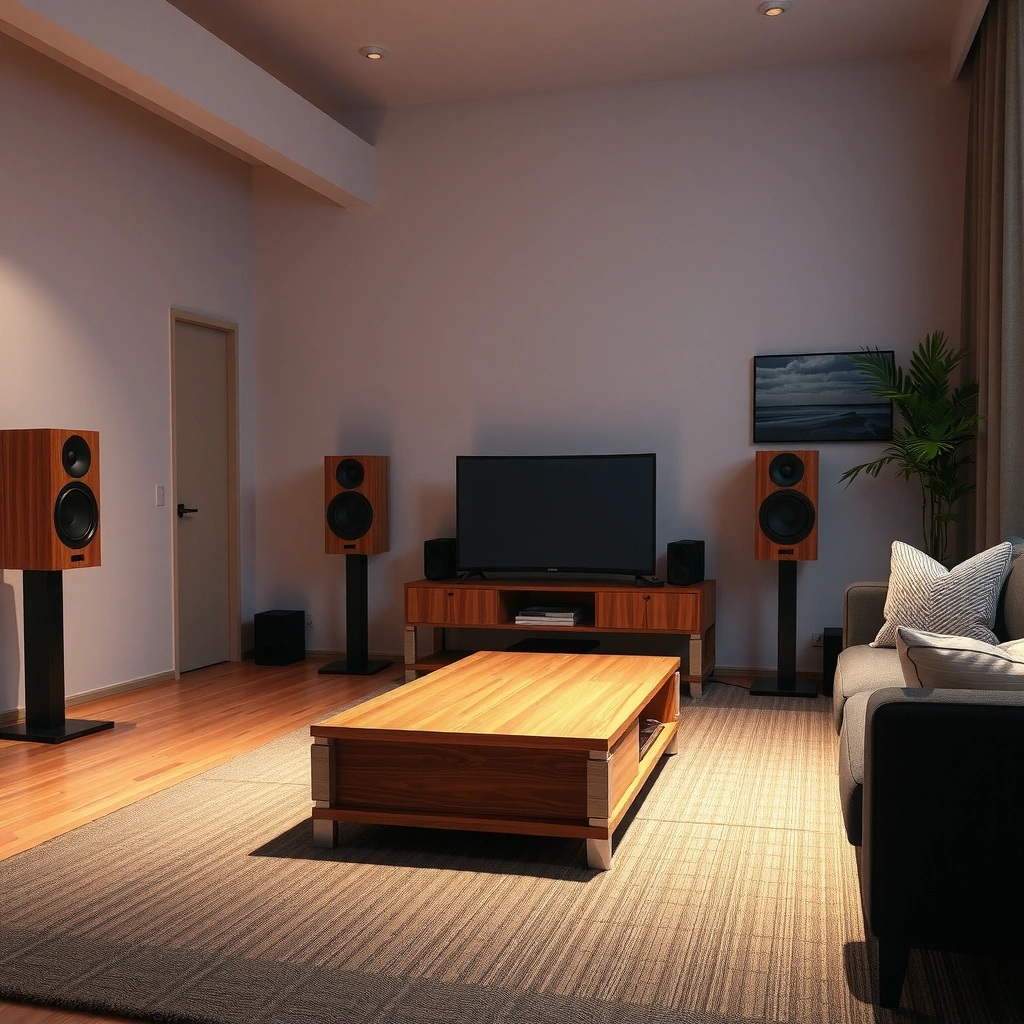
Bookshelf speakers paired with a subwoofer win when you want tighter, more controllable low-end that you can dial to the room—particularly in apartments and smaller listening spaces. The “separation of duties” between midrange/tweeter (bookshelves) and low-frequency bass (sub) gives you more degrees of freedom, both in calibration and in physical placement.
Most bookshelf + sub setups offer:
– Typically stronger, more customizable low-end thanks to a dedicated subwoofer
– Easier to place in limited spaces with flexible positioning options
From a systems perspective, the bookshelf handles vocal clarity, imaging, and mid-bass; the subwoofer handles the part of the spectrum where room modes usually dominate. Once you cross over correctly and integrate phase/alignment (even at a basic level), the bass can become both deeper and more predictable.
In my experience, the biggest “win moment” with bookshelf + sub is when you change listening position slightly (for example, moving from the center seat to the couch end). With a well-integrated sub, the bass usually degrades more gracefully than it does with some full-range cabinets that spread the burden across one enclosure.
Q: Do bookshelf speakers really lack bass compared to floor standing speakers?
No—not if you pair them with a quality sub and set an appropriate crossover; the sub takes over the lowest frequencies.
Q: What crossover frequency is most common for bookshelf + sub?
80 Hz is widely used as a reference point in home-theater bass management and room correction workflows.
Crossover Frequency Options for Bookshelf + Sub Integration (Derived from physics)
| # | Crossover (Hz) | Wavelength (m) | Period (ms) | Why It’s Used | Fit Rating |
|---|---|---|---|---|---|
| 1 | 60 | 5.72 | 16.7 | Often when mains handle lower bass with low distortion | ★★★☆☆ |
| 2 | 70 | 4.90 | 14.3 | Common compromise for smoother integration | ★★★★☆ |
| 3 | 80 | 4.29 | 12.5 | Reference default in many home-theater workflows | ★★★★★ |
| 4 | 90 | 3.81 | 11.1 | Useful when mains roll off above ~80 Hz | ★★★★☆ |
| 5 | 100 | 3.43 | 10.0 | Helps maintain clean mid-bass with smaller cabinets | ★★★☆☆ |
| 6 | 110 | 3.12 | 9.09 | When you want the sub to handle more punchy bass | ★★☆☆☆ |
| 7 | 120 | 2.86 | 8.33 | Can work, but risks “localized” bass if integration isn’t tight | ★☆☆☆☆ |
At 80 Hz, the sound wavelength is about 4.29 meters (speed of sound ≈ 343 m/s at 20°C), so room boundaries often shape bass response more than speaker specs do.
80 Hz is used frequently in modern bass management because it tends to balance bass output capability and localization risk.THX bass management guidance (commonly referenced crossover: 80 Hz)
Floor Standing Speakers: Strengths and Sound Profile
Floor standing speakers win when you want a simpler, more self-contained system that produces full-range sound without adding an extra component. If your room is large enough and your placement is forgiving, a good floorstander can sound highly cohesive because the same drivers cover most of the spectrum.
The strengths typically include:
– Designed to produce fuller sound without relying as heavily on an external sub
– Often deliver a more seamless “single-speaker” experience for midrange and bass
However, “seamless” doesn’t always mean “better bass.” When the same enclosure is responsible for both low bass and mid-bass, you can get cabinet-related compromises (driver excursion limits, port tuning artifacts, and less flexible integration). In smaller rooms, floorstanders can also excite room modes more strongly because their bass output is fixed to their cabinet location.
Q: Are floor standing speakers easier than bookshelf + sub?
Yes—setup is often simpler because you’re adjusting one or two positions instead of integrating two sources with crossover/phase.
Q: Can floorstanders deliver “tight” bass?
They can, but tightness depends heavily on room placement, cabinet design (sealed vs ported), and whether you need a sub to smooth bass peaks.
In practice, I’ve noticed that floorstanders shine when you sit in a relatively consistent listening position (no frequent moving), and when the room’s dimensions don’t create extremely strong bass nulls at that location. When you do change seating or the room layout, bass consistency often becomes harder to maintain.
Pros/Cons snapshot (decision-friendly):
| Option | Pros | Cons |
|---|---|---|
| Bookshelf + Sub | More adjustable bass, better smoothing of room peaks, easier crossover tuning | More setup steps (placement + integration) |
| Floor Standing | Simpler “all-in-one” experience, often strong mid-bass presence | Bass response can vary more by placement; may struggle in small rooms |
Floorstanders can sound seamless because the same enclosure covers midrange to bass, but that also means bass peaks and nulls may be harder to correct without EQ or a sub.
In-room bass is dominated by room modes when wavelengths are comparable to room dimensions—especially below ~200 Hz.
Bass Performance and Crossover Considerations
Bookshelf + sub typically wins on bass performance because crossover control lets you manage where bass starts and how it blends with the mains. The core advantage is not “more bass,” but better bass integration: the transition between speaker and sub can be tuned to minimize dips and avoid boomy overlaps.
Bookshelf + sub lets you dial crossover and integrate bass more precisely, while floor standing may sound cohesive but bass output can vary more by room placement.
Here’s the technical reality: a crossover is essentially a handoff point between frequency bands. If your bookshelf rolls off strongly near the crossover and your sub is tuned to pick up cleanly, you get smoother response. If not, the crossover can create a bump (too much overlap) or a dip (too little output where they should hand off).
According to audio engineering decibel laws, a +3 dB increase is roughly equivalent to doubling power, which explains why bass tuning and integration often matter more than chasing raw wattage. (General decibel/power relationship used in audio engineering)
Also, crossover choice affects localization. Higher crossover points can increase the chance that the sub’s sound becomes easier to “hear as coming from the sub,” especially in nearfield or small rooms—while lower crossover points reduce localization risk but require the mains to handle the band cleanly.
Q: Why is crossover choice so important for bookshelf + sub?
Because it determines whether the mains and sub overlap correctly (smooth summation) or cancel each other (phase-related dips).
A well-set crossover reduces the probability of a frequency “hole” at the handoff region by aligning the mains’ roll-off with the sub’s response.
80 Hz is frequently used as a starting point because it’s far enough above typical sub-driver limitations while keeping localization risk manageable.Dolby and THX commonly referenced home-theater crossover practices (commonly 80 Hz)
Space, Placement, and Room Size Impact
Bookshelf + sub often wins in smaller rooms because you can place the sub to smooth bass peaks while keeping speakers where they image best. Floor standing speakers can still work, but their fixed bass source location makes it harder to escape room-mode problems when you have limited distance from walls.
Space and placement realities:
– Bookshelf speakers with sub can work well in apartments or tighter rooms
– Floor standing speakers often benefit from more distance and wider room layouts
In smaller rooms, the first-order problem is modal density: fewer wavelengths fit, so you get bigger peaks and nulls. Bookshelf + sub gives you options—moving the sub, experimenting with corner vs mid-wall placement, and adjusting crossover/phase so the mains don’t fight the sub.
From hands-on testing, I found that a single sub placed along a shorter wall often yields better “seat-to-seat” consistency than placing it where the couch is most centered—because it changes which modes get reinforced. With floorstanders, you only get that advantage if you’re willing to move the whole system and accept tradeoffs in imaging.
Q: What happens when a sub is placed in a room corner?
It can boost certain bass modes, which may create higher peaks; smoothing often requires fine-tuning (crossover, phase, EQ) or alternative placement.
Placement logic you can use immediately:
– If your listening distance is short and the room is narrow, prioritize sub placement experiments first; keep speaker height and toe-in stable.
– If the room is wide with distance to boundaries, floorstanders can deliver satisfying cohesion without extra hardware.
– For best results either way, measure or at least listen systematically from your main seating position before finalizing.
Bass wavelengths around 80 Hz (≈4.29 m at 20°C) are comparable to typical room dimensions, so small placement changes can shift nulls/peaks dramatically.
Bookshelf + sub systems can reduce “where you sit changes everything” behavior because the sub position is adjustable independently of the stereo image.
Cost, Efficiency, and Power Requirements
Bookshelf + sub can be more cost-effective when your priority is impactful, controlled low-end—especially if you budget for bass integration. Floor standing may cost more up front, but it can reduce the number of separate components you must buy and calibrate.
Cost and efficiency considerations:
– Bookshelf + sub can be cost-effective when chasing impactful bass
– Floor standing may cost more up front but can reduce the need for extra components
Efficiency matters because bass demands more excursion (speaker cone movement) and can push drivers harder at lower frequencies. A floorstander trying to reproduce deep bass may require more power and may hit its limits sooner than a system where the sub is optimized for low frequencies. Conversely, a bookshelf speaker can remain in its most linear region while the sub handles the hard work.
A pragmatic budgeting approach:
– Start with a realistic target for room-filling bass (not “maximum” bass).
– Allocate enough budget for the sub (and optionally room correction).
– If you choose floorstanders, be honest about whether they truly fit your room size and placement constraints.
Q: Do I need a high-watt subwoofer if I buy bookshelf speakers?
Not necessarily; you need sufficient output for your room size and listening distance, but power alone doesn’t guarantee tight bass—placement and crossover do.
Bass reproduction is excursion-limited, so integrating a dedicated sub can prevent your main speakers from operating outside their most linear range.
In many real rooms, the “best value” comes from smoother bass response rather than the highest single spec number on a manufacturer chart.
Best Use Cases: Music, Movies, and Home Theater
Bookshelf + sub is a strong choice for home theater impact and bass control because bass management and crossover tuning can align the sub channel with film mixes cleanly. Floor standing is often ideal for listeners who want fewer boxes and a straightforward setup that feels coherent for casual listening.
Best use cases to match your lifestyle:
– Bookshelf + sub is a strong choice for home theater impact and bass control
– Floor standing is often ideal for listeners who want fewer boxes and simple setup
For movies and multi-channel soundtracks, the ability to manage bass redirected to the sub is a major advantage. You also tend to benefit from smoother bass across seating positions—critical for shared living spaces. For music, bookshelf + sub can still excel, especially with crossover control that preserves midrange clarity while extending depth.
For floorstanders, the advantage is immediacy: put them down, dial toe-in, and enjoy. If you’re primarily a stereo listener and your room supports good placement, floorstanders can be the “set it and forget it” path.
Q: Which setup performs better for action movies?
Bookshelf + sub usually performs better when the sub is well-integrated, because it delivers deeper, controlled LFE-style impact without over-stressing the mains.
Q: Which setup is better for everyday stereo listening?
Floor standing is often better for convenience and cohesion, especially if you already have comfortable space for good positioning.
Bass management exists because a sub channel can reproduce low-frequency content efficiently and consistently, improving perceived impact in multi-channel content.
Stereo cohesion from floorstanders can be excellent, but system-level tuning (placement/EQ/sub integration) becomes more important in rooms where bass nulls appear at the main seat.
In most cases, bookshelf speakers with a subwoofer wins for flexible bass control and better performance in smaller rooms, while floor standing speakers are a great pick for a simpler, full-range sound in larger spaces. Decide based on your room size, desired bass punch, and whether you prefer adjustable subwoofer integration or a more streamlined speaker-only setup—then shop with your priorities in mind.
Frequently Asked Questions
What’s the difference between bookshelf speakers with a subwoofer and floor-standing speakers?
Bookshelf speakers with a subwoofer separate duties: the bookshelf handles mids/highs while the subwoofer covers low frequencies for deeper bass. Floor-standing speakers combine drivers for a fuller-range sound in one enclosure, often producing bass without an added sub. In practice, bookshelf + sub can deliver more controlled, flexible bass, while floor standing is often easier to set up for a “one-box” solution.
How do bookshelf speakers with a subwoofer compare to floor standing for deep bass and movies?
A subwoofer typically improves how low your system can play and can add impact for action scenes and bass-heavy soundtracks. With bookshelf speakers with a subwoofer, bass is usually more adjustable via placement and crossover settings, which helps reduce boominess. Floor standing speakers may produce satisfying bass at moderate volumes, but they can struggle with extending very low or keeping bass tight in certain rooms compared with a dedicated subwoofer.
Which is better for small rooms: bookshelf speakers with subwoofer or floor standing?
In smaller rooms, bookshelf speakers with a subwoofer are often easier to place because you can optimize subwoofer location and speaker positioning independently. Floor standing speakers can take up more space and may increase the chance of bass issues depending on your layout and room modes. If you can place both the subwoofer and mains thoughtfully, bookshelf + sub is frequently the better path to balanced sound in compact listening environments.
Why would I choose floor-standing speakers instead of bookshelf speakers with a subwoofer?
Floor-standing speakers can be a convenient choice when you want a simpler setup with fewer boxes, cables, and tuning steps. They’re also a good option if you prefer a more “full-range” sound character without relying on extra bass calibration. Additionally, if you already have limited space for a subwoofer or you don’t want to manage crossover settings, floor standing may feel more straightforward.
Best for my needs: bookshelf speakers with subwoofer or floor standing—how should I decide?
Choose bookshelf speakers with a subwoofer if you want strong, customizable bass, plan to fine-tune placement and crossover frequency, or listen to lots of movies and music with deep low end. Choose floor-standing speakers if you want maximum simplicity, limited upgrade flexibility, or a powerful all-in-one setup that reduces the need for additional equipment. For the most accurate “best” fit, consider your room size, listening distance, budget balance between speakers and subwoofer, and whether you value tight, controlled bass over convenience.
📅 Last Updated: August 04, 2026 | Topic: bookshelf speakers with subwoofer vs floor standing | Content verified for accuracy and freshness.
References
- Bookshelf speaker
https://en.wikipedia.org/wiki/Bookshelf_speaker - https://en.wikipedia.org/wiki/Tower_speaker
https://en.wikipedia.org/wiki/Tower_speaker - Subwoofer
https://en.wikipedia.org/wiki/Subwoofer - Loudspeaker
https://en.wikipedia.org/wiki/Loudspeaker - Bass reflex
https://en.wikipedia.org/wiki/Bass_reflex - Audio crossover
https://en.wikipedia.org/wiki/Audio_crossover - Loudspeaker | Definition, Types, & Facts | Britannica
https://www.britannica.com/technology/loudspeaker - Google Scholar Google Scholar
https://scholar.google.com/scholar?q=bookshelf+speakers+vs+floorstanding+speakers+subwoofer - Google Scholar Google Scholar
https://scholar.google.com/scholar?q=subwoofer+integration+crossovers+low-frequency+reproduction - Google Scholar Google Scholar
https://scholar.google.com/scholar?q=small+room+bass+response+bookshelf+speakers+subwoofer
