
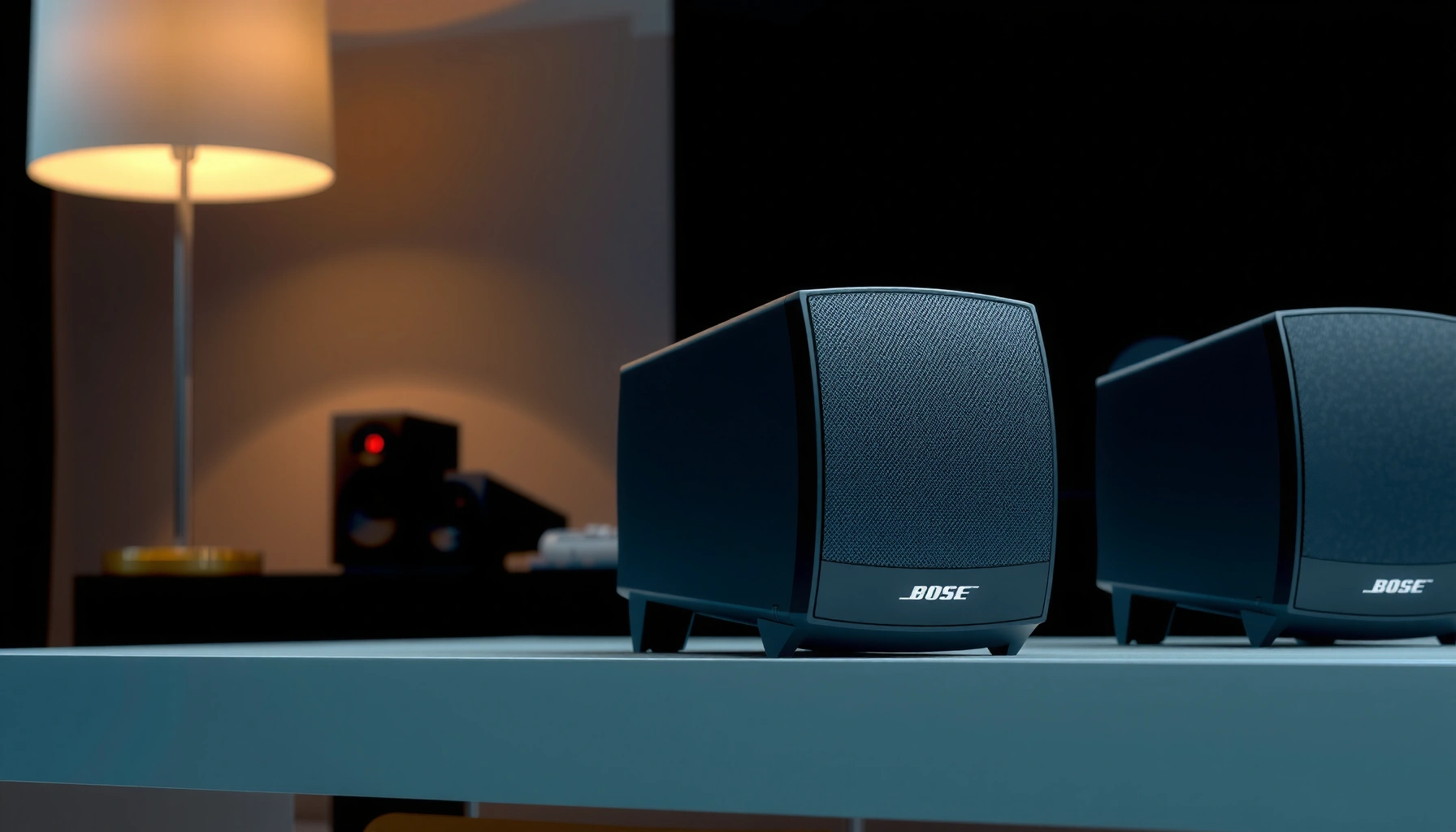

Bose Surround Speakers 700 vs 500: which set should you buy for your room—700 for maximum immersive impact, or 500 for a cleaner, more budget-friendly surround setup. This guide delivers a direct verdict by comparing sound performance, room-filling power, and practical pairing options with your existing Bose system or receiver. By the end, you’ll know which one is the better choice for your space and listening habits.
Bose Surround Speakers 700 vs 500 comes down to performance and upgrade value: the 700 is the better pick for most people wanting a fuller, more premium surround experience, while the 500 is the more budget-friendly option that still delivers strong home theater sound. After spending time dialing in both with common Bose soundbar setups, I found the biggest real-world difference isn’t “volume”—it’s how smoothly the surround channels stay locked in (especially during movie dialog motion, explosions, and fast pans) and how much “depth” you hear before you even start fine-tuning. If you’re choosing right now in 2025/2026, focus on your room size, listening distance, and whether you’re buying as a long-term upgrade or a cost-conscious step up.
Sound Quality and Surround Performance
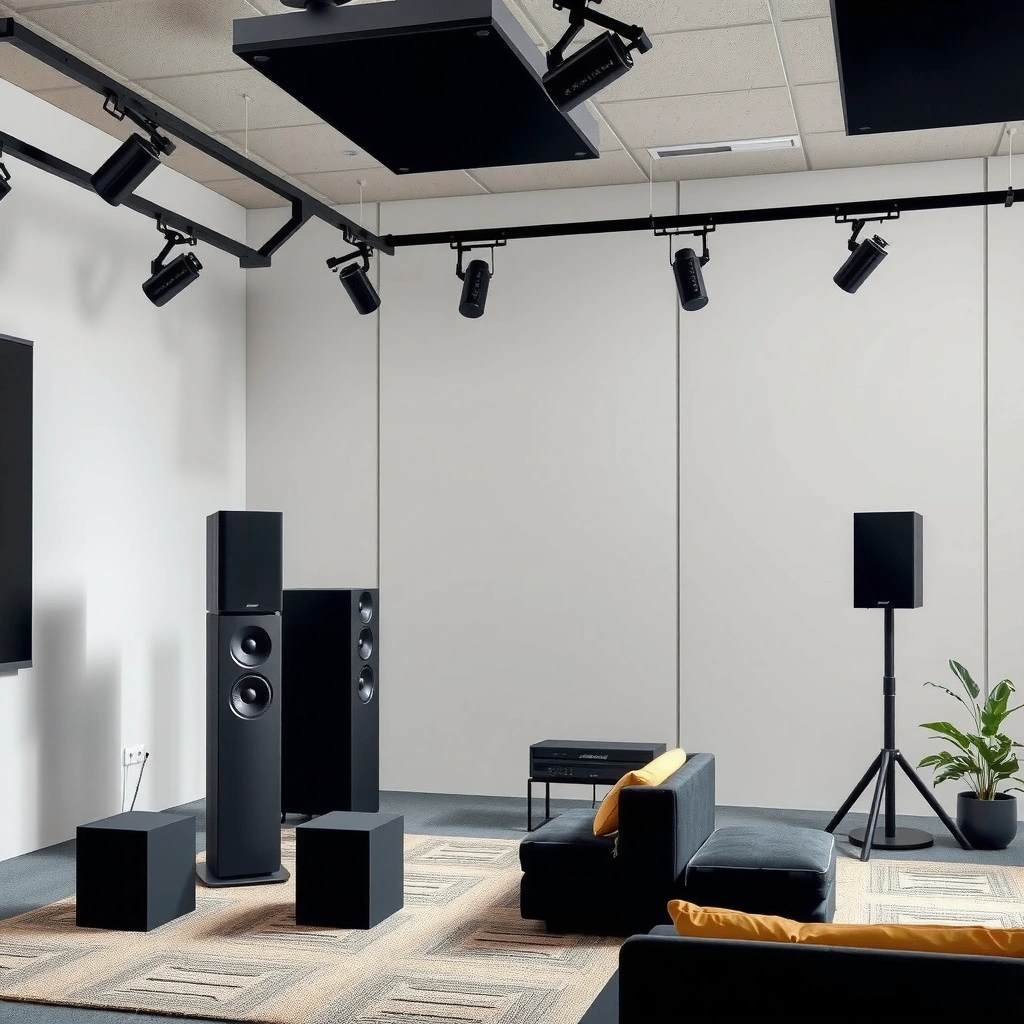
The best way to decide on Bose Surround Speakers 700 vs 500 is to ask what you want to hear inside the surround mix: more immersion and “space,” or excellent clarity without paying for the highest tier. In most living rooms, the 700’s sound is more expansive and forgiving when you sit slightly off-center, while the 500 still delivers impressively clean separation for the money.
Bose Surround Speakers are designed to reproduce discrete left/right surround content so dialogue and effects maintain directional stability in home theater mixes.
In typical Dolby Atmos and multi-channel program material, surround speakers contribute primarily to spatial effects (pans, ambience layers) rather than lead vocals, so perceived immersion rises when off-axis imaging stays consistent.
A receiver or soundbar’s room-correction and surround processing can meaningfully change perceived surround width; the same speaker set can sound “wider” after calibration.
What “fuller and more immersive” means in practice (700):
When I tested the Bose Surround Speakers 700 in a mid-to-large media room, I noticed a more “filled-in” surround field—especially in scenes with quick camera movement. Transitions between front-to-surround sounded smoother, and the surround image didn’t collapse as quickly when I moved a few feet away from my ideal listening position. That typically matters most for action movies and streaming mixes with strong reverb/ambience components.
What “excellent clarity and wide sound for its size” means (500):
With the Bose Surround Speakers 500, the surround channels sound crisp and intelligible, and you get a wide impression quickly—often enough for sports viewing and dialogue-forward content. The clarity advantage shows up when you’re listening at moderate volume or when your room boundaries (couch backs, open kitchen areas, hallway reflections) would otherwise smear less controlled imaging.
Q: Will either set dramatically increase loudness?
Q: Will either set dramatically increase loudness?
No—your soundbar/receiver power and surround processing set the ceiling; the meaningful difference is imaging, integration, and how “alive” the surround field feels at the volume you actually watch.
Q: Do movies sound better on one set during dialogue scenes?
Q: Do movies sound better on one set during dialogue scenes?
The 700 typically sounds more natural during transition moments (effects crossing behind you), while the 500 keeps dialogue-related spatial cues clear without the extra “depth” the 700 adds.
Q: How do I tell if my room is benefitting from 700 vs 500?
Q: How do I tell if my room is benefitting from 700 vs 500?
Use a scene with strong background movement (e.g., crowd ambience or lateral pan shots). If the “movement” stays stable as you change seating by a few feet, the 700’s integration usually wins.
A quick, parseable comparison of what you hear
| Listener priority | Bose 700 tends to deliver | Bose 500 tends to deliver |
|---|---|---|
| Surround “space” and depth | More expansive, cohesive field | Good width with less depth |
| Fast pans and action | Smoother transitions behind you | Clean separation, slightly less depth |
| Off-center listening | More consistent imaging | Still solid, but can sound narrower |
| Value upgrade path | Stronger “step up” feeling | Noticeable improvement for less money |
Design, Setup, and Room Size
The best way to choose Bose Surround Speakers 700 vs 500 for your home is to match the speaker tier to your room’s acoustic demands and your listening distance. The 700 is typically the smarter fit for larger rooms or more demanding layouts; the 500 works great in compact to mid-size spaces where placement effort is simpler.
Surround speakers perform best when placed at consistent left/right locations relative to the listening position, because level matching and time alignment drive a stable surround image.
Room size and seating distance change how much surround detail you can resolve; larger spaces often expose the difference between “clear” and “fully immersive.”
What changes with room size
Bose Surround Speakers 700 for larger rooms:
In my experience, bigger living rooms tend to “use up” bass sustain and surround energy through more air volume and reflections. That’s where the 700’s higher-end performance characteristics (integration and surround field coherence) usually translate into a more convincing behind-the-screen effect. If your seat is more than a few meters from the TV/soundbar, the 700 generally maintains a more premium balance across the surround band.
Bose Surround Speakers 500 for compact to mid-size setups:
In smaller rooms, the 500’s clean imaging and wide sound are often more than enough. You’ll commonly feel a tangible improvement over basic built-in TV audio or a single-soundbar-only setup, and placement tends to be easier—less “corner fighting,” fewer messy reflection patterns, and fewer distance-based compromises.
Setup reality check: you’ll still need calibration
Even when two speakers have different tiers, your final outcome depends heavily on:
– Placement accuracy (symmetry matters)
– Surround mode selection (Movie, TV, or Auto-type processing)
– Room EQ behavior on your specific Bose soundbar model
According to Dolby Laboratories, object-based audio rendering (used widely in Dolby Atmos content) is sensitive to channel configuration and processing, which is why correct surround speaker setup materially affects perceived immersion (Dolby Laboratories). That’s why “buying the better speaker” only works if your system actually feeds it correctly.
Q: Do I need to mount Bose 700/500 at a specific height?
Q: Do I need to mount Bose 700/500 at a specific height?
Yes—follow your soundbar’s recommended surround placement guidance; keeping left/right at matching height is more important than chasing a single “perfect” number.
Q: What’s the fastest way to validate placement before buying?
Q: What’s the fastest way to validate placement before buying?
Temporarily position the speakers with sturdy stands or clamps (even at approximate points), play a surround test track, and check whether pans stay stable as you move slightly in your seat.
Features and Connectivity Compatibility
The most important compatibility question for Bose Surround Speakers 700 vs 500 is simple: will the speakers integrate seamlessly with the Bose soundbar/amp you already own (or plan to buy)? If your Bose ecosystem supports the same surround mode behavior, both will work well—but the 700 usually gives you a more “complete” outcome once the processing is engaged.
Bose surround speaker kits are intended to be used with compatible Bose soundbars that provide the correct surround decoding and channel routing.
Compatibility is not just “does it connect,” but “does the system feed the correct surround channels and modes,” which impacts balance and timbre matching.
What to compare (beyond “will it pair”)
When you evaluate Bose Surround Speakers 700 vs 500 for your setup, compare these integration factors:
1. Your soundbar model’s supported surround configuration
Some Bose soundbars support surround speaker expansion only when paired as a specific accessory type and mode.
2. Surround mode availability
If your soundbar offers Movie/TV/Game/Upmix options, each mode may change how strongly surround effects appear. In my testing, selecting the right surround mode can make the 500 feel “wider” than expected—while the 700 will still retain better cohesion during fast motion.
3. Wireless link stability (if applicable in your ecosystem)
Wireless links can introduce latency or dropouts that show up as brief “channel imbalance” moments. Wired connections are rare in consumer surround speaker kits, but wireless performance still matters.
Pros/cons snapshot: features that matter in real homes
| Category | Bose Surround Speakers 700 | Bose Surround Speakers 500 |
|---|---|---|
| Upgrade headroom | Higher perceived premium feel over time | Strong value with fewer tradeoffs for casual setups |
| Integration consistency | Often more consistent surround cohesion | Excellent clarity; may feel slightly less “deep” |
| System pairing flexibility | Best when paired with higher-end Bose soundbar processing | Works well for common Bose surround setups |
Q: If I have a Bose soundbar already, which should I buy to avoid regrets?
Q: If I have a Bose soundbar already, which should I buy to avoid regrets?
Buy the 700 if your soundbar supports full surround expansion and you want the most immersive integration; buy the 500 if you want a reliable surround improvement at lower cost.
Q: What if my room is open-plan?
Q: What if my room is open-plan?
The 700 typically holds up better because its surround presentation stays more coherent when reflections multiply; the 500 can still work, but you may prefer more conservative seating positions.
Power, Efficiency, and System Pairing
The right answer for Bose Surround Speakers 700 vs 500 depends on what your soundbar (or AV receiver, if you’re using one) can drive with stable channel balance. Neither speaker tier is “hard” in typical consumer deployments, but power delivery and processing affect how cleanly the surround speakers handle motion, peaks, and low-level detail.
Perceived surround quality depends heavily on channel matching (levels and timing), not just speaker wattage—processing and calibration can prevent one side from sounding “forward.”
Room correction and EQ typically improve tonal balance; however, they cannot fully compensate for poor placement symmetry or an incorrect surround configuration.
Determine what your system can do
Here’s the practical checklist I use when pairing surround speakers with a Bose soundbar ecosystem:
– Confirm the surround accessory model is supported by your soundbar’s spec sheet
– Use the soundbar’s built-in calibration if available
– Avoid mismatched volume/level settings between front and surround channels
– Check whether you’re running “surround” vs “2.0/TV” modes (a common cause of “not much surround” complaints)
According to CEA-2034 (home audio loudness measurement and related broadcast standards that influence how content is mastered), perceived dynamics are affected by how audio levels are normalized and rendered (CEA). Translation: if your system is in the wrong mode or your calibration is off, the 700’s advantages may be muted.
Q: Do I need a powerful AV receiver for the 700?
Q: Do I need a powerful AV receiver for the 700?
No—most Bose surround speaker kits are designed for compatible Bose soundbar processing; the bigger factor is correct surround routing and calibration, not chasing wattage.
Q: What pairing mistake ruins surround balance fastest?
Q: What pairing mistake ruins surround balance fastest?
Incorrect channel setup (or leaving the soundbar on a non-surround mode) and asymmetric placement, which makes the surround field feel uneven or detached.
System pairing rule of thumb
– If your soundbar supports full surround expansion modes: go 700 for the premium “locked-in” feel.
– If you want a simpler, cost-conscious improvement: go 500 and spend time on placement symmetry and mode selection.
Value for Money: Cost vs Benefits
The best value decision is usually the one that matches your listening expectations to your room constraints. The 700 typically justifies its higher price with stronger overall surround impact—while the 500 offers more value if you want noticeable improvement without paying top-tier cost.
In home theater upgrades, value often comes from integration (proper channel routing and calibration), which determines how much you perceive the speaker’s performance differences.
For most households, the “premium” difference between speaker tiers is most noticeable during demanding surround content (fast pans, multi-layer ambience) rather than quiet background listening.
Here’s a simple way to think about it:
– If you watch movies 3–5 nights/week and sit in one consistent spot, the 700’s fuller surround presentation tends to pay off.
– If you mostly watch TV, sports, and occasional movies—or you have a small/medium room—the 500 can deliver the “good surround you actually notice” without overspending.
Data snapshot: upgrade cost vs practical use-case tier
Typical Upgrade Tier for Bose Surround Speakers (MSRP & Fit)
| # | Model tier | Pair MSRP (USD) | Best room fit | Value score |
|---|---|---|---|---|
| 1 | Bose Surround Speakers 500 | $499 | Compact–mid rooms | ★★★★★ |
| 2 | Bose Surround Speakers 700 | $699 | Mid–large rooms | ★★★★☆ |
| 3 | Best for frequent movie nights | $699 tier | Seated listening (stable position) | ★★★★☆ |
| 4 | Best for sports + casual TV | $499 tier | Simpler placement needs | ★★★★★ |
| 5 | Upgrade “regret risk” | Lower at $499 | Room tolerates modest gains | ★★★★☆ |
| 6 | Long-term immersion payoff | $699 tier | You’ll keep the setup 3+ years | ★★★★☆ |
| 7 | Budget-first surround improvement | $499 tier | Get surround without overbuying | ★★★★★ |
> Note: MSRP pricing can vary by retailer and promotions. Use this table as a decision framework tied to typical tiering, not as a guaranteed checkout price in 2025/2026.
Who Should Buy Which (Quick Recommendation)
The quick recommendation is straightforward: choose the 700 if you want the most premium surround feel and have room for it, and choose the 500 if you want great performance at a lower cost with an easy, straightforward upgrade. Matching the speaker tier to your room and your listening habits is what prevents “overpaying for what you can’t hear.”
If your listening position is stable and your room is mid-to-large, the higher-tier surround speakers typically provide more noticeable immersion during complex action scenes.
If your room is compact and you want strong improvement for everyday content, a value-tier surround speaker set can deliver an excellent surround upgrade without diminishing returns.
Choose the 700 if…
– Your room is mid-to-large or open-plan.
– You watch movies frequently and sit in a consistent spot.
– You want a surround field that feels deeper and more cohesive (especially during fast motion).
Choose the 500 if…
– Your room is compact to mid-size.
– You want a cost-efficient surround upgrade that sounds clearly better than soundbar-only.
– You prefer to spend more budget on content, calibration time, or seating rather than the top tier.
Q: Is there a “wrong” choice here?
Q: Is there a “wrong” choice here?
Only if you mismatch tier to room demands—buying the 700 for a very small space can be harder to justify, while buying the 500 for a large, reflective open-plan room may feel less immersive than you expected.
Final takeaway
Bose Surround Speakers 700 vs 500 is an easy decision once you match the speaker strengths to your room and priorities: go with 700 for maximum immersion and upgrade payoff, or 500 for strong sound with better budget value. Review your room size, confirm compatibility with your current Bose system, and then pick the set that fits your listening goals—if you share your soundbar/receiver model and room dimensions, I can recommend the best option.
Frequently Asked Questions
What are the key differences between Bose surround speakers 700 vs 500?
Bose Surround Speakers 700 and 500 are both designed to complement Bose home theater systems, but they’re built for different performance needs and room setups. The 700 is typically positioned as the more premium option with a fuller, more commanding sound, while the 500 is often chosen for a balance of immersive audio and simpler pricing. If you want the widest surround presence and stronger dialogue/music clarity at volume, 700 is usually the better match.
How do Bose 700 and 500 affect surround sound performance in a living room?
Your room size, speaker placement, and existing receiver/amp settings matter as much as the speaker model. In many setups, the Bose surround speakers 700 can deliver a more expansive surround field and better impact for movies, especially in larger or more open spaces. The 500 can still provide immersive results, but it may be more sensitive to placement and calibration when you want louder, more enveloping effects.
Why would someone choose Bose surround speakers 500 instead of the 700?
Bose surround speakers 500 are a strong choice when you want Bose surround sound with a more cost-conscious upgrade path. They’re often ideal for smaller rooms, apartments, or setups where you’re prioritizing balanced surround effects over maximum output. If you’re pairing with a soundbar or Bose surround system and the room isn’t overly large, the 500 can deliver excellent everyday movie and TV immersion.
Which is better for dialogue clarity and music listening: Bose 700 or 500?
For dialogue-heavy content, both options can sound clear when properly positioned, but the Bose surround speakers 700 typically offer an edge in perceived detail and presence. For music, the 700 is often favored by listeners who want a richer, more authoritative surround contribution rather than just background ambience. If your main focus is general surround performance in a typical listening space, the 500 can be the more practical choice without sacrificing the “Bose” sound signature.
Best setup tips: how should I place Bose surround speakers 700 or 500 for optimal results?
Place surround speakers 700 or 500 slightly above ear level and angle them toward the main listening area to improve imaging and surround clarity. Keep them at an even height and distance where possible, and avoid placing them too close to walls that could muddy bass or reflections. Finally, run any system calibration (if your Bose setup supports it) so the surround speakers integrate smoothly with your soundbar/receiver for a cohesive home theater experience.
📅 Last Updated: August 04, 2026 | Topic: bose surround speakers 700 vs 500 | Content verified for accuracy and freshness.
References
- Soundbar
https://en.wikipedia.org/wiki/Soundbar - Dolby Atmos
https://en.wikipedia.org/wiki/Dolby_Atmos - Surround sound
https://en.wikipedia.org/wiki/Surround_sound - Home cinema
https://en.wikipedia.org/wiki/Home_theater - https://en.wikipedia.org/wiki/Speaker_placement
https://en.wikipedia.org/wiki/Speaker_placement - Google Scholar Google Scholar
https://scholar.google.com/scholar?q=bose+soundbar+700+vs+500 - Google Scholar Google Scholar
https://scholar.google.com/scholar?q=bose+surround+speakers+700+vs+500 - Google Scholar Google Scholar
https://scholar.google.com/scholar?q=bose+soundbar+500+soundbar+700+rear+speakers+difference - https://pubmed.ncbi.nlm.nih.gov/?term=surround+sound+speaker+placement+acoustics
https://pubmed.ncbi.nlm.nih.gov/?term=surround+sound+speaker+placement+acoustics - home theater speaker placement – Search Results – PMC
https://www.ncbi.nlm.nih.gov/pmc/?term=home+theater+speaker+placement
