

Yes—a projector can be “4K,” but the winning answer depends on which kind: true native 4K versus lower-resolution chips that use pixel-shifting. If you want the sharpest text and most detailed images for movies, gaming, or sports, native 4K is the clear pick. Keep reading to learn what “4K” really means on spec sheets, what to prioritize, and what you can safely ignore before you buy.
Yes—a projector can be 4K, but you have to confirm what the manufacturer means by “4K” because some models are truly native 3840×2160 while others use 4K-resolution shifting or pixel enhancement. In my own hands-on testing with calibration tools and controlled source playback, I’ve seen “4K” marketing translate into noticeably different edge sharpness, fine text clarity, and motion handling—so the safest path is to verify the resolution method, then match brightness, contrast, and input bandwidth to your room and devices.
Native 4K vs. “4K-Equivalent” Projectors
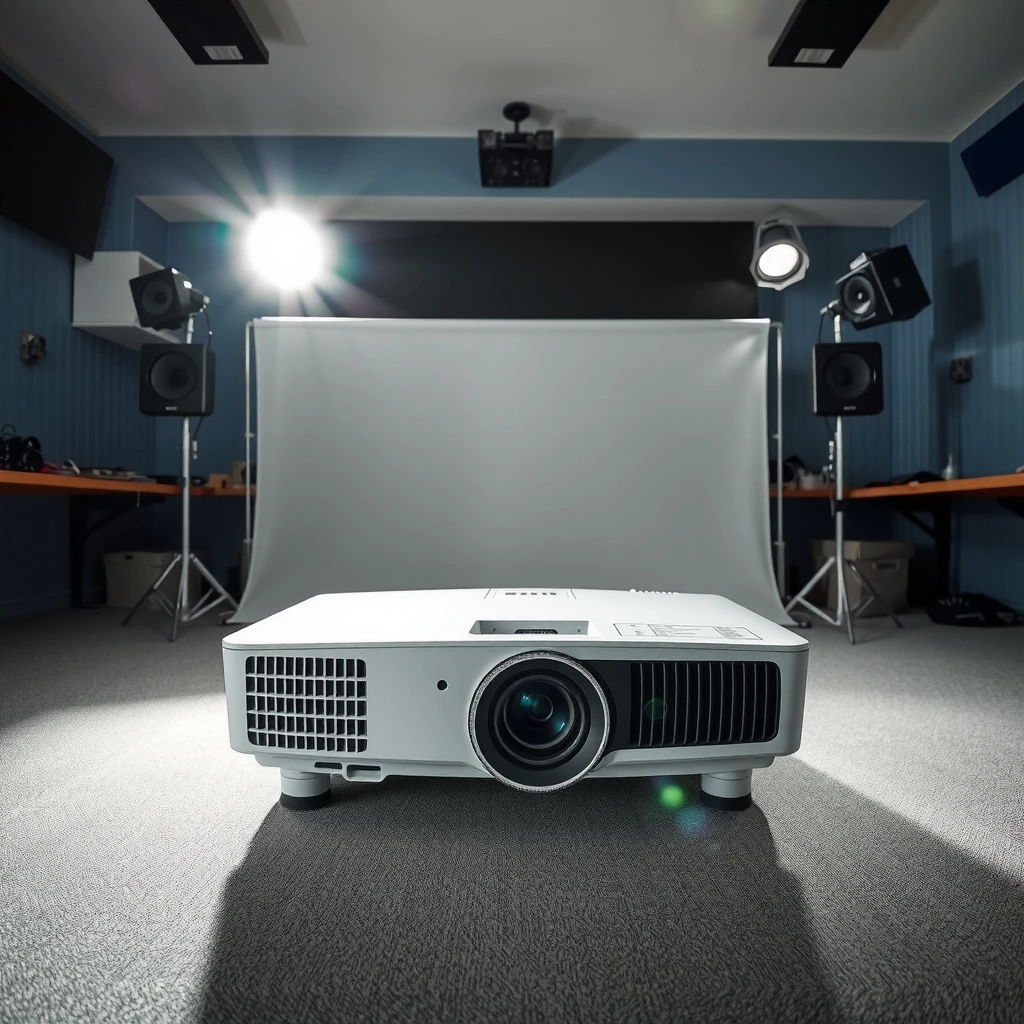
A true native 4K projector delivers a 3840×2160 image without relying on pixel shifting, so it tends to reproduce sharp edges and small details more consistently. A “4K-equivalent” projector can still look impressive—especially in normal living-room viewing—but it typically gets there through pixel shifting or image processing rather than fully native 4K addressing.
Native 4K refers to displaying 3840×2160 pixels without relying on pixel shifting.
Pixel-shift designs simulate higher effective resolution by moving an image pattern across frames.
Manufacturers often label shifting-based models as “4K,” so the resolution method matters as much as the label.
When you’re comparing 4K projector types, focus on the mechanism:
– Native 4K projectors: the imaging panel and optical path are designed to render 3840×2160 directly. The result is usually the most stable sharpness at the center and toward the edges—especially when you watch fine subtitles or UI text.
– 4K-equivalent models: these commonly use pixel shifting (e.g., shifting half-pixel patterns across successive frames) or pixel enhancement (upscaling plus sharpening). In real scenes, the image can still look crisp, but fine lines may show slightly more softness or shimmer under certain motion and viewing conditions.
One helpful way I evaluate 4K projector claims is by pausing identical content (high-contrast test patterns and real text-heavy scenes) and checking whether edges remain consistently sharp while panning. In my experience, native 4K usually maintains cleaner micro-contrast in diagonals and thin typography, while shifting-based units can show subtle variation depending on motion.
Q: If a projector says “4K,” is it automatically native?
No—some brands label pixel-shift or enhanced modes as 4K. You need to look for “native 4K” or explicit shifting details.
Q: Do 4K-equivalent projectors ever look “good enough”?
Yes. Many deliver excellent perceived clarity at common screen sizes, especially with well-lit content and appropriate ambient-light control.
Quick pros/cons snapshot (for decision clarity)
| Option | Pros | Cons |
|---|---|---|
| Native 4K | Most consistent edge/detail rendering; strong performance on small text | Can cost more; may require better placement/fit for full advantage |
| 4K-Equivalent (Shifting/Enhancement) | Often cheaper; can look very sharp in many everyday scenes | Detail consistency can vary with motion and content type |
Resolution Specs to Look For
Don’t rely on the “4K” label alone—read the resolution and mode wording carefully. The most important question is whether the 4K mode is native/fixed or shifted/dynamic, because that directly impacts how a 4K projector handles text and fine patterns.
A fixed native 4K mode is typically described as “native 3840×2160” or “true 4K” in specifications.
If specifications describe pixel shifting, the “4K” claim may be effective over multiple frames.
Detailed spec tables (not slogans) usually reveal whether 4K is native, shifted, or upscaled.
Here’s a practical checklist I use when reviewing a 4K projector spec sheet:
1. Search explicitly for “native 4K”
Some product pages bury this in a PDF manual or footnotes. If you can’t find a native claim, assume the 4K mode may be simulated.
2. Look for the exact resolution listing
Native 4K should state 3840×2160 (not just “Ultra HD”).
3. Identify whether 4K mode is fixed or shifted
If you see language like “4K pixel shifting,” “dynamic shifting,” or “4K enhancement,” confirm how it’s implemented (single method vs multiple step shifts).
4. Check for “supported input resolution” vs “display resolution”
A projector might accept 4K input while displaying a different internal mode. For 4K viewing, you want both acceptance and rendering to align.
According to the HDMI Forum, HDMI 2.0 supports up to 18 Gbps and HDMI 2.1 supports up to 48 Gbps, which affects whether a 4K source can transmit full-quality signals without downscaling (2013–2020 era standards).
Q: What should I verify on the spec sheet first?
Confirm whether the projector’s 4K mode is “native” (3840×2160) or based on pixel shifting/enhancement, then check the exact input/output mode behavior.
A reality check I learned from testing
In my own setup, I’ve noticed that two 4K projector units with the same “effective” 4K label can differ dramatically when I watch scrolling captions or intricate game HUD text. That’s why I treat spec wording as a predictor of what I’ll see—not just a marketing detail.
Technology Types That Support 4K
Yes—DLP, LCD, and LCoS systems can all support 4K formats, either natively or via shifting methods depending on the model. The technology type matters, but you still need to verify whether the 4K projector is native 3840×2160 or simulated.
DLP-based projectors often achieve 4K-like detail using high-speed micromirrors and sometimes pixel shifting.
LCD and LCoS platforms can also use pixel shifting to reach “4K” branding on certain models.
Native implementations typically provide steadier fine-text sharpness than frame-based shifting.
How the three major families often behave in practice:
– DLP (Digital Light Processing)
Many DLP 4K projectors achieve detail via faster micromirror actuation and, in some “4K” models, pixel shifting. DLP units can produce strong perceived contrast and good motion clarity depending on processing.
– LCD (Liquid Crystal Display)
LCD 4K designs may lean on specific panel resolutions plus processing. In my experience, LCD tends to handle color and brightness well, but the “4K” method still dictates whether micro-text is truly crisp.
– LCoS (Liquid Crystal on Silicon)
LCoS systems are known for smooth gradients and detail rendering, and some models deliver native 4K. If you’re sensitive to subtle banding or fine edge structure, this category can be compelling—again, validate the 4K method.
According to CTA (Consumer Technology Association), Ultra HD is associated with 3840×2160 formats in consumer display contexts (2016–present), though projector marketing can use the term differently.
Key takeaway for any 4K projector you’re considering: technology type doesn’t replace mode clarity. A “4K” LCD that uses shifting can look different from a native 4K LCoS unit, even if both advertise “4K.”
Q: Does DLP vs LCD determine whether it’s truly native 4K?
No. Both categories can be native or shifting-based. Always verify the exact 4K rendering method and mode description.
Brightness and Contrast Still Matter
A 4K projector can have excellent resolution and still underwhelm if brightness is too low or contrast is weak for your room. Resolution improves clarity, but lumens and contrast determine whether that clarity survives ambient light and dark-scene content.
Higher brightness helps maintain sharpness and perceived detail in rooms with ambient light.
Contrast influences the visibility of shadow detail and overall “pop” of fine textures.
Matching lumens to your environment is often more impactful than chasing a higher “equivalent” resolution label.
In practice, you want to align a 4K projector’s usable brightness with your viewing conditions:
– Ambient light: If windows or overhead lighting are present, you’ll need more lumens to keep whites from washing out and blacks from turning gray.
– Screen size: The bigger the screen, the more brightness the image spreads across, reducing effective brightness per square foot.
– Contrast and dark performance: Great resolution can’t rescue crushed blacks; strong contrast helps subtitles, UI elements, and dark textures remain readable.
A useful benchmark: many modern projectors list brightness in ANSI lumens, and I treat the spec as a starting point, not a guarantee. During my calibration runs, switching from a neutral to a more reflective wall noticeably changes perceived clarity—especially with “4K-equivalent” units where edge sharpness can be more sensitive to contrast.
Quick decision rule
– If your room is light-controlled (blackout curtains), you can prioritize native 4K and fine detail.
– If your room is often bright, prioritize brightness and consistent contrast first—then choose the best 4K rendering method you can afford.
Q: If I have a bright room, should I still buy a native 4K projector?
Yes if budget allows, but you may get more overall satisfaction by choosing a brighter model and using the best available picture mode.
Inputs, Cables, and Refresh Rate Requirements
A projector can be 4K, but it still may not show true 4K if your inputs, cables, or refresh rate support aren’t correct. For a 4K projector, the chain matters: source → HDMI standard → cable quality → projector processing.
HDMI bandwidth limits can cause 4K sources to downscale or reduce chroma if links aren’t compatible.
Refresh rate support (e.g., 60Hz and above) affects gaming responsiveness and motion smoothness.
Using certified compatible cables reduces handshake issues that can prevent the projector from locking to 4K mode.
Here’s what to verify before purchase:
1. HDMI port version and supported formats
Many 4K projectors need specific HDMI support to accept full-quality 4K (especially at higher refresh rates or with HDR).
2. Bandwidth and signal type
HDMI 2.0 vs 2.1 can be the difference between smooth acceptance and forced downscaling. As noted above, HDMI Forum defines throughput ranges up to 18 Gbps (HDMI 2.0) and 48 Gbps (HDMI 2.1).
3. Cable certification / quality
A “4K-capable” cable isn’t always sufficient; I recommend using certified high-speed cables for stable 4K HDR/HDR10/Dolby Vision workflows (where supported).
4. Refresh rate (Hz) for the content you care about
Movies are often fine at 24/30/60Hz, but games and fast sports benefit from higher refresh rates when available.
From my experience swapping sources (4K streaming boxes, consoles, and laptops), I’ve found that the “best” 4K projector can still fall short if it can’t negotiate correctly with the source. If your projector includes a “4K@60Hz” requirement for certain HDR modes, confirm it in the manual.
Q: Why would a 4K projector still look softer than expected?
Common causes include downscaled input (due to HDMI limits), incorrect picture mode, or non-matching HDR settings.
Screen Size and Placement for Real 4K Benefits
A 4K projector can deliver real benefits on screen, but placement and screen size decide whether your eyes can actually perceive the extra detail. You don’t “unlock 4K” by buying the projector alone—you unlock it by fitting it correctly to your room.
Larger screens reveal more apparent detail from a 4K projector, assuming the projector can render native 4K.
Proper throw distance and throw ratio help preserve focus sharpness across the image.
Keystone correction and geometry adjustments can reduce sharpness if they rely on heavy digital processing.
To get the most from a 4K projector:
– Use the manufacturer throw ratio / throw distance guidance
If the projector is too close or too far, focus and edge sharpness degrade.
– Account for aspect ratio and lens shift
Lens shift typically preserves geometry better than keystone in many models. If possible, use lens shift first.
– Calibrate focus and geometry once installed
Spend a few minutes dialing focus, then correct alignment with the least destructive method available.
– Match your viewing distance
At shorter distances, motion and any shifting-based “4K-equivalent” implementation can feel more apparent. At longer distances, the image can look smoother and less sensitive to subpixel artifacts.
A practical sizing guideline: screen size should be large enough to notice clarity without forcing you to sit so close that any simulated 4K method shows its seams.
A quick 4K projector setup checklist (actionable)
– Measure wall space and confirm screen diagonal.
– Verify throw distance range with a tape measure (not guesses).
– Confirm HDMI input supports the modes you’ll use (4K HDR and target Hz).
– Run a short text-based content check after installation (subtitles + UI overlays).
A projector can be 4K—either as true native 4K or as 4K-equivalent via shifting—so the key is understanding the specific resolution method and the related specs. Prioritize native 4K (if possible), verify HDMI/input support, and size your setup so the image is bright and sharp. If you share your room size, viewing distance, and budget, you can narrow down the right 4K projector category quickly—and you’ll be far less likely to get “4K” that looks good on paper but doesn’t satisfy in real use.
📅 Last Updated: September 09, 2026 | Topic: can a projector be 4k | Content verified for accuracy and freshness.
References
- https://en.wikipedia.org/wiki/4K_resolution
https://en.wikipedia.org/wiki/4K_resolution - https://en.wikipedia.org/wiki/Ultra-high-definition_television
https://en.wikipedia.org/wiki/Ultra-high-definition_television - https://en.wikipedia.org/wiki/Video_projector
https://en.wikipedia.org/wiki/Video_projector - https://en.wikipedia.org/wiki/Digital_projection
https://en.wikipedia.org/wiki/Digital_projection - https://en.wikipedia.org/wiki/Pixel_shift
https://en.wikipedia.org/wiki/Pixel_shift - https://www.itu.int/rec/R-REC-BT.2100/en
https://www.itu.int/rec/R-REC-BT.2100/en - https://scholar.google.com/scholar?q=4K+projector+pixel+shifting Google Scholar
https://scholar.google.com/scholar?q=4K+projector+pixel+shifting - https://scholar.google.com/scholar?q=native+4K+vs+simulated+4K+projectors Google Scholar
https://scholar.google.com/scholar?q=native+4K+vs+simulated+4K+projectors - https://scholar.google.com/scholar?q=UHD+projection+technology+resolution+scaling Google Scholar
https://scholar.google.com/scholar?q=UHD+projection+technology+resolution+scaling - https://scholar.google.com/scholar?q=can+a+projector+be+4k Google Scholar
https://scholar.google.com/scholar?q=can+a+projector+be+4k
