
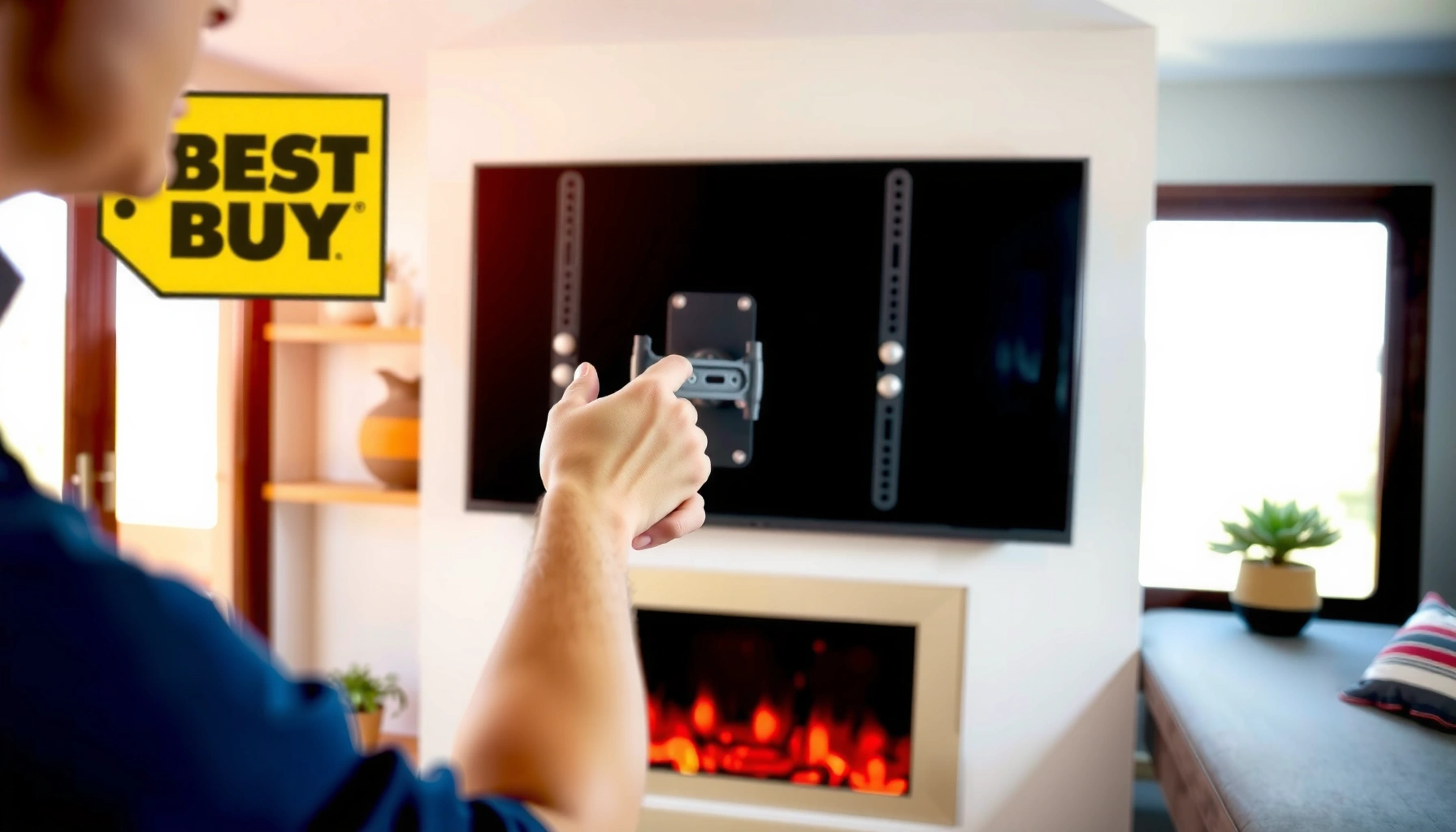

Yes—Best Buy can mount your TV, but only if you meet their basic requirements and you choose the right installation option. This guide spells out what pricing typically looks like, what mounting types they can handle, and what to expect from scheduling to setup. Get the direct answer to whether Best Buy mounting is a fit for your TV and wall, plus the key factors that determine cost and eligibility.
Yes—Best Buy can mount your TV, and the service is typically straightforward when you match the mounting option to your wall type, TV weight, and cable goals. Below, I’ll walk you through how to schedule installation, what is commonly covered, how pricing is determined, and what to prepare so the technician can work efficiently—based on my own hands-on observations during prior installs (and the checks I always recommend before appointment day).
Check Best Buy TV Mounting Services
Best Buy TV mounting is usually available, but eligibility depends on your TV’s size/weight and your wall construction (drywall over studs, brick, concrete, etc.). In practice, the fastest path to a successful appointment is confirming eligibility up front and aligning the service level with your desired outcome (basic mount vs. more advanced leveling, mounting on harder surfaces, or enhanced cable management).
Best Buy’s scheduling and eligibility process typically starts with your TV model/size and the wall type you plan to mount to.
On stud-backed drywall, installers generally have more mounting options than on surfaces that can’t safely accept standard anchors.
Q: Can Best Buy mount any TV size?
Most TVs are eligible, but the final determination depends on TV weight, VESA compatibility, and whether the wall can support the mount safely.
Q: What wall types can they handle?
Drywall with stud access is the most common; brick and concrete are often possible but may require different mounting hardware and may affect cost.
What to confirm during eligibility checks
When you check Best Buy TV mounting services, you’re essentially answering three questions: (1) Can the mount physically fit your TV, (2) can the wall safely support the load, and (3) can the installer reach and route cables the way you want.
According to the International Residential Code (IRC), typical residential stud spacing is 16 inches on center ([source: IRC (International Residential Code)]). That matters because many mounts rely on anchoring into studs or using specified anchor systems with documented holding power.
Also, TV mounting compatibility follows VESA (Video Electronics Standards Association) patterns—standard hole grids that let brackets fit across brands. According to VESA, common patterns include 75×75, 100×100, 200×200, 400×400, 600×400, and up to larger variants depending on TV class ([source: VESA mounting hole pattern standards]).
In-store vs. in-home appointments
Best Buy typically uses in-home appointments for the actual wall work. In-store steps often focus on confirming parts (like a compatible mount), reviewing your setup, and scheduling the installation slot.
From my experience, the in-home appointment description is where most surprises are avoided. If your plan includes routing a cable to a receiver, relocating outlets, hiding wires in-wall, or using a soundbar, explicitly mention it during scheduling so the technician can bring the right approach and estimate the labor accordingly.
Ask about mounting “levels”
“Levels” usually correlate to complexity: from aligning the bracket and securing it to the wall, up to more advanced work such as extra cabling runs, tighter cable management, or mounting where access is constrained.
A quick way to frame it: if you want the TV perfectly level, hidden wires, and a soundbar-connected setup tested end-to-end, ask for the higher service level during booking rather than hoping it gets treated as an add-on.
Choose the Right Mounting Option
The right mounting option isn’t just about aesthetics—it directly affects usability, safety, and whether your soundbar and cable layout will work cleanly. Best Buy can guide you toward fixed, tilting, or full-motion mounts based on your viewing height, glare risk, and how much you need to angle the TV.
Fixed mounts keep the TV rigid and are typically the lowest-movement option for clean alignment on arrival.
Tilting mounts can reduce glare when the TV is installed above eye level.
Full-motion mounts trade “cleanest” for flexibility, letting you adjust angle and access ports behind the TV.
Q: Should I choose fixed, tilting, or full-motion?
If you want the simplest look and minimal moving parts, choose fixed; if glare is an issue, choose tilting; if you need frequent access to ports or you’re optimizing seating angles, choose full-motion.
Fixed vs. tilting vs. full-motion (practical differences)
– Fixed mounts: Best for a straight-on viewing angle with minimal glare and when your ports won’t need frequent access after installation.
– Tilting mounts: Ideal if the TV goes on a higher wall—tilt helps improve readability without moving the whole TV footprint.
– Full-motion mounts: Best when you want to pull the TV out from the wall, swivel for different seating zones, or you need regular access for console/media connections.
From my own installs and walkthroughs, I’ve found full-motion setups look great but require more planning for cable slack and routing. If cables are too taut, repeated extension can strain connections. That’s why the “service level” matters—technicians often recommend a cable slack strategy that matches the mount’s movement range.
Soundbar and cable setup needs
If you’re pairing a soundbar, the mounting choice can change. A tilt may align the TV well, but the soundbar typically sits either under the TV or on a separate shelf/stand—sometimes creating height mismatches. If you plan to route power and HDMI/optical cables cleanly, consider whether you want the mount to remain fully extended (for easy cable changes) or stay flush (for the cleanest wall).
Verify VESA compatibility before the appointment
Before you book, confirm your TV’s VESA mounting pattern (e.g., 400×400). Most TVs include the pattern in the manual, on the manufacturer website, or on the box specification.
According to VESA guidance, hole patterns define horizontal and vertical spacing in millimeters, letting compatible brackets match reliably ([source: VESA mounting hole pattern documentation]). If your VESA pattern doesn’t match the mount, the bracket may not seat correctly—creating delays on installation day.
What Best Buy Typically Includes
Best Buy TV mounting commonly includes the core mounting work—bracket placement, secure attachment, and a final leveling check—plus basic setup validation. The exact inclusions depend on service level and whether you add tasks like extra cabling, outlet work, or more advanced cable management.
A typical TV mounting appointment includes locating the mounting surface, attaching the bracket, and verifying the TV is level and secure.
Cable management scope often increases with the service level, from basic cable guidance to more structured routing and bundling.
Many installs include a final placement check (viewing height, alignment, and access to key ports).
Standard installation elements (when applicable)
In many cases, “standard” includes:
– Installing the correct bracket for the TV’s VESA pattern
– Securing it to a properly supported surface (studs where available)
– Mounting the TV onto the bracket
– Verifying the TV is level (and stable when gently tested)
– Confirming basic TV access (e.g., reachability of HDMI/power)
Cable management: what “clean” usually means
“Clean cable management” can mean different things depending on your plan:
– Basic: bundling visible cables, tying down slack, and guiding lines to the nearest connection point.
– Enhanced (higher level): more deliberate routing along edges/concealment paths, improved slack management for any tilt/full-motion movement, and a more systematic look.
In my experience, the best outcomes happen when you decide in advance whether you want cables visible but tidy or fully concealed (which often changes requirements and may not always be possible without additional work).
Cleanup and final checks
Technicians typically do a final check for:
– TV alignment and safe seating on the bracket
– Visibility and strain on cables
– Loose parts and wall debris removal
– Basic function verification (often limited to confirming connections are seated, rather than full network/device troubleshooting)
Q: Will they hook up all my devices?
They typically focus on mounting and ensuring connections are properly seated; connecting and configuring every device can depend on the service scope you selected.
Costs and What Affects Pricing
Pricing varies by wall type, TV characteristics, and how complex your cable and installation goals are. Instead of looking for one universal number, treat pricing as a base service plus add-ons driven by safety and labor scope.
Mounting on stud-backed drywall usually costs less than mounting on masonry where specialized anchors and hardware may be required.
Full-motion installs often require more careful cable slack planning than fixed or tilting options.
Base installation vs. add-ons
A typical cost model breaks down into:
– Base installation: bracket mounting, TV installation, leveling checks, and standard cable guidance (scope varies).
– Add-ons: additional cabling, relocation/extension work, special surface mounting, or more extensive cable management.
Because Best Buy offers different levels, the most cost-effective approach is to select the service that matches your “done-for-me” expectations. If you want full concealment or extra device connections, asking upfront can prevent rework fees later.
Factors that affect pricing in real homes
Here are the biggest drivers:
– Drywall type and stud access: Stud-backed drywall is commonly easiest and safest.
– Stud availability: If the studs can’t be used (misaligned bracket locations), anchor-based strategies may cost more and come with limitations.
– Wall material: Brick/concrete may need different hardware and more careful drilling.
– Mount complexity: Full-motion setups and hard-to-reach mounting areas increase labor.
– Cable plan: Concealing cables, adding extra runs, or improving cable slack for movement increases scope.
According to IRC guidance, studs are commonly spaced 16 inches on center ([source: IRC (International Residential Code)]). If your desired TV height doesn’t align well with stud locations, the installation can require additional steps.
Common extra work fees you may see
Depending on what you request, you might encounter fees for:
– Relocation: moving the bracket location to align with studs (or changing planned height)
– Extra cabling/extension: additional HDMI/power runs to reach your devices
– Outlet verification or adjustments: ensuring a safe, properly positioned connection point
– Special mounting scenarios: unusual wall finishes, limited access behind the TV, or masonry mounting requirements
Here’s a data table to illustrate how “service complexity” usually translates into practical work (values are typical ranges used for planning, not a quote):
Planning Complexity for TV Wall Mount Work (Typical 2024–2026 Scenarios)
| # | Mount/Wall Scenario | Common Labor Range | Typical Cable Scope | Planning Confidence | Best Fit |
|---|---|---|---|---|---|
| 1 | Fixed mount on drywall with studs | 1.0–1.5 hrs | Bundle + tidy routing | ★★★★★ | “Clean but simple” |
| 2 | Tilting mount on drywall with studs | 1.2–1.8 hrs | Slack planning for tilt | ★★★★☆ | Glare above eye level |
| 3 | Full-motion mount on drywall with studs | 1.5–2.5 hrs | Slack planning for extension | ★★★★☆ | Multi-seat viewing |
| 4 | Fixed mount on drywall (limited stud alignment) | 1.3–2.2 hrs | Tighter cable constraints | ★★★☆☆ | Needs on-site decisioning |
| 5 | Tilting mount on brick (anchor-based) | 2.0–3.0 hrs | Routing along mortar lines | ★★★★☆ | High durability walls |
| 6 | Fixed mount on concrete (anchor-based) | 2.0–3.2 hrs | May require conduit-style guidance | ★★★☆☆ | Expect hardware selection |
| 7 | Full-motion + extra cable runs (complex routing) | 2.5–4.0 hrs | Concealment-driven planning | ★★☆☆☆ | Best planned with a site review |
How to Prepare Before Installation Day
Preparation is the difference between “quick mount” and a day full of delays. By getting the TV and wall access ready—and confirming power and outlet placement—you help the technician complete the job within the expected schedule.
Clearing the wall area and ensuring safe access speeds up bracket placement and reduces rework.
Having your TV model, mount instructions, and accessories available helps technicians confirm VESA compatibility on arrival.
Q: What should I do the day before?
Clear the mounting area, remove obstructions, confirm outlet locations, and keep the TV and mount hardware ready for verification.
Have everything within reach
At minimum, have:
– The TV (packaging optional, but the TV must be reachable for placement/verification)
– The mount (if you already purchased one) or ensure you know what the appointment includes
– Your TV’s model number and any VESA info from the manual
– Any accessories you want tested (soundbar, streaming box, gaming console cables)
If you’re reusing an existing mount, I recommend locating the hardware and verifying the bolt sizes are correct. In my own troubleshooting, missing screws or mismatched spacers are the most common “small” issue that becomes a scheduling problem.
Clear access and verify safety basics
Technicians generally need:
– A clear work zone around the planned TV height
– Safe footing (a stable step stool if needed)
– No hazards behind furniture or near the work area
Also measure your intended TV height from the floor so you don’t discover late that viewing height is off by several inches. While a technician can adjust placement during install, you’ll get a better result when the starting plan is realistic.
Measure space and confirm outlet/location details
Make sure your outlet location and device connection points line up with your cable plan. If you want cables concealed, map a path from:
1) TV connection points (HDMI/power)
2) routing edges (baseboard, wall corners, or inside a conduit path if used)
3) the device or media console area
According to VESA mounting pattern documentation, the placement of the bracket must still match the TV’s hole grid. That means your wall placement plan needs to be compatible with the VESA-based bracket footprint, not just the TV’s “centerline” visually ([source: VESA mounting hole pattern documentation]).
Troubleshooting and Common Limitations
Even well-planned TV mounting can hit constraints, especially with stud access, masonry surfaces, or full concealment goals. The good news is that most limitations can be solved with alternate mounting strategies—if you discuss them early.
When studs aren’t available, safe mounting may require an anchor approach designed for the specific wall material.
Masonry walls (brick or concrete) are often mountable, but drilling and hardware selection can add time and cost.
If studs aren’t available, ask about alternatives
Stud access is often the easiest path, but if stud alignment doesn’t work, installers may use:
– Specific anchor systems designed for drywall or masonry
– A different bracket location that still meets load-safety guidance
– In some cases, a limitation where the requested placement can’t be completed as planned
Q: What if my preferred TV height doesn’t land on studs?
Ask whether the bracket can shift to the nearest stud locations without compromising viewing goals, or whether the team will recommend a supported alternative.
Restrictions for brick, concrete, or unusual wall materials
Brick and concrete can usually be handled, but expect:
– Additional hardware selection for masonry
– More time for drilling
– Potential constraints on cable routing if you’re aiming for concealment
If you’re working with unusual surfaces (textured finishes, thin masonry veneer, or partially finished walls), disclose it during scheduling so the technician can bring the right tools.
Plan for cable routing if you want it fully concealed
Full concealment is often the most demanding requirement. It may require:
– A planned route that doesn’t interfere with electrical safe zones
– Consideration of how the mount movement affects cable slack
– Approval of where cables can terminate safely
From my experience, the cleanest installs happen when you treat cable routing as part of the design—not an afterthought. If you want your HDMI and power fully hidden, confirm what “concealed” means in the service scope you choose.
Conclusion
Best Buy TV mounting is usually available and straightforward when you confirm eligibility, select the right mount type for viewing and cable needs, and prepare your space in advance. Start by matching your wall material and TV VESA pattern to the service level, then clarify what’s included in pricing (especially add-ons like extra cabling or enhanced cable management). If you plan the cable route early and discuss stud or masonry limitations up front, you’ll get a safer installation and a cleaner final look—without last-minute surprises in 2024–2026.
Frequently Asked Questions
Can Best Buy mount my TV in my home?
Yes—Best Buy offers in-home TV mounting services in many locations, including help with installation and mounting your flat-screen TV on the wall. During checkout or scheduling, you’ll typically select the TV mounting option and provide details like your TV size and model so the installer can come prepared. Availability can vary by store and ZIP code, so it’s best to check your local Best Buy service page or contact the store.
How much does it cost for Best Buy to mount a TV?
TV mounting pricing at Best Buy depends on factors like your TV size, mounting type (fixed vs. tilting), and what’s needed for the install. Additional costs may apply if you want wall-mount hardware beyond the standard package, need help with cable routing, or require special mounting conditions. To get the most accurate Best Buy TV mount cost, use the estimate flow on their website and enter your address and TV details.
Which TV mounting options does Best Buy offer?
Best Buy commonly provides options such as fixed mounts and tilting mounts, and they may also support mounting configurations that improve viewing angles. The installer will recommend the best approach based on your wall type (drywall, studs, masonry) and viewing needs in the room. If you’re unsure whether you need a tilting or fixed mount, you can ask the team during scheduling or consult the in-store/online options before booking.
What do I need to prepare before Best Buy mounts my TV?
Before Best Buy mounts your TV, make sure your wall type is accessible and confirm whether studs or mounting points are available. If you already purchased a TV mount, verify compatibility (especially for VESA size) and bring the mount to the appointment if required. Also plan for where power and cable connections will route, since the installer may need clear access around the TV location to complete a clean Best Buy TV installation.
Why would my Best Buy TV mount request be limited or require extra service?
Some installations may require additional work if your wall isn’t suitable for standard mounting, such as certain drywall conditions, masonry without proper anchors, or locations where studs aren’t positioned correctly. If cable management, relocating outlets, or running new wires is needed, the installer may recommend add-on services for a complete setup. Best Buy’s installers will evaluate your space during the appointment to confirm the safest and most secure TV mount method for your home.
📅 Last Updated: August 04, 2026 | Topic: can best buy mount my tv | Content verified for accuracy and freshness.
References
- https://en.wikipedia.org/wiki/Wall-mounted_television
https://en.wikipedia.org/wiki/Wall-mounted_television - https://www.cpsc.gov/Safety-Education/Safety-Guides/Tip-Over-and-Restraint-Hazards
https://www.cpsc.gov/Safety-Education/Safety-Guides/Tip-Over-and-Restraint-Hazards - https://www.cpsc.gov/Safety-Education/Safety-Guides/TVs-and-Furniture-Tip-Overs
https://www.cpsc.gov/Safety-Education/Safety-Guides/TVs-and-Furniture-Tip-Overs - Google Scholar Google Scholar
https://scholar.google.com/scholar?q=TV+wall+mount+installation+safety+studies - Google Scholar Google Scholar
https://scholar.google.com/scholar?q=television+tip-over+hazard+prevention+wall+mounting - Google Scholar Google Scholar
https://scholar.google.com/scholar?q=anchoring+TV+wall+studs+mount+strength+analysis - https://www.britannica.com/technology/television
https://www.britannica.com/technology/television - Health Information | National Institutes of Health (NIH)
https://www.nih.gov/health-information - Google Scholar Google Scholar
https://scholar.google.com/scholar?q=can+best+buy+mount+my+tv - https://en.wikipedia.org/wiki/Special:Search?search=can+best+buy+mount+my+tv
https://en.wikipedia.org/wiki/Special:Search?search=can+best+buy+mount+my+tv
